Hartmann Sonja, Biliouris Konstantinos, Lesko Lawrence J, Nowak-Göttl Ulrike, Trame Mirjam N
Center for Pharmacometrics & Systems Pharmacology, Department of Pharmaceutics, University of Florida, Orlando, FL, United States.
Thrombosis & Hemostasis Treatment Center, Institute of Clinical Chemistry, University of Schleswig-Holstein, Germany.
Front Pharmacol. 2020 Jul 14;11:1041. doi: 10.3389/fphar.2020.01041. eCollection 2020.
Tight monitoring of efficacy and safety of anticoagulants such as warfarin is imperative to optimize the benefit-risk ratio of anticoagulants in patients. The standard tests used are measurements of prothrombin time (PT), usually expressed as international normalized ratio (INR), and activated partial thromboplastin time (aPTT).
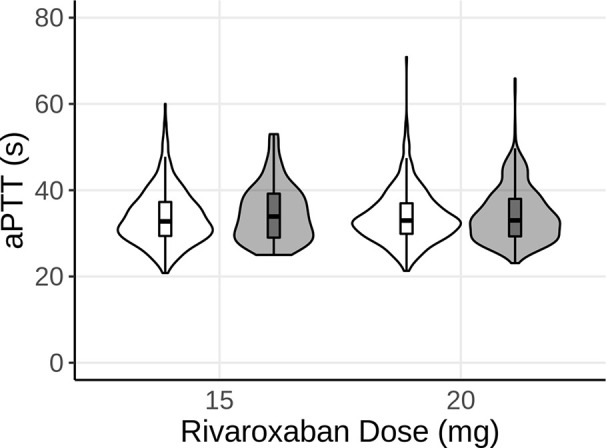
To leverage a previously developed quantitative systems pharmacology (QSP) model of the human coagulation network to predict INR and aPTT for warfarin and rivaroxaban, respectively.
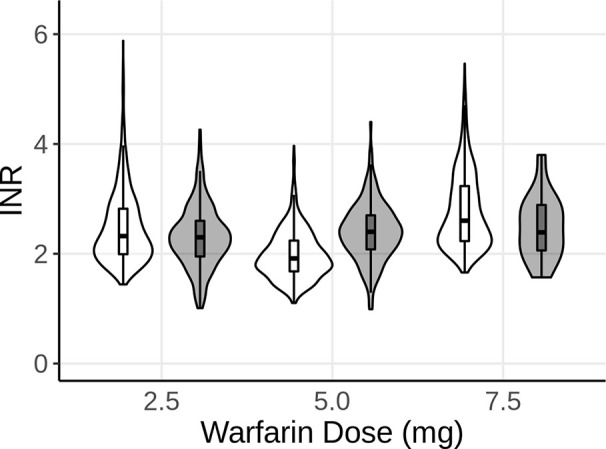
A modeling and simulation approach was used to predict INR and aPTT measurements of patients receiving steady-state anticoagulation therapy. A previously developed QSP model was leveraged for the present analysis. The effect of genetic polymorphisms known to influence dose response of warfarin () were implemented into the model by modifying warfarin clearance (CYP2C9 *1: 0.2 L/h; *2: 0.14 L/h, *3: 0.04 L/h) and the concentration of available vitamin K (VKORC1 GA: -22% from normal vitamin K concentration; AA: -44% from normal vitamin K concentration). Virtual patient populations were used to assess the ability of the model to accurately predict routine INR and aPTT measurements from patients under long-term anticoagulant therapy.
The introduced model accurately described the observed INR of patients receiving long-term warfarin treatment. The model was able to demonstrate the influence of genetic polymorphisms of and on the INR measurements. Additionally, the model was successfully used to predict aPTT measurements for patients receiving long-term rivaroxaban therapy.
The QSP model accurately predicted INR and aPTT measurements observed during routine therapeutic drug monitoring. This is an exemplar of how a QSP model can be adapted and used as a model-based precision dosing tool during clinical practice and drug development to predict efficacy and safety of anticoagulants to ultimately help optimize anti-thrombotic therapy.
密切监测华法林等抗凝剂的疗效和安全性对于优化患者抗凝剂的效益风险比至关重要。常用的标准检测方法是测量凝血酶原时间(PT),通常以国际标准化比值(INR)表示,以及活化部分凝血活酶时间(aPTT)。
利用先前开发的人类凝血网络定量系统药理学(QSP)模型,分别预测华法林和利伐沙班的INR和aPTT。
采用建模与模拟方法预测接受稳态抗凝治疗患者的INR和aPTT测量值。本次分析利用了先前开发的QSP模型。通过修改华法林清除率(CYP2C9 *1:0.2 L/h;*2:0.14 L/h,*3:0.04 L/h)和可用维生素K浓度(VKORC1 GA:比正常维生素K浓度低22%;AA:比正常维生素K浓度低44%),将已知影响华法林剂量反应的基因多态性效应纳入模型。虚拟患者群体用于评估该模型准确预测长期抗凝治疗患者常规INR和aPTT测量值的能力。
引入的模型准确描述了接受长期华法林治疗患者观察到的INR。该模型能够证明 和 的基因多态性对INR测量值的影响。此外,该模型成功用于预测接受长期利伐沙班治疗患者的aPTT测量值。
QSP模型准确预测了常规治疗药物监测期间观察到的INR和aPTT测量值。这是一个范例,展示了QSP模型如何在临床实践和药物开发过程中进行调整并用作基于模型的精准给药工具,以预测抗凝剂的疗效和安全性,最终有助于优化抗血栓治疗。