Li Panyuan, Yang Lingcong, Li Tong, Bin Shufang, Sun Bohao, Huang Yuting, Yang Kaiyan, Shan Daming, Gu Haihua, Li Hongzhi
Zhejiang Provincial Key Laboratory of Medical Genetics, Key Laboratory of Laboratory Medicine, Ministry of Education, Wenzhou Medical University, School of Laboratory Medicine and Life Sciences, Wenzhou Medical University, Wenzhou, China.
The Third People's Hospital of Dalian, Dalian, China.
Front Oncol. 2020 Jul 14;10:1143. doi: 10.3389/fonc.2020.01143. eCollection 2020.
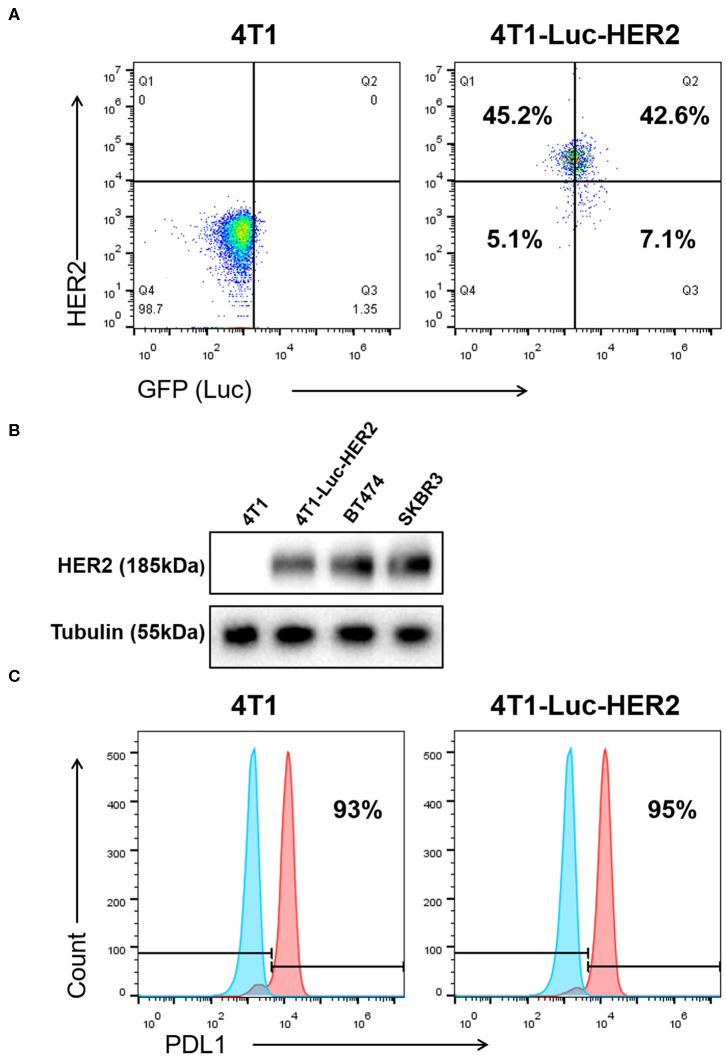
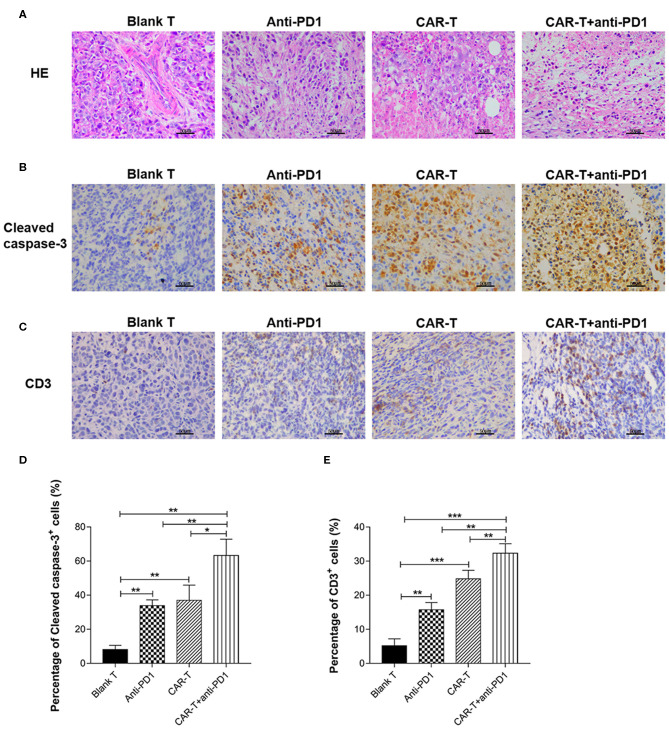
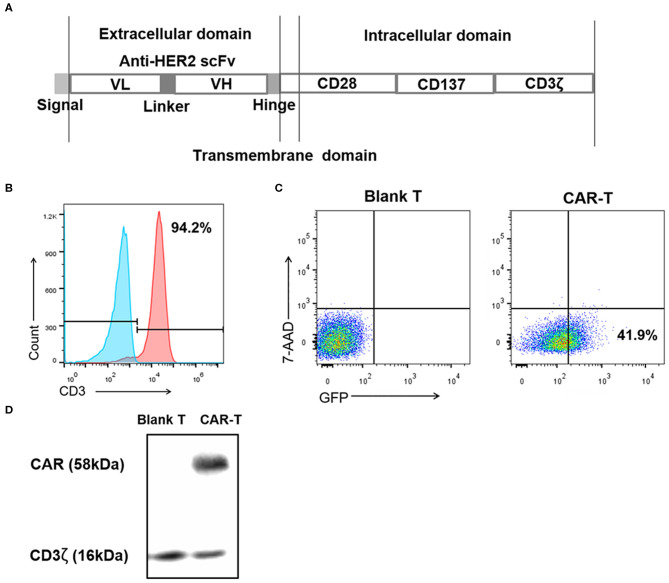
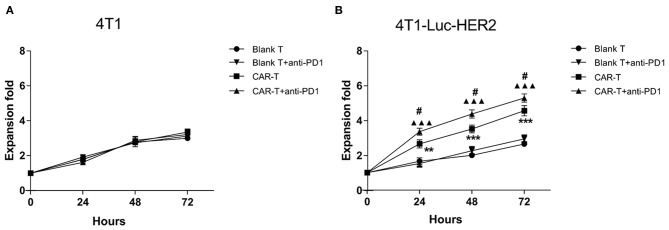
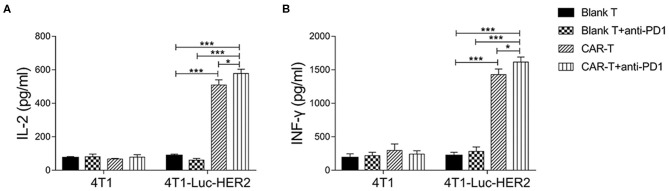
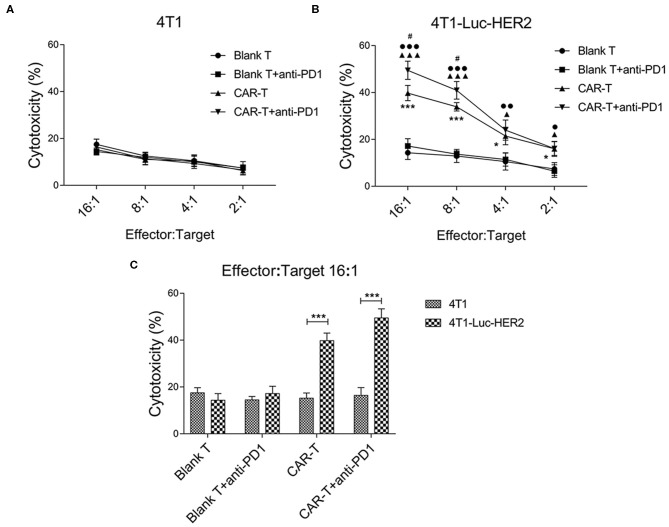
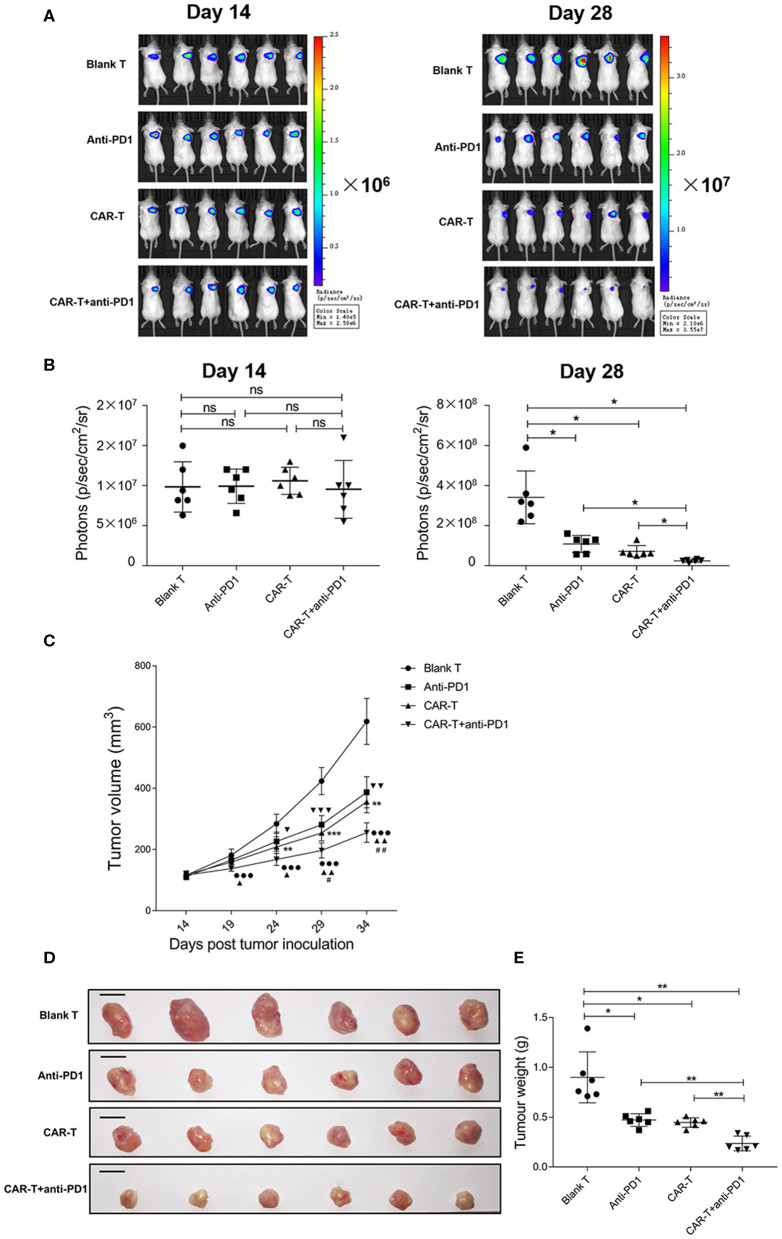
Chimeric Antigen Receptor (CAR)-T cells have great efficacy against CD19 leukemia but little success for solid tumors. This study explored the effectiveness of third generation anti-HER2 CAR-T cells alone or in combination with anti-PD1 antibody on breast tumor cells expressing HER2 and in immune competent mouse model. The PDL1-positive mouse mammary tumor cell line 4T1 engineered to express luciferase and human HER2 was used as the target cell line (4T1-Luc-HER2). Anti-HER2 CAR-T cells were generated by transducing mouse spleen T cells with recombinant lentiviruses. ELISA analysis showed that IL-2 and IFN-γ secretion was increased in CAR-T cells co-cultured with the target cells, and the secretion of these two cytokines was increased further with the addition of anti-PD1 antibody. Lactate dehydrogenase assay revealed that CAR-T cells displayed a potent cytotoxicity against the target cells, and the addition of anti-PD1 antibody further enhanced the cytotoxicity. At the effector: target ratio of 16:1, cytotoxicity was 39.8% with CAR-T cells alone, and increased to 49.5% with the addition of anti-PD1 antibody. In immune competent syngeneic mouse model, CAR-T cells were found to be present in tumor stroma, inhibited tumor growth and increased tumor apoptosis significantly. Addition of anti-PD1 antibody further enhanced these anti-tumor activities. Twenty-one days after treatment, tumor weight was reduced by 50.0% and 73.3% in CAR-T group and CAR-T plus anti-PD1 group compared with blank T group. Our results indicate that anti-PD1 antibody can greatly increase the efficacy of anti-HER2 CAR-T against HER2-positive solid tumors.
嵌合抗原受体(CAR)-T细胞对CD19白血病具有显著疗效,但对实体瘤的治疗效果甚微。本研究探讨了第三代抗HER2 CAR-T细胞单独或与抗PD1抗体联合应用于表达HER2的乳腺肿瘤细胞以及免疫健全小鼠模型中的有效性。将工程改造为表达荧光素酶和人HER2的PDL1阳性小鼠乳腺肿瘤细胞系4T1用作靶细胞系(4T1-Luc-HER2)。通过用重组慢病毒转导小鼠脾脏T细胞来生成抗HER2 CAR-T细胞。ELISA分析表明,与靶细胞共培养的CAR-T细胞中IL-2和IFN-γ分泌增加,添加抗PD1抗体后这两种细胞因子的分泌进一步增加。乳酸脱氢酶测定显示,CAR-T细胞对靶细胞表现出强大的细胞毒性,添加抗PD1抗体进一步增强了细胞毒性。在效应细胞与靶细胞比例为16:1时,单独使用CAR-T细胞时细胞毒性为39.8%,添加抗PD1抗体后增至49.5%。在免疫健全的同基因小鼠模型中,发现CAR-T细胞存在于肿瘤基质中,显著抑制肿瘤生长并增加肿瘤凋亡。添加抗PD1抗体进一步增强了这些抗肿瘤活性。治疗21天后,与空白T细胞组相比,CAR-T组和CAR-T加抗PD1组的肿瘤重量分别降低了50.0%和73.3%。我们的结果表明,抗PD1抗体可大大提高抗HER2 CAR-T对HER2阳性实体瘤的疗效。