Madewell Zachary J, Yang Yang, Longini Ira M, Halloran M Elizabeth, Dean Natalie E
Department of Biostatistics, University of Florida, Gainesville, FL.
Fred Hutchinson Cancer Research Center, Seattle, WA.
medRxiv. 2020 Jul 31:2020.07.29.20164590. doi: 10.1101/2020.07.29.20164590.
Severe acute respiratory syndrome coronavirus 2 (SARS-CoV-2) is spread by direct, indirect, or close contact with infected people via infected respiratory droplets or saliva. Crowded indoor environments with sustained close contact and conversations are a particularly high-risk setting.
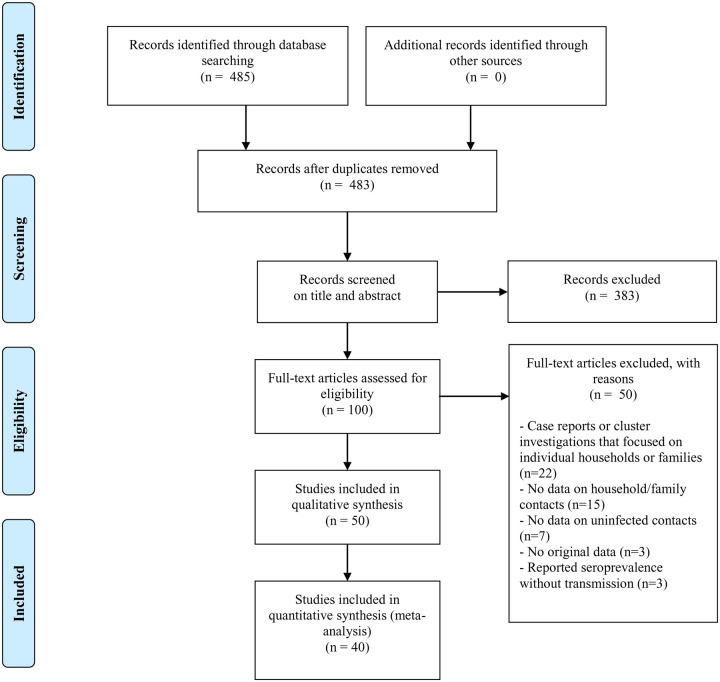
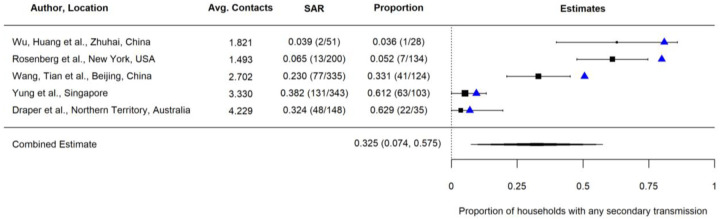
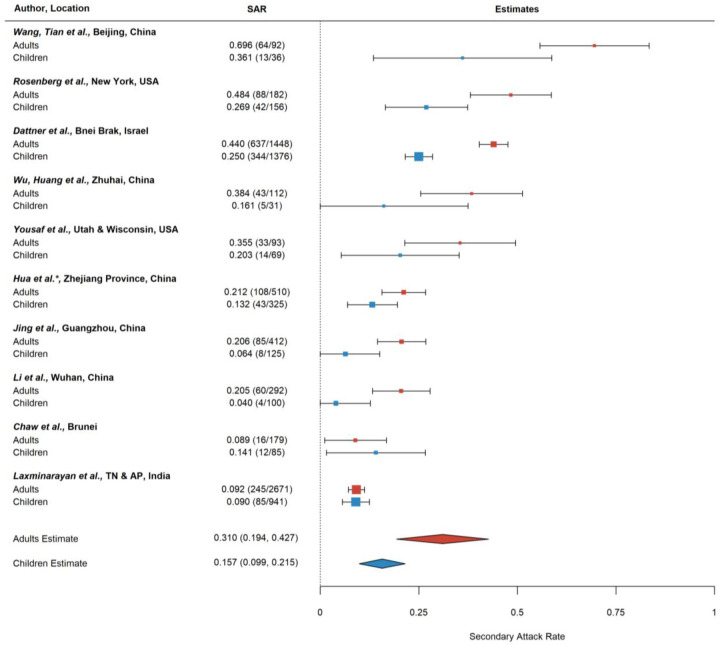
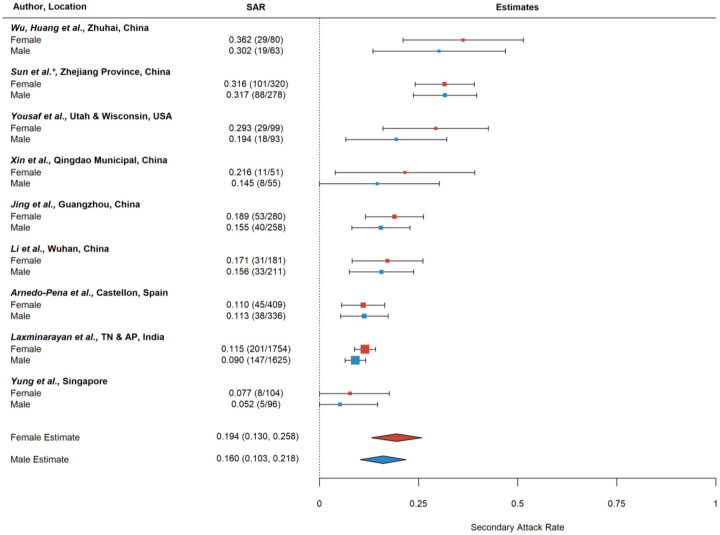
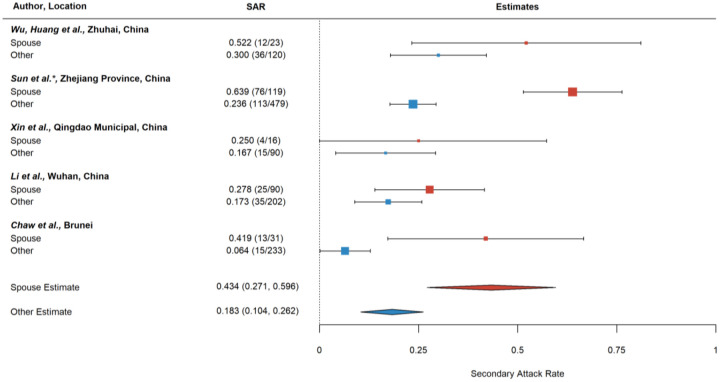
We performed a meta-analysis through July 29, 2020 of SARS-CoV-2 household secondary attack rate (SAR), disaggregating by several covariates (contact type, symptom status, adult/child contacts, contact sex, relationship to index case, index case sex, number of contacts in household, coronavirus).
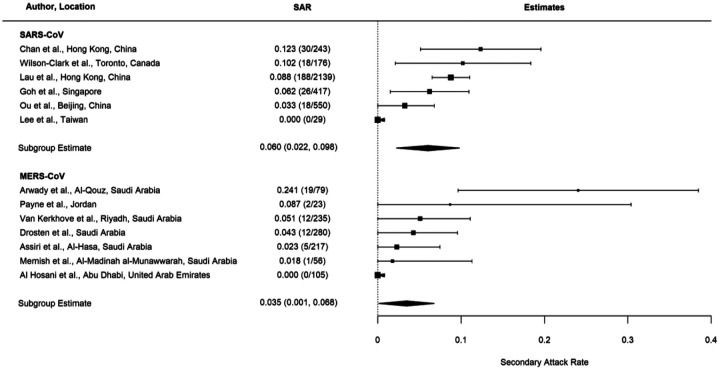
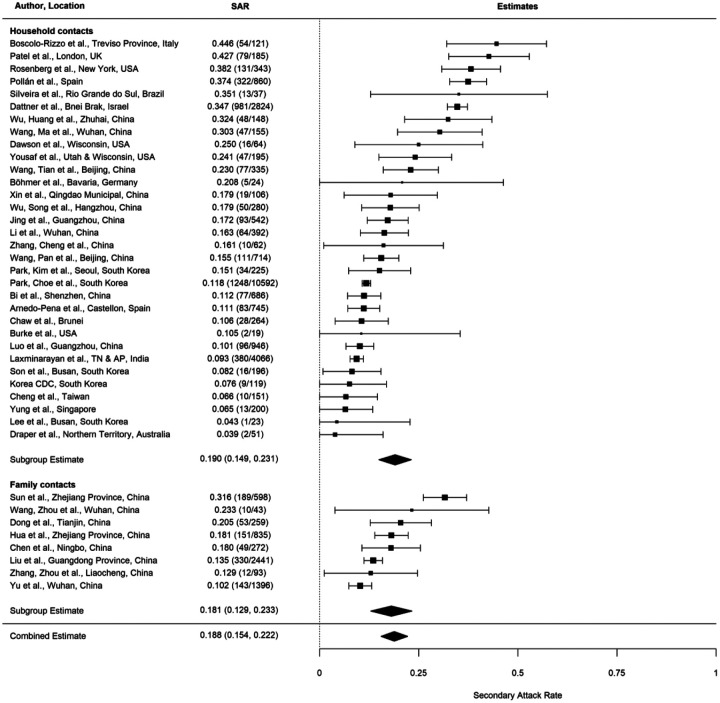
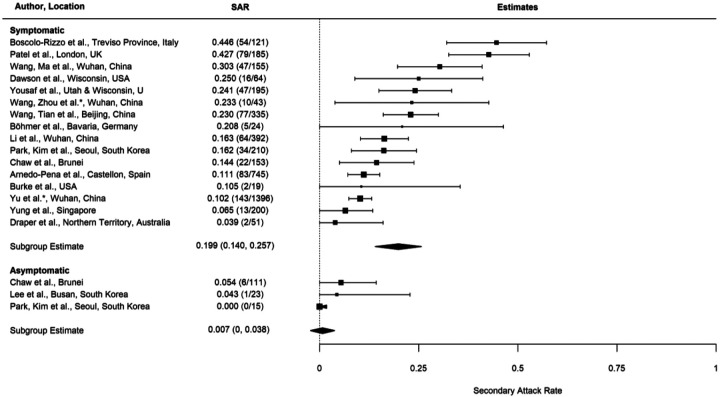
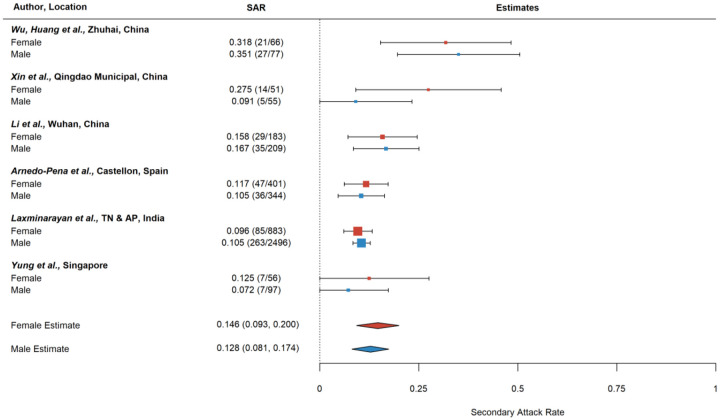
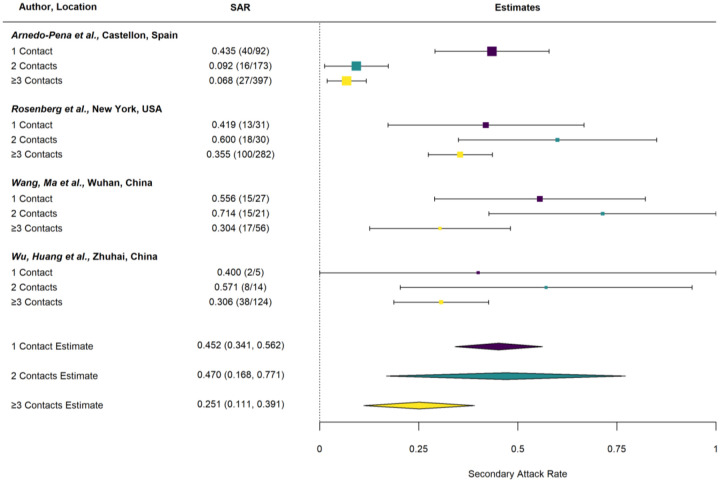
We identified 40 relevant published studies that report household secondary transmission. The estimated overall household SAR was 18.8% (95% confidence interval [CI]: 15.4%-22.2%), which is higher than previously observed SARs for SARS-CoV and MERS-CoV. We observed that household SARs were significantly higher from symptomatic index cases than asymptomatic index cases, to adult contacts than children contacts, to spouses than other family contacts, and in households with one contact than households with three or more contacts.
To prevent the spread of SARS-CoV-2, people are being asked to stay at home worldwide. With suspected or confirmed infections referred to isolate at home, household transmission will continue to be a significant source of transmission.
严重急性呼吸综合征冠状病毒2(SARS-CoV-2)通过与感染者直接、间接接触或经由受感染的呼吸道飞沫或唾液进行密切接触传播。在人员密集且持续存在密切接触和对话的室内环境中,传播风险尤其高。
我们对截至2020年7月29日的SARS-CoV-2家庭二代发病率(SAR)进行了荟萃分析,并按多个协变量(接触类型、症状状态、成人/儿童接触者、接触者性别、与索引病例的关系、索引病例性别、家庭接触者数量、冠状病毒)进行分类。
我们确定了40项报告家庭二代传播情况的相关已发表研究。估计的总体家庭SAR为18.8%(95%置信区间[CI]:15.4%-22.2%),高于先前观察到的SARS-CoV和MERS-CoV的SAR。我们观察到,有症状的索引病例导致的家庭SAR显著高于无症状索引病例,成人接触者高于儿童接触者,配偶高于其他家庭成员,且家庭中接触1人的家庭高于接触3人或更多人的家庭。
为防止SARS-CoV-2传播,全球各地的人们被要求居家。由于疑似或确诊感染者需居家隔离,家庭传播将继续成为一个重要的传播源。