MRC Mitochondrial Biology Unit, University of Cambridge, The Keith Peters Building, Cambridge Biomedical Campus, Hills Road, Cambridge CB2 0XY, UK.
Department of Medicine, University of Cambridge, Addenbrookes Hospital, Hills Road, Cambridge CB2 0QQ, UK.
Cardiovasc Res. 2021 Mar 21;117(4):1188-1201. doi: 10.1093/cvr/cvaa148.
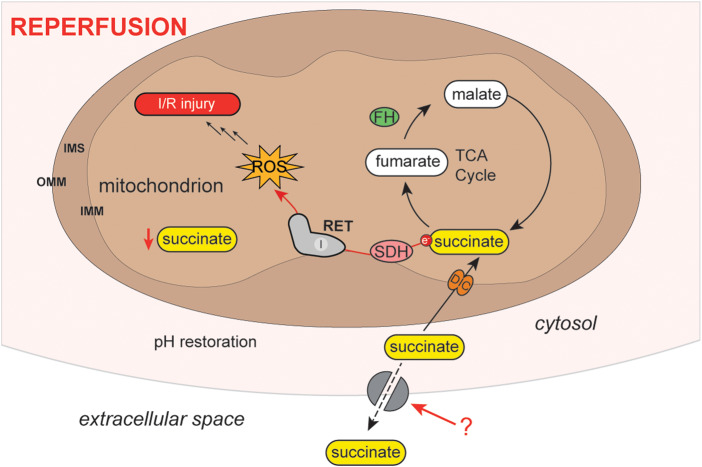
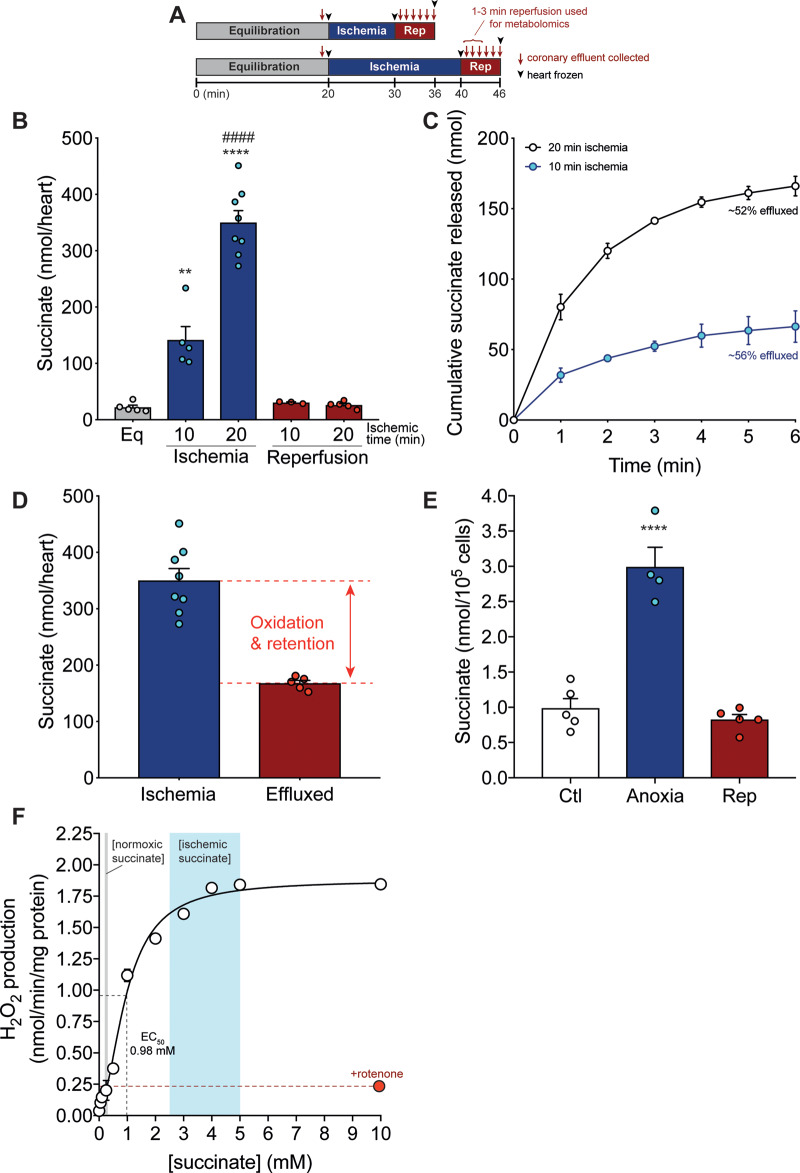
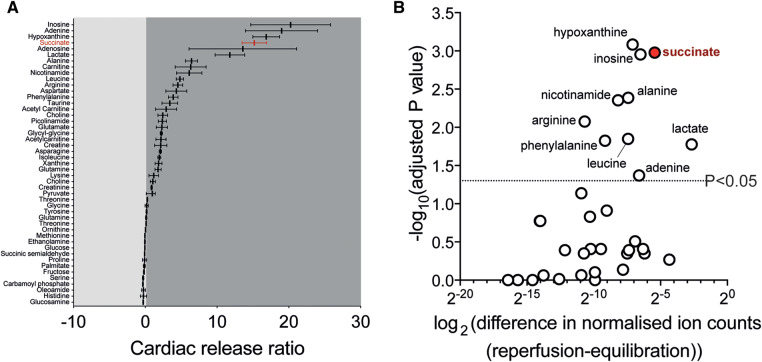
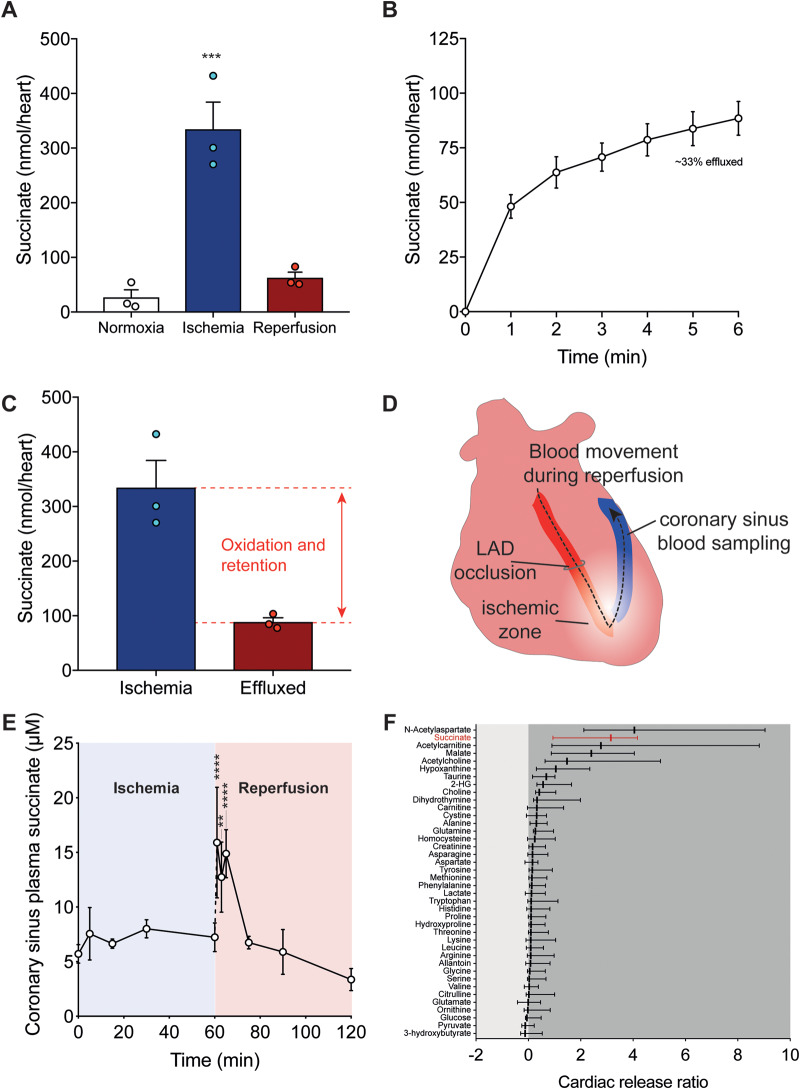
Succinate accumulates several-fold in the ischaemic heart and is then rapidly oxidized upon reperfusion, contributing to reactive oxygen species production by mitochondria. In addition, a significant amount of the accumulated succinate is released from the heart into the circulation at reperfusion, potentially activating the G-protein-coupled succinate receptor (SUCNR1). However, the factors that determine the proportion of succinate oxidation or release, and the mechanism of this release, are not known.
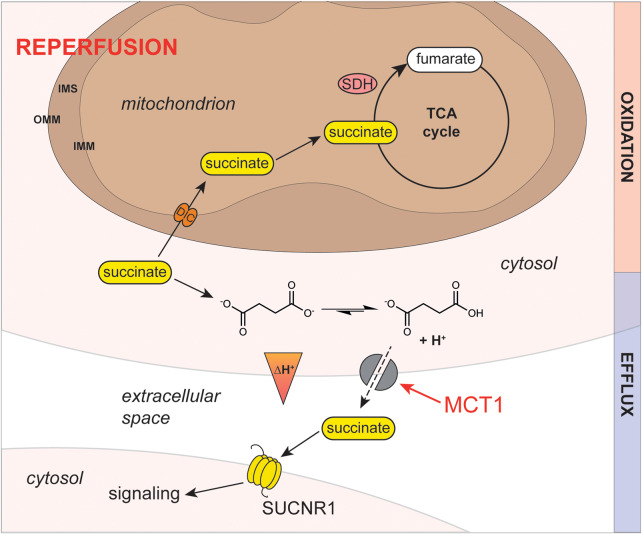
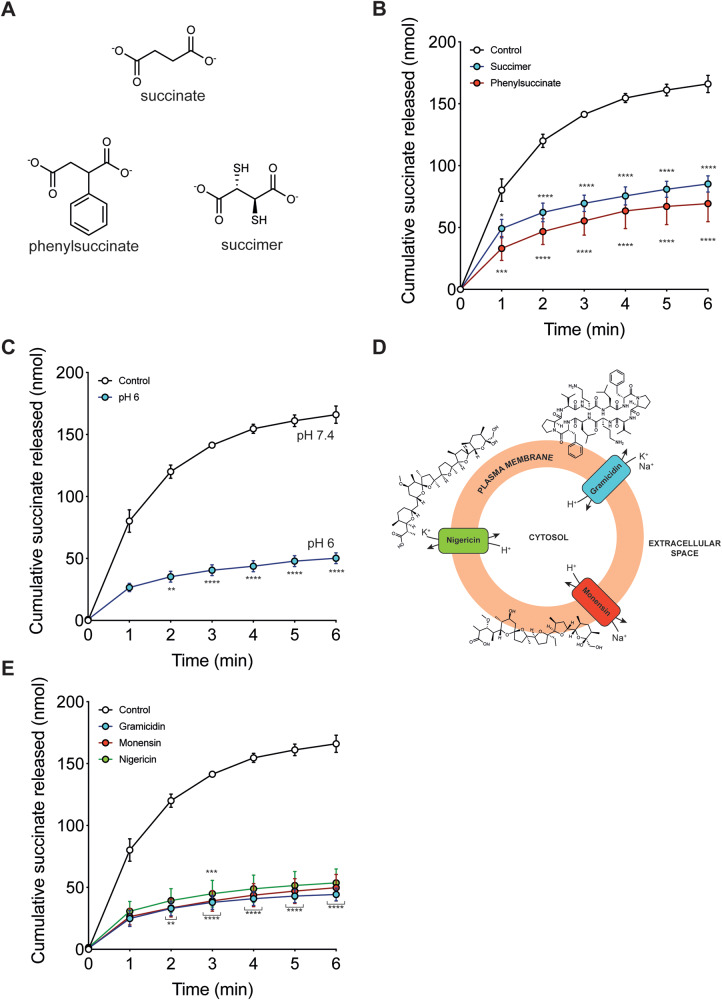
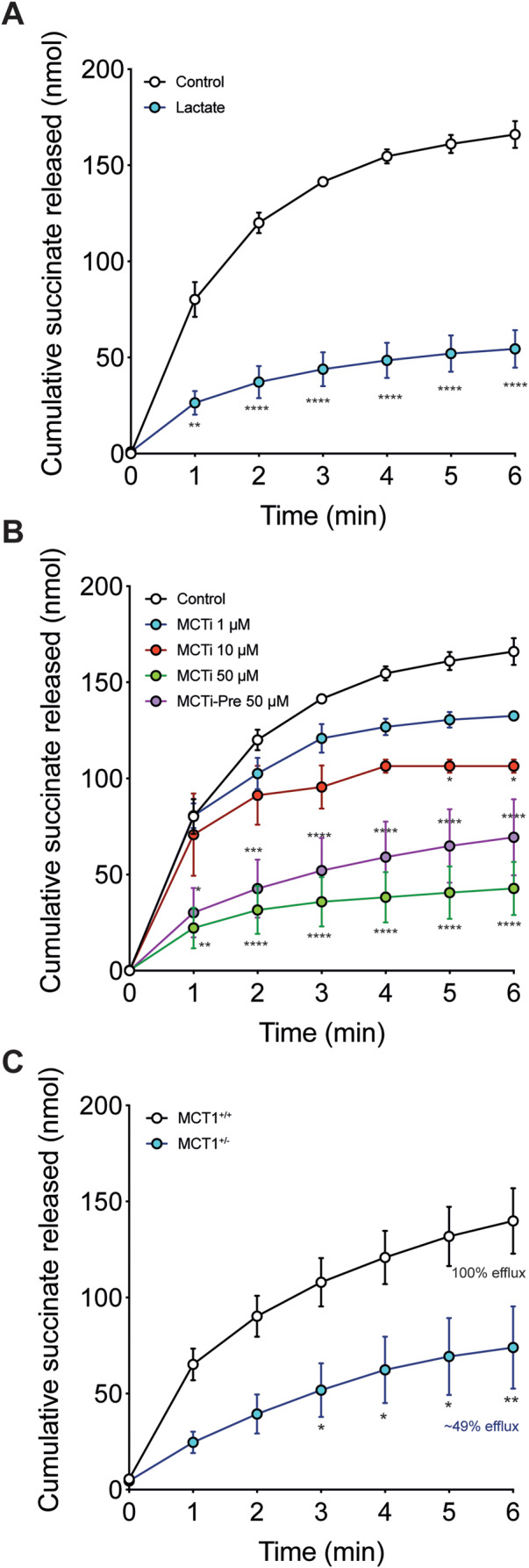
To address these questions, we assessed the fate of accumulated succinate upon reperfusion of anoxic cardiomyocytes, and of the ischaemic heart both ex vivo and in vivo. The release of accumulated succinate was selective and was enhanced by acidification of the intracellular milieu. Furthermore, pharmacological inhibition, or haploinsufficiency of the monocarboxylate transporter 1 (MCT1) significantly decreased succinate efflux from the reperfused heart.
Succinate release upon reperfusion of the ischaemic heart is mediated by MCT1 and is facilitated by the acidification of the myocardium during ischaemia. These findings will allow the signalling interaction between succinate released from reperfused ischaemic myocardium and SUCNR1 to be explored.
琥珀酸在缺血心脏中积累数倍,然后在再灌注时迅速氧化,导致线粒体产生活性氧物质。此外,大量积累的琥珀酸在再灌注时从心脏释放到循环中,可能会激活 G 蛋白偶联的琥珀酸受体 (SUCNR1)。然而,决定琥珀酸氧化或释放比例的因素以及这种释放的机制尚不清楚。
为了解决这些问题,我们评估了缺氧心肌细胞再灌注时以及离体和体内缺血心脏中积累的琥珀酸的命运。积累的琥珀酸的释放是选择性的,并受细胞内环境酸化的增强。此外,单羧酸转运蛋白 1 (MCT1) 的药理学抑制或单倍不足显著降低了再灌注心脏中琥珀酸的流出。
缺血心脏再灌注时琥珀酸的释放是由 MCT1 介导的,并受到缺血期间心肌酸化的促进。这些发现将允许探索从再灌注缺血心肌释放的琥珀酸与 SUCNR1 之间的信号相互作用。