Couselo-Seijas Marinela, Lopez-Canoa José N, Fernandez Ángel L, González-Melchor Laila, Seoane Luisa M, Duran-Muñoz Darío, Rozados-Luis Adriana, González-Juanatey José Ramón, Rodríguez-Mañero Moisés, Eiras Sonia
Translational Cardiology group, Health Research Institute, Santiago de Compostela, Spain.
University of Santiago de Compostela, Santiago de Compostela, Spain.
J Cell Mol Med. 2020 Sep;24(18):10958-10969. doi: 10.1111/jcmm.15727. Epub 2020 Aug 7.
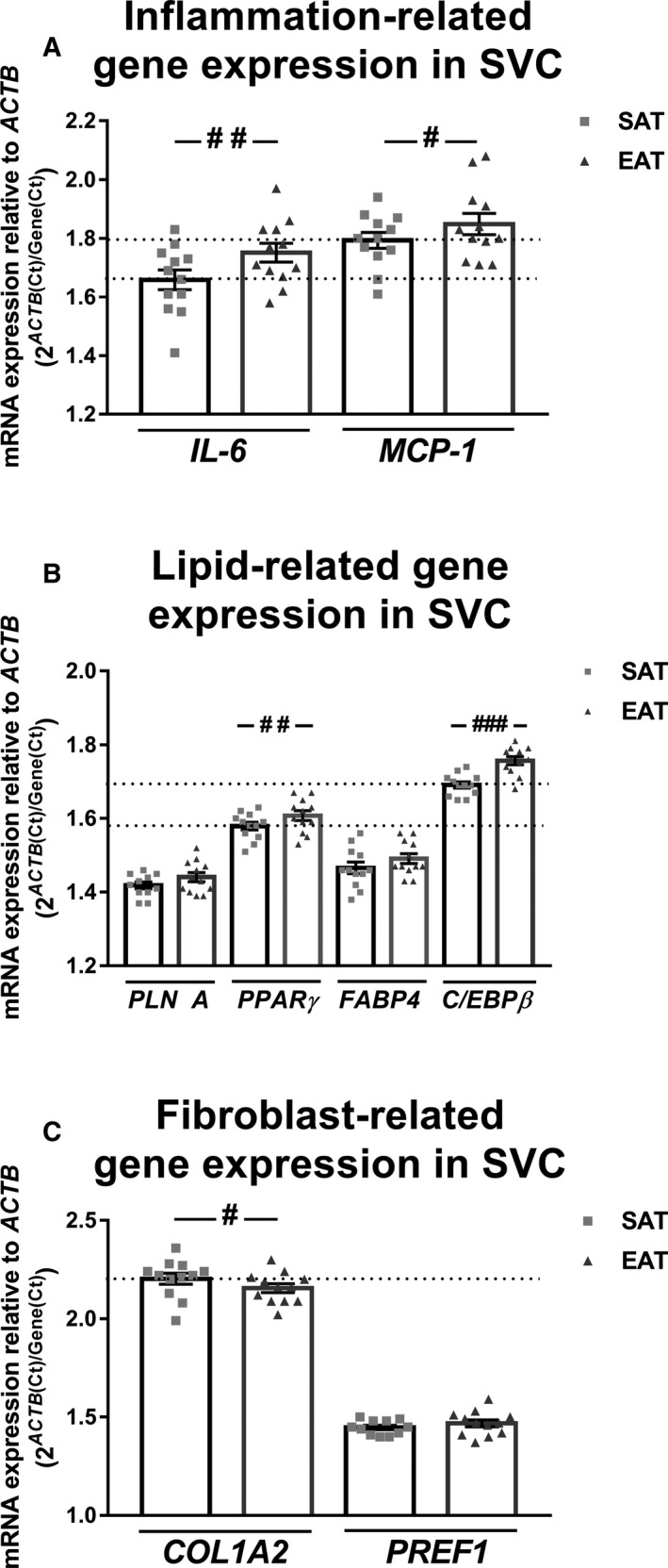
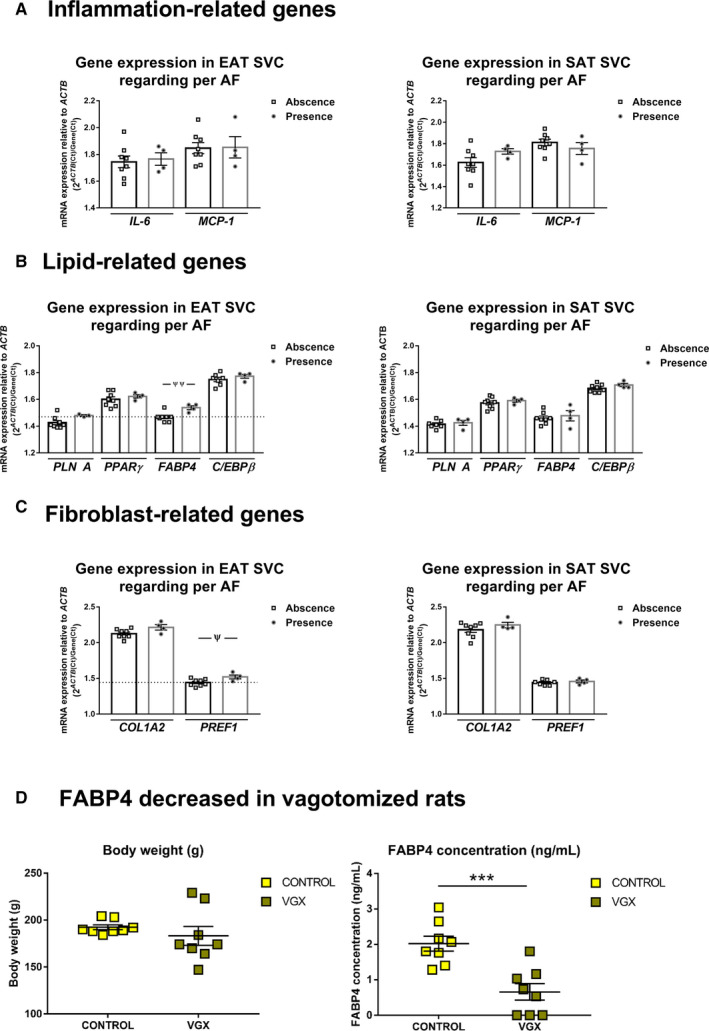
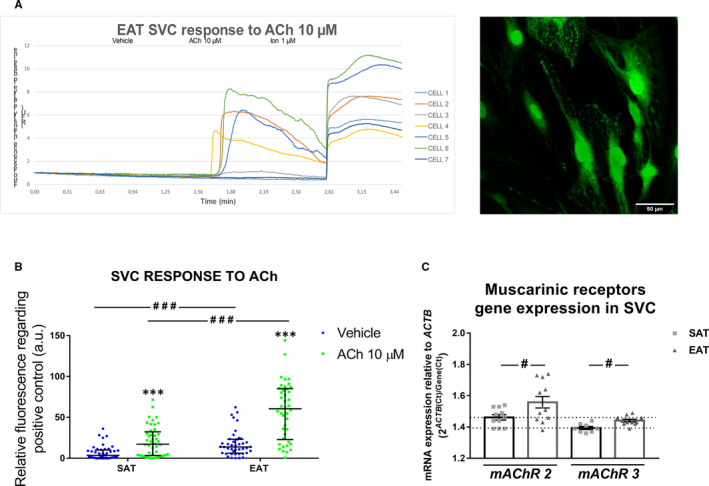
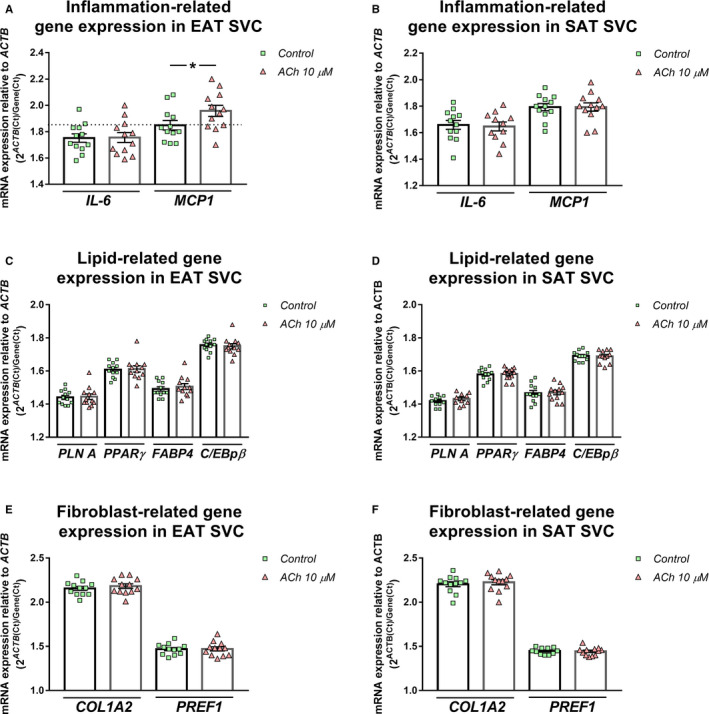
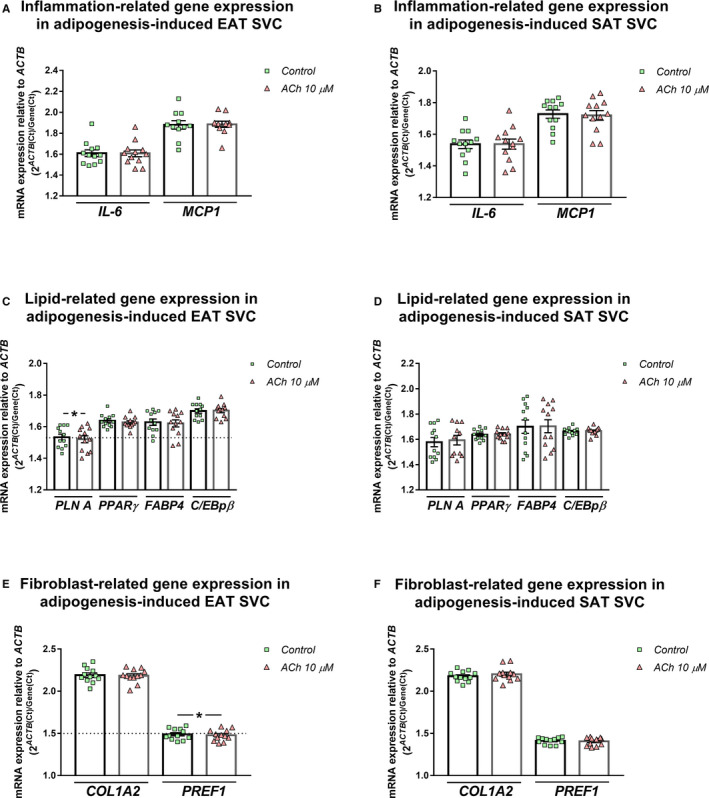
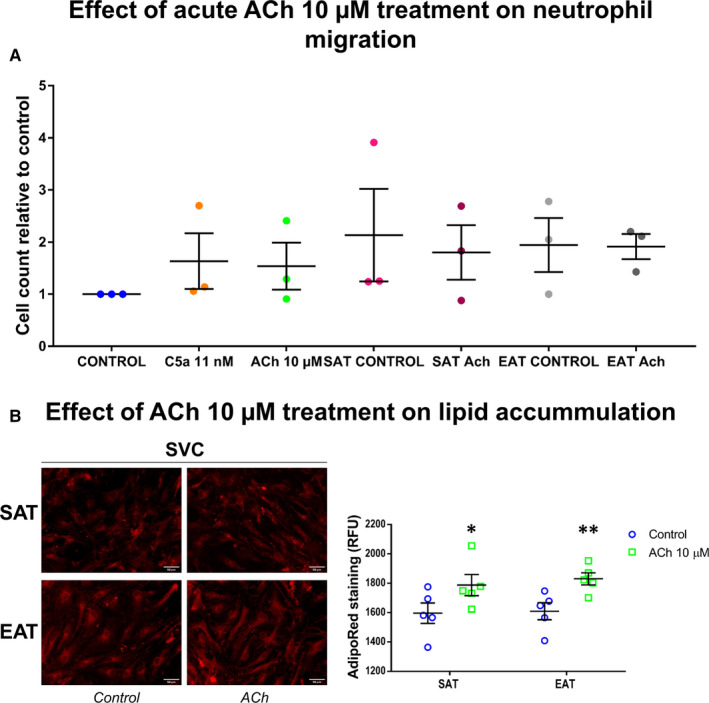
The modulation of acetylcholine (ACh) release by botulinum toxin injection into epicardial fat diminishes atrial fibrillation (AF) recurrence. These results suggest an interaction between autonomic imbalance and epicardial fat as risk factors of AF. Our aim was to study the inflammatory, lipidic and fibroblastic profile of epicardial stroma from patients who underwent open-heart surgery, their regulation by cholinergic activity and its association with AF. We performed in vitro and ex vivo assays from paired subcutaneous and epicardial stromal cells or explants from 33 patients. Acute ACh effects in inflammation and lipid-related genes were analysed by qPCR, in intracellular calcium mobilization were performed by Fluo-4 AM staining and in neutrophil migration by trans-well assays. Chronic ACh effects on lipid accumulation were visualized by AdipoRed. Plasma protein regulation by parasympathetic denervation was studied in vagotomized rats. Our results showed a higher pro-inflammatory profile in epicardial regarding subcutaneous stromal cells. Acute ACh treatment up-regulated monocyte chemoattractant protein 1 levels. Chronic ACh treatment improved lipid accumulation within epicardial stromal cells (60.50% [22.82-85.13] vs 13.85% [6.17-23.16], P < .001). Additionally, patients with AF had higher levels of fatty acid-binding protein 4 (1.54 ± 0.01 vs 1.47 ± 0.01, P = .005). Its plasma levels were pronouncedly declined in vagotomized rats (2.02 ± 0.21 ng/mL vs 0.65 ± 0.23 ng/mL, P < .001). Our findings support the characterization of acute or chronic cholinergic activity on epicardial stroma and its association with AF.
向心外膜脂肪注射肉毒杆菌毒素对乙酰胆碱(ACh)释放的调节作用可减少心房颤动(AF)复发。这些结果表明自主神经失衡与心外膜脂肪之间存在相互作用,这是AF的危险因素。我们的目的是研究接受心脏直视手术患者的心外膜基质的炎症、脂质和成纤维细胞特征,其受胆碱能活性的调节及其与AF的关联。我们对33例患者的配对皮下和心外膜基质细胞或外植体进行了体外和离体试验。通过qPCR分析ACh对炎症和脂质相关基因的急性影响,通过Fluo-4 AM染色检测细胞内钙动员情况,通过Trans-well试验检测中性粒细胞迁移情况。通过AdipoRed观察ACh对脂质积累的慢性影响。在迷走神经切断的大鼠中研究副交感神经去神经支配对血浆蛋白的调节作用。我们的结果显示,与皮下基质细胞相比,心外膜基质细胞具有更高的促炎特征。急性ACh处理上调单核细胞趋化蛋白1水平。慢性ACh处理改善了心外膜基质细胞内的脂质积累(60.50% [22.82 - 85.13] 对13.85% [6.17 - 23.16],P <.001)。此外,AF患者的脂肪酸结合蛋白4水平较高(1.54 ± 0.01对1.47 ± 0.01,P =.005)。在迷走神经切断的大鼠中其血浆水平显著下降(2.02 ± 0.21 ng/mL对0.65 ± 0.23 ng/mL,P <.001)。我们的研究结果支持了急性或慢性胆碱能活性在心外膜基质上的特征及其与AF的关联。