Wang Jingjing, Wang Zhen, Zhang Min, Lou Zhenshuai, Deng Jiaxiang, Li Qian
Department of Emergency Internal Medicine.
Department of Critical Care Medicine.
Medicine (Baltimore). 2020 Aug 7;99(32):e21649. doi: 10.1097/MD.0000000000021649.
An increasing number of studies in recent years have identified mean platelet volume (MPV) as a predictive marker for neonatal sepsis. However, most of these studies focused on single regions, and therefore, the findings remain inconclusive. We, in this study, aimed to evaluate the potential of MPV as a biological indicator of neonatal sepsis through a systematic review and meta-analysis.
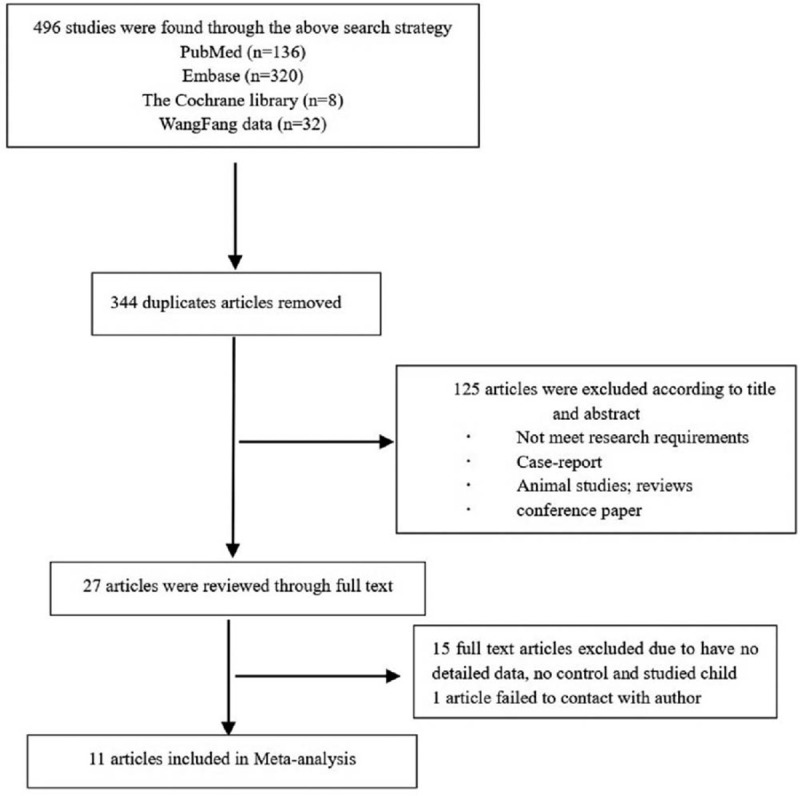
We searched PubMed, the Cochrane Library, Embase, and WanFang database for articles on MPV and neonatal sepsis, published from January 1, 1990 to December 31, 2018. We included 11 studies on 932 neonates with sepsis in this meta-analysis.
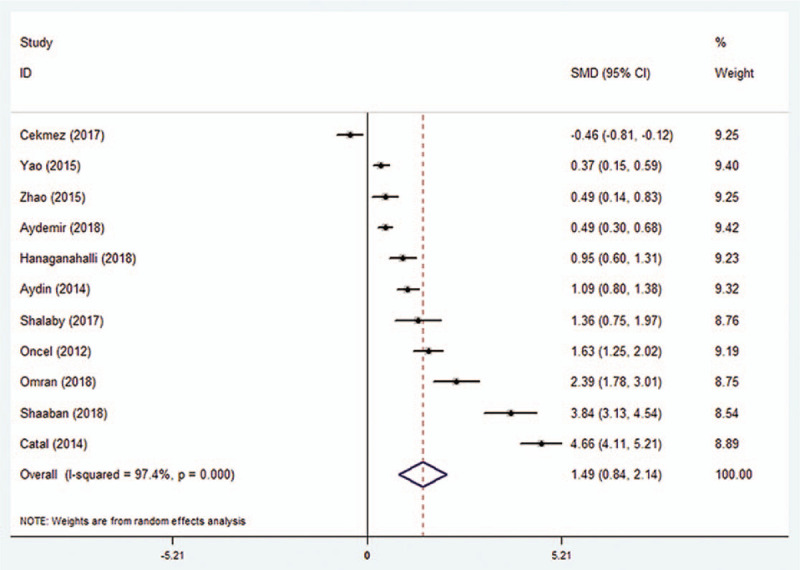
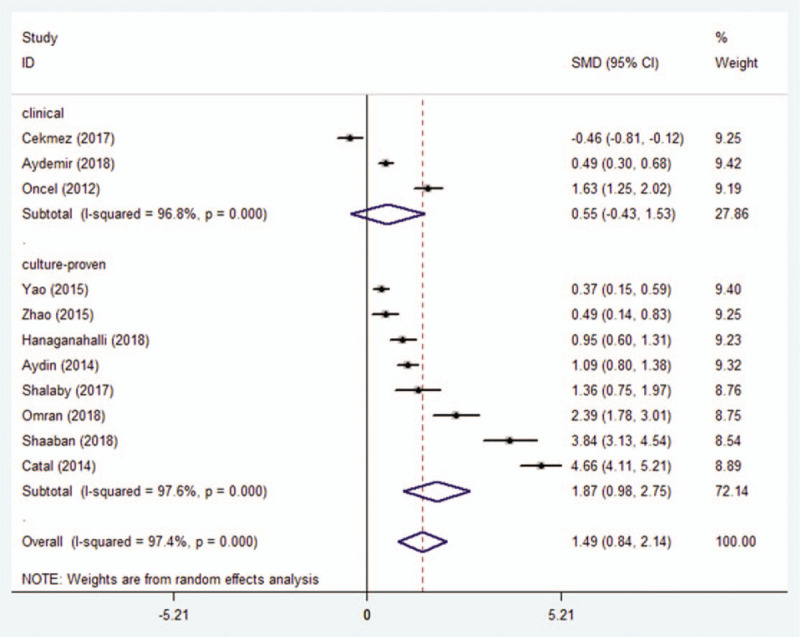
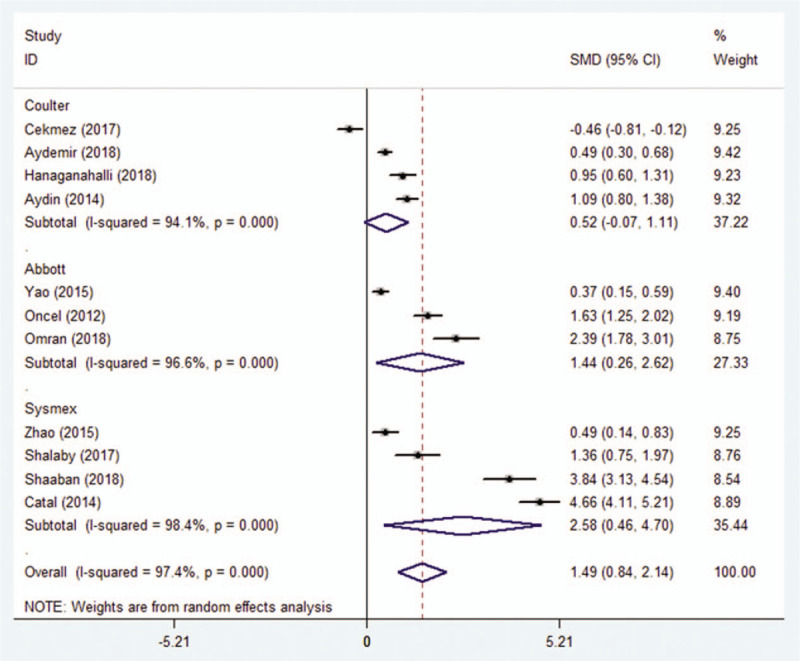
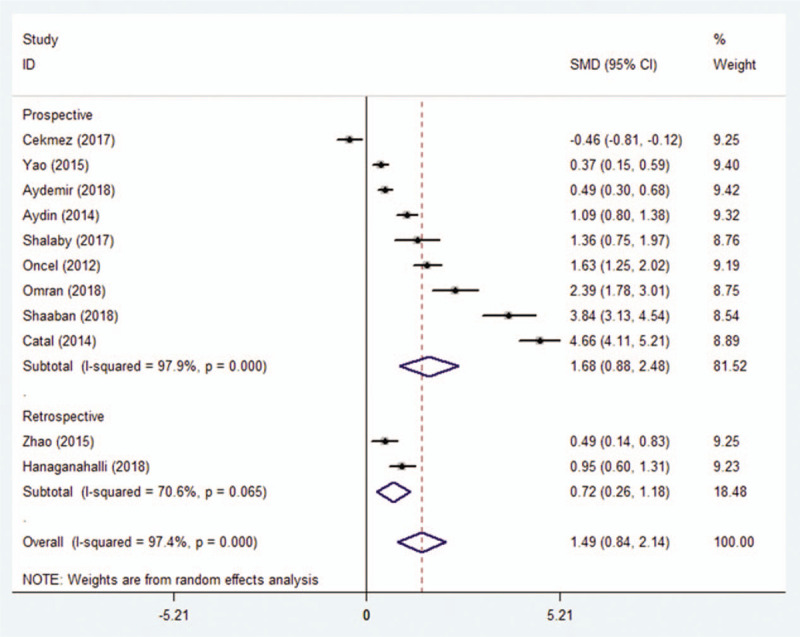
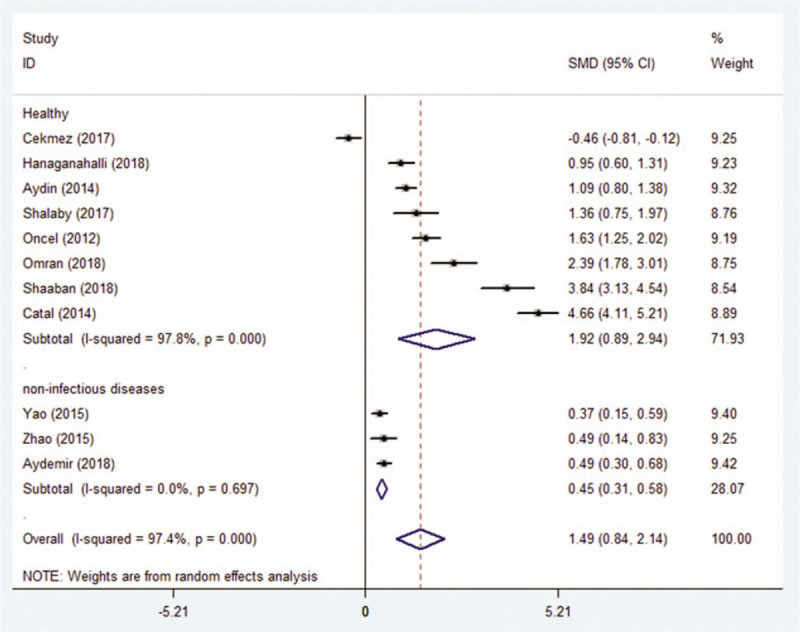
The overall meta-analysis showed that MPV was significantly higher in patients with neonatal sepsis compared with healthy controls. Subgroup analysis revealed that the type of diagnostic criteria, analyzer, analyte, and controls used in the studies affected the difference in MPV between patients and healthy controls.
MPV was significantly higher in the neonatal sepsis group compared to the control group. Therefore, in clinical practice, MPV could be used as an indicator for the early diagnosis of neonatal sepsis.
近年来,越来越多的研究已将平均血小板体积(MPV)确定为新生儿败血症的预测指标。然而,这些研究大多集中在单一地区,因此,研究结果仍无定论。在本研究中,我们旨在通过系统评价和荟萃分析评估MPV作为新生儿败血症生物学指标的潜力。
我们检索了PubMed、Cochrane图书馆、Embase和万方数据库,查找1990年1月1日至2018年12月31日发表的关于MPV和新生儿败血症的文章。本荟萃分析纳入了11项针对932例败血症新生儿的研究。
总体荟萃分析表明,与健康对照组相比,新生儿败血症患者的MPV显著更高。亚组分析显示,研究中使用的诊断标准、分析仪、分析物和对照组类型影响了患者与健康对照组之间MPV的差异。
新生儿败血症组的MPV明显高于对照组。因此,在临床实践中,MPV可作为新生儿败血症早期诊断的指标。