Signal Transduction Laboratory, National Institute of Environmental Health Sciences, Research Triangle Park, Durham, NC, 27709, USA.
Biostatistics and Computational Biology Branch, National Institute of Environmental Health Sciences, Research Triangle Park, Durham, NC, 27709, USA.
Nat Commun. 2020 Aug 7;11(1):3978. doi: 10.1038/s41467-020-17818-w.
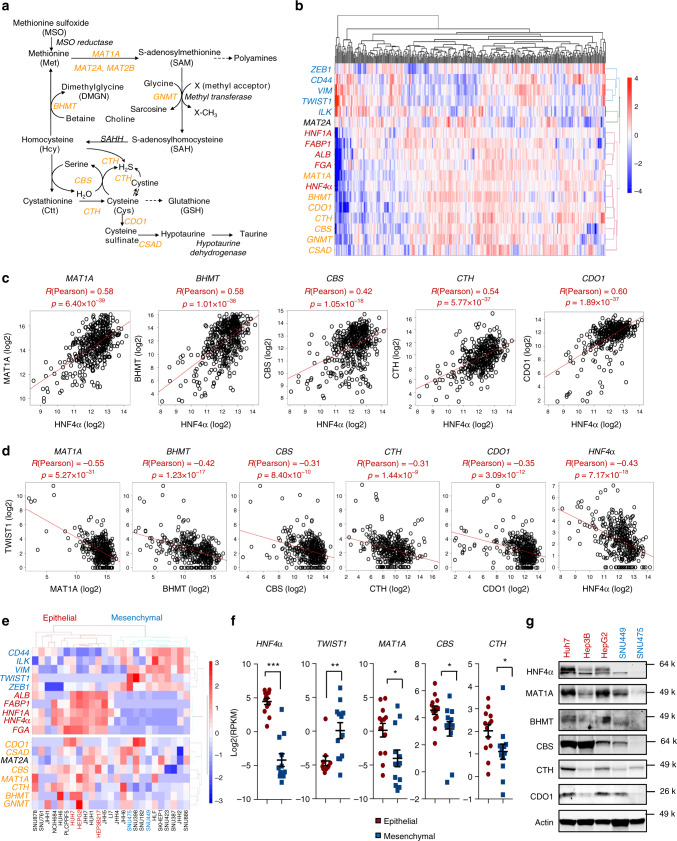
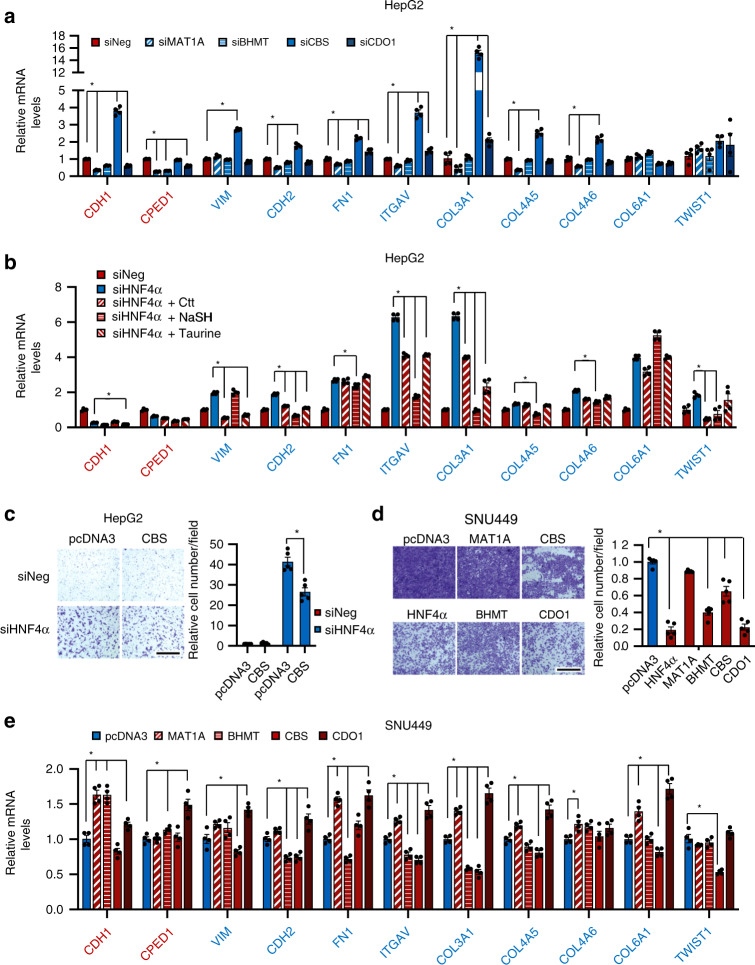
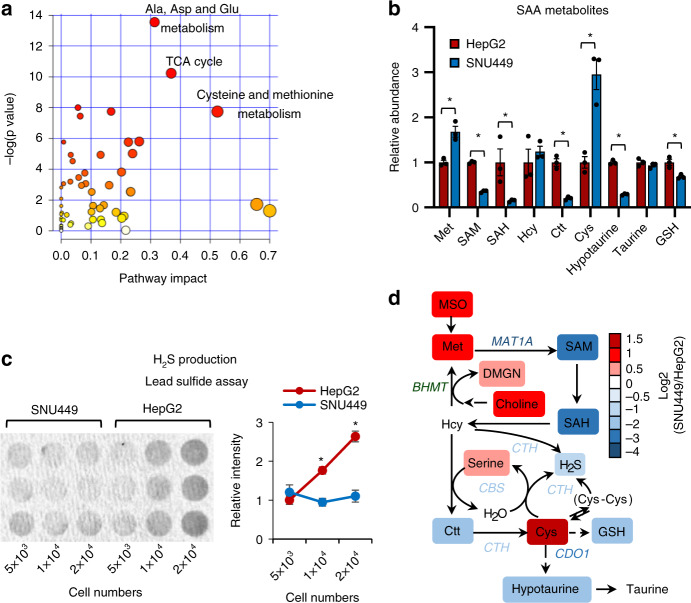
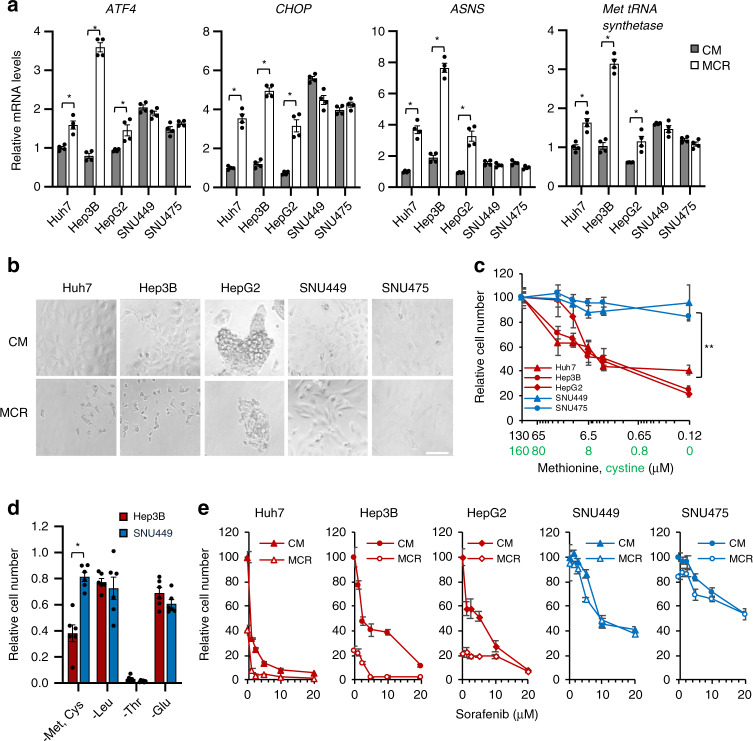
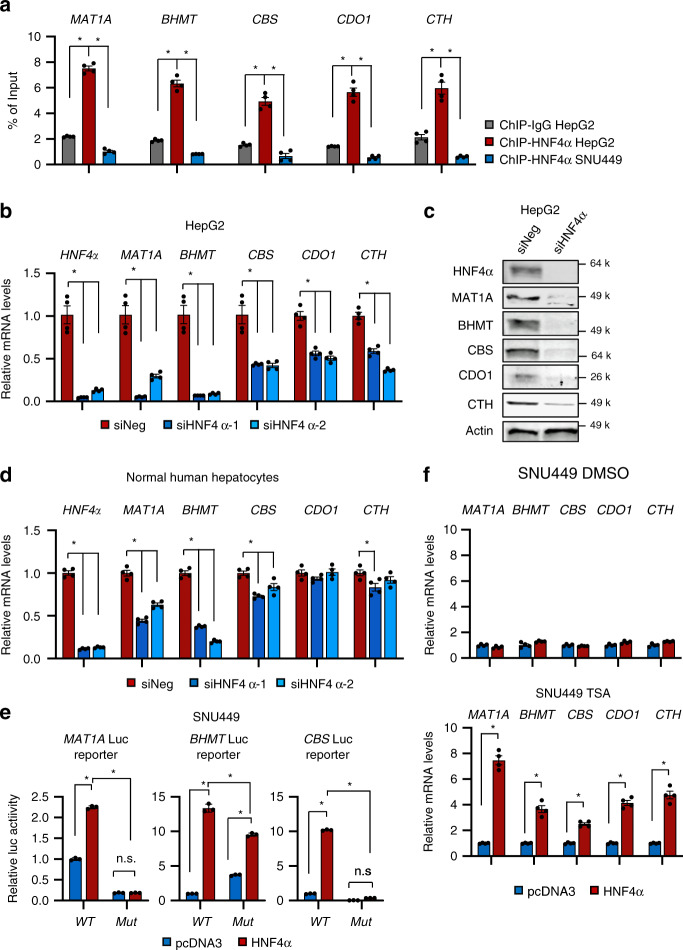
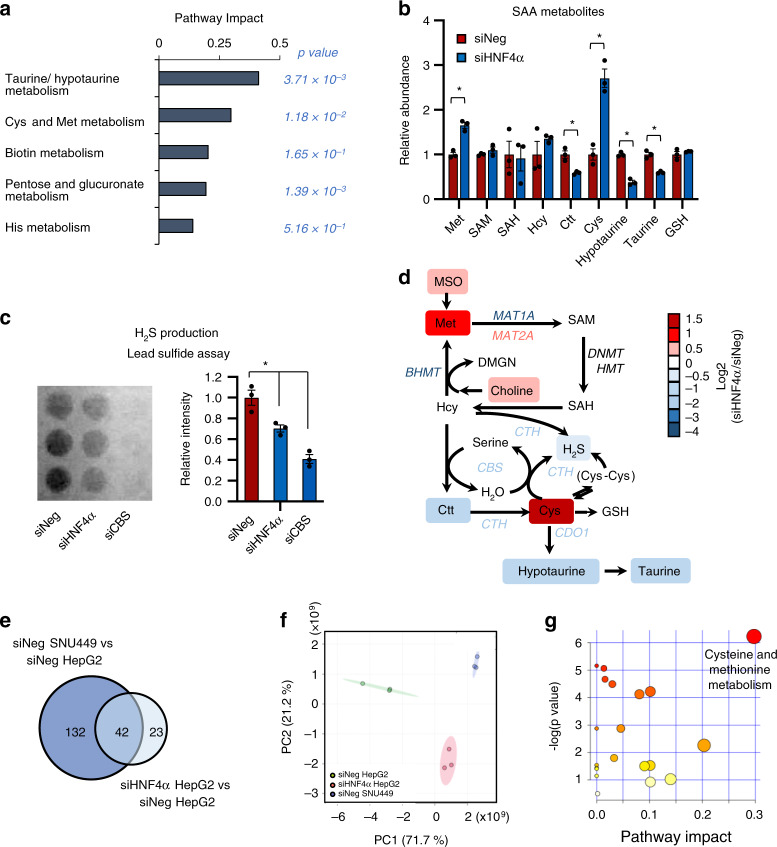
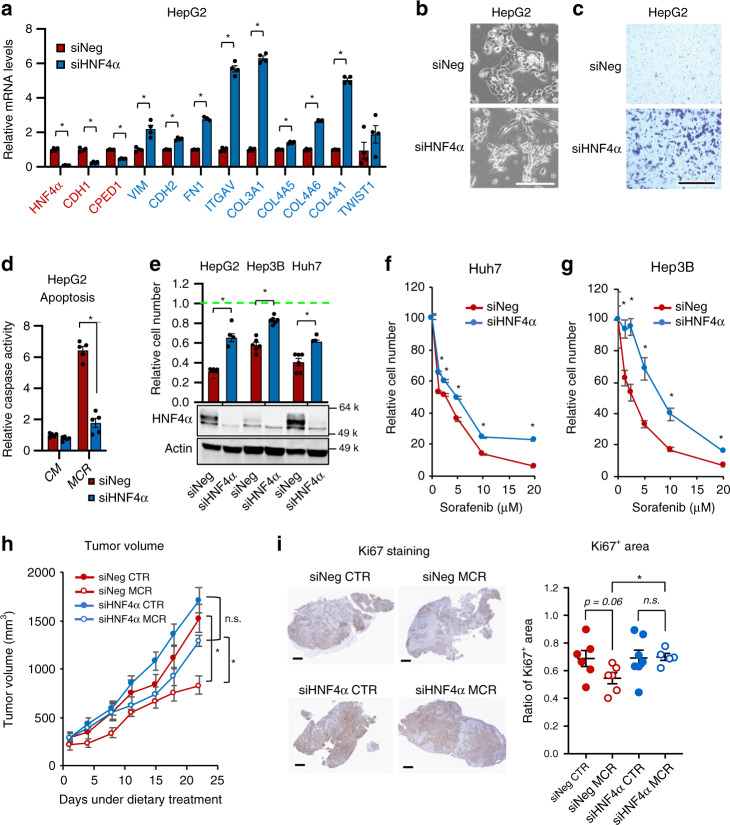
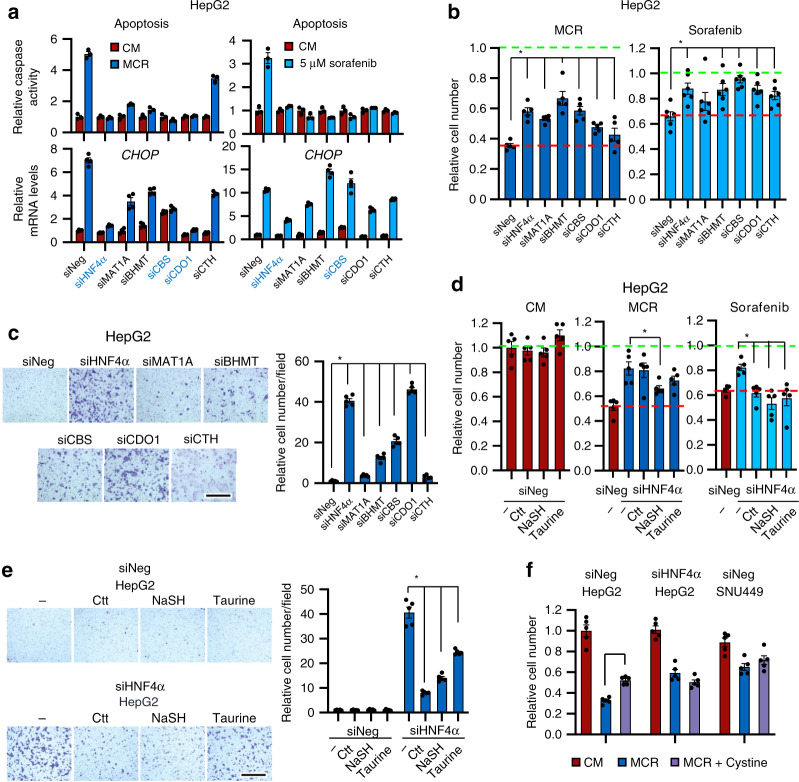
Methionine restriction, a dietary regimen that protects against metabolic diseases and aging, represses cancer growth and improves cancer therapy. However, the response of different cancer cells to this nutritional manipulation is highly variable, and the molecular determinants of this heterogeneity remain poorly understood. Here we report that hepatocyte nuclear factor 4α (HNF4α) dictates the sensitivity of liver cancer to methionine restriction. We show that hepatic sulfur amino acid (SAA) metabolism is under transcriptional control of HNF4α. Knocking down HNF4α or SAA enzymes in HNF4α-positive epithelial liver cancer lines impairs SAA metabolism, increases resistance to methionine restriction or sorafenib, promotes epithelial-mesenchymal transition, and induces cell migration. Conversely, genetic or metabolic restoration of the transsulfuration pathway in SAA metabolism significantly alleviates the outcomes induced by HNF4α deficiency in liver cancer cells. Our study identifies HNF4α as a regulator of hepatic SAA metabolism that regulates the sensitivity of liver cancer to methionine restriction.
限制蛋氨酸摄入是一种饮食方案,它可以预防代谢性疾病和衰老,抑制肿瘤生长并改善癌症治疗效果。然而,不同癌细胞对这种营养干预的反应具有高度的可变性,其异质性的分子决定因素仍知之甚少。在这里,我们报告称,肝细胞核因子 4α(HNF4α)决定了肝癌对蛋氨酸限制的敏感性。我们发现,肝脏硫氨基酸(SAA)代谢受到 HNF4α 的转录控制。敲低 HNF4α 或 HNF4α 阳性上皮性肝癌细胞中的 SAA 酶会损害 SAA 代谢,增加对蛋氨酸限制或索拉非尼的耐药性,促进上皮-间充质转化,并诱导细胞迁移。相反,在 SAA 代谢中恢复转硫途径的遗传或代谢功能可显著缓解肝癌细胞中 HNF4α 缺乏引起的后果。我们的研究确定了 HNF4α 是肝脏 SAA 代谢的调节剂,它调节肝癌对蛋氨酸限制的敏感性。