Siegfried Weller Institute, BG Trauma Clinic, Eberhard Karls University Tübingen, 72076 Tübingen, Germany.
Department of Hepatobiliary Surgery and Visceral Transplantation, University of Leipzig, 04103 Leipzig, Germany.
Int J Mol Sci. 2019 Jan 16;20(2):347. doi: 10.3390/ijms20020347.
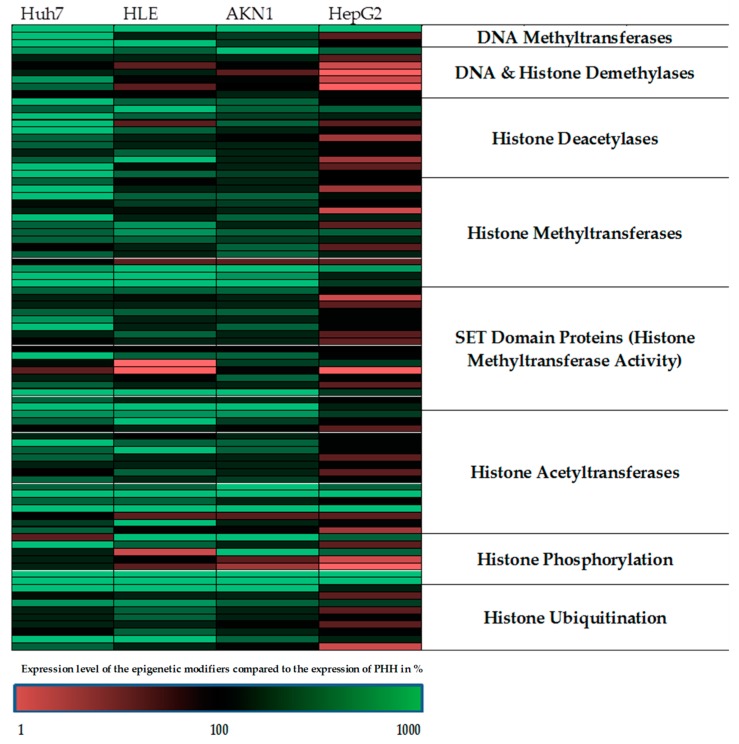
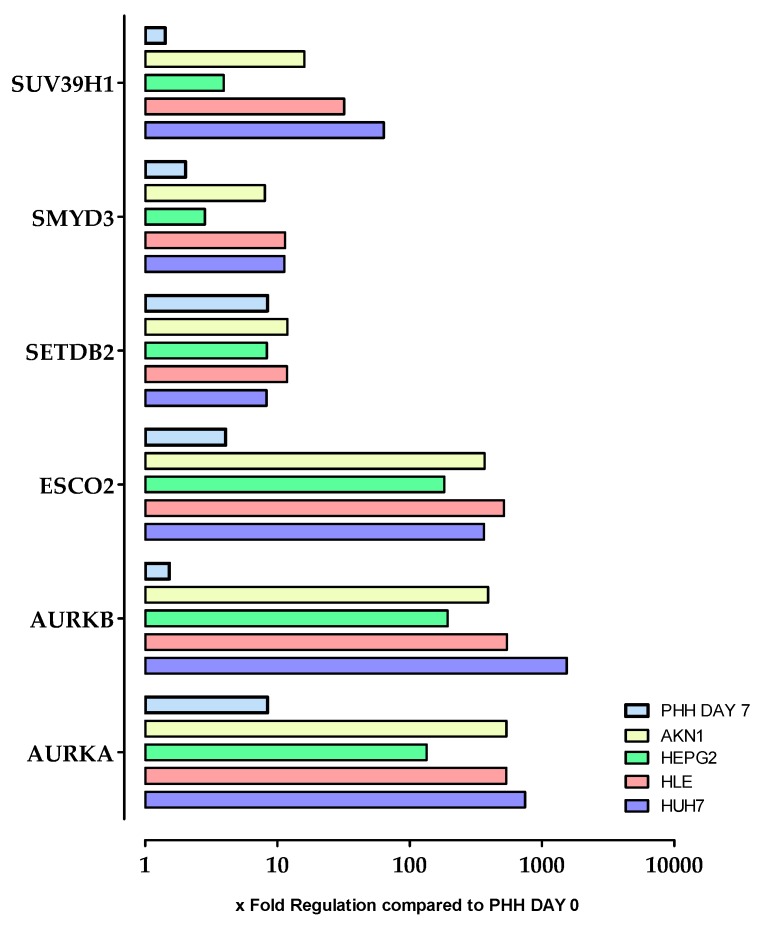
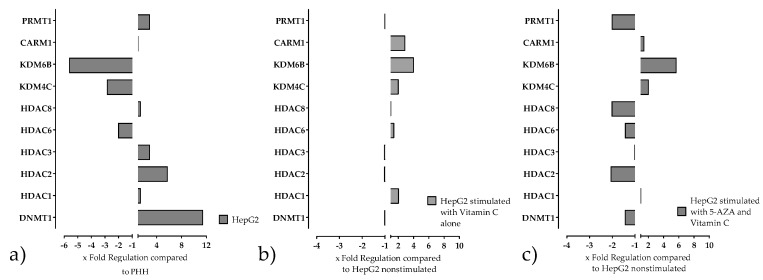
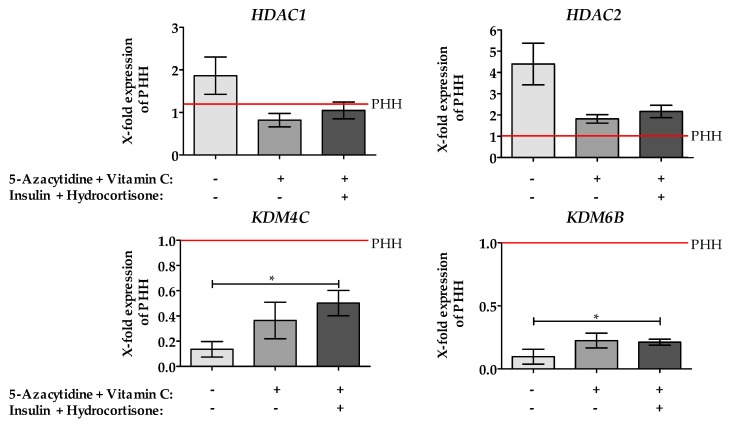
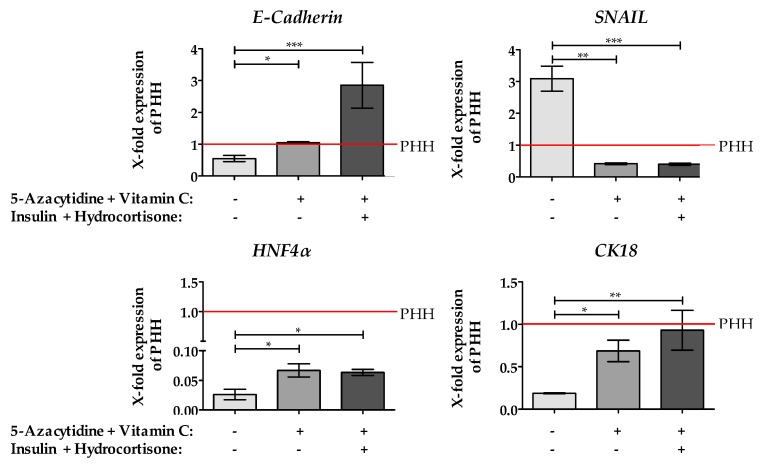
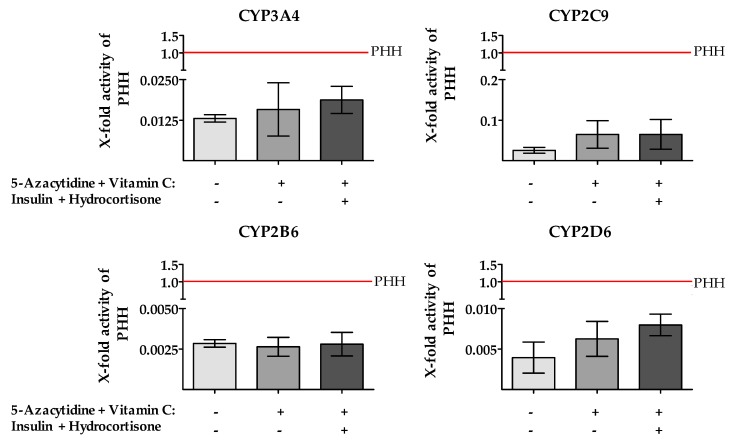
Although human liver tumor cells have reduced metabolic functions as compared to primary human hepatocytes (PHH) they are widely used for pre-screening tests of drug metabolism and toxicity. The aim of the present study was to modify liver cancer cell lines in order to improve their drug-metabolizing activities towards PHH. It is well-known that epigenetics is strongly modified in tumor cells and that epigenetic regulators influence the expression and function of Cytochrome P450 (CYP) enzymes through altering crucial transcription factors responsible for drug-metabolizing enzymes. Therefore, we screened the epigenetic status of four different liver cancer cell lines (Huh7, HLE, HepG2 and AKN-1) which were reported to have metabolizing drug activities. Our results showed that HepG2 cells demonstrated the highest similarity compared to PHH. Thus, we modified the epigenetic status of HepG2 cells towards 'normal' liver cells by 5-Azacytidine (5-AZA) and Vitamin C exposure. Then, mRNA expression of Epithelial-mesenchymal transition (EMT) marker SNAIL and CYP enzymes were measured by PCR and determinate specific drug metabolites, associated with CYP enzymes by LC/MS. Our results demonstrated an epigenetic shift in HepG2 cells towards PHH after exposure to 5-AZA and Vitamin C which resulted in a higher expression and activity of specific drug metabolizing CYP enzymes. Finally, we observed that 5-AZA and Vitamin C led to an increased expression of Hepatocyte nuclear factor 4α (HNF4α) and E-Cadherin and a significant down regulation of Snail1 (SNAIL), the key transcriptional repressor of E-Cadherin. Our study shows, that certain phase I genes and their enzyme activities are increased by epigenetic modification in HepG2 cells with a concomitant reduction of EMT marker gene SNAIL. The enhancing of liver specific functions in hepatoma cells using epigenetic modifiers opens new opportunities for the usage of cell lines as a potential liver in vitro model for drug testing and development.
尽管与原代人肝细胞(PHH)相比,人肝癌细胞的代谢功能降低,但它们被广泛用于药物代谢和毒性的预筛选测试。本研究的目的是修饰肝癌细胞系,以提高其对 PHH 的药物代谢活性。众所周知,肿瘤细胞中的表观遗传修饰强烈改变,并且表观遗传调节剂通过改变负责药物代谢酶的关键转录因子来影响细胞色素 P450(CYP)酶的表达和功能。因此,我们筛选了四种不同肝癌细胞系(Huh7、HLE、HepG2 和 AKN-1)的表观遗传状态,这些细胞系被报道具有代谢药物的活性。我们的结果表明,HepG2 细胞与 PHH 的相似性最高。因此,我们通过 5-氮杂胞苷(5-AZA)和维生素 C 暴露将 HepG2 细胞的表观遗传状态修饰为“正常”肝细胞。然后,通过 PCR 测量上皮-间充质转化(EMT)标志物 SNAIL 和 CYP 酶的 mRNA 表达,并通过 LC/MS 确定与 CYP 酶相关的特定药物代谢物。我们的结果表明,暴露于 5-AZA 和维生素 C 后,HepG2 细胞向 PHH 的表观遗传转变导致特定药物代谢 CYP 酶的表达和活性增加。最后,我们观察到 5-AZA 和维生素 C 导致肝核因子 4α(HNF4α)和 E-钙粘蛋白的表达增加,Snail1(SNAIL)的表达显著下调,Snail1 是 E-钙粘蛋白的关键转录抑制因子。我们的研究表明,通过 HepG2 细胞的表观遗传修饰,某些 I 相基因及其酶活性增加,同时 EMT 标志物基因 SNAIL 减少。使用表观遗传修饰剂增强肝癌细胞的肝特异性功能为使用细胞系作为潜在的药物测试和开发体外肝模型开辟了新的机会。