Department of Oncology, the First Affiliated Hospital of Nanchang University, 17 Yongwaizheng Street, Nanchang, Jiangxi, 330006, People's Republic of China.
J Exp Clin Cancer Res. 2020 Aug 8;39(1):151. doi: 10.1186/s13046-020-01660-5.
Pancreatic cancer (PC) is one of the most aggressive cancers and has an extremely poor prognosis worldwide. Long noncoding RNA (lncRNA) has been reported to be a potential prognostic biomarker in the initiation and prognosis of PC. Nevertheless, the biological functions and the detailed molecular mechanism of LINC00514 in PC remain unclear.
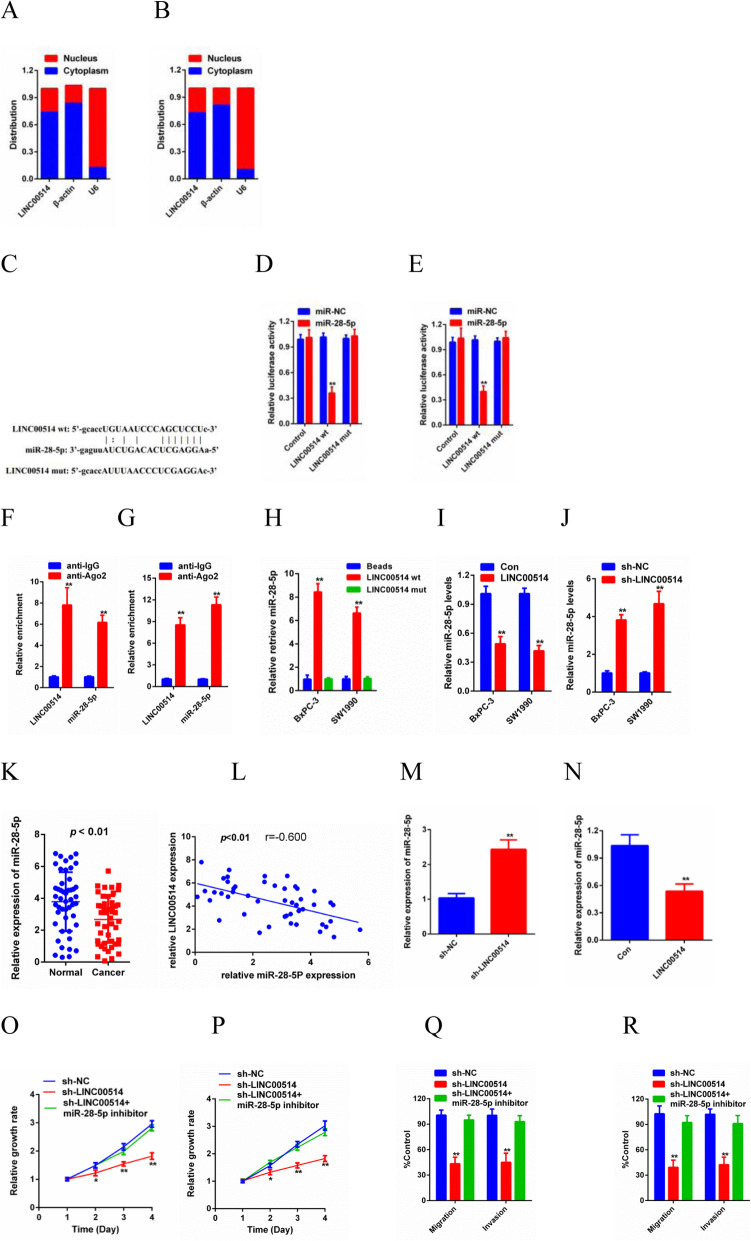
We measured the expression level of LINC00514 in PC tissues and cell lines by quantitative real-time PCR. Gain- and loss-of-function experiments were performed to explore the bioeffects of LINC00514 on PC development both in vitro and in vivo. Subcellular fractionation, luciferase reporter assay, RNA immunoprecipitation assay, pull-down assay and western blotting were performed to investigate the oncogenic molecular mechanisms of LINC00514.
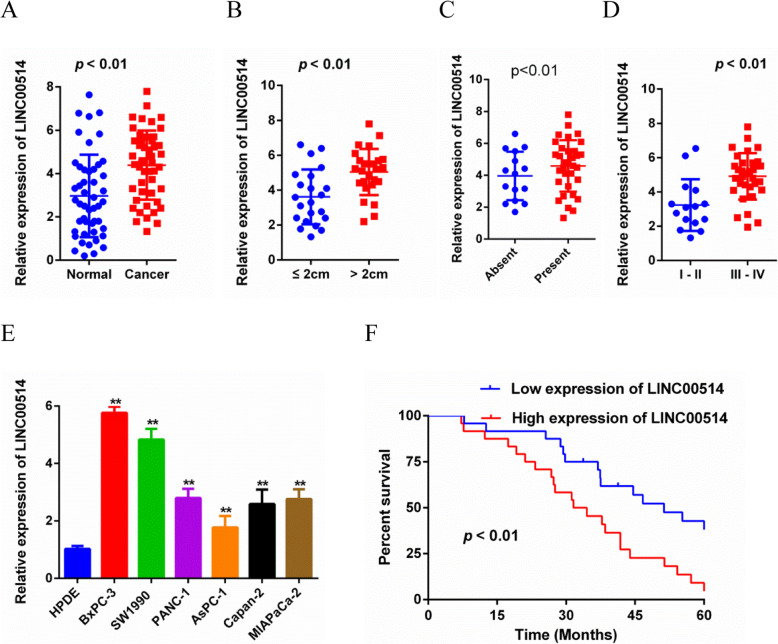
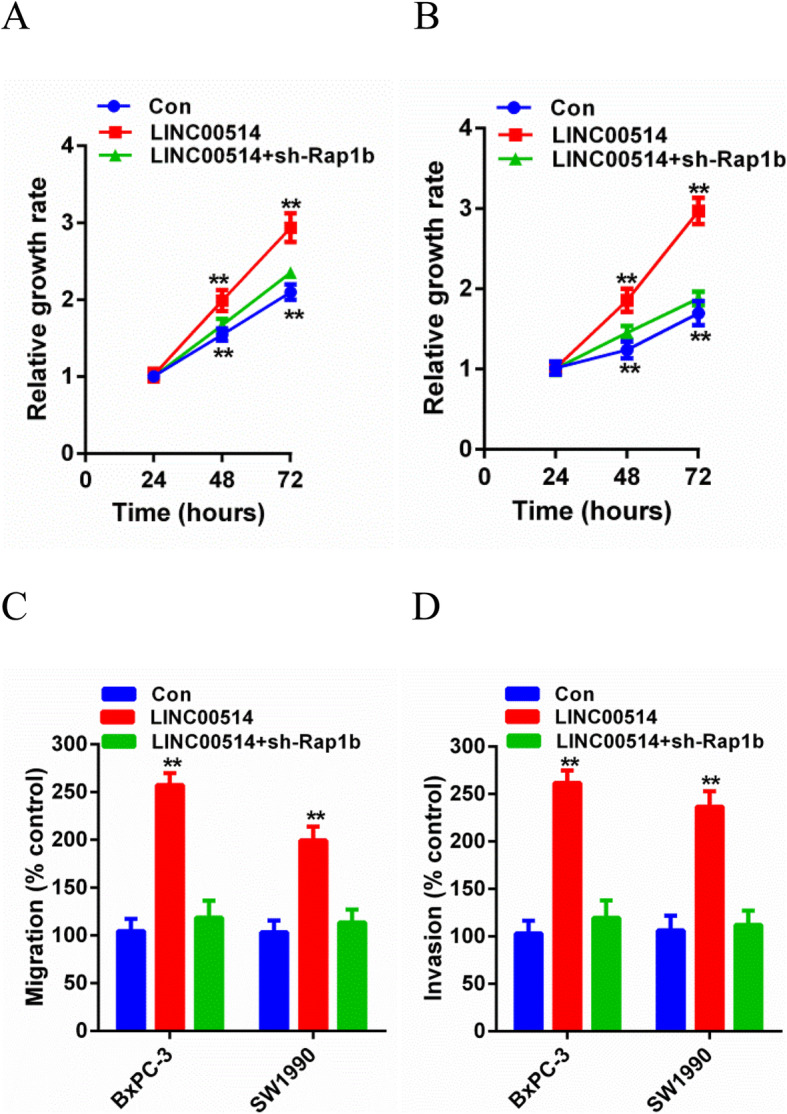
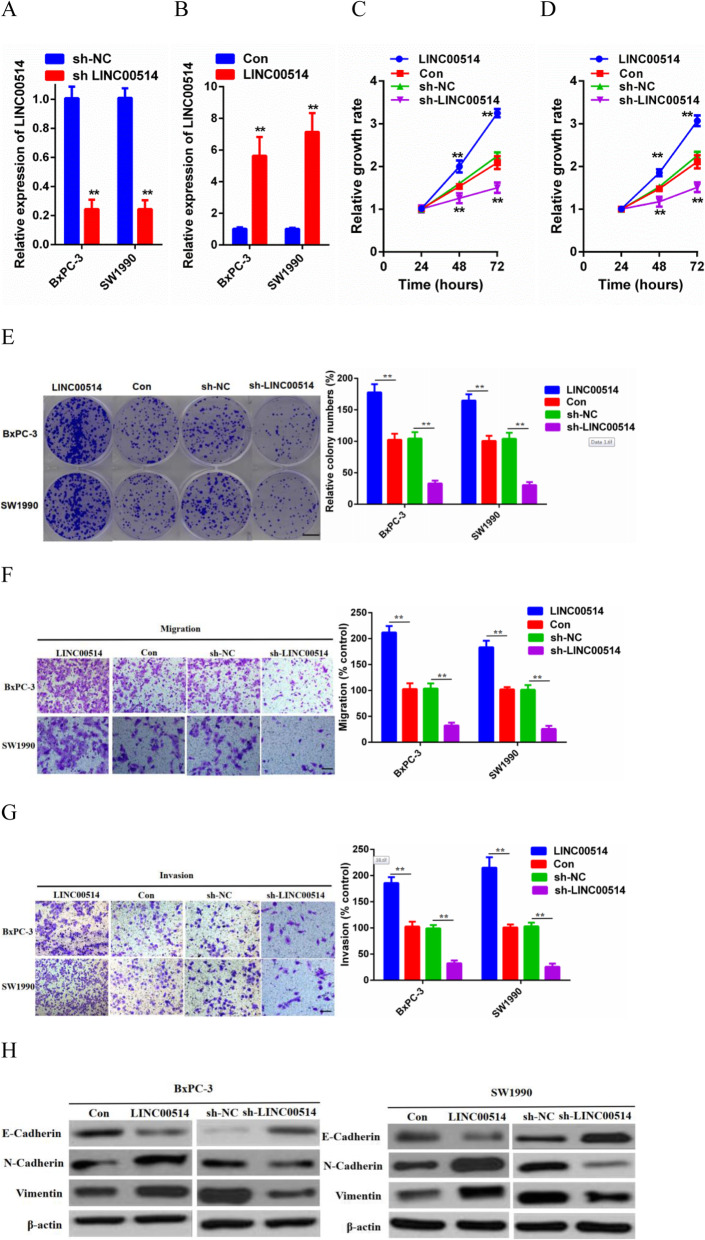
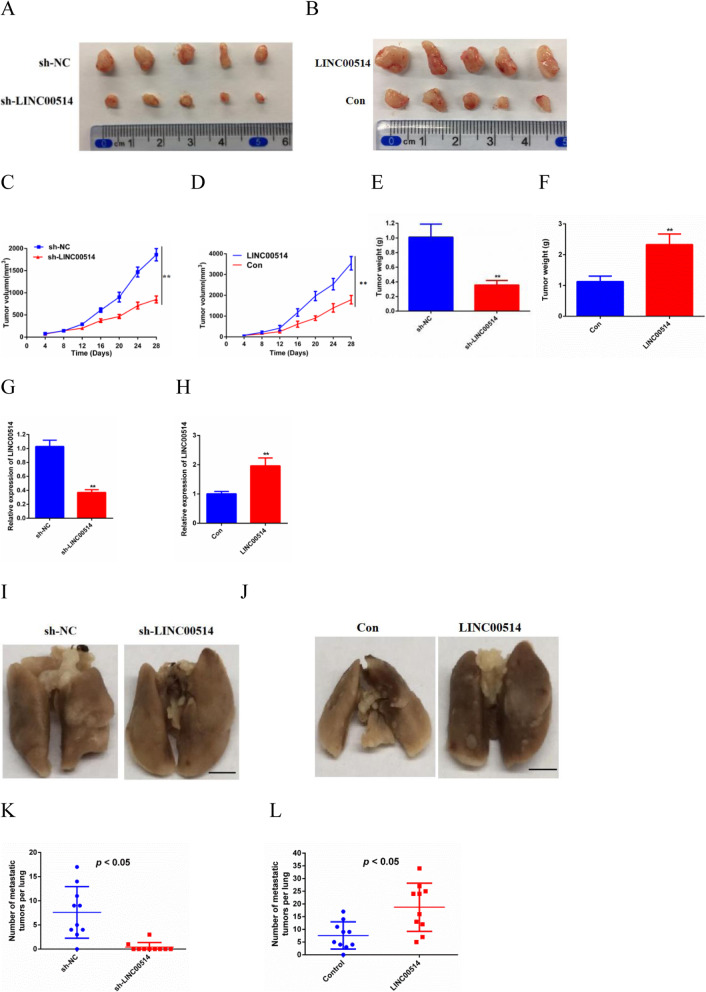
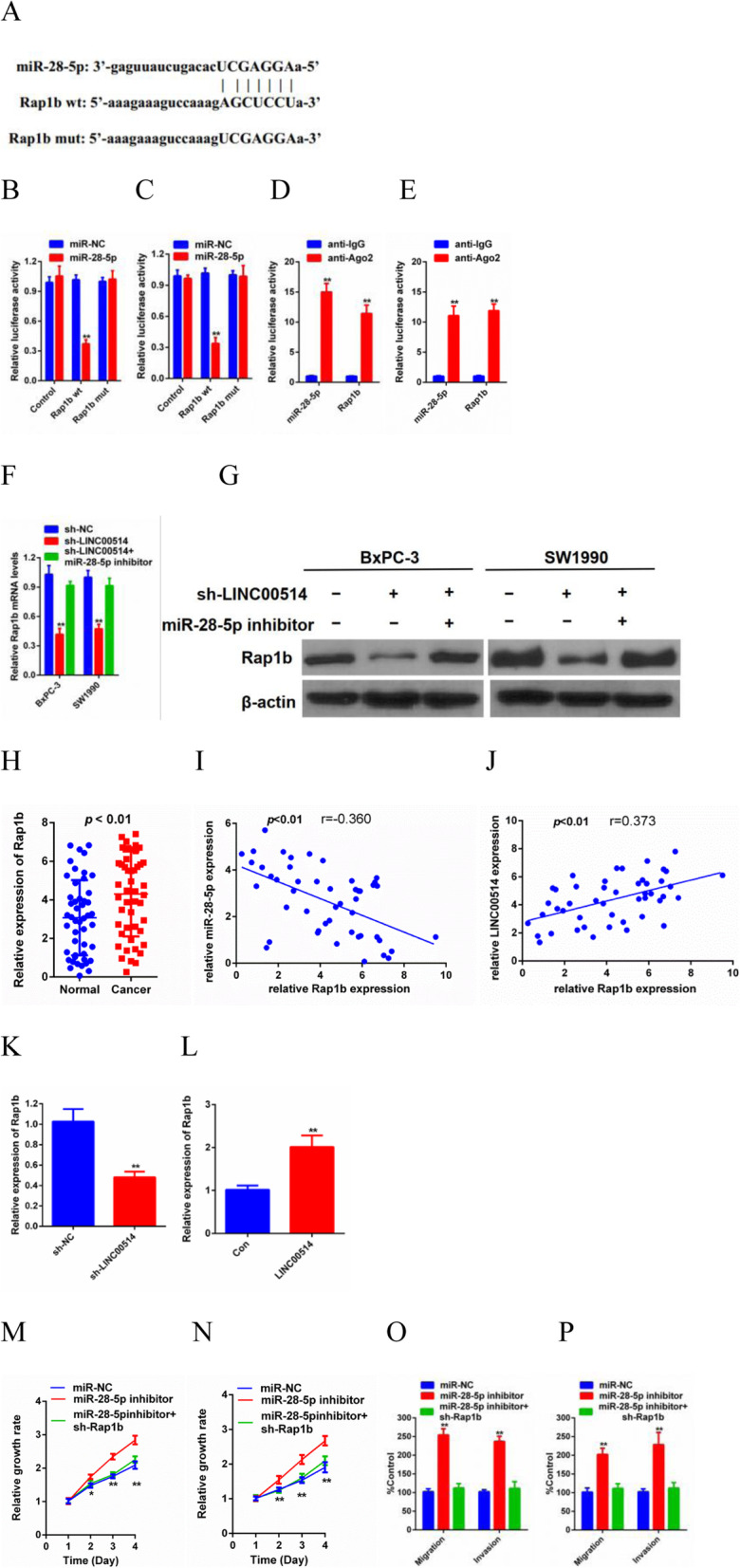
In this study, LINC00514 was shown to be upregulated in PC tissues and cell lines. Increased LINC00514 expression was significantly associated with the clinical progression and prognosis of PC patients. In addition, silencing LINC00514 inhibited PC cell proliferation, migration and invasion, while LINC00514 overexpression promoted these processes. Moreover, LINC00514 knockdown remarkably inhibited PC development and metastasis in vivo. Deeper investigations indicated that LINC00514 acted as a sponge for microRNA-28-5p (miR-28-5p) in PC and that Rap1b was a downstream target of miR-28-5p. Furthermore, the positive correlation of LINC00514 and Rap1b and the negative correlation between miR-28-5p and LINC00514 (or Rap1b) were revealed. Based on the rescue assays, Rap1b inhibition partially suppressed the oncogenic effect of LINC00514 overexpression on PC cell proliferation, migration and invasion.
This study is the first to characterize the oncogenic function of the long noncoding RNA LINC00514 in pancreatic cancer progression by acting as a competing endogenous RNA (ceRNA) of miR-28-5p to upregulate Rap1b expression. Understanding this molecular mechanism might contribute to further discoveries of better diagnostic and therapeutic options for pancreatic cancer.
胰腺癌(PC)是最具侵袭性的癌症之一,在全球范围内预后极差。长链非编码 RNA(lncRNA)已被报道为 PC 发生和预后的潜在预后生物标志物。然而,LINC00514 在 PC 中的生物学功能和详细分子机制尚不清楚。
我们通过定量实时 PCR 测量了 PC 组织和细胞系中 LINC00514 的表达水平。通过体外和体内的增益和缺失功能实验,研究了 LINC00514 对 PC 发展的生物学效应。进行亚细胞分离、荧光素酶报告基因检测、RNA 免疫沉淀检测、下拉检测和 Western blot 分析,以研究 LINC00514 的致癌分子机制。
本研究表明,LINC00514 在 PC 组织和细胞系中上调。LINC00514 表达的增加与 PC 患者的临床进展和预后显著相关。此外,沉默 LINC00514 抑制了 PC 细胞的增殖、迁移和侵袭,而 LINC00514 的过表达则促进了这些过程。此外,LINC00514 敲低显著抑制了体内 PC 的发展和转移。进一步研究表明,LINC00514 在 PC 中作为 microRNA-28-5p(miR-28-5p)的海绵,Rap1b 是 miR-28-5p 的下游靶标。此外,还揭示了 LINC00514 与 Rap1b 的正相关以及 miR-28-5p 与 LINC00514(或 Rap1b)的负相关。基于挽救实验,Rap1b 抑制部分抑制了 LINC00514 过表达对 PC 细胞增殖、迁移和侵袭的致癌作用。
本研究首次通过作为 miR-28-5p 的竞争性内源 RNA(ceRNA)来上调 Rap1b 表达,描述了长链非编码 RNA LINC00514 在胰腺癌细胞增殖中的致癌功能。了解这一分子机制可能有助于进一步发现更好的胰腺癌诊断和治疗选择。