Department of Biology, New York University, New York, NY 10012, United States of America.
Beijing Center for Disease Prevention and Control, Beijing 100013, China; Beijing Research Center for Preventive Medicine, Beijing, China; School of Public Health, Capital Medical University, Beijing, China.
Math Biosci. 2020 Oct;328:108438. doi: 10.1016/j.mbs.2020.108438. Epub 2020 Aug 6.
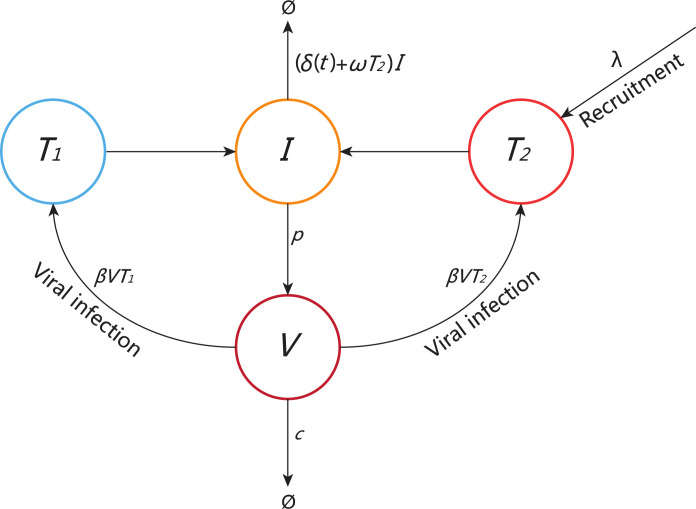
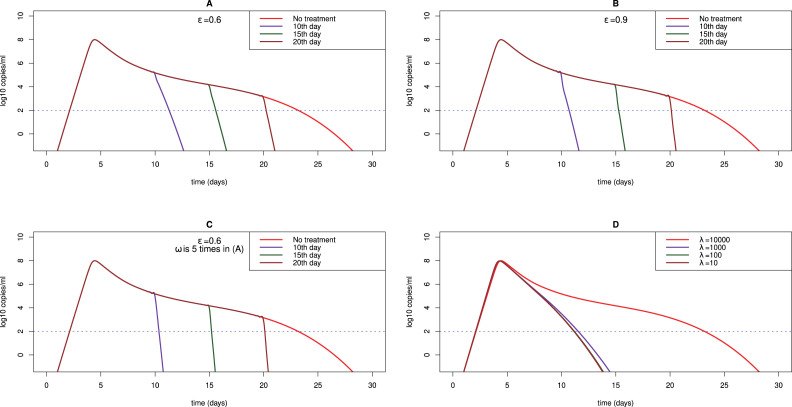
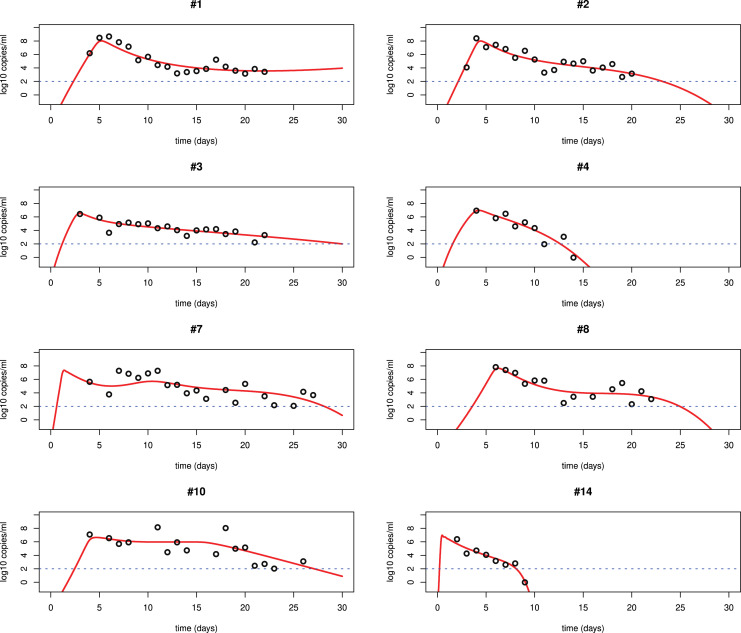
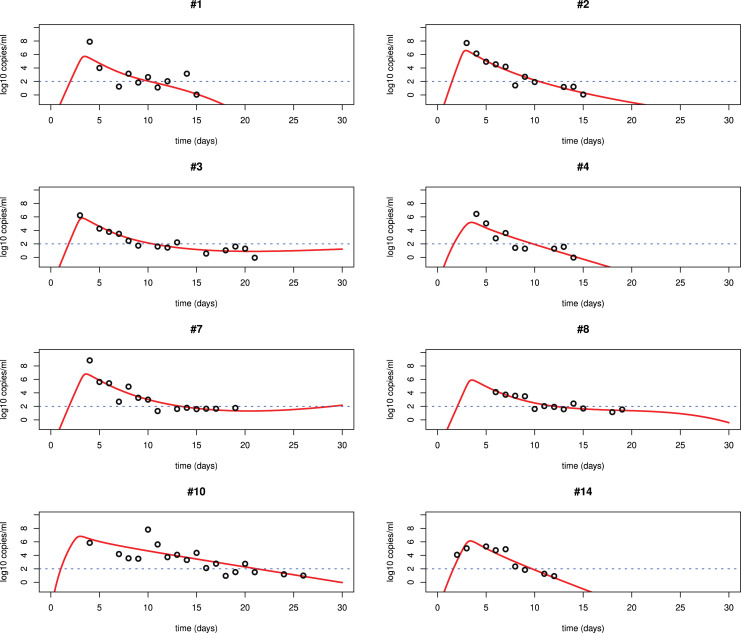
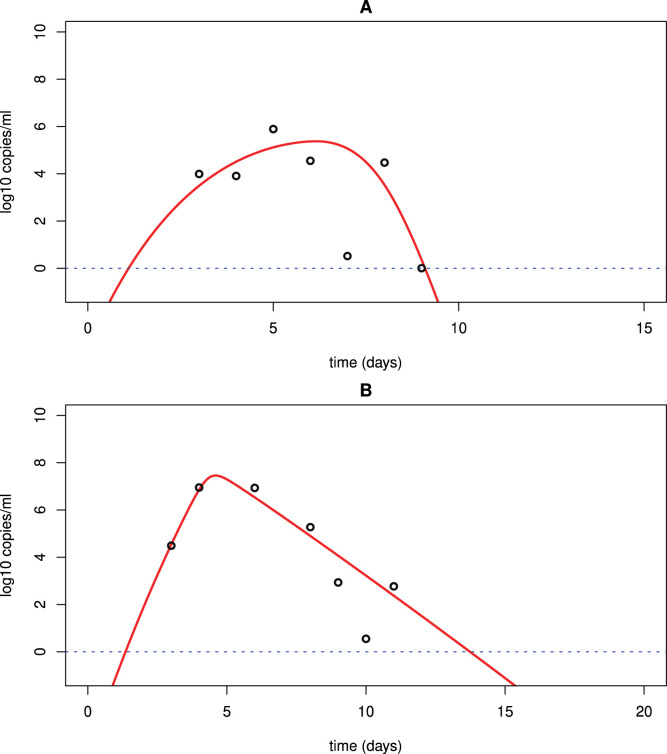
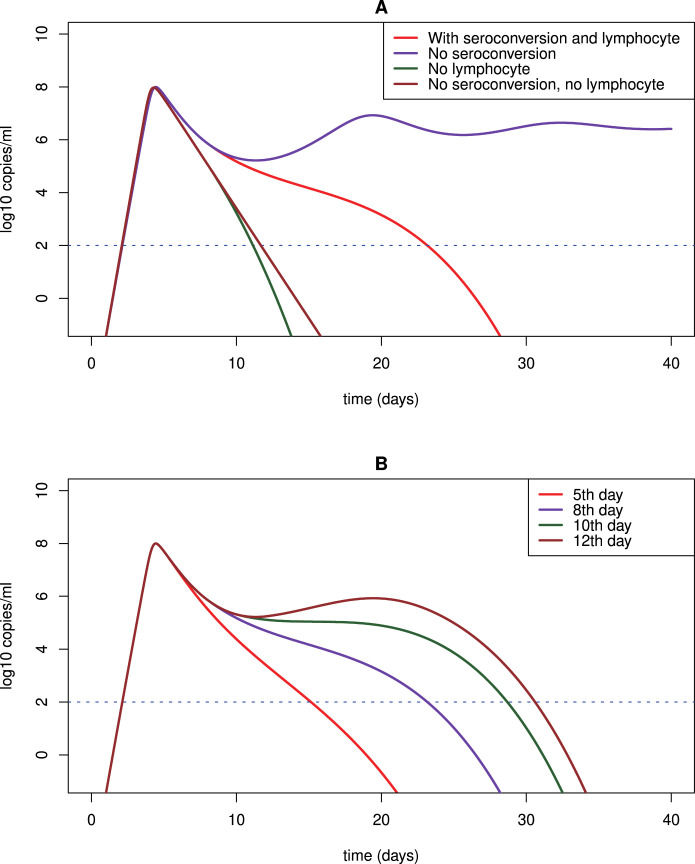
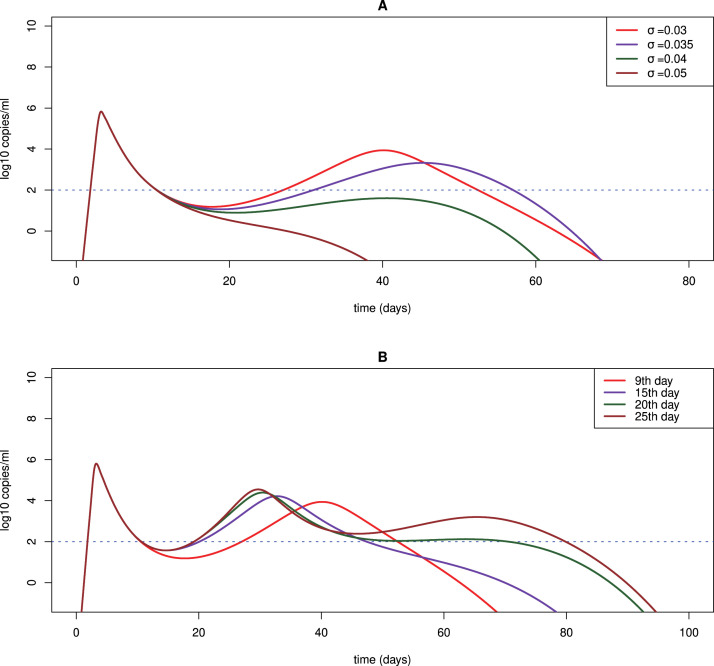
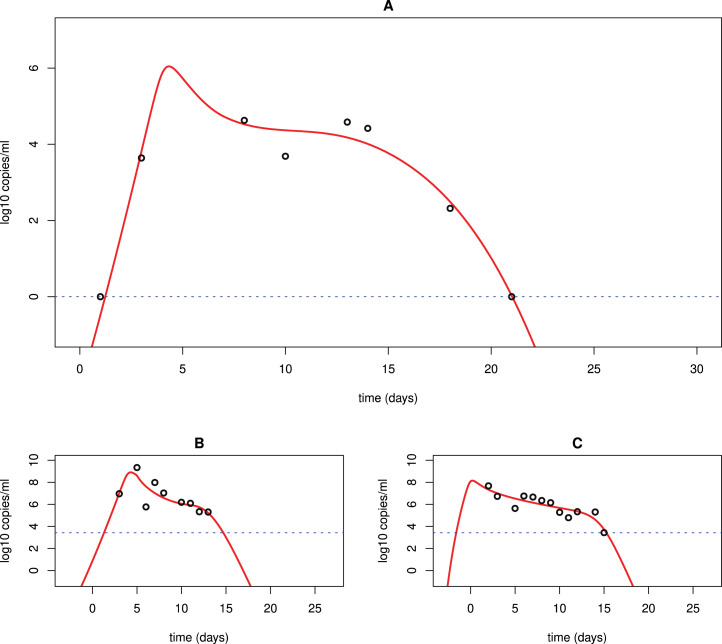
Coronavirus disease 2019 (COVID-19), an infectious disease caused by the infection of severe acute respiratory syndrome coronavirus 2 (SARS-CoV-2), is spreading and causing the global coronavirus pandemic. The viral dynamics of SARS-CoV-2 infection have not been quantitatively investigated. In this paper, we use mathematical models to study the pathogenic features of SARS-CoV-2 infection by examining the interaction between the virus, cells and immune responses. Models are fit to the data of SARS-CoV-2 infection in patients and non-human primates. Data fitting and numerical simulation show that viral dynamics of SARS-CoV-2 infection have a few distinct stages. In the initial stage, viral load increases rapidly and reaches the peak, followed by a plateau phase possibly generated by lymphocytes as a secondary target of infection. In the last stage, viral load declines due to the emergence of adaptive immune responses. When the initiation of seroconversion is late or slow, the model predicts viral rebound and prolonged viral persistence, consistent with the observation in non-human primates. Using the model we also evaluate the effect of several potential therapeutic interventions for SARS-CoV-2 infection. Model simulation shows that anti-inflammatory treatments or antiviral drugs combined with interferon are effective in reducing the duration of the viral plateau phase and diminishing the time to recovery. These results provide insights for understanding the infection dynamics and might help develop treatment strategies against COVID-19.
新型冠状病毒病(COVID-19),是一种由严重急性呼吸综合征冠状病毒 2(SARS-CoV-2)感染引起的传染病,正在全球范围内传播并引发大流行。SARS-CoV-2 感染的病毒动力学尚未得到定量研究。在本文中,我们使用数学模型通过检查病毒、细胞和免疫反应之间的相互作用来研究 SARS-CoV-2 感染的发病特征。通过拟合 SARS-CoV-2 感染患者和非人类灵长类动物的数据来建立模型。数据拟合和数值模拟表明,SARS-CoV-2 感染的病毒动力学具有几个不同的阶段。在初始阶段,病毒载量迅速增加并达到峰值,随后可能由于淋巴细胞作为感染的次级靶标而进入平台期。在最后阶段,由于适应性免疫反应的出现,病毒载量下降。当血清转换的开始较晚或较慢时,模型预测会出现病毒反弹和病毒持续时间延长,与非人类灵长类动物的观察结果一致。我们还使用该模型评估了几种针对 SARS-CoV-2 感染的潜在治疗干预措施的效果。模型模拟表明,抗炎治疗或抗病毒药物联合干扰素可有效减少病毒平台期的持续时间,并缩短恢复时间。这些结果为理解感染动力学提供了思路,并可能有助于制定针对 COVID-19 的治疗策略。