COREMED-Cooperative Centre for Regenerative Medicine, JOANNEUM RESEARCH Forschungsgesellschaft mbH, Graz, Austria.
Division of Plastic, Aesthetic and Reconstructive Surgery, Department of Surgery, Medical University of Graz, Graz, Austria.
Photodermatol Photoimmunol Photomed. 2020 Nov;36(6):424-432. doi: 10.1111/phpp.12597. Epub 2020 Aug 27.
DNA damage is one of the main factors responsible for photoageing and is predominantly attributed to ultraviolet irradiation (UV-R). Photoprotection by conventional sunscreens is exclusively prophylactic, and of no value, once DNA damage has occurred. As a result, the demand for DNA repair mechanisms inhibiting, reversing or delaying the pathologic events in UV-exposed skin has sparked research on anti-photoageing and strategies to improve the effect of conventional sunscreens. This review provides an overview of recent developments in DNA repair enzymes used in sunscreens and their impact on photoageing.
A systematic review of the literature, up to March 2019, was conducted using the electronic databases, PubMed and Web of Science. Quality assessment was carried out using the Newcastle-Ottawa scale (NOS) to ensure inclusion of adequate quality studies only (NOS > 5).
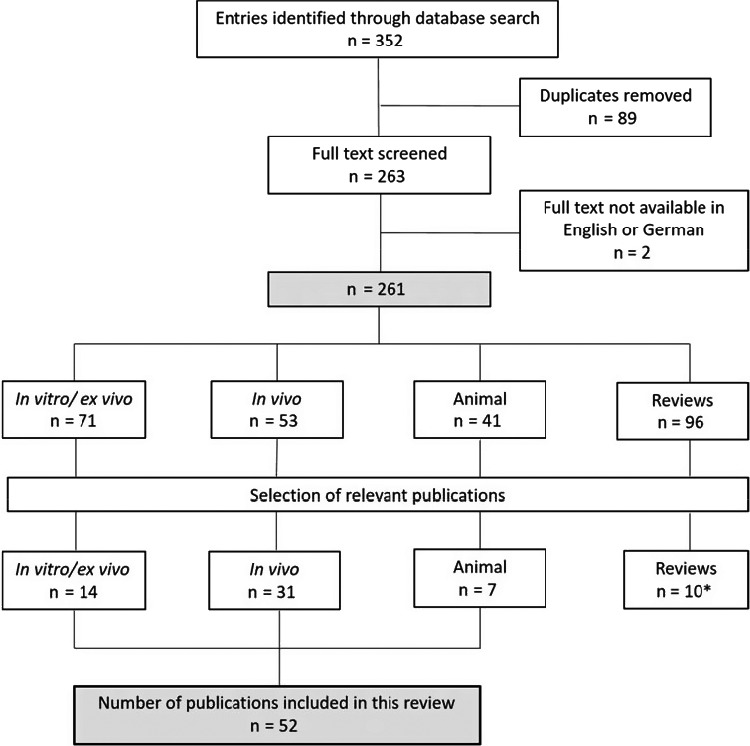
Out of the 352 publications, 52 were considered relevant to the key question and included in the present review. Two major enzymes were found to play a major role in DNA damage repair in sunscreens: photolyase and T4 endonuclease V. These enzymes are capable of identifying and removing UV-R-induced dimeric photoproducts. Clinical studies revealed that sunscreens with liposome-encapsulated types of photolyase and/or T4 endonuclease V can enhance these repair mechanisms.
There is a lack of randomized controlled trials demonstrating the efficacy of DNA repair enzymes on photoageing, or a superiority of sunscreens with DNA repair enzymes compared to conventional sunscreens. Further studies are mandatory to further reveal pathogenic factors of photoageing and possible therapeutic strategies against it.
DNA 损伤是导致光老化的主要因素之一,主要归因于紫外线辐射(UV-R)。传统防晒霜的光保护作用完全是预防性的,一旦发生 DNA 损伤,就没有价值了。因此,对抑制、逆转或延缓 UV 暴露皮肤中病理事件的 DNA 修复机制的需求,激发了对防晒和改善传统防晒霜效果的策略的研究。本综述概述了防晒霜中使用的 DNA 修复酶的最新进展及其对光老化的影响。
使用电子数据库 PubMed 和 Web of Science 对截至 2019 年 3 月的文献进行系统综述。使用纽卡斯尔-渥太华量表(NOS)进行质量评估,以确保仅纳入足够质量的研究(NOS>5)。
在 352 篇出版物中,有 52 篇被认为与关键问题相关,并包含在本综述中。发现两种主要的酶在防晒霜中的 DNA 损伤修复中起着重要作用:光解酶和 T4 内切核酸酶 V。这些酶能够识别和去除 UV-R 诱导的二聚体光产物。临床研究表明,含有脂质体包封型光解酶和/或 T4 内切核酸酶 V 的防晒霜可以增强这些修复机制。
目前缺乏随机对照试验来证明 DNA 修复酶对光老化的疗效,或 DNA 修复酶防晒霜与传统防晒霜相比具有优越性。需要进一步的研究来进一步揭示光老化的发病因素和可能的治疗策略。