Chen Yingying, Lu Dan, Churov Alexey, Fu Rong
Department of Hematology, General Hospital of Tianjin Medical University, China.
Institute of Biology, Karelian Research Centre, Russian Academy of Sciences, Petrozavodsk, Russia.
Mediators Inflamm. 2020 Jul 24;2020:6437057. doi: 10.1155/2020/6437057. eCollection 2020.
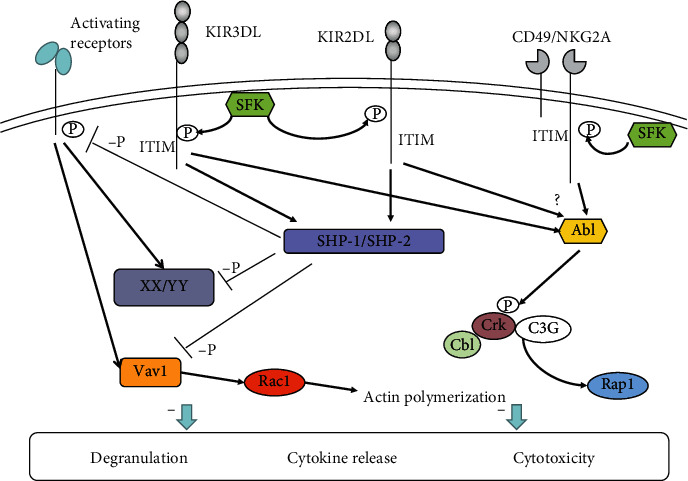
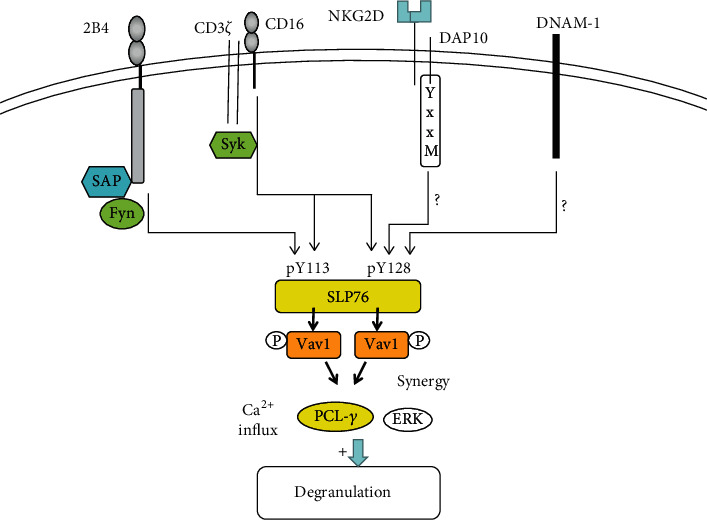
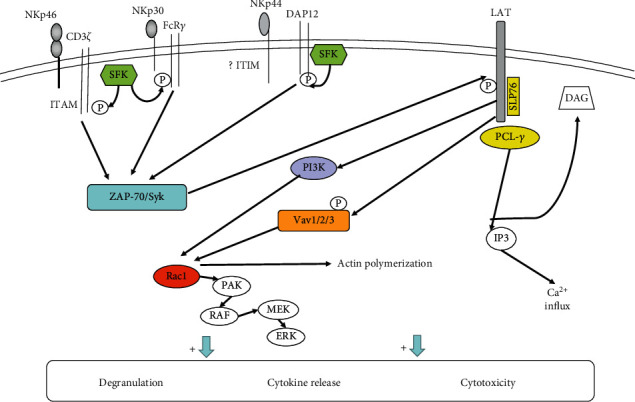
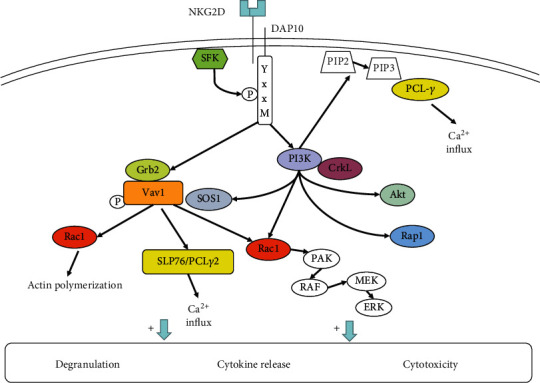
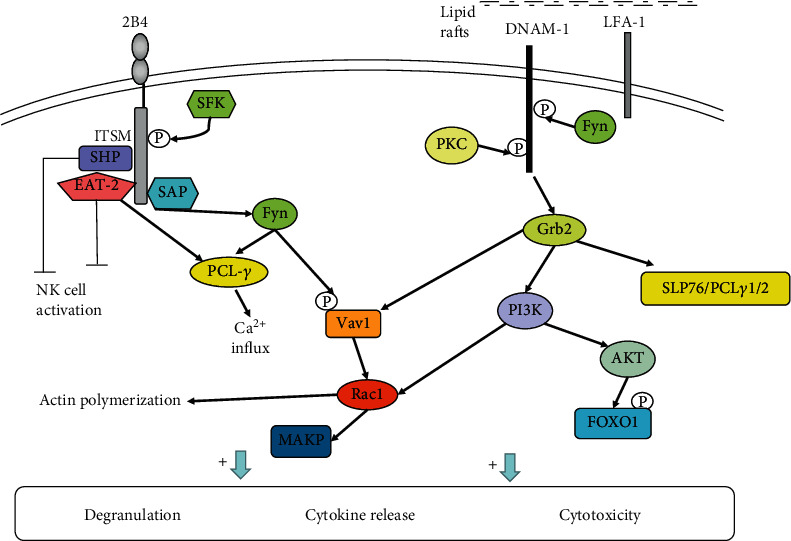
Natural killer cells (NK cells) play an important role in innate immunity. NK cells recognize self and nonself depending on the balance of activating receptors and inhibitory receptors. After binding to their ligands, NK cell receptors trigger subsequent signaling conduction and then determine whether NK is activated or inhibited. Furthermore, NK cell response includes cytotoxicity and cytokine release, which is tightly related to the activation of NK cell-activating receptors and the inhibition of inhibitory receptors on the surfaces of NK cells. The expression and function of NK cell surface receptors also alter in virus infection, tumor, and autoimmune diseases and influence the occurrence and development of diseases. So, it is important to understand the mechanism of recognition between NK receptors and their ligands in pathological conditions and the signaling pathways of NK cell receptors. This review mainly summarizes the research progress on NK cell surface receptors and their signal pathways.
自然杀伤细胞(NK细胞)在固有免疫中发挥着重要作用。NK细胞根据激活受体和抑制受体的平衡来识别自身和非自身。与配体结合后,NK细胞受体触发后续的信号传导,进而决定NK细胞是被激活还是被抑制。此外,NK细胞反应包括细胞毒性和细胞因子释放,这与NK细胞激活受体的激活以及NK细胞表面抑制受体的抑制密切相关。NK细胞表面受体的表达和功能在病毒感染、肿瘤及自身免疫性疾病中也会发生改变,并影响疾病的发生和发展。因此,了解病理条件下NK受体与其配体之间的识别机制以及NK细胞受体的信号通路具有重要意义。本综述主要总结了NK细胞表面受体及其信号通路的研究进展。