Wegner Rodney E, Abel Stephen, Colonias Athanasios
Division of Radiation Oncology, Allegheny Health Network Cancer Institute, Pittsburgh, PA 15212, USA.
Lung Cancer Manag. 2020 Apr 21;9(3):LMT32. doi: 10.2217/lmt-2020-0004.
Some patients with early stage large cell neuroendocrine carcinoma (LCNEC) of the lung are not surgical candidates and will be managed with radiotherapy. We used the national cancer database to identify predictors of stereotactic radiotherapy and compare outcomes.
MATERIALS & METHODS: We queried national cancer database for T1-2N0 LCNEC treated with radiation. Logistic regression and Cox regression identified predictors of stereotactic ablative body radiotherapy (SABR) and survival, respectively.
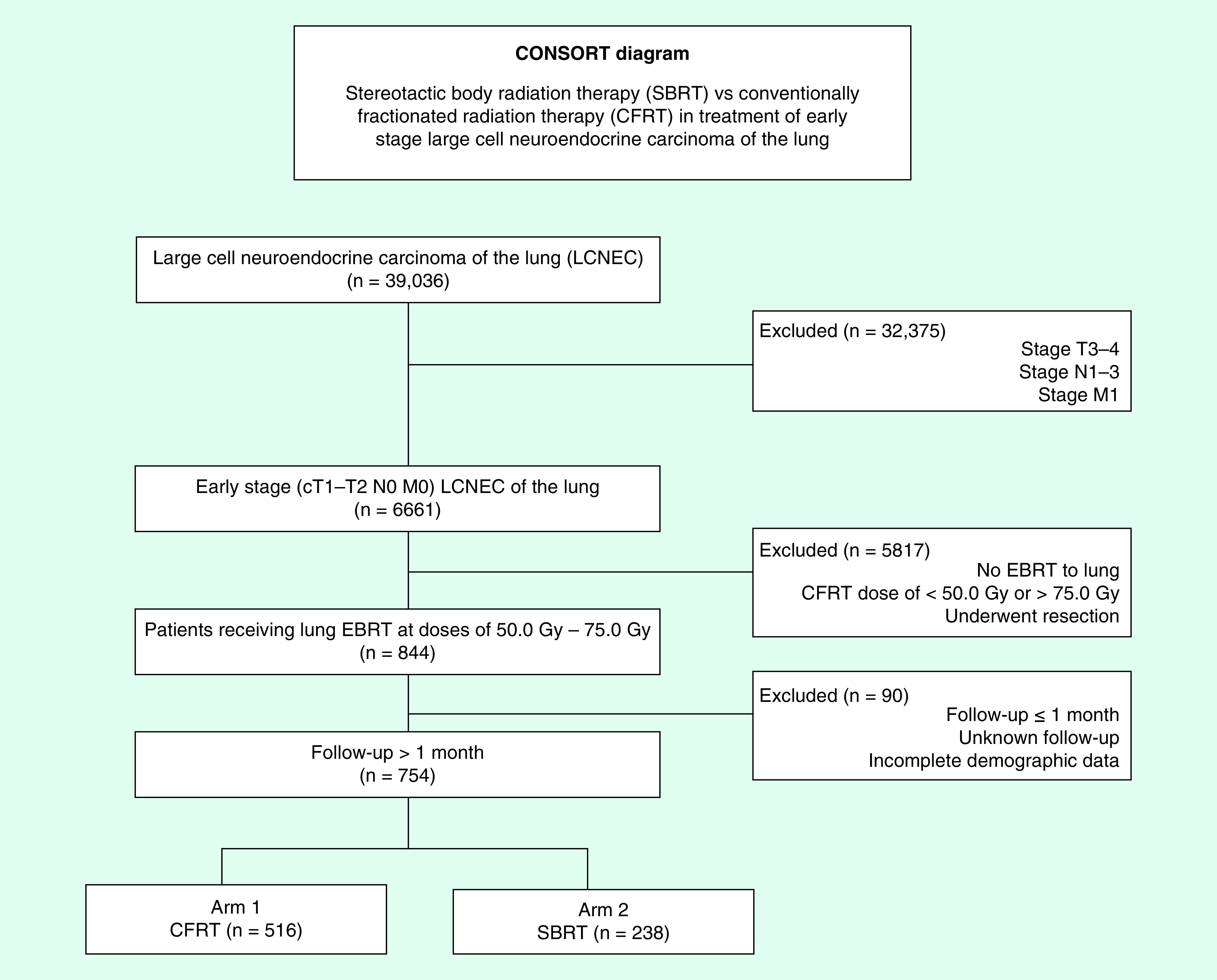
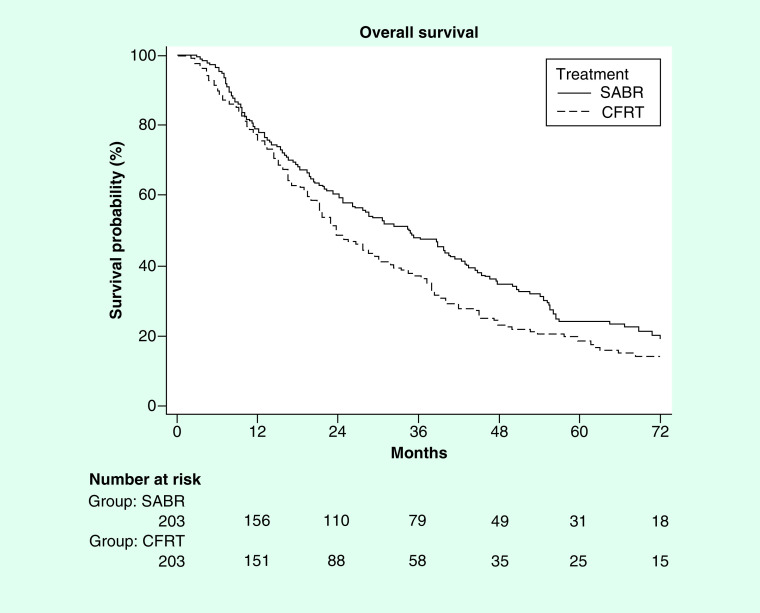
We identified 754 patients, with 238 (32%) treated with SABR. Predictors of SABR were distance to facility, no chemotherapy, academic center, T1 and recent year. After propensity matching, median survival was 34.7 months compared with 23.7 months in favor of SABR (p = 0.02).
SABR for LCNEC has increased over time and was associated with improved survival.
一些早期肺大细胞神经内分泌癌(LCNEC)患者不适合手术,将接受放射治疗。我们利用国家癌症数据库确定立体定向放射治疗的预测因素并比较疗效。
我们在国家癌症数据库中查询接受放疗的T1-2N0 LCNEC患者。逻辑回归和Cox回归分别确定立体定向消融体部放疗(SABR)和生存的预测因素。
我们确定了754例患者,其中238例(32%)接受了SABR治疗。SABR的预测因素为与医疗机构的距离、未接受化疗、学术中心、T1期和近年。倾向匹配后,SABR组的中位生存期为34.7个月,而另一组为23.7个月,SABR组更具优势(p = 0.02)。
随着时间的推移,LCNEC的SABR治疗有所增加,且与生存期改善相关。