Abokyi Samuel, Shan Sze Wan, To Chi-Ho, Chan Henry Ho-Lung, Tse Dennis Yan-Yin
School of Optometry, The Hong Kong Polytechnic University, Hong Kong SAR, China.
Department of Optometry & Vision Science, University of Cape Coast, Cape Coast, Ghana.
Oxid Med Cell Longev. 2020 Jul 21;2020:5296341. doi: 10.1155/2020/5296341. eCollection 2020.
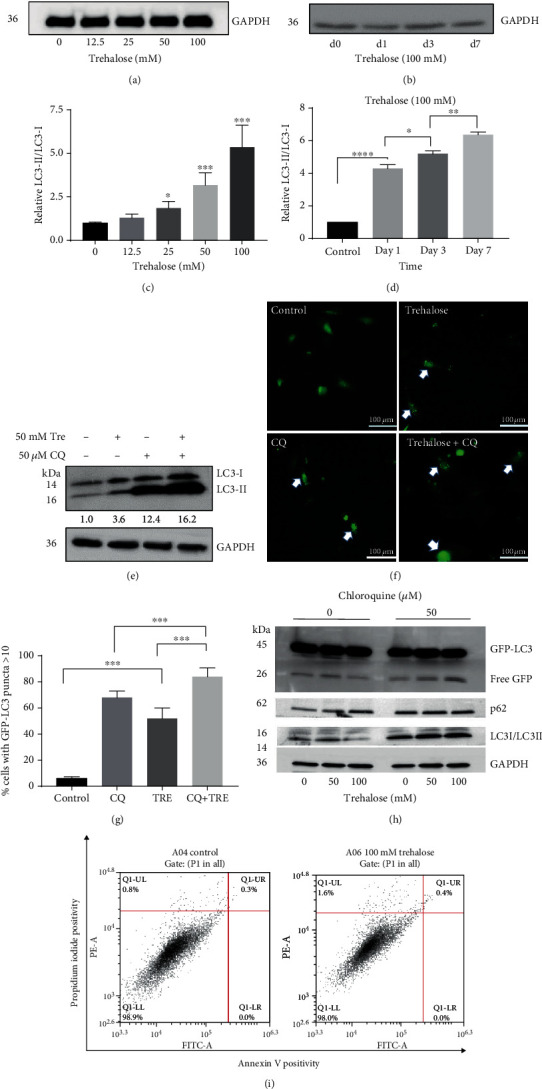
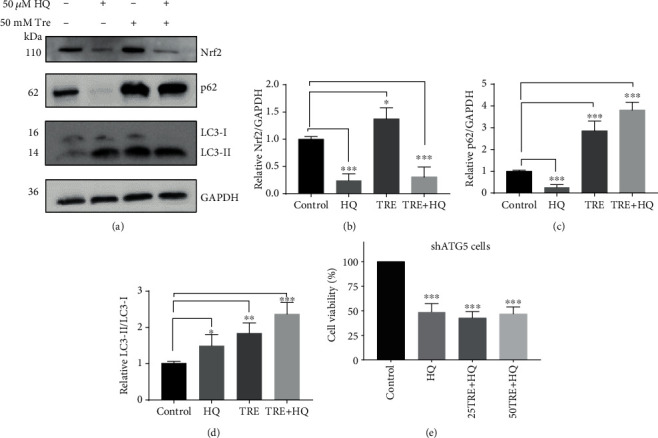
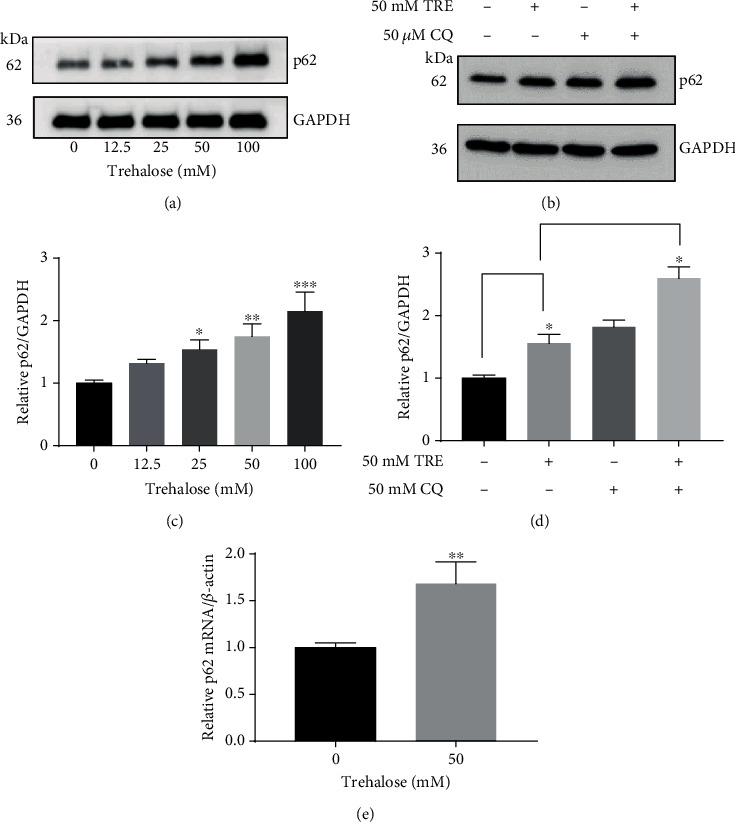
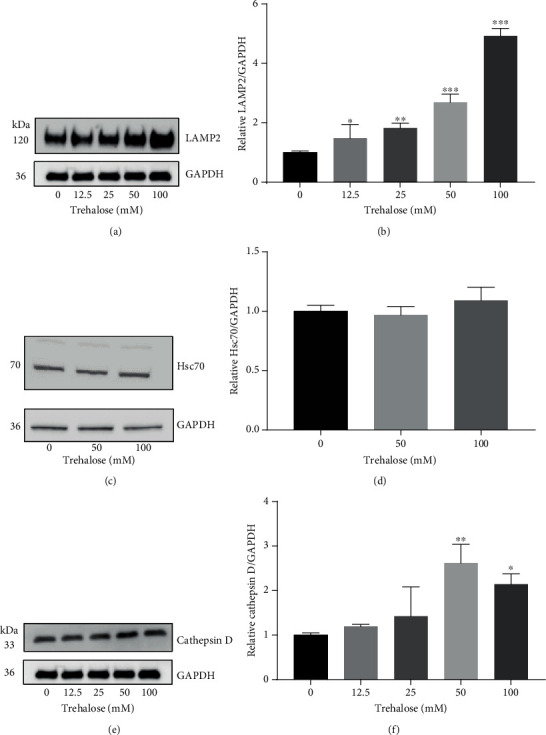
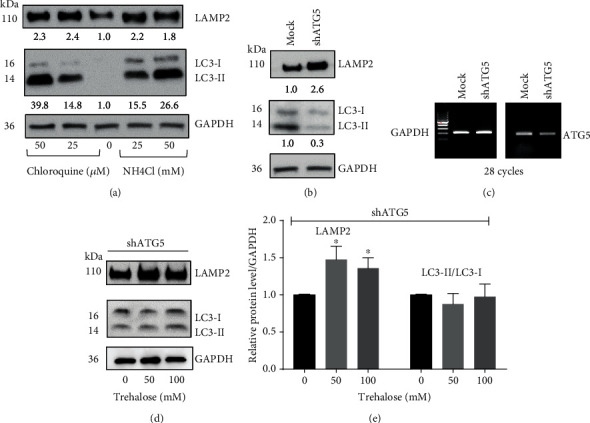
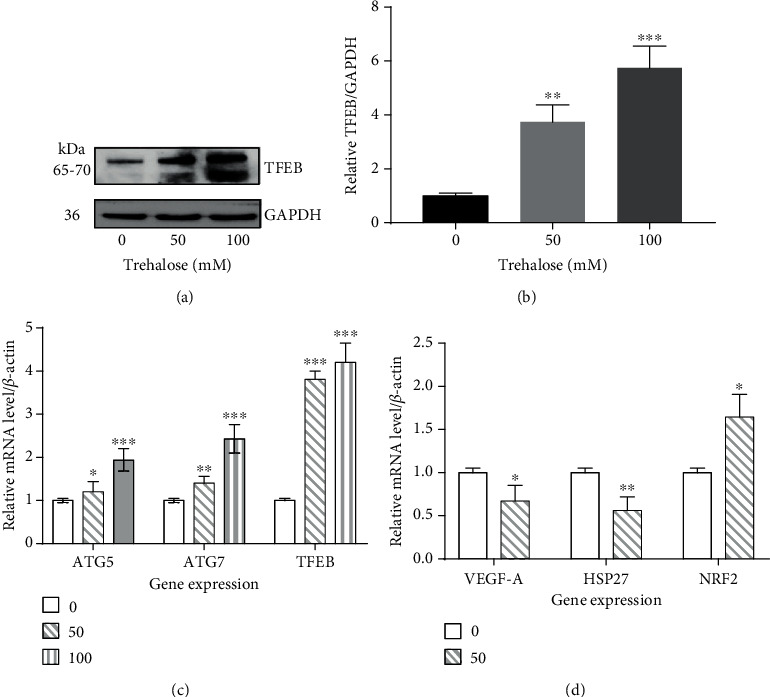
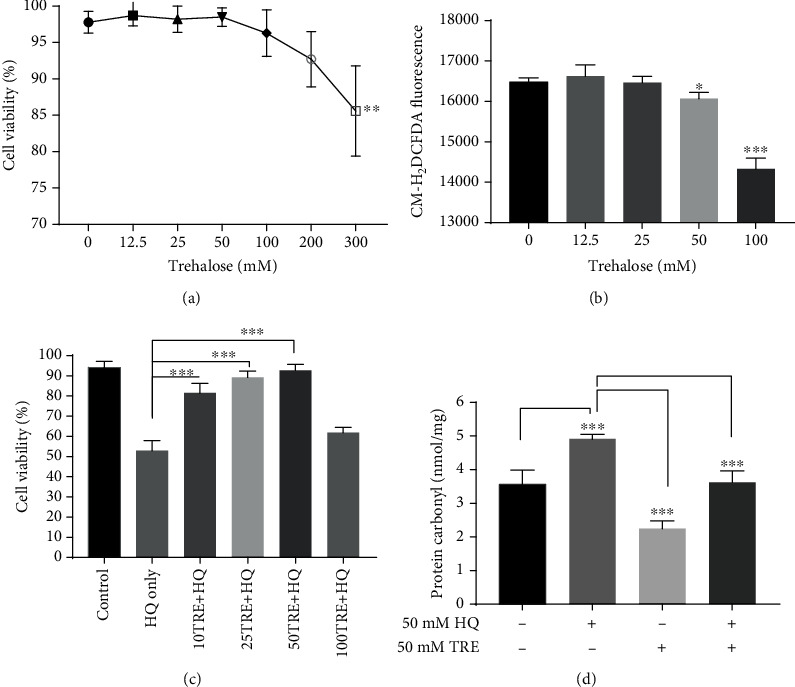
Trehalose is a natural dietary molecule that has shown antiaging and neuroprotective effects in several animal models of neurodegenerative diseases. The role of trehalose in the management of age-related macular degeneration (AMD) is yet to be investigated and whether trehalose could be a remedy for the treatment of diseases linked to oxidative stress and NRF2 dysregulation. Here, we showed that incubation of human retinal pigment epithelial (RPE) cells with trehalose enhanced the mRNA and protein expressions of TFEB, autophagy genes and , as well as protein expressions of macroautophagy markers, LC3B and p62/SQTM1, and the chaperone-mediated autophagy (CMA) receptor LAMP2. Cathepsin D, a hydrolytic lysosomal enzyme, was also increased by trehalose, indicating higher proteolytic activity. Moreover, trehalose upregulated autophagy flux evident by an increase in the endogenous LC3B level, and accumulation of GFP-LC3B puncta and free GFP fragments in GFP-LC3 - expressing cells in the presence of chloroquine. In addition, the mRNA levels of key molecular targets implicated in RPE damage and AMD, such as vascular endothelial growth factor- (-) A and heat shock protein 27 (HSP27), were downregulated, whereas was upregulated by trehalose. Subsequently, we mimicked AMD conditions using hydroquinone (HQ) as the oxidative insult on RPE cells and evaluated the cytoprotective effect of trehalose compared to vehicle treatment. HQ depleted NRF2, increased oxidative stress, and reduced the viability of cells, while trehalose pretreatment protected against HQ-induced toxicity. The cytoprotection by trehalose was dependent on autophagy but not NRF2 activation, since autophagy inhibition by shRNA knockdown of led to a loss of the protective effect. The results support the transcriptional upregulation of TFEB and autophagy by trehalose and its protection against HQ-induced oxidative damage in RPE cells. Further investigation is, therefore, warranted into the therapeutic value of trehalose in alleviating AMD and retinal diseases associated with impaired NRF2 antioxidant defense.
海藻糖是一种天然膳食分子,在多种神经退行性疾病的动物模型中已显示出抗衰老和神经保护作用。海藻糖在年龄相关性黄斑变性(AMD)管理中的作用尚待研究,以及海藻糖是否可作为治疗与氧化应激和NRF2失调相关疾病的药物。在此,我们表明用海藻糖孵育人视网膜色素上皮(RPE)细胞可增强TFEB、自噬基因以及自噬标志物LC3B和p62/SQTM1的mRNA和蛋白表达,以及伴侣介导的自噬(CMA)受体LAMP2的蛋白表达。海藻糖还增加了溶酶体水解酶组织蛋白酶D,表明蛋白水解活性更高。此外,海藻糖上调了自噬通量,这在氯喹存在下,GFP-LC3表达细胞中内源性LC3B水平增加、GFP-LC3B斑点和游离GFP片段积累中明显可见。此外,RPE损伤和AMD中涉及的关键分子靶点的mRNA水平,如血管内皮生长因子-A和热休克蛋白27(HSP27),被下调,而海藻糖上调了。随后,我们使用对苯二酚(HQ)模拟AMD条件对RPE细胞进行氧化损伤,并评估海藻糖与载体处理相比的细胞保护作用。HQ消耗了NRF2,增加了氧化应激,并降低了细胞活力,而海藻糖预处理可防止HQ诱导的毒性。海藻糖的细胞保护作用依赖于自噬而非NRF2激活,因为通过shRNA敲低导致自噬抑制会导致保护作用丧失。这些结果支持海藻糖对TFEB和自噬的转录上调及其对RPE细胞中HQ诱导的氧化损伤的保护作用。因此,有必要进一步研究海藻糖在减轻AMD和与NRF2抗氧化防御受损相关的视网膜疾病中的治疗价值。