Lv Yi, So Kwok Fai, Xiao Jia
Laboratory of Neuroendocrinology, Fujian Key Laboratory of Developmental and Neurobiology, College of Life Sciences, Fujian Normal University, Fuzhou 350108, China.
Institute of Clinical Medicine, The First Affiliated Hospital of Jinan University, Guangzhou 510632, China.
Ann Transl Med. 2020 Apr;8(8):567. doi: 10.21037/atm.2020.02.168.
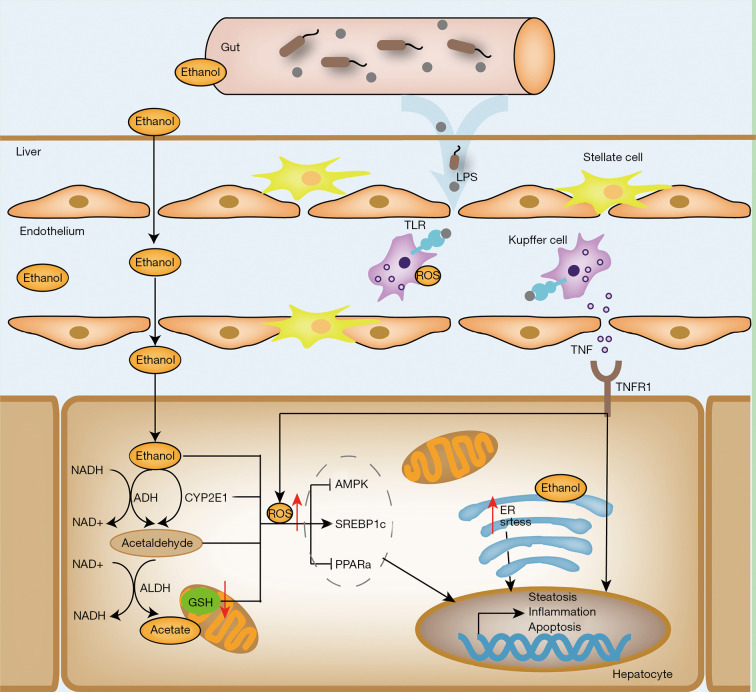
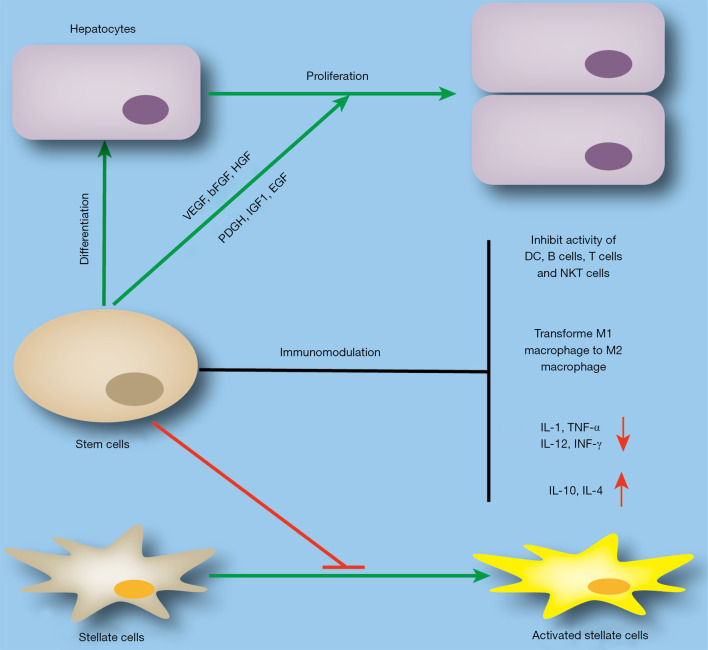
Alcoholic liver diseases (ALD) are a wide spectrum of liver diseases caused by excessive alcohol consumption, from steatosis to cirrhosis. The pathogenesis of ALD is insufficiently understood, but mainly involves oxidative stress, inflammation, bacterial translocation, cell death, and impaired regeneration. Despite numerous attempts to improve patient prognosis, the treatment of advanced ALD is still based on abstinence, brief exposure to corticosteroids, or liver transplantation. However, poor response to corticosteroids and the shortage of liver donors leaves patients helpless towards the end stages. Advances in basic research have contributed to a better understanding of ALD pathophysiology, which offers new options for treatment. In recent years, several therapies related to liver regeneration have been tested with promising prospects, including molecule-induced liver regeneration, stem cell transplantation, and full-function 3D artificial liver assembly. This review discusses mechanisms underlying ALD that can be considered therapeutic targets for regeneration-based treatments.
酒精性肝病(ALD)是由过量饮酒引起的一系列肝脏疾病,范围从脂肪变性到肝硬化。ALD的发病机制尚未完全明确,但主要涉及氧化应激、炎症、细菌易位、细胞死亡和再生受损。尽管人们多次尝试改善患者预后,但晚期ALD的治疗仍基于戒酒、短期使用皮质类固醇或肝移植。然而,对皮质类固醇反应不佳以及肝供体短缺使患者在疾病末期束手无策。基础研究的进展有助于更好地理解ALD的病理生理学,为治疗提供了新的选择。近年来,几种与肝脏再生相关的疗法已进行了测试,前景乐观,包括分子诱导肝再生、干细胞移植和全功能3D人工肝组装。本综述讨论了ALD潜在的机制,这些机制可被视为基于再生治疗的靶点。