Medical School of Chinese PLA, Beijing 100853, China.
Chinese National Institute of Sports Medicine, Beijing 100061, China.
J Immunol Res. 2020 Jul 28;2020:8127281. doi: 10.1155/2020/8127281. eCollection 2020.
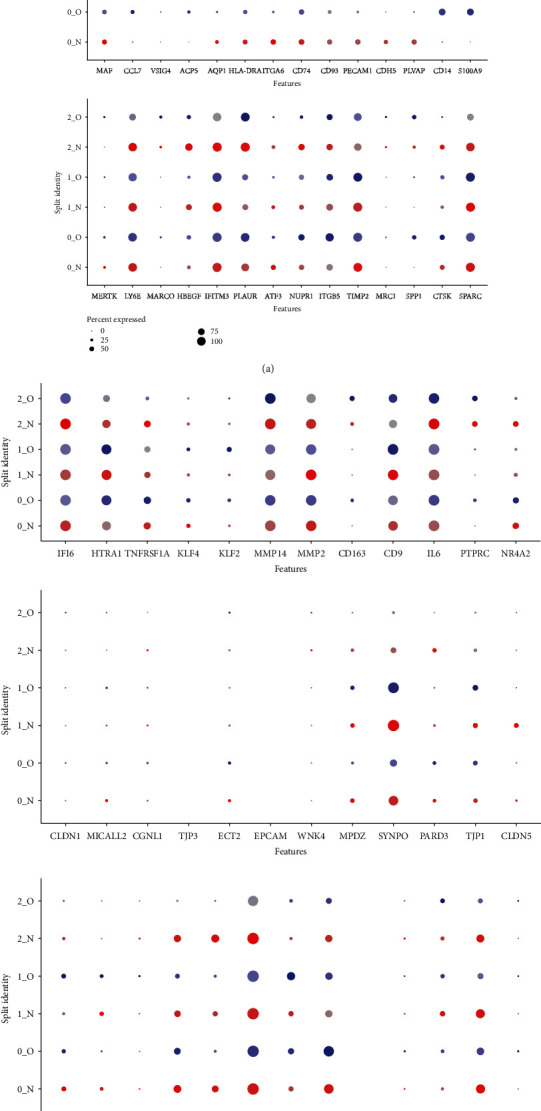
Osteoarthritis (OA) has long been considered as a degenerative disease, but growing evidence suggests that inflammation plays a vital role in its pathogenesis. Unlike rheumatoid arthritis and other autoimmune diseases, inflammation in OA is chronic and, in relatively low grade, mainly mediated by the innate immune system, especially macrophages. However, due to its low abundance, there is a lack of systematic studies on macrophages in the OA condition. Here, we have used single-cell RNA sequencing analysis to gain insight into the heterogeneity and functional specialization of human knee macrophages. We also compared the gene expression profiles of macrophages in healthy people and OA patients and found the characteristic changes of special macrophages in the OA knee. We believe that this in-depth understanding of the basis of OA inflammation will bring hope for the development of new therapies.
骨关节炎(OA)长期以来被认为是一种退行性疾病,但越来越多的证据表明炎症在其发病机制中起着至关重要的作用。与类风湿关节炎和其他自身免疫性疾病不同,OA 中的炎症是慢性的,且炎症程度相对较低,主要由先天免疫系统介导,特别是巨噬细胞。然而,由于其丰度较低,对 OA 状态下的巨噬细胞缺乏系统研究。在这里,我们使用单细胞 RNA 测序分析深入了解了人类膝关节巨噬细胞的异质性和功能特化。我们还比较了健康人和 OA 患者的巨噬细胞的基因表达谱,发现了 OA 膝关节中特殊巨噬细胞的特征变化。我们相信,对 OA 炎症基础的深入了解将为新疗法的发展带来希望。