Department of Neurosurgery, Beijing Tiantan Hospital, Capital Medical University, Beijing, China.
China National Clinical Research Center for Neurological Diseases, Beijing, China.
Cancer Med. 2020 Oct;9(19):6996-7006. doi: 10.1002/cam4.3364. Epub 2020 Aug 10.
Due to their rarity, the clinicopathological characteristics and prognostic factors of spinal cord gliomas are still unclear. Here, we aimed to clarify these issues in a cohort of 108 spinal cord astrocytomas.
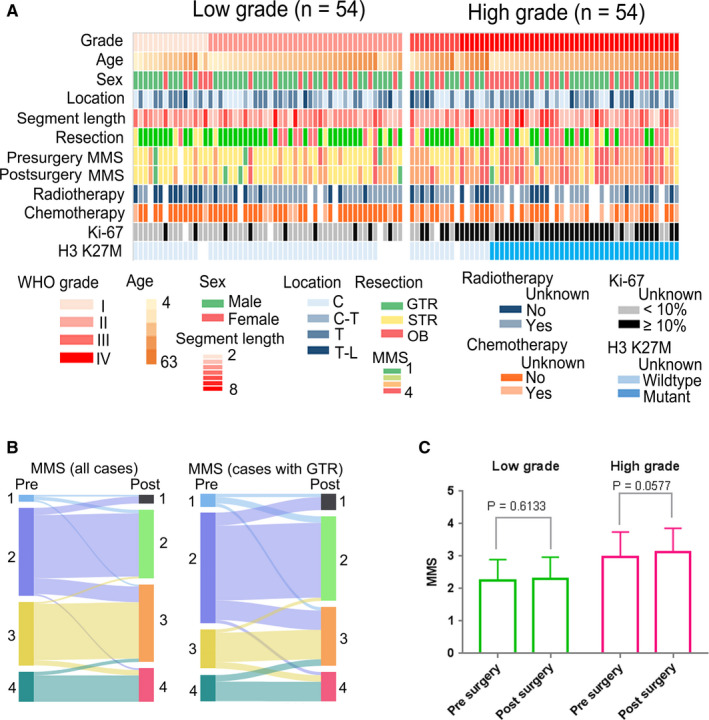
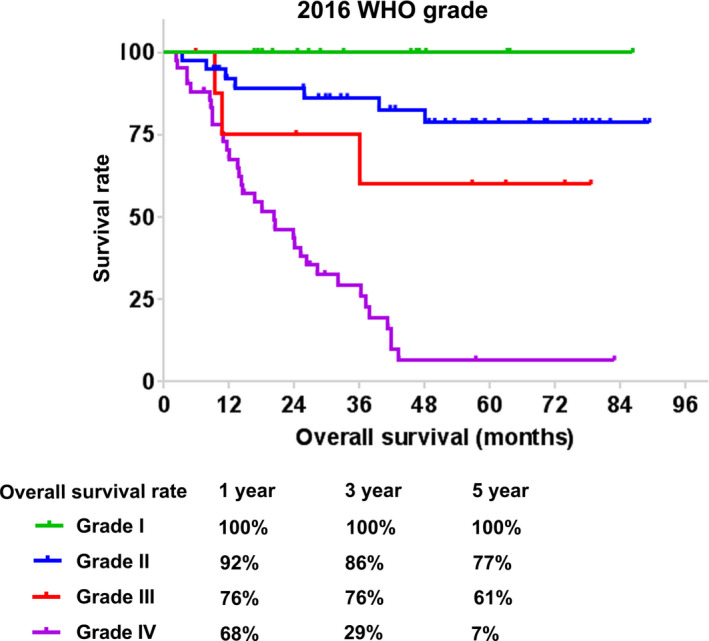
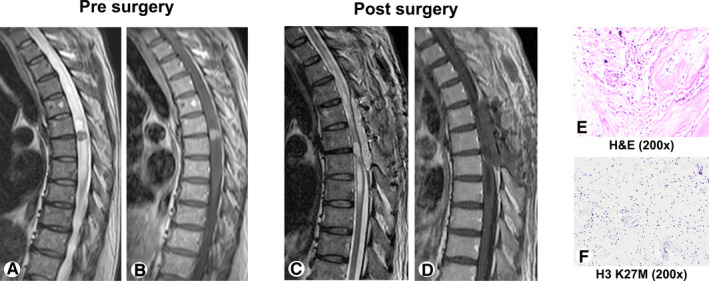
We characterized the clinicopathological characteristics, including 2016 World Health Organization (WHO) grade, age, sex, location, segment length, resection, pre- and postsurgery, Modified McCormick Scale (MMS), radio- and chemotherapy, and Ki-67 and H3 K27M mutations, in 108 spinal cord astrocytomas through heatmaps. The Cox regression analysis and Kaplan-Meier curves were used to study the prognostic value of these clinicopathological features.
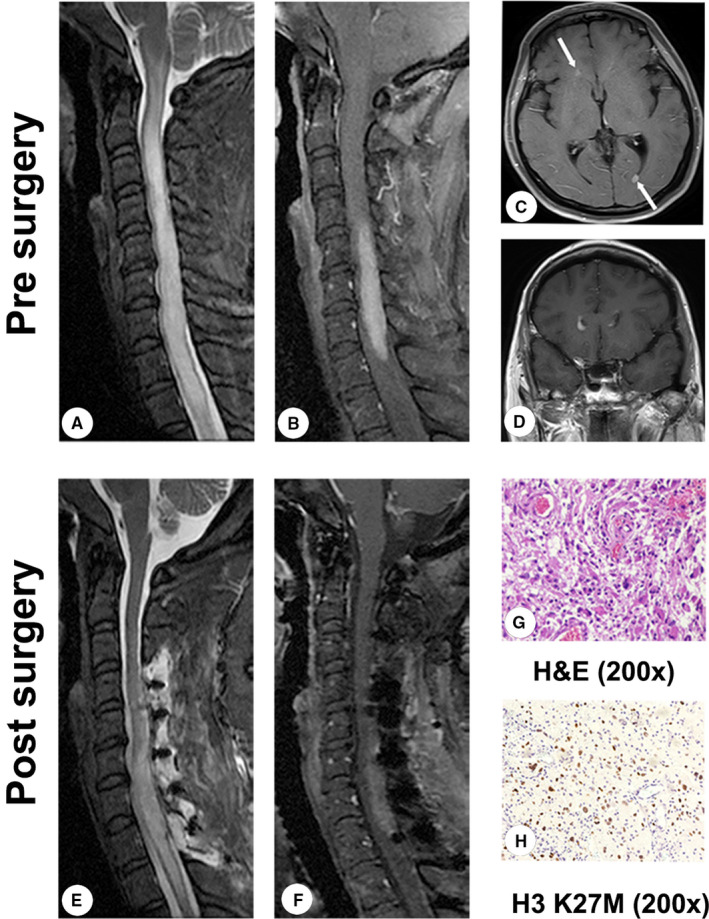
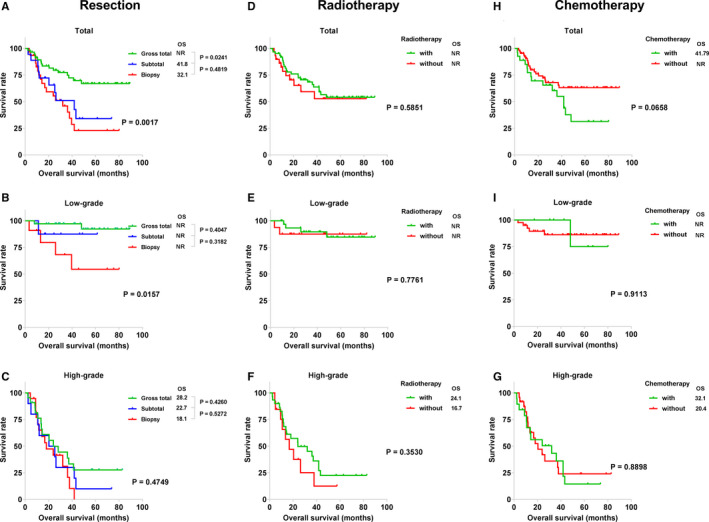
There are a total 38 H3 K27M-mutant tumors, including 31 cases with histological grade II/III tumors. The age of low-grade astrocytoma patients (WHO grade I/II, n = 54) was significantly younger (27.0 vs 35.5 years, P = .001) than those with high-grade tumors (WHO grade III/IV, n = 54). All patients underwent surgical resection with neurophysiological monitoring, and the surgery did not result in significant changes in MMS. The presurgery MMS was associated with overall survival in the high-grade subgroup (P = .008) but not in the low-grade subgroup (P = .312). While, the high content of resection improved the survival of only patients with low-grade astrocytomas (P = .016) but not those with high-grade astrocytomas (P = .475). Both the low-grade and high-grade astrocytomas had no obvious benefit from neither adjuvant chemotherapy nor radiotherapy (all P > .05).
We characterized the clinicopathological characteristics and their prognostic values in 108 spinal cord astrocytomas, which could help with evidence-based management of spinal cord astrocytomas.
由于其罕见性,脊髓胶质瘤的临床病理特征和预后因素仍不清楚。在这里,我们旨在澄清 108 例脊髓星形细胞瘤队列中的这些问题。
我们通过热图描述了 108 例脊髓星形细胞瘤的临床病理特征,包括 2016 年世界卫生组织(WHO)分级、年龄、性别、位置、节段长度、切除、术前和术后、改良 McCormick 量表(MMS)、放射和化学治疗以及 Ki-67 和 H3 K27M 突变。Cox 回归分析和 Kaplan-Meier 曲线用于研究这些临床病理特征的预后价值。
共有 38 例 H3 K27M 突变肿瘤,其中 31 例为组织学分级 II/III 肿瘤。低级别星形细胞瘤患者(WHO 分级 I/II,n=54)的年龄明显低于高级别肿瘤患者(WHO 分级 III/IV,n=54)(27.0 岁比 35.5 岁,P=0.001)。所有患者均接受了有神经生理监测的手术切除,手术并未导致 MMS 显著变化。术前 MMS 与高级别亚组的总生存相关(P=0.008),但与低级别亚组无关(P=0.312)。然而,高切除含量仅改善了低级别星形细胞瘤患者的生存(P=0.016),而对高级别星形细胞瘤患者则无影响(P=0.475)。低级别和高级别星形细胞瘤均未从辅助化疗或放疗中获益(均 P>0.05)。
我们描述了 108 例脊髓星形细胞瘤的临床病理特征及其预后价值,这有助于为脊髓星形细胞瘤提供循证管理。