School of Psychology, Plymouth University, Plymouth, UK.
Clinic for Psychotherapy and Psychosomatics "Hohenegg", Meilen, Switzerland.
BMC Health Serv Res. 2020 Aug 10;20(1):734. doi: 10.1186/s12913-020-05617-4.
Psychiatric inpatients receive a multidisciplinary treatment approach, covering psychiatry, nursing, occupational therapy, and psychology. Research findings reveal that the effectiveness of any treatment is associated with three types of factors: specific (e.g., treatment techniques), common (e.g., clinician-patient relationship, patients' expectations) and extra-therapeutic. However, there is little published research on the factors and events which inpatients themselves consider to be beneficial ('beneficial moments').
Inpatients (N = 107) of a psychiatric clinic completed a questionnaire to elicit their appraisal of beneficial moments. A qualitative content analysis was applied. The coding procedure was conducted independently by two authors.
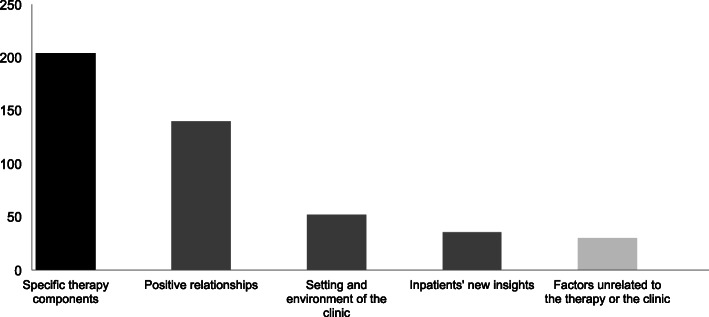
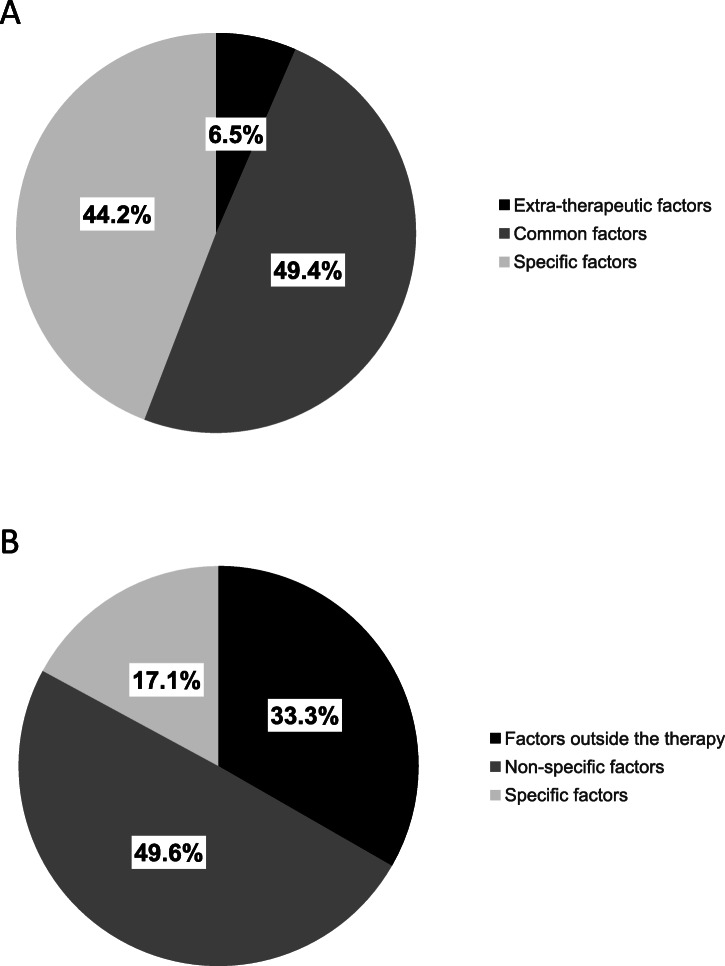
Self-appraised beneficial moments were found in five areas: therapy-specific components (number of quotations, N = 204), positive relationships (N = 140), clinical setting and environment (N = 52), inpatients' new insights (N = 36), and factors unrelated to either therapy or the clinic (N = 30). In total, 44% of the quotations were related to specific factors, 49% to common factors, and 7% to extra-therapeutic factors.
Inpatients judge both specific and common factors as crucial for the therapeutic benefit they gain during their stay at the clinic. Our results differ from meta-analytical findings, where the impact of specific factors on symptom improvement has shown to be much smaller (i.e., 17%) than appraised by patients in our study (i.e., 44%). Our study underlines the importance of a patient-centred care approach as well as shared decision making and patient-clinician communication. For clinical practice, knowledge of inpatients' perspectives on beneficial moments is crucial in order to reinforce precisely these therapeutic components.
精神科住院患者接受多学科治疗方法,涵盖精神病学、护理、职业治疗和心理学。研究结果表明,任何治疗的效果都与三种类型的因素有关:特定的(例如,治疗技术)、常见的(例如,医患关系、患者的期望)和治疗以外的因素。然而,关于住院患者自身认为有益的因素和事件(“有益时刻”)的研究很少。
精神科诊所的住院患者(N=107)完成了一份问卷,以评估他们对有益时刻的看法。采用定性内容分析法。编码程序由两位作者独立进行。
自我评估的有益时刻出现在五个领域:治疗特异性成分(引用次数,N=204)、积极的关系(N=140)、临床环境和环境(N=52)、住院患者的新见解(N=36)和与治疗或诊所无关的因素(N=30)。总的来说,44%的引用与特定因素有关,49%与常见因素有关,7%与治疗以外的因素有关。
住院患者认为特定因素和共同因素对他们在诊所逗留期间获得的治疗益处至关重要。我们的研究结果与荟萃分析结果不同,后者表明特定因素对症状改善的影响要小得多(即 17%),而不是患者在我们的研究中评估的(即 44%)。我们的研究强调了以患者为中心的护理方法以及共同决策和医患沟通的重要性。对于临床实践,了解住院患者对有益时刻的看法对于加强这些治疗成分至关重要。