Center for Biotechnology, Department of Zoology, Faculty of Applied Sciences, University of Sri Jayewardenepura, Nugegoda, Sri Lanka.
Department of Microbiology, Immunology and Pathology, Colorado State University, Fort Collins, CO, 80523, USA.
Parasit Vectors. 2020 Aug 10;13(1):407. doi: 10.1186/s13071-020-04284-y.
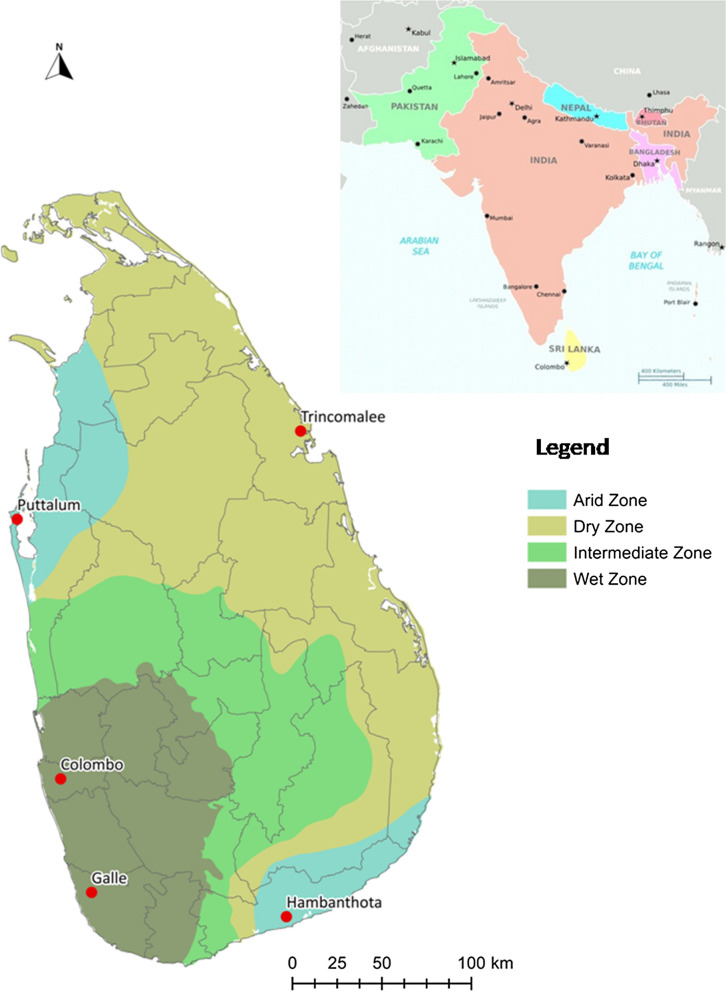
Drastic increases of dengue fever (DF) over the past few years have prompted studies on the development of resistance to insecticides in the mosquito vector, Aedes aegypti (Linnaeus). In Sri Lanka control of the vector population is essentially achieved using larvicides (temephos) and adulticides (principally pyrethroids). The present study investigates resistance to commonly used insecticides and underlying mechanisms of Ae. aegypti in selected sites in Sri Lanka.
In this study, susceptibility to three commonly used adulticides (malathion, permethrin and deltamethrin) and the larvicide temephos were tested for Ae. aegypti sampled from five localities in Sri Lanka using WHO dose diagnostics tests. In addition, we performed dose-response tests for permethrin to determine lethal concentrations (LCs) with CDC bottle bioassays. An assessment of the activity of metabolic detoxifying enzymes (multifunction oxidases (MFOs), glutathione S-transferases (GSTs) and esterases) and determination of frequency of the kdr mutations (F1534C, V1016G and S989P) were also carried out to ascertain the associated resistance mechanisms. Kdr genotype frequencies were compared with samples collected from the same sites in 2015 to determine the change of allele frequencies over the years.
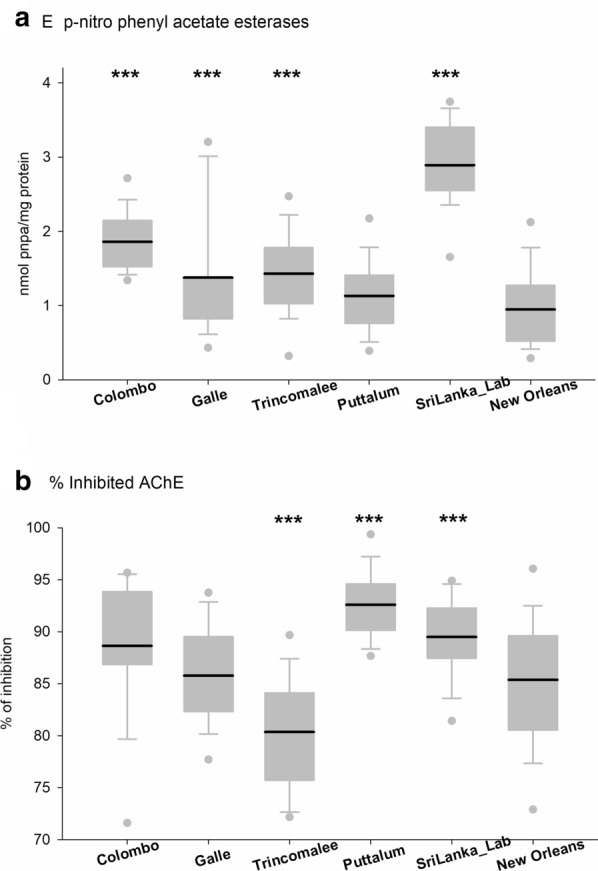
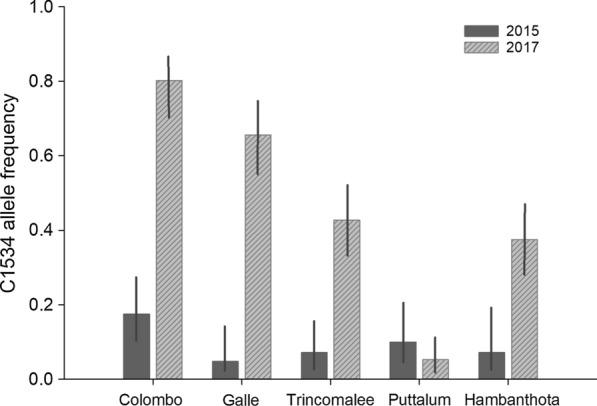
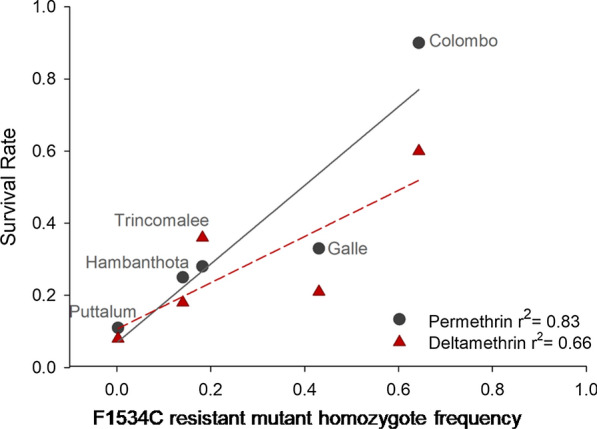
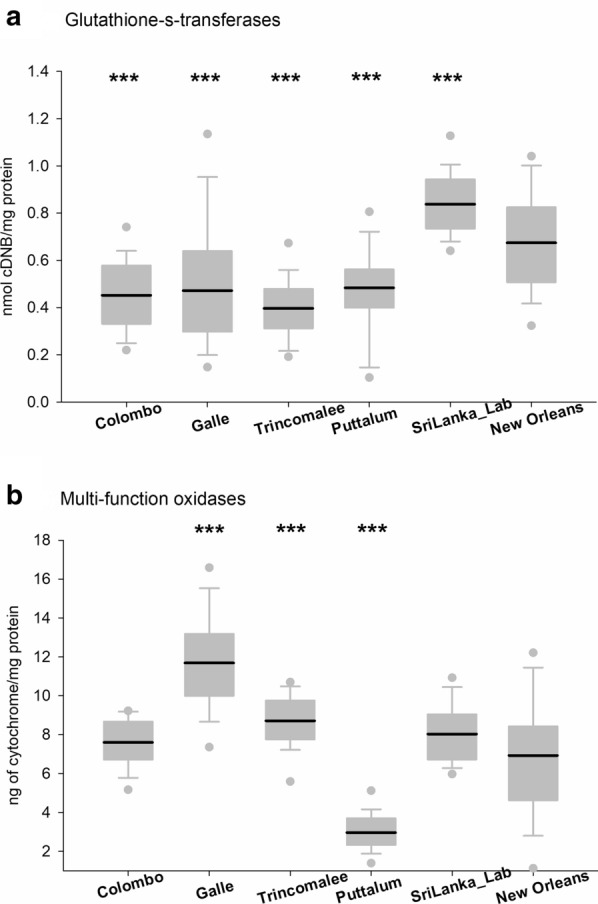
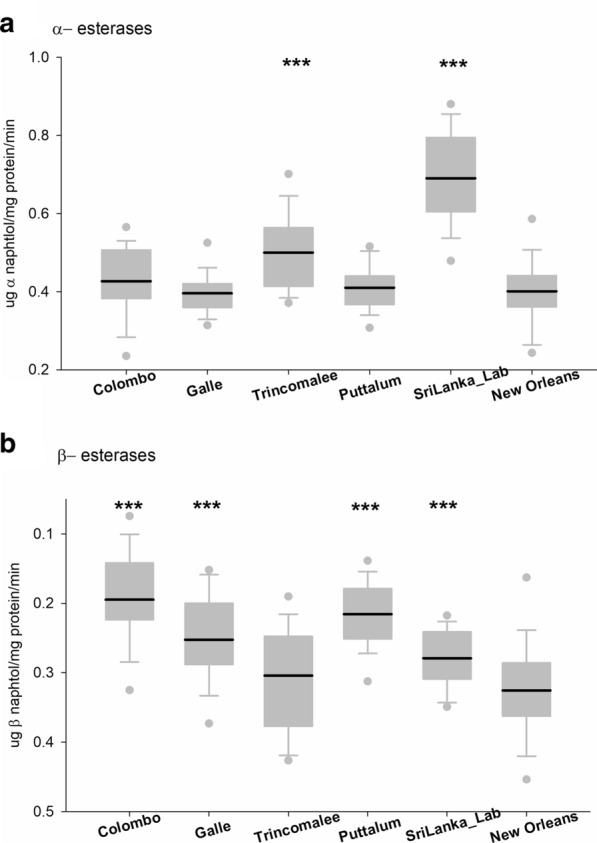
The present study revealed resistance in all Ae. aegypti populations studied, with low mortality percentages for both permethrin (10-89%) and deltamethrin (40-92%). Dose response tests revealed highest resistance ratios (RR) for permethrin and temephos from Colombo district whereas Puttalum district exhibited the lowest. High frequencies of the 1534C allele (0.052-0.802) were found in the study sites in 2017. Comparison with samples collected in 2015 revealed a substantial increase in this allele. The activity of MFOs and p-nitro phenyl-acetate esterase was significantly greater in most Sri Lankan populations in comparison to that of the New Orleans (NO) susceptible strain. In contrast, the activity of α-esterase and β-esterase was similar or lower than that in the NO strain.
Aedes aegypti from Sri Lanka is resistant to pyrethroid insecticides showing rapid selection for kdr mutations and varying metabolic mechanisms. Continued monitoring of vector populations is crucial to mitigate the development of resistance to commonly used insecticides and in turn, controlling the vector population.
在过去的几年中,登革热(DF)的急剧增加促使人们对埃及伊蚊(Aedes aegypti(Linnaeus))的杀虫剂抗药性进行了研究。在斯里兰卡,主要使用幼虫杀虫剂(涕灭威)和成虫杀虫剂(主要是拟除虫菊酯)来控制蚊子种群。本研究调查了在斯里兰卡选定地点的埃及伊蚊对常用杀虫剂的抗性及其潜在机制。
本研究使用世界卫生组织剂量诊断测试,对来自斯里兰卡五个地点的埃及伊蚊样本进行了对三种常用成虫杀虫剂(马拉硫磷、氯菊酯和溴氰菊酯)和幼虫杀虫剂涕灭威的敏感性测试。此外,我们还进行了氯菊酯的剂量-反应测试,以确定用 CDC 瓶生物测定法测定的致死浓度(LCs)。还评估了代谢解毒酶(多功能氧化酶(MFOs)、谷胱甘肽 S-转移酶(GSTs)和酯酶)的活性,并确定了 kdr 突变(F1534C、V1016G 和 S989P)的频率,以确定相关的抗性机制。将 kdr 基因型频率与 2015 年从同一地点采集的样本进行比较,以确定多年来等位基因频率的变化。
本研究表明所有研究的埃及伊蚊种群均存在抗性,氯菊酯(10-89%)和溴氰菊酯(40-92%)的死亡率较低。剂量反应测试显示,科伦坡地区的氯菊酯和涕灭威的最高抗性比,而普塔勒姆地区的最低。2017 年研究地点发现 1534C 等位基因的高频率(0.052-0.802)。与 2015 年采集的样本进行比较,发现该等位基因的显著增加。与新奥尔良(NO)敏感株相比,大多数斯里兰卡种群的 MFOs 和对硝基苯乙酸酯酶的活性显著更高。相比之下,α-酯酶和β-酯酶的活性与 NO 株相似或更低。
来自斯里兰卡的埃及伊蚊对拟除虫菊酯杀虫剂具有抗性,表现出对 kdr 突变的快速选择和不同的代谢机制。持续监测蚊子种群对于减轻对常用杀虫剂的抗性发展至关重要,从而控制蚊子种群。