Department of Morphology, Institute of Biological Sciences, Federal University of Minas Gerais, Belo Horizonte, Brazil.
Laboratory of Translational Endocrinology, Institute of Biophysics Carlos Chagas Filho, Federal University of Rio de Janeiro, Rio de Janeiro, Brazil.
J Cell Mol Med. 2020 Sep;24(18):10636-10647. doi: 10.1111/jcmm.15682. Epub 2020 Aug 11.
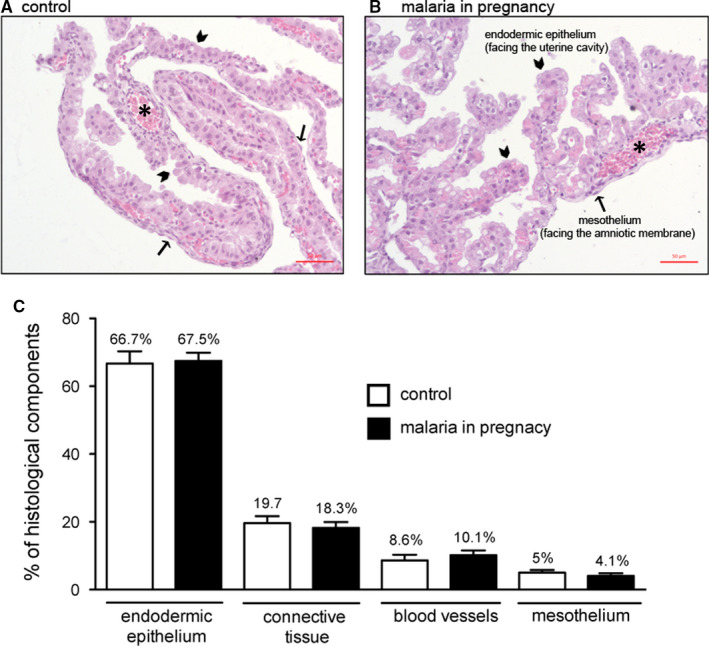
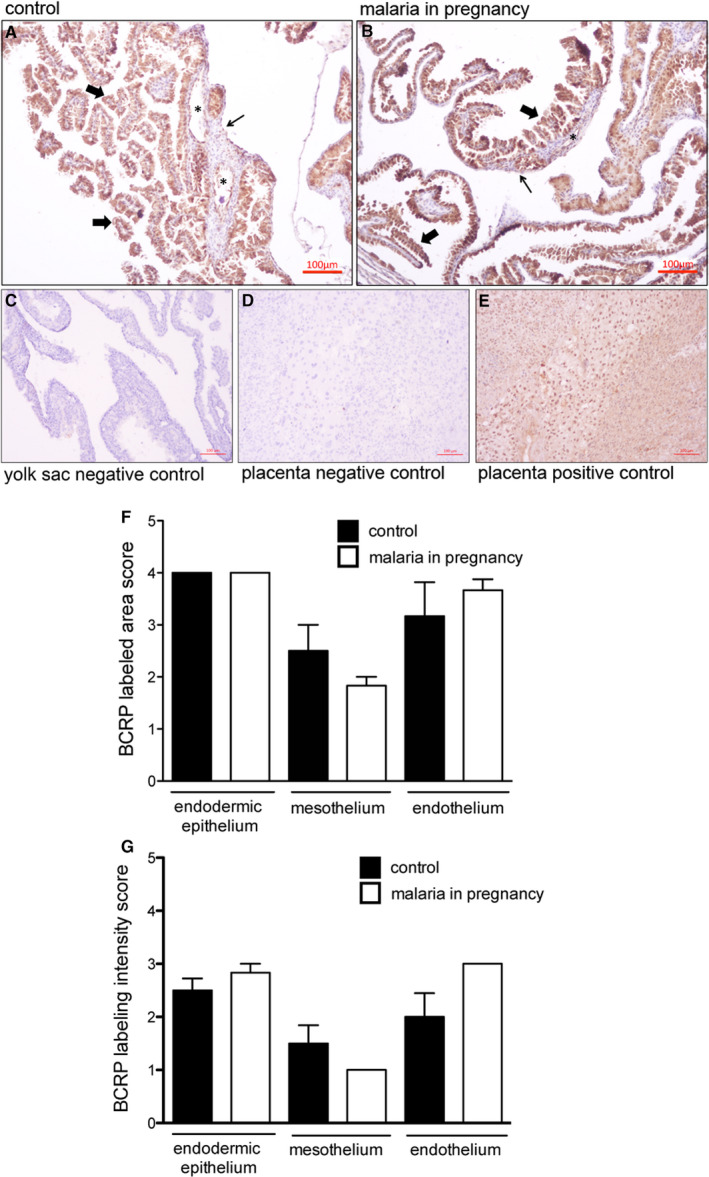
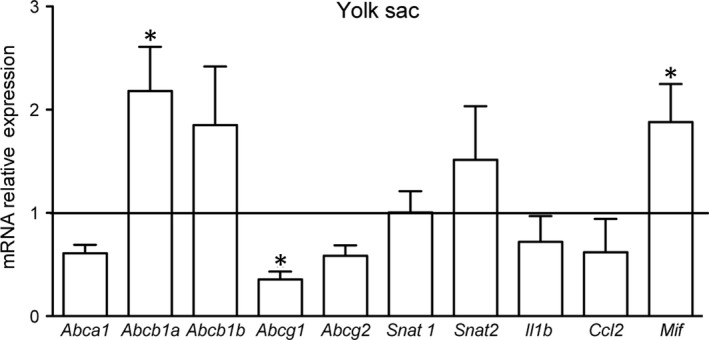
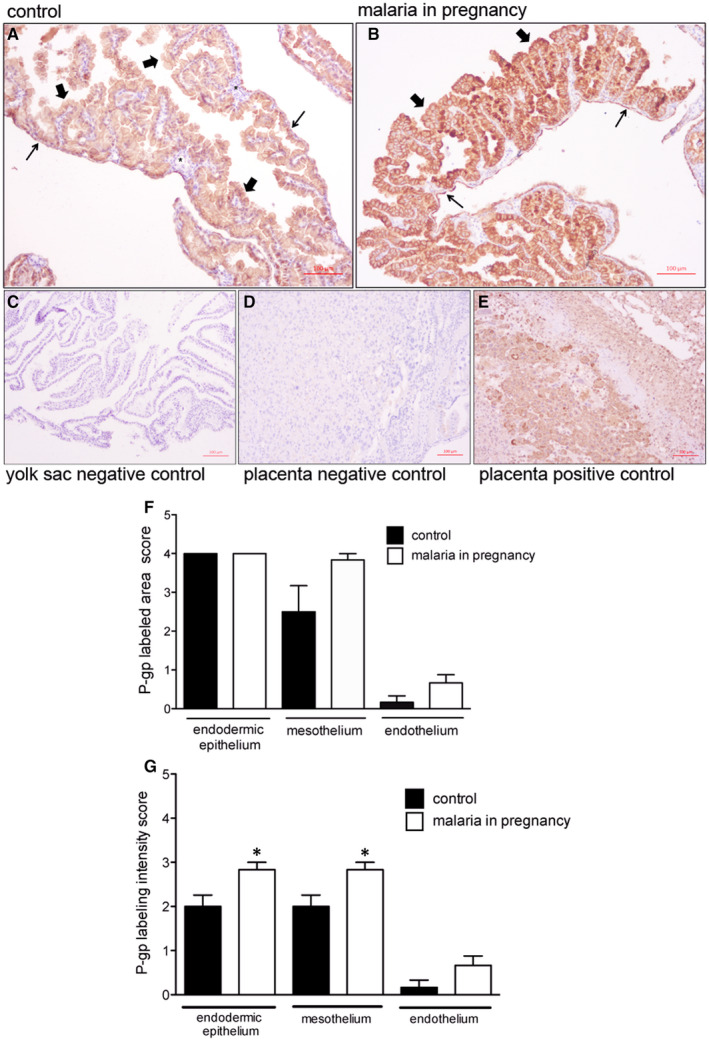
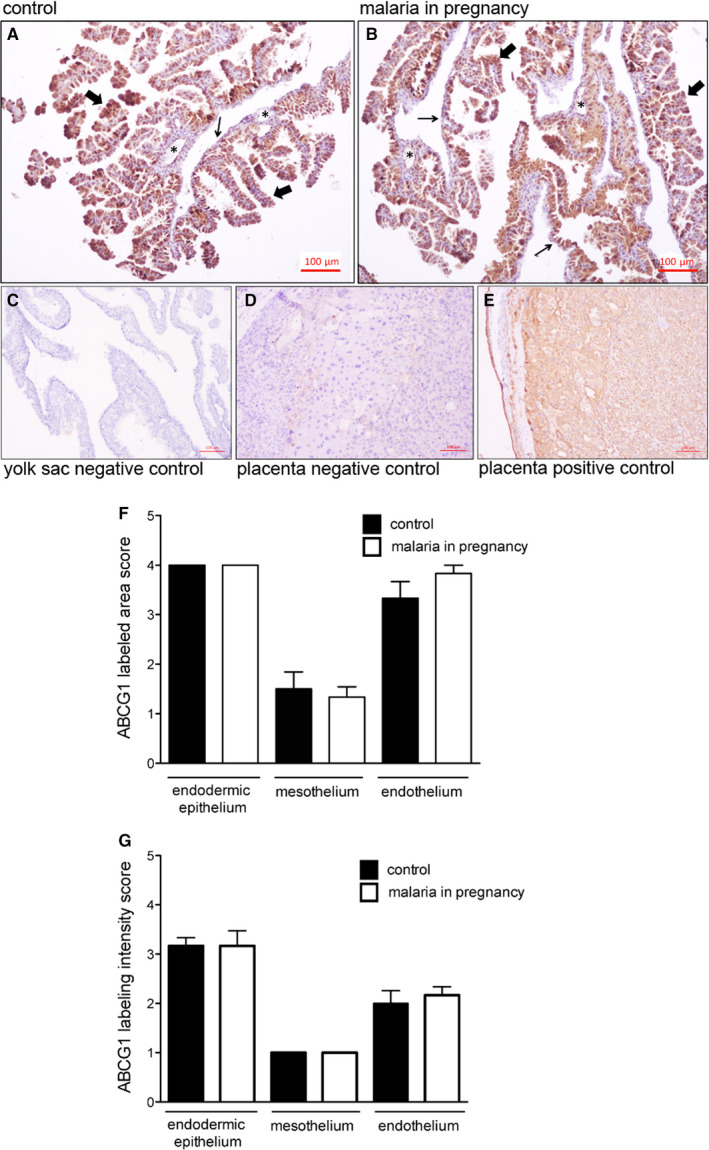
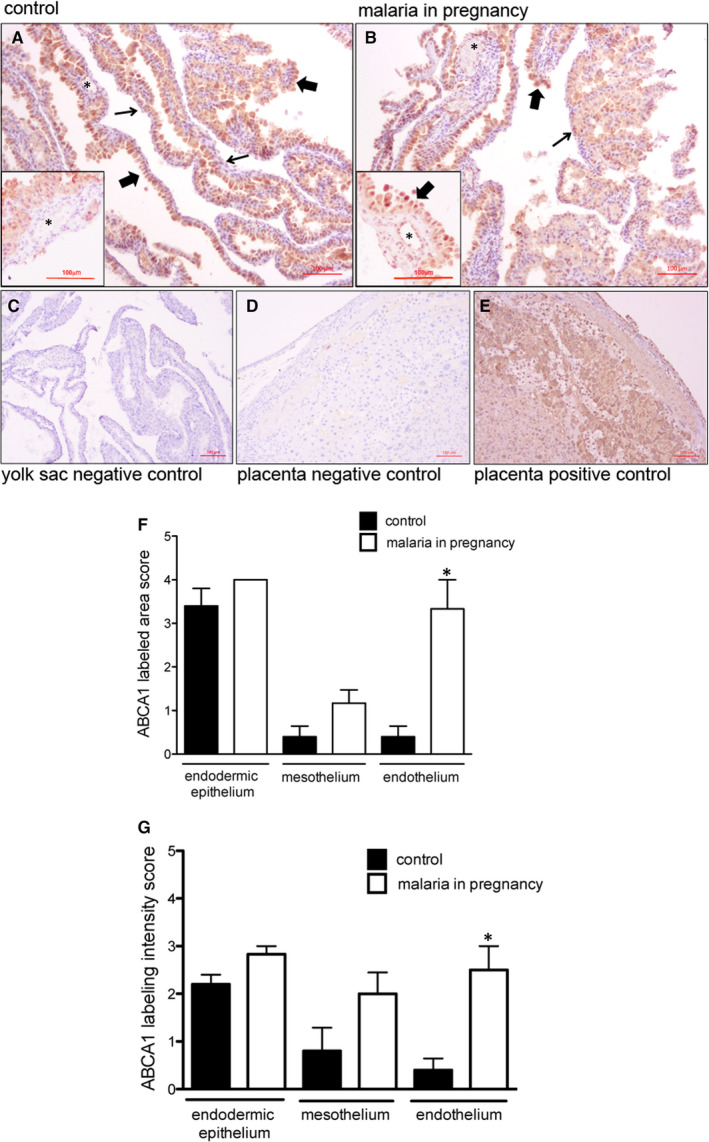
Malaria in pregnancy (MiP) induces intrauterine growth restriction (IUGR) and preterm labour (PTL). However, its effects on yolk sac morphology and function are largely unexplored. We hypothesized that MiP modifies yolk sac morphology and efflux transport potential by modulating ABC efflux transporters. C57BL/6 mice injected with Plasmodium berghei ANKA (5 × 10 infected erythrocytes) at gestational day (GD) 13.5 were subjected to yolk sac membrane harvesting at GD 18.5 for histology, qPCR and immunohistochemistry. MiP did not alter the volumetric proportion of the yolk sac's histological components. However, it increased levels of Abcb1a mRNA (encoding P-glycoprotein) and macrophage migration inhibitory factor (Mif chemokine), while decreasing Abcg1 (P < 0.05); without altering Abca1, Abcb1b, Abcg2, Snat1, Snat2, interleukin (Il)-1β and C-C Motif chemokine ligand 2 (Ccl2). Transcripts of Il-6, chemokine (C-X-C motif) ligand 1 (Cxcl1), Glut1 and Snat4 were not detectible. ABCA1, ABCG1, breast cancer resistance protein (BCRP) and P-gp were primarily immunolocalized to the cell membranes and cytoplasm of endodermic epithelium but also in the mesothelium and in the endothelium of mesodermic blood vessels. Intensity of P-gp labelling was stronger in both endodermic epithelium and mesothelium, whereas ABCA1 labelling increased in the endothelium of the mesodermic blood vessels. The presence of ABC transporters in the yolk sac wall suggests that this fetal membrane acts as an important protective gestational barrier. Changes in ABCA1 and P-gp in MiP may alter the biodistribution of toxic substances, xenobiotics, nutrients and immunological factors within the fetal compartment and participate in the pathogenesis of malaria-induced IUGR and PTL.
妊娠疟疾(MiP)可导致胎儿宫内生长受限(IUGR)和早产(PTL)。然而,其对卵黄囊形态和功能的影响在很大程度上尚未得到探索。我们假设 MiP 通过调节 ABC 外排转运蛋白来改变卵黄囊的形态和外排转运潜能。在妊娠第 13.5 天向 C57BL/6 小鼠注射疟原虫伯氏疟原虫 ANKA(5×10 感染红细胞),在妊娠第 18.5 天采集卵黄囊膜进行组织学、qPCR 和免疫组织化学分析。MiP 并未改变卵黄囊组织学成分的体积比例。然而,它增加了 Abcb1a mRNA(编码 P-糖蛋白)和巨噬细胞移动抑制因子(Mif 趋化因子)的水平,同时降低了 Abcg1(P<0.05);而 ABCA1、Abcb1b、Abcg2、Snat1、Snat2、白细胞介素(IL)-1β和 C-C 基序趋化因子配体 2(Ccl2)的水平没有改变。IL-6、趋化因子(C-X-C 基序)配体 1(Cxcl1)、Glut1 和 Snat4 的转录本无法检测到。ABCA1、ABCG1、乳腺癌耐药蛋白(BCRP)和 P-糖蛋白主要定位于内胚层的细胞膜和细胞质,但也定位于间皮和中胚层血管的内皮。P-糖蛋白的标记强度在内胚层上皮和间皮中均较强,而 ABCA1 的标记强度在中胚层血管的内皮中增加。卵黄囊壁中 ABC 转运蛋白的存在表明,这种胎儿膜作为一种重要的保护性妊娠屏障。MiP 中 ABCA1 和 P-糖蛋白的变化可能改变胎儿隔室内有毒物质、外源性化学物质、营养物质和免疫因子的生物分布,并参与疟疾诱导的 IUGR 和 PTL 的发病机制。