Yick Leung-Wah, Tang Chi-Ho, Ma Oscar Ka-Fai, Kwan Jason Shing-Cheong, Chan Koon-Ho
Department of Medicine, Li Ka Shing Faculty of Medicine, The University of Hong Kong, Hong Kong, Hong Kong.
Neuroimmunology and Neuroinflammation Research Laboratory, Li Ka Shing Faculty of Medicine, The University of Hong Kong, Hong Kong, Hong Kong.
J Neuroinflammation. 2020 Aug 11;17(1):236. doi: 10.1186/s12974-020-01913-2.
Neuromyelitis optica spectrum disorders (NMOSD) are central nervous system (CNS) autoimmune inflammatory demyelinating diseases characterized by recurrent episodes of acute optic neuritis and transverse myelitis. Aquaporin-4 immunoglobulin G (AQP4-IgG) autoantibodies, which target the water channel aquaporin-4 (AQP4) on astrocytic membrane, are pathogenic in NMOSD. Glutamate excitotoxicity, which is triggered by internalization of AQP4-glutamate transporter complex after AQP4-IgG binding to astrocytes, is involved in early NMOSD pathophysiologies. We studied the effects of memantine, a N-methyl-D-aspartate (NMDA) receptor antagonist, on motor impairments and spinal cord pathologies in mice which received human AQP4-IgG.
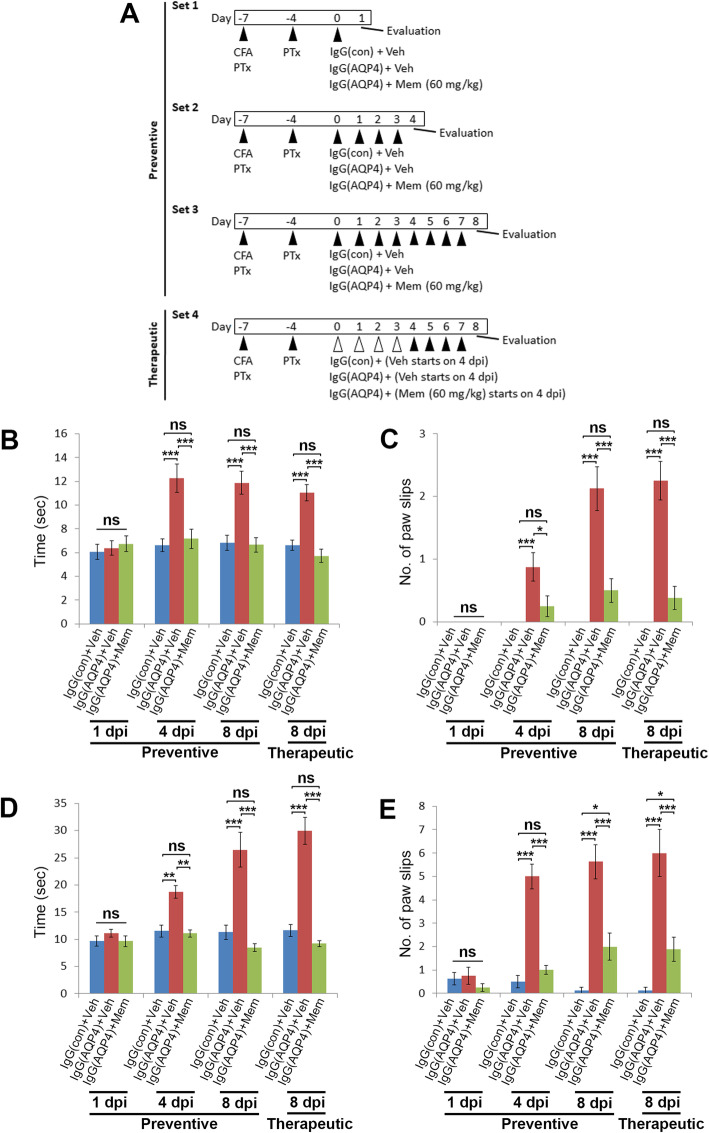
Purified IgG from AQP4-IgG-seropositive NMOSD patients were passively transferred to adult C57BL/6 mice with disrupted blood-brain barrier. Memantine was administered by oral gavage. Motor impairments of the mice were assessed by beam walking test. Spinal cords of the mice were assessed by immunofluorescence and ELISA.
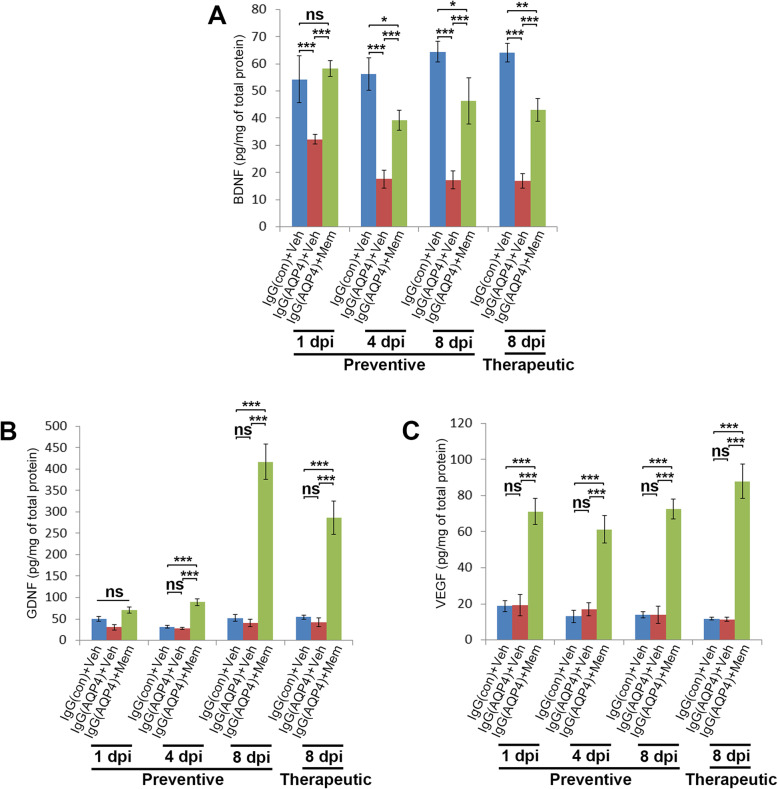
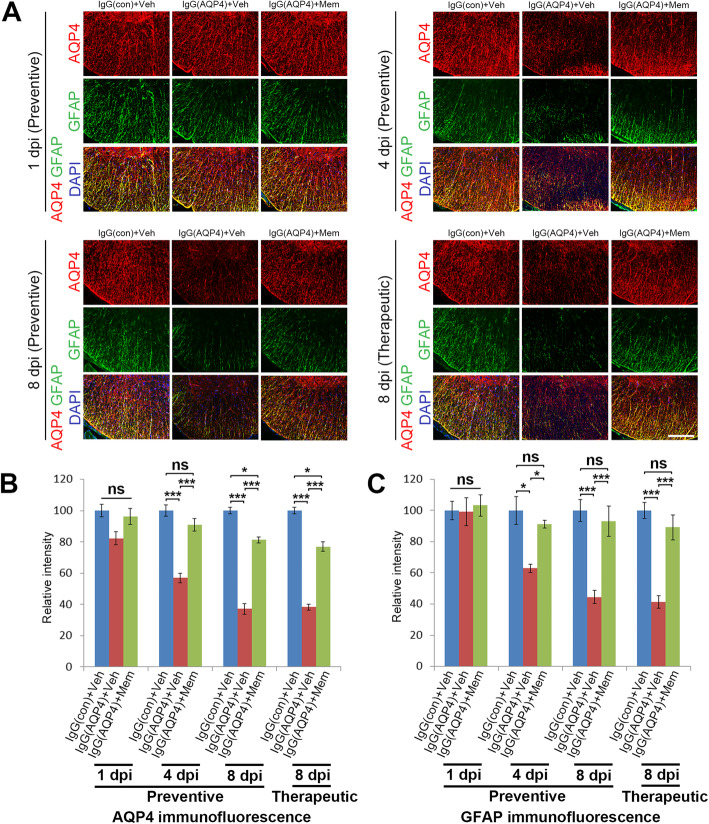
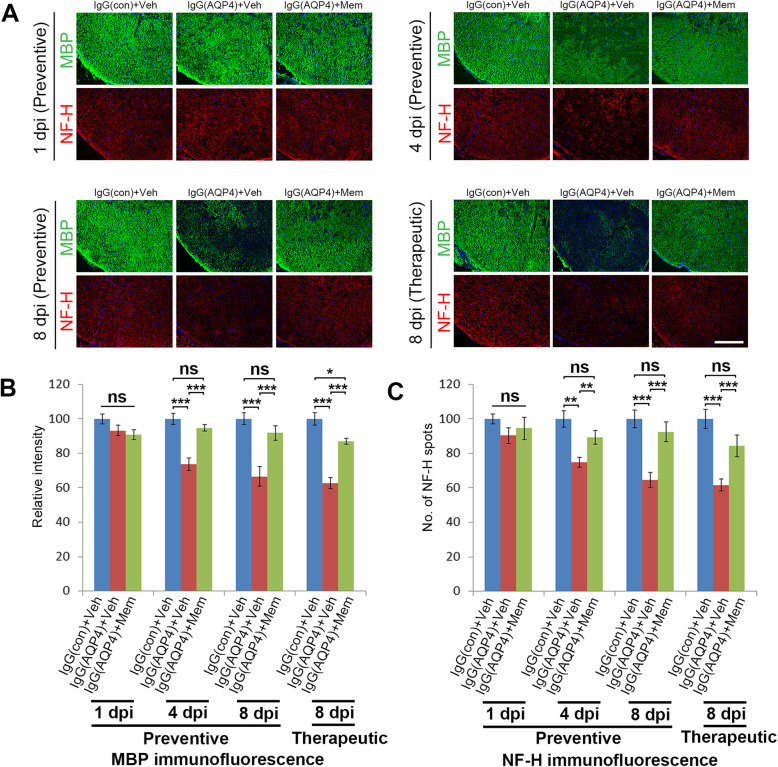
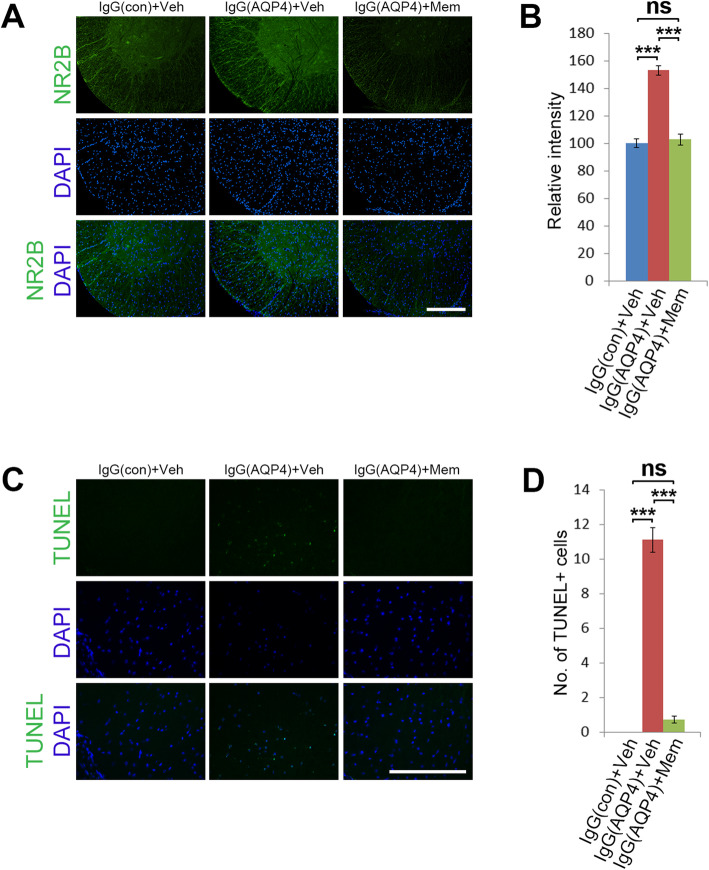
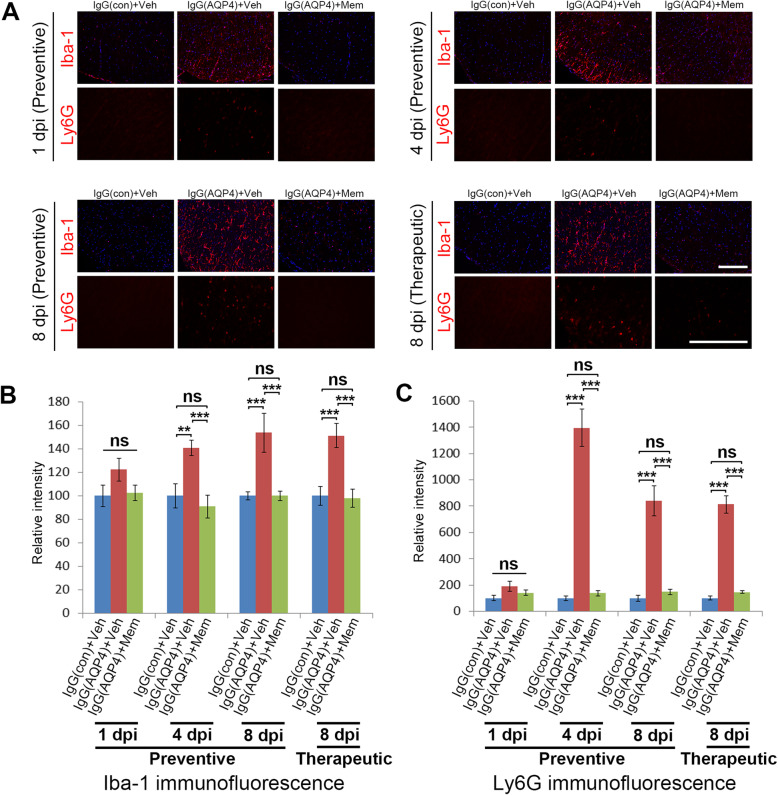
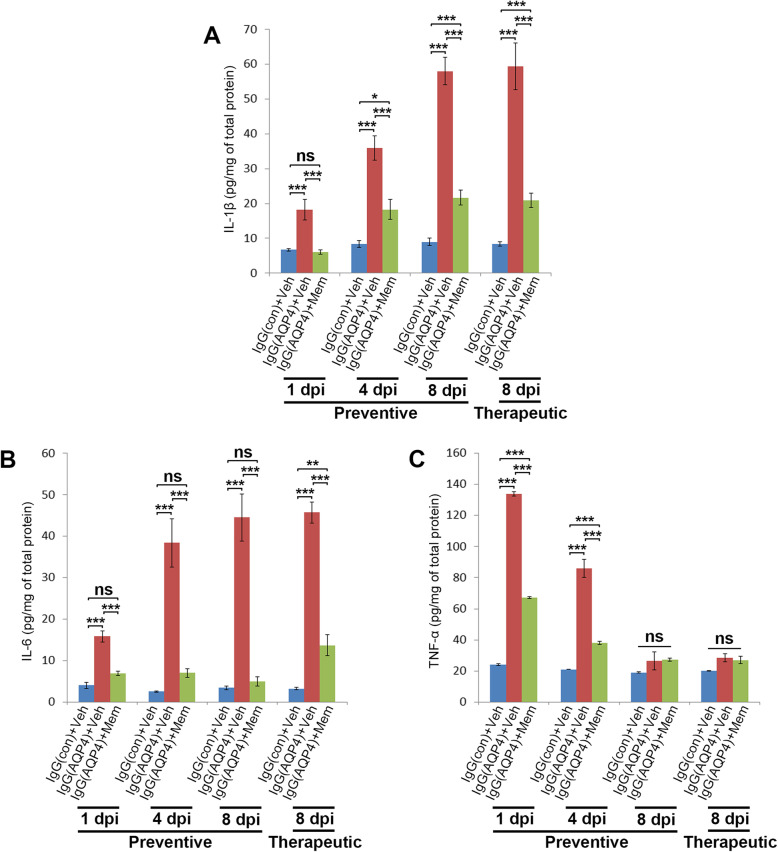
Oral administration of memantine ameliorated the motor impairments induced by AQP4-IgG, no matter the treatment was initiated before (preventive) or after (therapeutic) disease flare. Memantine profoundly reduced AQP4 and astrocyte loss, and attenuated demyelination and axonal loss in the spinal cord of mice which had received AQP4-IgG. The protective effects of memantine were associated with inhibition of apoptosis and suppression of neuroinflammation, with decrease in microglia activation and neutrophil infiltration and reduction of increase in levels of proinflammatory cytokines including interleukin-1β (IL-1β), interleukin-6 (IL-6), and tumor necrosis factor-α (TNF-α). In addition, memantine elevated growth factors including brain-derived neurotrophic factor (BDNF), glial cell line-derived neurotrophic factor (GDNF), and vascular endothelial growth factor (VEGF) in the spinal cord.
Our findings support that glutamate excitotoxicity and neuroinflammation play important roles in complement-independent pathophysiology during early development of NMOSD lesions, and highlight the potential of oral memantine as a therapeutic agent in NMOSD acute attacks.
视神经脊髓炎谱系障碍(NMOSD)是中枢神经系统(CNS)自身免疫性炎性脱髓鞘疾病,其特征为急性视神经炎和横贯性脊髓炎反复发作。水通道蛋白4免疫球蛋白G(AQP4-IgG)自身抗体靶向星形细胞膜上的水通道蛋白4(AQP4),在NMOSD中具有致病性。AQP4-IgG与星形胶质细胞结合后,AQP4-谷氨酸转运体复合物内化引发谷氨酸兴奋性毒性,参与NMOSD早期病理生理过程。我们研究了N-甲基-D-天冬氨酸(NMDA)受体拮抗剂美金刚对接受人AQP4-IgG的小鼠运动障碍和脊髓病理的影响。
将来自AQP4-IgG血清阳性NMOSD患者的纯化IgG被动转移至血脑屏障破坏的成年C57BL/6小鼠。通过口服灌胃给予美金刚。通过光束行走试验评估小鼠的运动障碍。通过免疫荧光和酶联免疫吸附测定法评估小鼠的脊髓。
口服美金刚可改善由AQP4-IgG诱导的运动障碍,无论治疗是在疾病发作之前(预防性)还是之后(治疗性)开始。美金刚可显著减少接受AQP4-IgG的小鼠脊髓中AQP4和星形胶质细胞的损失,并减轻脱髓鞘和轴突损失。美金刚的保护作用与抑制细胞凋亡和抑制神经炎症有关,可减少小胶质细胞活化和中性粒细胞浸润,并降低包括白细胞介素-1β(IL-1β)、白细胞介素-6(IL-6)和肿瘤坏死因子-α(TNF-α)在内的促炎细胞因子水平的升高。此外,美金刚可提高脊髓中包括脑源性神经营养因子(BDNF)、胶质细胞系源性神经营养因子(GDNF)和血管内皮生长因子(VEGF)在内的生长因子水平。
我们的研究结果支持谷氨酸兴奋性毒性和神经炎症在NMOSD病变早期发展的非补体依赖性病理生理过程中起重要作用,并突出了口服美金刚作为NMOSD急性发作治疗药物的潜力。