Nie Zi-Yuan, Zhao Ming-Hui, Cheng Bao-Qian, Pan Rong-Fang, Wang Tian-Rui, Qin Yan, Zhang Xue-Jun
Department of Hematology, The Second Hospital of Hebei Medical University, Shijiazhuang, 050000 China.
Department of Radiology, Affiliated Hospital of Hebei University, Baoding, 071000 China.
Cancer Cell Int. 2020 Aug 7;20:379. doi: 10.1186/s12935-020-01468-5. eCollection 2020.
The roots of are used in traditional Chinese medicine (TCM) and have high medicinal value. Tanshinone IIA (Tan IIA) is the active ingredient of which can inhibit the growth of acute leukemia cell lines in vitro, although the mechanism remains unclear.
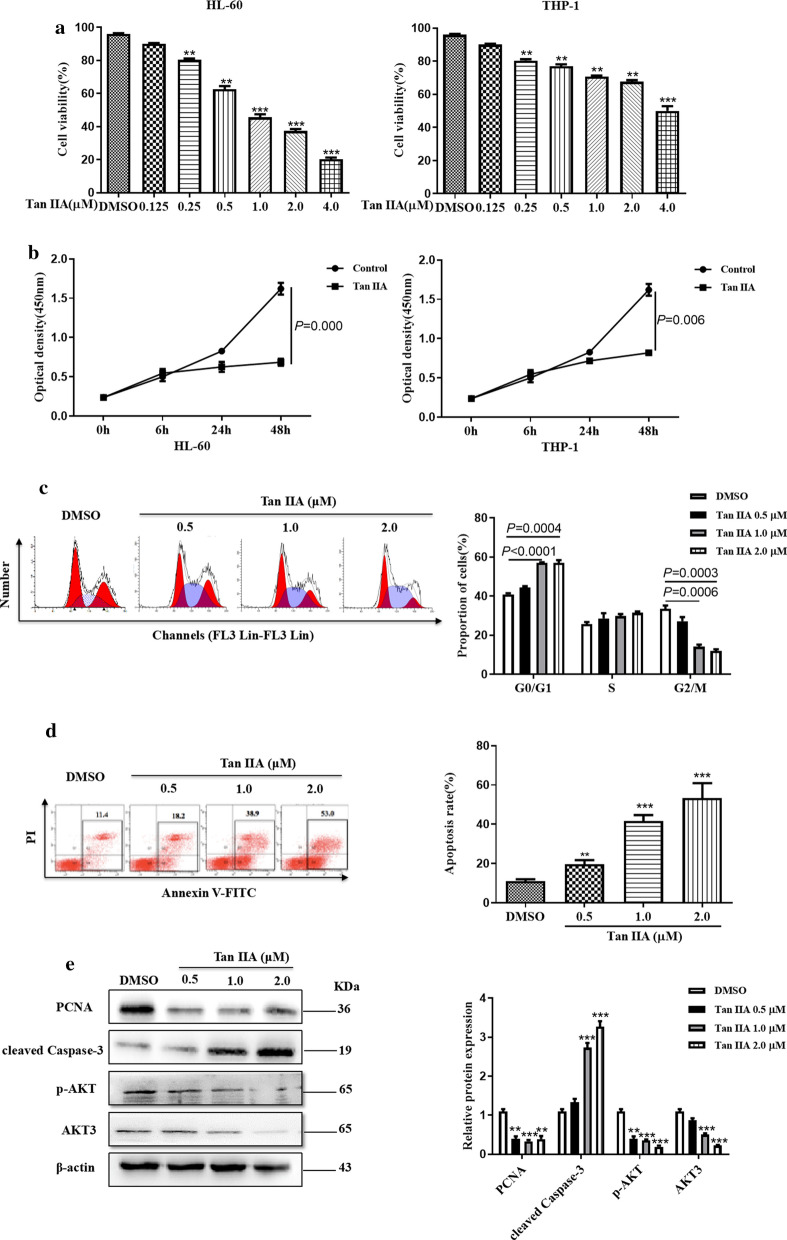
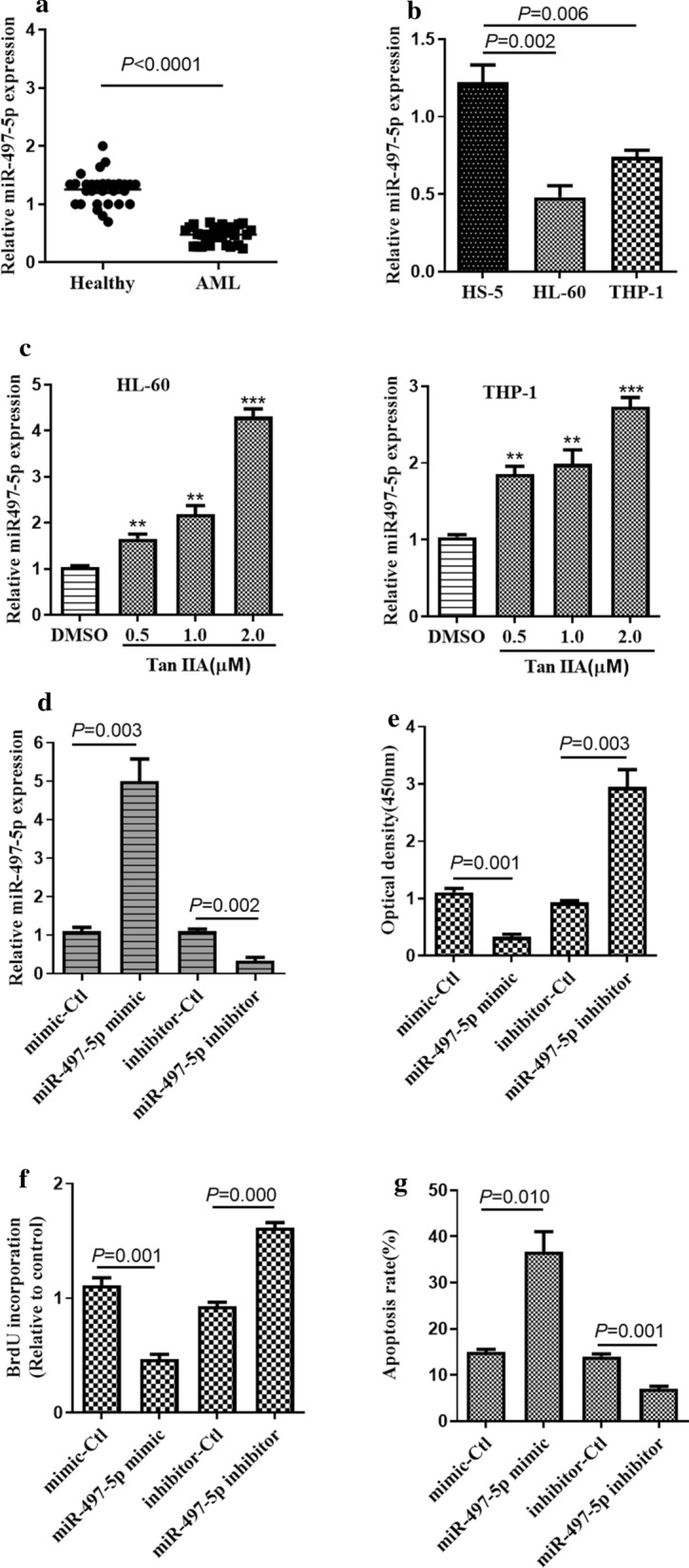
CCK-8 assays and BrdU stain were used to evaluate cell proliferation ability. Western blot analysis was used to detect protein expression. miR-497-5p expression level was detected by using qRT-PCR, and Annexin V-FITC/propidium iodide (PI) was used to detect cell apoptosis.
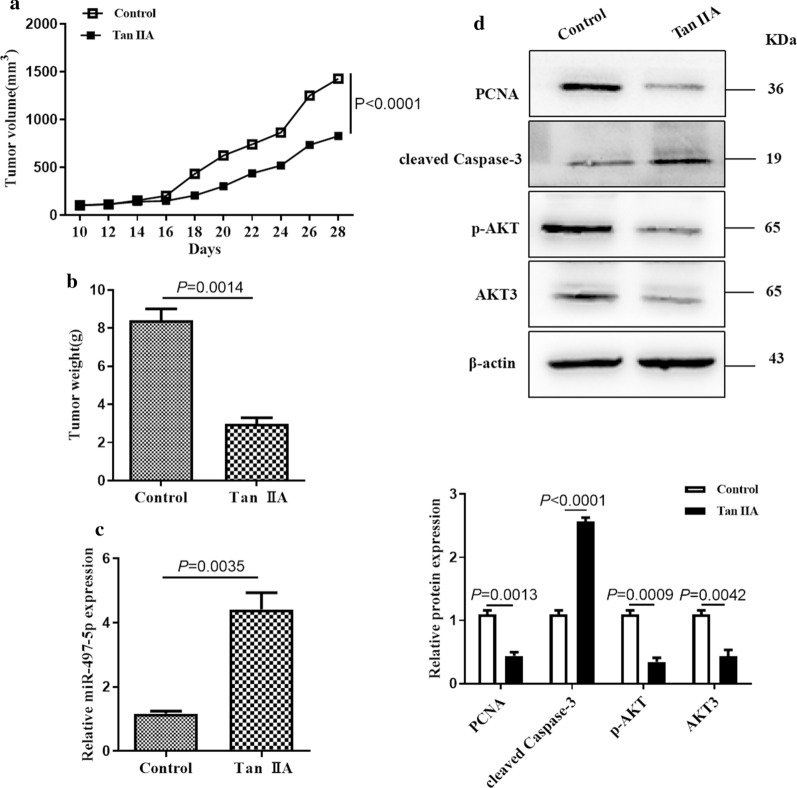
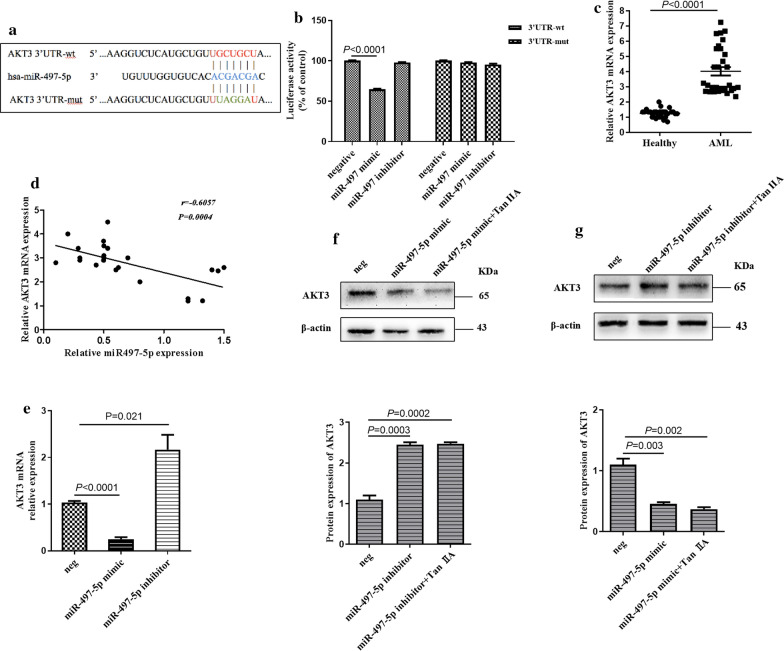
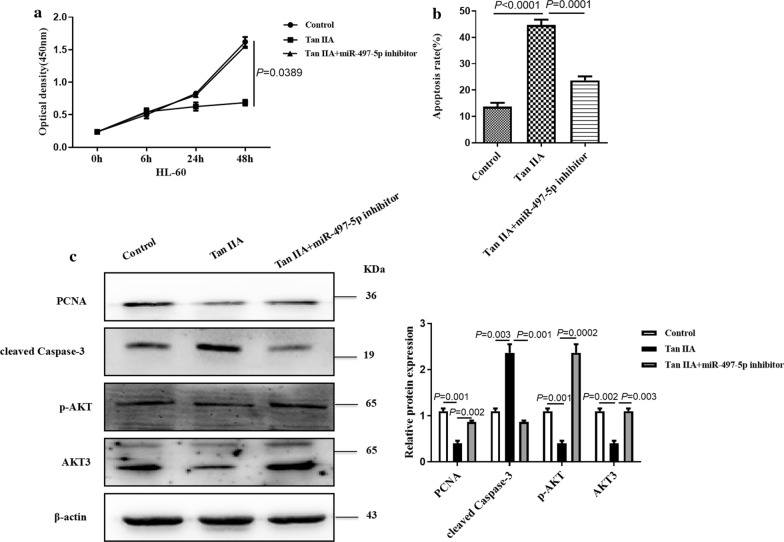
Here we reported that Tan IIA could inhibit cell proliferation, induce cell cycle arrest, and promote cell apoptosis in acute myeloid leukemia (AML) cells. Thus, Tan IIA had the anti-cancer activity in AML cell lines, which was likely mediated by up-regulation of miR-497-5p expression. Our data further showed that in AML cells, the same effects were observed with overexpression of miR-497-5p by a miR-497-5p mimic. We demonstrated that Tan IIA could inhibit the expression of AKT3 by up-regulating the expression of miR-497-5p. We subsequently identified that AKT3 was the direct target of miR-497-5p, and that treatment with Tan IIA obviously reversed the effect of treatment with an miR-497-5p inhibitor under harsh conditions. In turn, PCNA expression was increased and cleaved Caspase-3 was suppressed, which contributed to the growth of AML cells.
Our results showed that Tan IIA could inhibit cell proliferation in AML cells through miR-497-5p-mediated AKT3 downregulation pathway.
[某种植物]的根被用于传统中药,具有很高的药用价值。丹参酮IIA(Tan IIA)是[该植物]的活性成分,其在体外可抑制急性白血病细胞系的生长,尽管其机制尚不清楚。
采用CCK-8法和BrdU染色评估细胞增殖能力。采用蛋白质印迹分析检测蛋白质表达。使用qRT-PCR检测miR-497-5p表达水平,并用膜联蛋白V-异硫氰酸荧光素/碘化丙啶(PI)检测细胞凋亡。
在此我们报道Tan IIA可抑制急性髓系白血病(AML)细胞的增殖、诱导细胞周期停滞并促进细胞凋亡。因此,Tan IIA在AML细胞系中具有抗癌活性,这可能是通过上调miR-497-5p的表达介导的。我们的数据进一步表明,在AML细胞中,通过miR-497-5p模拟物过表达miR-497-5p也观察到了相同的效果。我们证明Tan IIA可通过上调miR-497-5p的表达来抑制AKT3的表达。随后我们确定AKT3是miR-497-5p的直接靶点,并且在苛刻条件下,Tan IIA处理明显逆转了miR-497-5p抑制剂处理的效果。反过来,增殖细胞核抗原(PCNA)表达增加,而裂解的半胱天冬酶-3受到抑制,这促进了AML细胞的生长。
我们的结果表明,Tan IIA可通过miR-497-5p介导的AKT3下调途径抑制AML细胞的增殖。