Department of Microbiology and Immunology, College of Medicine, National Cheng Kung University, Tainan, 701, Taiwan.
The Institute of Basic Medical Sciences, College of Medicine, National Cheng Kung University, Tainan, 701, Taiwan.
Sci Rep. 2020 Aug 12;10(1):13582. doi: 10.1038/s41598-020-70137-4.
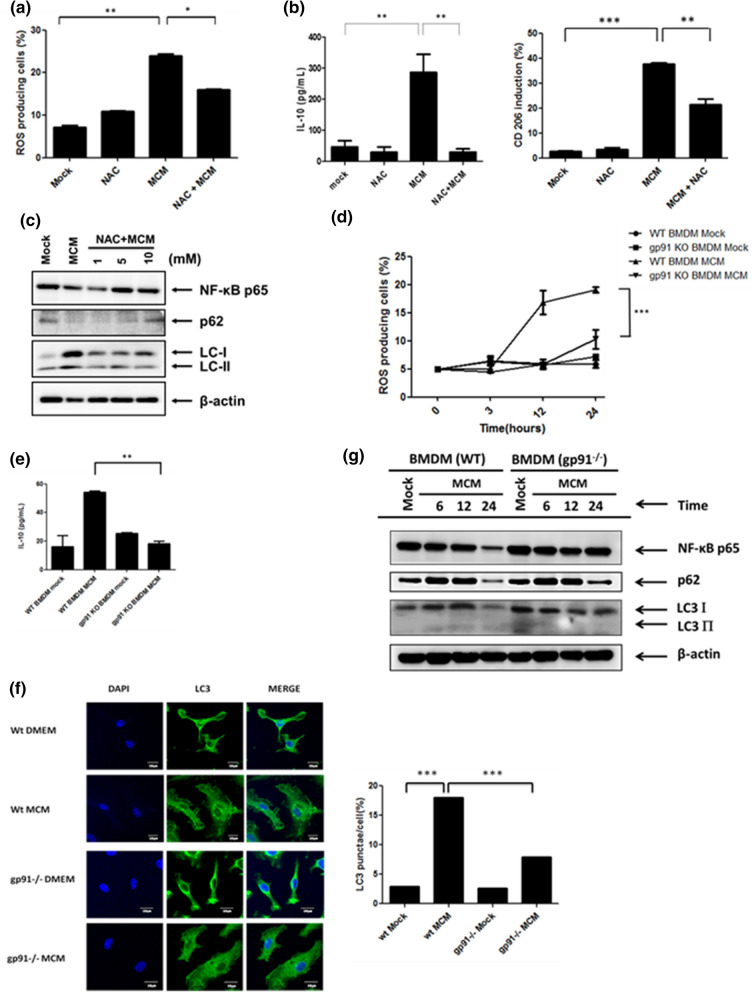
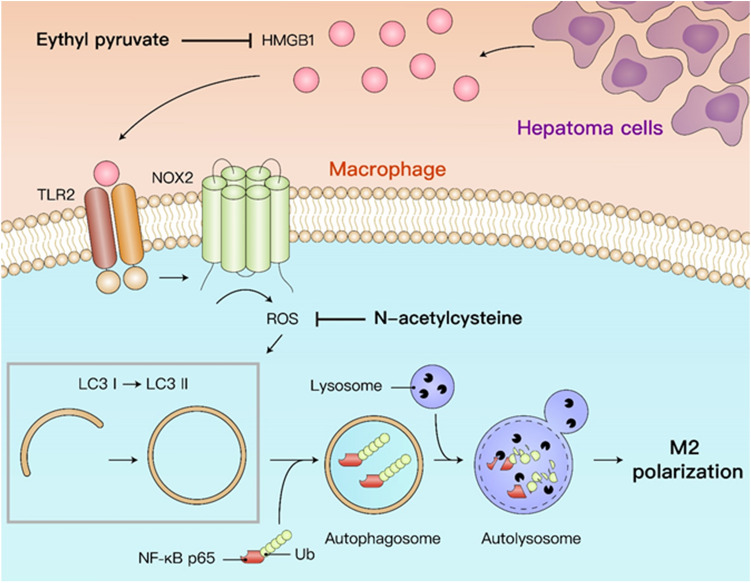
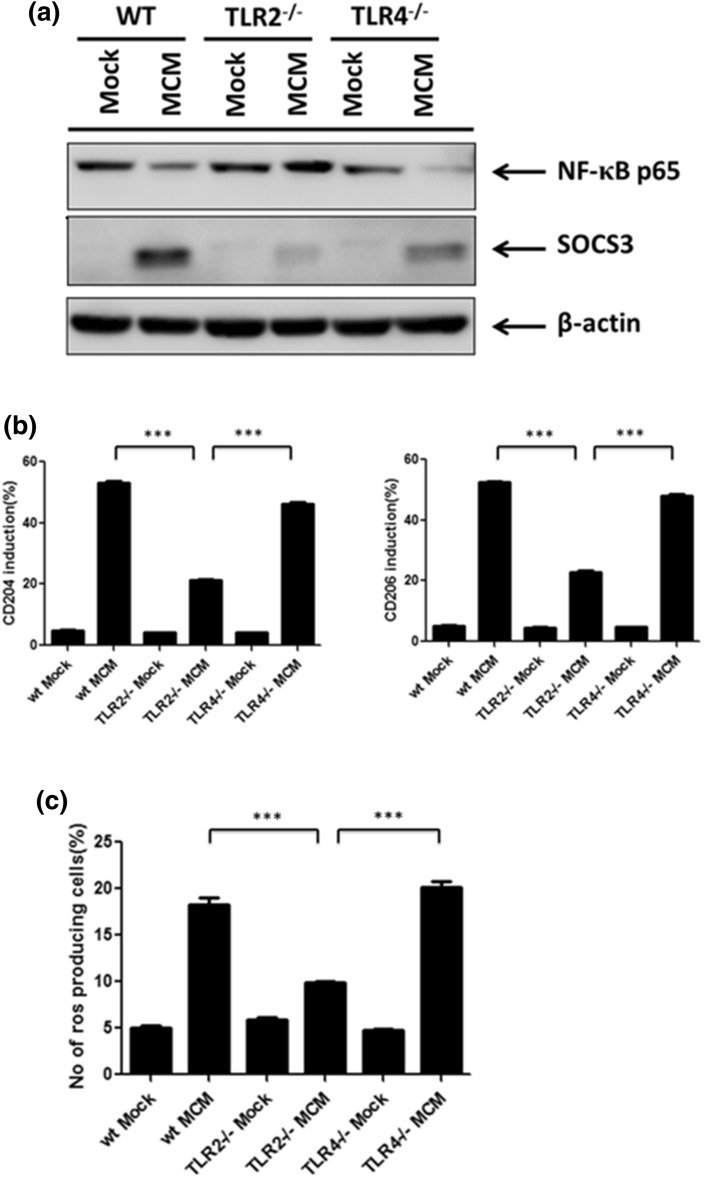
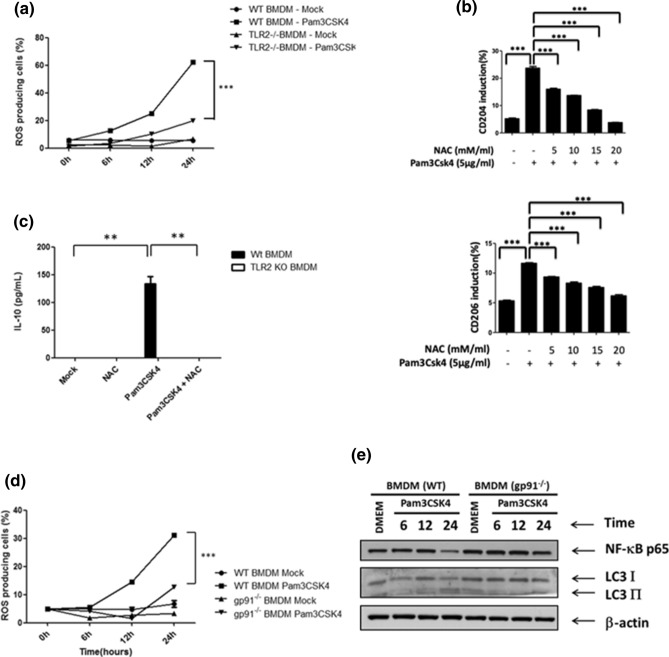
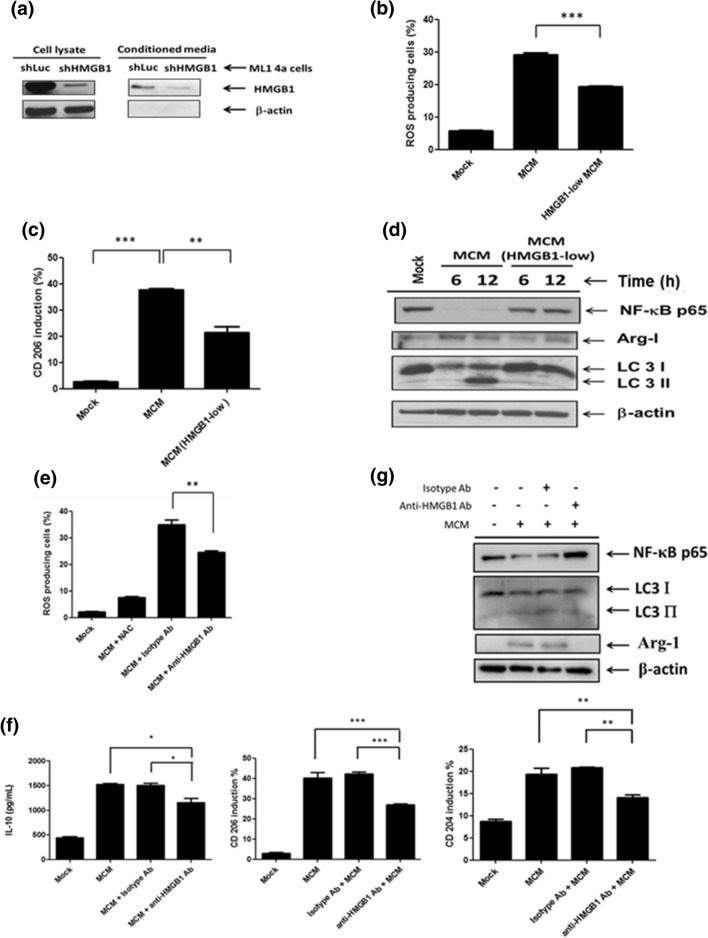
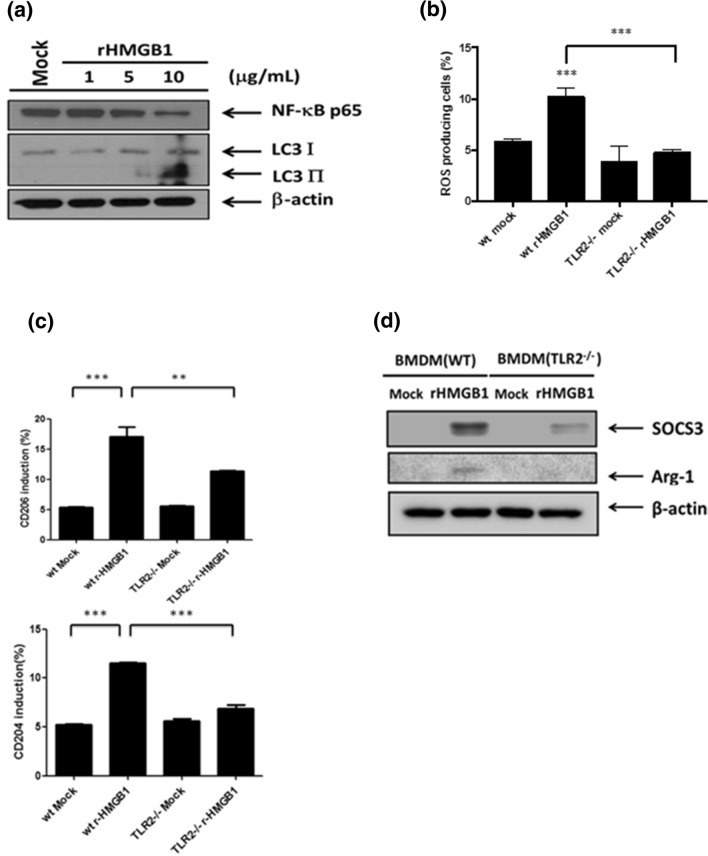
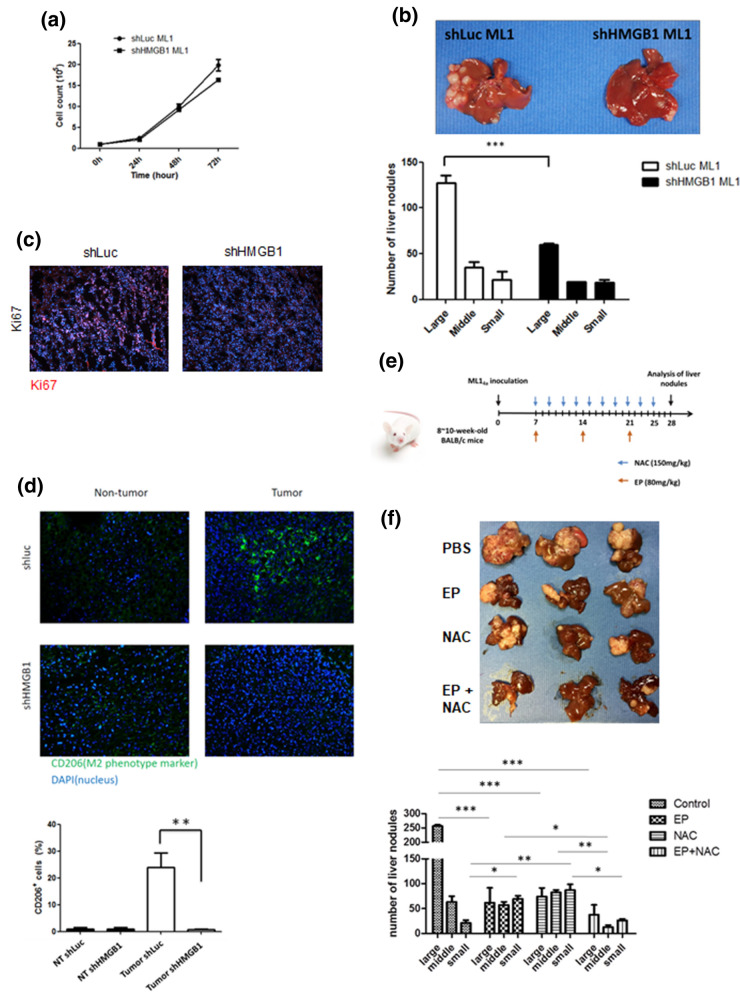
In many human cancers, including hepatocellular carcinoma (HCC), high density of infiltrating tumor-associated macrophages (TAM) is associated with poor prognosis. Most TAMs express a M2 phenotype subsequently supporting tumor growth. How tumor cells polarize these TAMs to a pro-tumor M2 phenotype is still poorly understood. Our previous studies have revealed that a Toll-like receptor 2 (TLR2)-dependent autophagy triggered by hepatoma-derived factors down-regulates NF-κB p65 and drives M2 macrophage differentiation. However, the underlying mechanisms and potential hepatoma-derived TLR2 ligands are not clear. Here, we provide evidence to reveal that NADPH oxidase 2 (NOX2)-dependent reactive oxygen species (ROS) generation is crucial for HCC-induced autophagy, NF-κB p65 down-regulation and M2 phenotype polarization in primary macrophages. This NOX2-generated ROS production in abolished in TLR2-deficient macrophages. HCC-derived or recombinant high-mobility group box 1 (HMGB1) is able to trigger this TLR2-mediated M2 macrophage polarization. Blockage of HMGB1 and ROS by inhibitors, ethyl pyruvate and N-acetylcysteine amide, respectively, significantly reduces both M2 macrophage accumulation and liver nodule formation in HCC-bearing mice. Our findings uncover a HMGB1/TLR2/NOX2/autophagy axis to trigger M2 macrophage polarization in HCC that can be considered as a novel therapeutic target for treating HCC.
在许多人类癌症中,包括肝细胞癌 (HCC),浸润性肿瘤相关巨噬细胞 (TAM) 的高密度与预后不良有关。大多数 TAMs 表达 M2 表型,随后支持肿瘤生长。肿瘤细胞如何将这些 TAMs 极化为促肿瘤的 M2 表型仍知之甚少。我们之前的研究表明,肝癌衍生因子触发的 Toll 样受体 2 (TLR2) 依赖性自噬下调 NF-κB p65,并驱动 M2 巨噬细胞分化。然而,潜在的机制和潜在的肝癌衍生 TLR2 配体尚不清楚。在这里,我们提供的证据表明,NADPH 氧化酶 2 (NOX2) 依赖性活性氧 (ROS) 的产生对于 HCC 诱导的自噬、NF-κB p65 下调和原代巨噬细胞的 M2 表型极化至关重要。TLR2 缺陷型巨噬细胞中这种 NOX2 产生的 ROS 生成被消除。HCC 衍生或重组高迁移率族蛋白 1 (HMGB1) 能够触发这种 TLR2 介导的 M2 巨噬细胞极化。抑制剂乙基丙酮酸和 N-乙酰半胱氨酸酰胺分别阻断 HMGB1 和 ROS,可显著减少 HCC 荷瘤小鼠中 M2 巨噬细胞的积累和肝结节形成。我们的研究结果揭示了 HMGB1/TLR2/NOX2/自噬轴在 HCC 中触发 M2 巨噬细胞极化的机制,可作为治疗 HCC 的新的治疗靶点。