Li Sha, Wang Ning, Tan Hor-Yue, Chueng Fan, Zhang Zhang-Jin, Yuen Man-Fung, Feng Yibin
School of Chinese Medicine, Li Ka Shing Faculty of Medicine, The University of Hong Kong, Pokfulam, Hong Kong S.A.R, P. R. China.
Division of Gastroenterology and Hepatology, Queen Mary Hospital, Department of Medicine, Li Ka Shing Faculty of Medicine, The University of Hong Kong, Pokfulam, Hong Kong S.A.R, P. R. China.
Clin Transl Med. 2020 Aug;10(4):e112. doi: 10.1002/ctm2.112. Epub 2020 Aug 13.
Berberine is an isoquinoline alkaloid compound derived from many herbs, which has been used extensively to improve liver function. But action mechanism of its hepatoprotection in alcoholic liver disease (ALD) is far from being clear.
To investigate the underlying mechanism of berberine's therapeutic effect on ALD associated with gut microbiota-immune system axis.
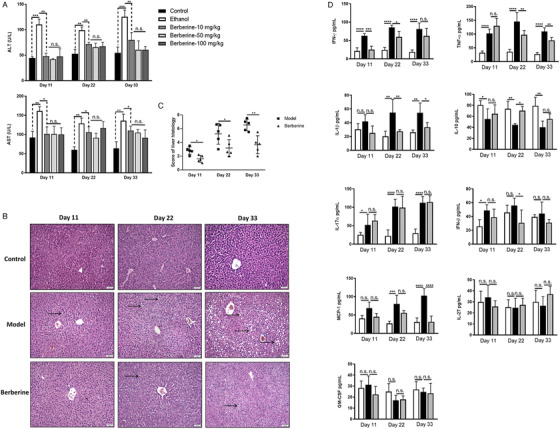
An animal model fed with ethanol that mimics drinking pattern ideally in ALD patients was established. Liver function was evaluated by biochemical test and histological examination. Immune cells were detected by flow cytometry and feces samples were collected for 16S rRNA gene amplicon sequencing.
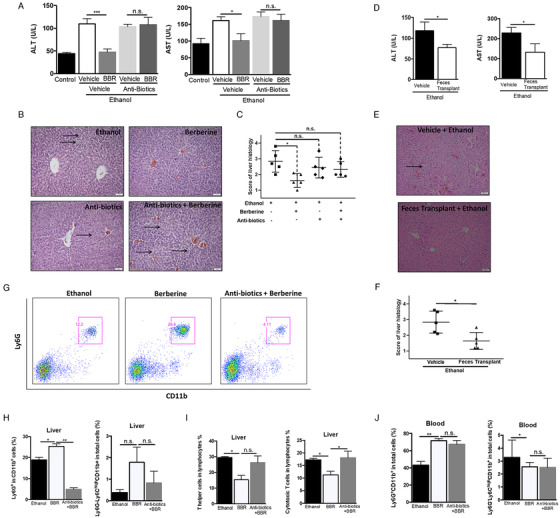
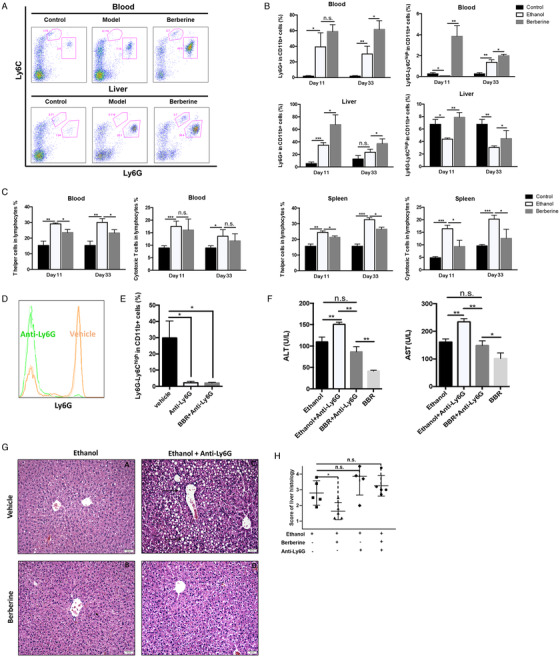
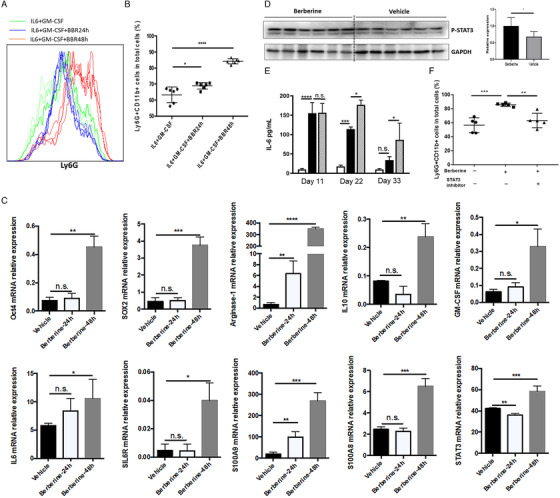
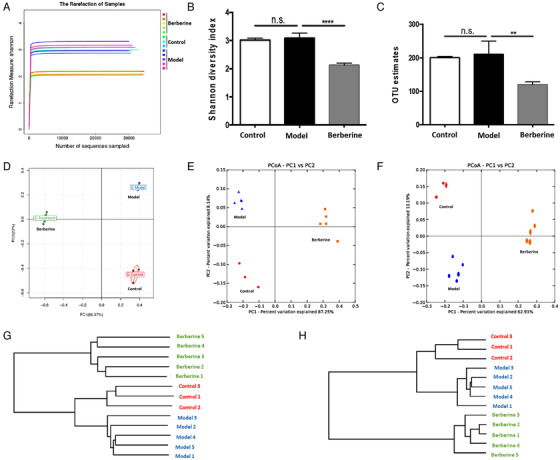
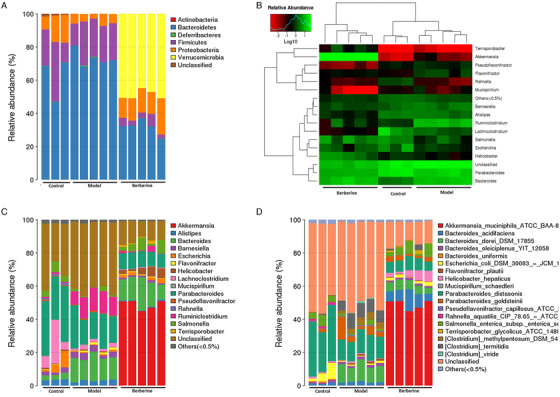
We first reported the promising beneficial effect of berberine on ameliorating acute-on-chronic alcoholic hepatic damage and explored the underlying mechanism involving gut microbiota-immune system axis. Notably, berberine activated a population with immune suppressive function, defined as granulocytic- myeloid-derived suppressor cell (G-MDSC)-like population, in the liver of mice with alleviating alcohol-induced hepatic injury. Berberine remarkably enhanced the increase of G-MDSC-like cells in blood and liver and decreased cytotoxic T cells correspondingly. Suppression of G-MDSC-like population significantly attenuated the protective effect of berberine against alcohol. Berberine activated IL6/STAT3 signaling in in vitro culture of G-MSDCs-like population, while inhibition of STAT3 activity attenuated the activation of this population by berberine. Moreover, berberine changed the overall gut microbial community, primarily increased the abundance of Akkermansia muciniphila. Of note, depletion of gut microbiota abolished the inducing effect of berberine on G-MDSC-like population, and attenuated its hepatoprotective effect against alcohol in mice, suggesting intestinal flora might be involved in mediating the expansion of this protective population.
Collectively, this study delivered insight into the role of immunosuppressive response in ALD, and facilitated the understanding of the pharmacological effects and action mechanisms of berberine.
黄连素是一种从多种草药中提取的异喹啉生物碱化合物,已被广泛用于改善肝功能。但其在酒精性肝病(ALD)中肝脏保护作用的机制尚不清楚。
探讨黄连素对与肠道微生物群-免疫系统轴相关的ALD的治疗作用机制。
建立一种理想模拟ALD患者饮酒模式的乙醇喂养动物模型。通过生化检测和组织学检查评估肝功能。采用流式细胞术检测免疫细胞,并收集粪便样本进行16S rRNA基因扩增子测序。
我们首次报道了黄连素对改善慢性酒精性肝损伤的有益作用,并探讨了其涉及肠道微生物群-免疫系统轴的潜在机制。值得注意的是,黄连素在减轻酒精性肝损伤的小鼠肝脏中激活了一群具有免疫抑制功能的细胞,定义为粒细胞-髓源性抑制细胞(G-MDSC)样细胞群。黄连素显著增强了血液和肝脏中G-MDSC样细胞的增加,并相应地减少了细胞毒性T细胞。抑制G-MDSC样细胞群显著减弱了黄连素对酒精的保护作用。黄连素在体外培养的G-MSDC样细胞群中激活了IL6/STAT3信号通路,而抑制STAT3活性减弱了黄连素对该细胞群的激活作用。此外,黄连素改变了整体肠道微生物群落,主要增加了嗜黏蛋白阿克曼氏菌的丰度。值得注意的是,肠道微生物群的缺失消除了黄连素对G-MDSC样细胞群的诱导作用,并减弱了其对小鼠酒精性肝损伤的保护作用,提示肠道菌群可能参与介导这一保护性细胞群的扩增。
总体而言,本研究深入了解了免疫抑制反应在ALD中的作用,并有助于理解黄连素的药理作用和作用机制。