Augelletti Floriana, Jousset Alexandre, Agathos Spiros N, Stenuit Benoit
Laboratory of Bioengineering, Earth and Life Institute, Catholic University of Louvain, Louvain-la-Neuve, Belgium.
Ecology and Biodiversity Group, Institute of Environmental Biology, Utrecht University, Utrecht, Netherlands.
Front Microbiol. 2020 Jul 24;11:1490. doi: 10.3389/fmicb.2020.01490. eCollection 2020.
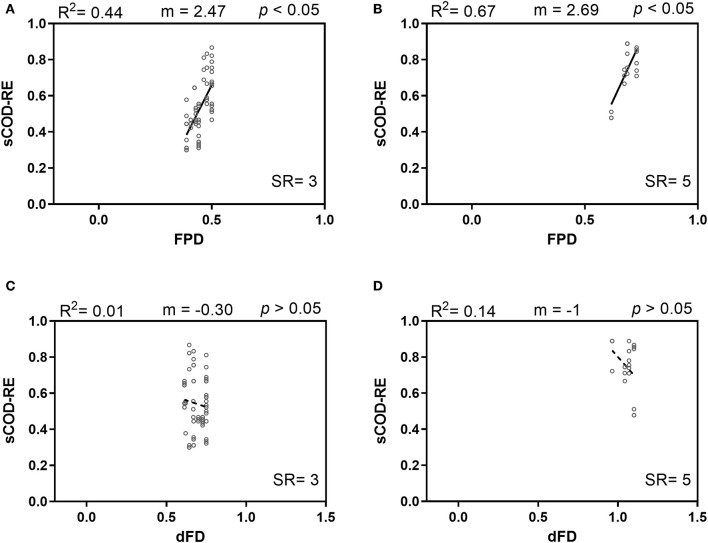
Psychrophilic bacteria are valuable biocatalysts to develop robust bioaugmentation formulations for enhanced wastewater treatment at low temperatures or fluctuating temperature conditions. Here, using different biodiversity indices [based on species richness (SR), phylogenetic diversity (PD) and functional diversity (FD)], we studied the effects of microbial diversity of artificial bacterial consortia on the biomass gross yields (measured through OD) and removal efficiency of soluble chemical oxygen demand (mg sCOD removed/mg sCOD introduced) in synthetic, medium-strength wastewater. We built artificial consortia out of one to six bacterial strains isolated at 4°C through combinatorial biodiversity experiments. Increasing species richness resulted in improved sCOD removal efficiency (i.e., 0.266 ± 0.146, 0.542 ± 0.155, 0.742 ± 0.136, 0.822 ± 0.019 for mono-, tri-, penta-and hexacultures, respectively) and higher biomass gross yields (i.e., 0.065 ± 0.052, 0.132 ± 0.046, 0.173 ± 0.049, 0.216 ± 0.019 for mono-, tri-, penta,- and hexacultures, respectively). This positive relationship between biodiversity, sCOD removal and biomass gross yield was also observed when considering metabolic profiling (functional diversity) or evolutionary relationships (phylogenetic diversity). The positive effect of biodiversity on sCOD removal efficiency could be attributed to the selection of a particular, best-performing species (i.e., sp.) as well as complementary use of carbon resources among consortia members (i.e., complementarity effects). Among the biodiversity indices, PD diversity metrics explained higher variation in sCOD removal than SR and FD diversity metrics. For a more effective bioaugmentation, our results stress the importance of using phylogenetically diverse consortia, with an increased degradation ability, instead of single pure cultures. Moreover, PD could be used as an assembly rule to guide the composition of mixed cultures for wastewater bioaugmentation under psychrophilic conditions.
嗜冷菌是开发强大生物强化配方的宝贵生物催化剂,可用于在低温或温度波动条件下增强废水处理效果。在此,我们使用不同的生物多样性指数[基于物种丰富度(SR)、系统发育多样性(PD)和功能多样性(FD)],研究了人工细菌群落的微生物多样性对合成中等强度废水中生物量总产量(通过OD测量)和可溶性化学需氧量去除效率(去除的毫克sCOD/引入的毫克sCOD)的影响。我们通过组合生物多样性实验,从在4°C下分离的一至六种细菌菌株构建了人工群落。物种丰富度的增加导致sCOD去除效率提高(即单培养、三培养、五培养和六培养的去除效率分别为0.266±0.146、0.542±0.155、0.742±0.136、0.822±0.019)以及生物量总产量更高(即单培养、三培养、五培养和六培养的生物量总产量分别为0.065±0.052、0.132±0.046、0.173±0.049、0.216±0.019)。在考虑代谢谱(功能多样性)或进化关系(系统发育多样性)时,也观察到生物多样性、sCOD去除和生物量总产量之间的这种正相关关系。生物多样性对sCOD去除效率的积极影响可归因于选择了特定的、表现最佳的物种(即 种)以及群落成员之间碳资源的互补利用(即互补效应)。在生物多样性指数中,PD多样性指标比SR和FD多样性指标能解释sCOD去除中更高的变异。为了实现更有效的生物强化,我们的结果强调了使用具有更高降解能力的系统发育多样的群落而非单一纯培养物的重要性。此外,PD可作为一种组装规则,指导嗜冷条件下废水生物强化混合培养物的组成。