Sun Yue, Estevez Alberto, Schlothauer Tilman, Wecksler Aaron T
Protein Analytical Chemistry, Genentech Inc ., South San Francisco, CA, USA.
Structural Biology, Genentech Inc ., South San Francisco, CA, USA.
MAbs. 2020 Jan-Dec;12(1):1802135. doi: 10.1080/19420862.2020.1802135.
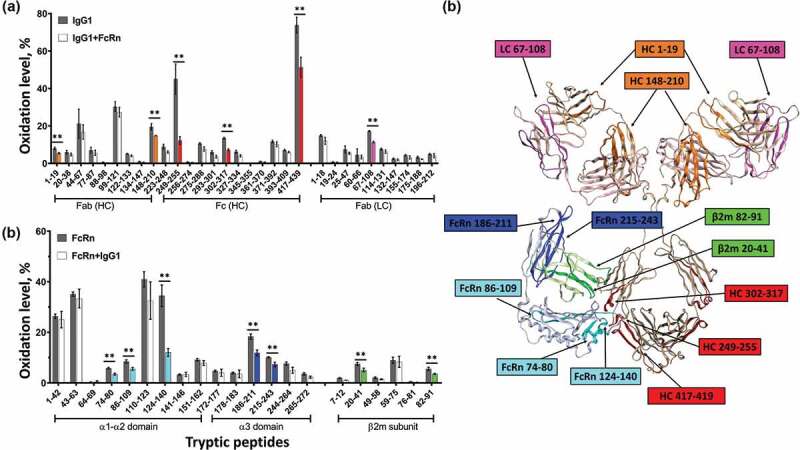
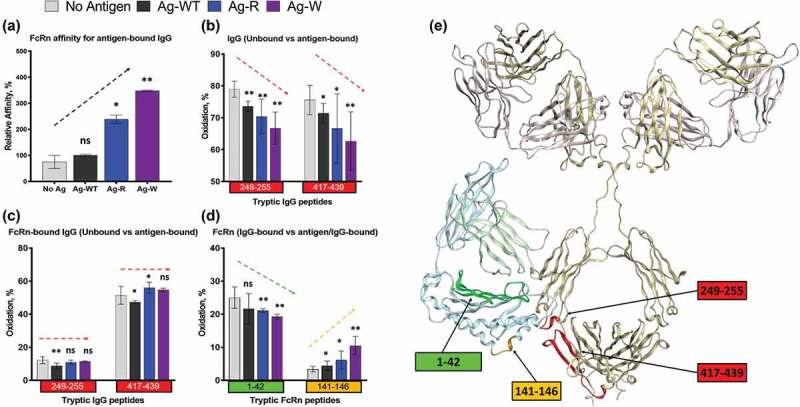
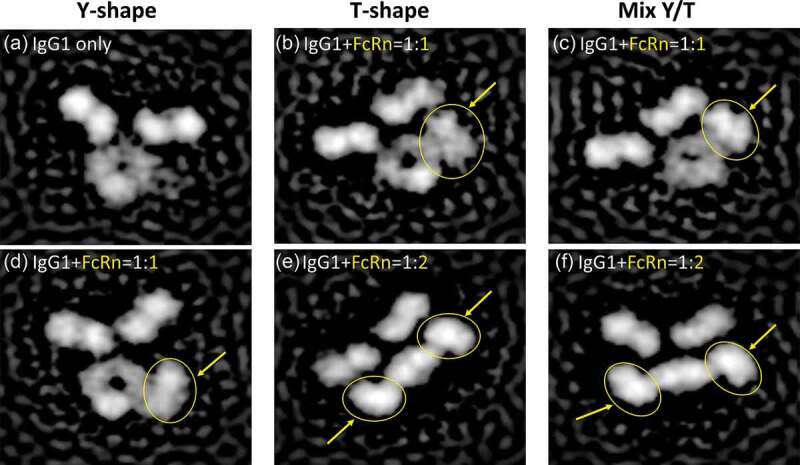
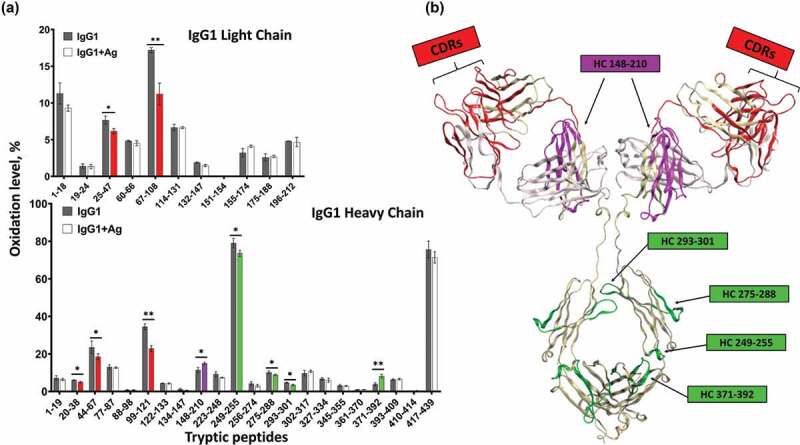
The neonatal Fc receptor (FcRn) is a key membrane protein that plays an integral role in serum immunoglobulin (IgG) recycling, which extends the half-life of antibody. In addition, FcRn is known to traffic antigen-bound immunoglobulins (Ag-IgGs), and to interact with immune complexes to facilitate the antigen cross-presentation of peptides derived from the immune complexes in antigen-presenting cells (APCs). Studies on the IgG-FcRn molecular interactions have primarily focused on the Fc region, and only recently have shown the potential impact of the antigen-binding fragment physiochemical properties on FcRn binding. However, the effect of the antigen physiochemical properties on IgG structure as it relates to Ag-IgG-FcRn binding is not well understood. Here we used an IgG-peptide antigen complex as a model system to investigate the structural effects of the antigen's physiochemical properties on the IgG structure, and the subsequent effects of Ag-IgG-FcRn interactions. We used hydroxyl radical footprinting-mass spectrometry to investigate the structural impact on an IgG upon antigen binding, and observed that the physicochemical properties of the antigen differentially induce conformational changes in the IgG FcRn binding region. The extent of these structural changes directly correlates to the magnitude of the affinity differences between the Ag-IgG complexes and FcRn. Moreover, the antigen's physicochemical properties differentially induce structural differences within the Ag-IgG-FcRn ternary complex. We also provide electron microscopy data that shows corroborating Fab-FcRn interactions, and confirms the hypothesis of potential 2:1 FcRn:IgG binding stoichiometry. These data demonstrate antigen-induced Fc structural rearrangements affect both the affinity toward FcRn and the trimeric antigen-IgG-FcRn complex, providing novel molecular insights in the first steps toward understanding interactions of FcRn-containing large(r)-sized immune complex.
新生儿Fc受体(FcRn)是一种关键的膜蛋白,在血清免疫球蛋白(IgG)循环中发挥着不可或缺的作用,可延长抗体的半衰期。此外,已知FcRn能转运抗原结合的免疫球蛋白(Ag-IgG),并与免疫复合物相互作用,以促进抗原呈递细胞(APC)中源自免疫复合物的肽段进行抗原交叉呈递。关于IgG-FcRn分子相互作用的研究主要集中在Fc区域,直到最近才显示出抗原结合片段的物理化学性质对FcRn结合的潜在影响。然而,抗原的物理化学性质对与Ag-IgG-FcRn结合相关的IgG结构的影响尚不清楚。在此,我们使用IgG-肽抗原复合物作为模型系统,研究抗原的物理化学性质对IgG结构的影响,以及随后的Ag-IgG-FcRn相互作用的影响。我们使用羟基自由基足迹质谱法研究抗原结合对IgG的结构影响,观察到抗原的物理化学性质差异诱导IgG FcRn结合区域的构象变化。这些结构变化的程度与Ag-IgG复合物和FcRn之间亲和力差异的大小直接相关。此外,抗原的物理化学性质差异诱导Ag-IgG-FcRn三元复合物内的结构差异。我们还提供了电子显微镜数据,证实了Fab-FcRn相互作用,并证实了潜在的2:1 FcRn:IgG结合化学计量比的假设。这些数据表明,抗原诱导的Fc结构重排既影响对FcRn的亲和力,也影响三聚体抗原-IgG-FcRn复合物,为理解含FcRn的大尺寸免疫复合物相互作用的第一步提供了新的分子见解。