a Cancer and Inflammation Program , National Cancer Institute , Frederick , Maryland , USA.
b Basic Science Program , Leidos Biomedical Research, Inc., Cancer and Inflammation Program, National Cancer Institute , Frederick , Maryland , USA.
MAbs. 2019 Jan;11(1):58-74. doi: 10.1080/19420862.2018.1522178. Epub 2018 Oct 5.
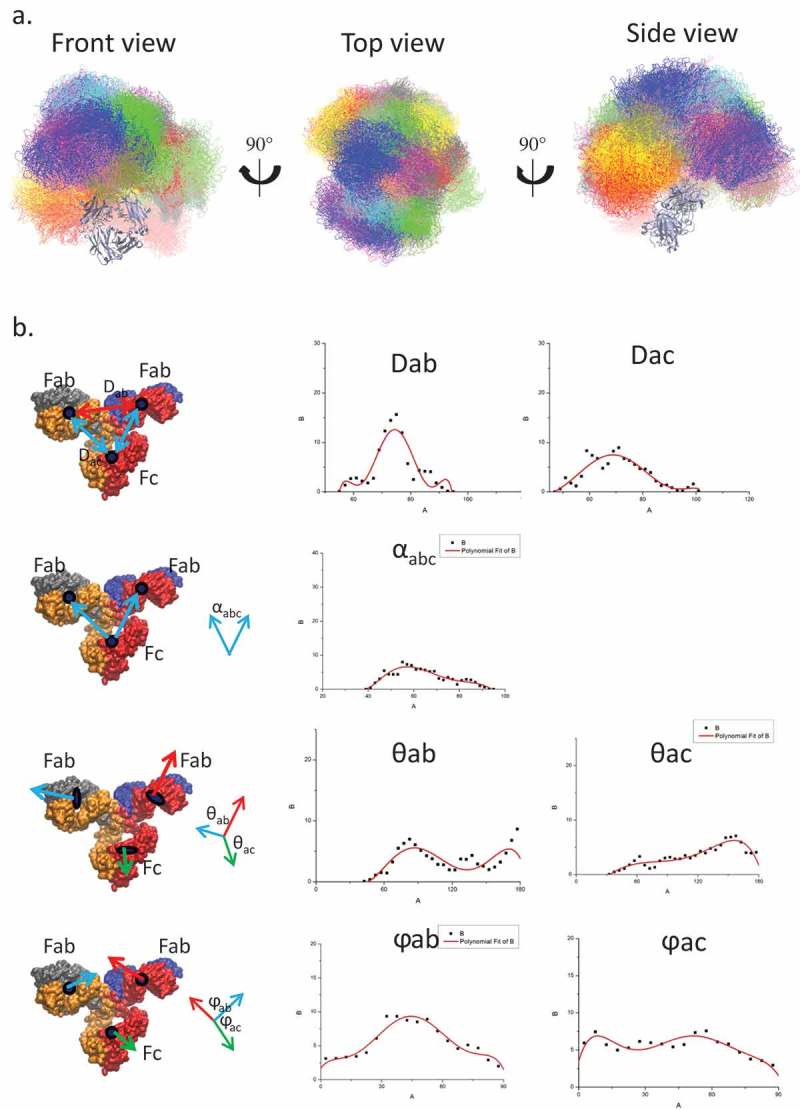
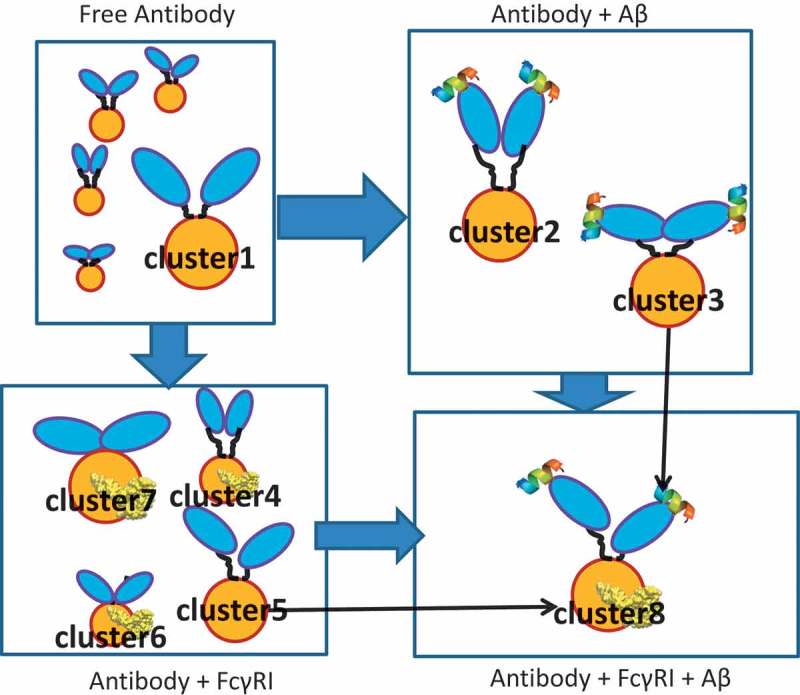
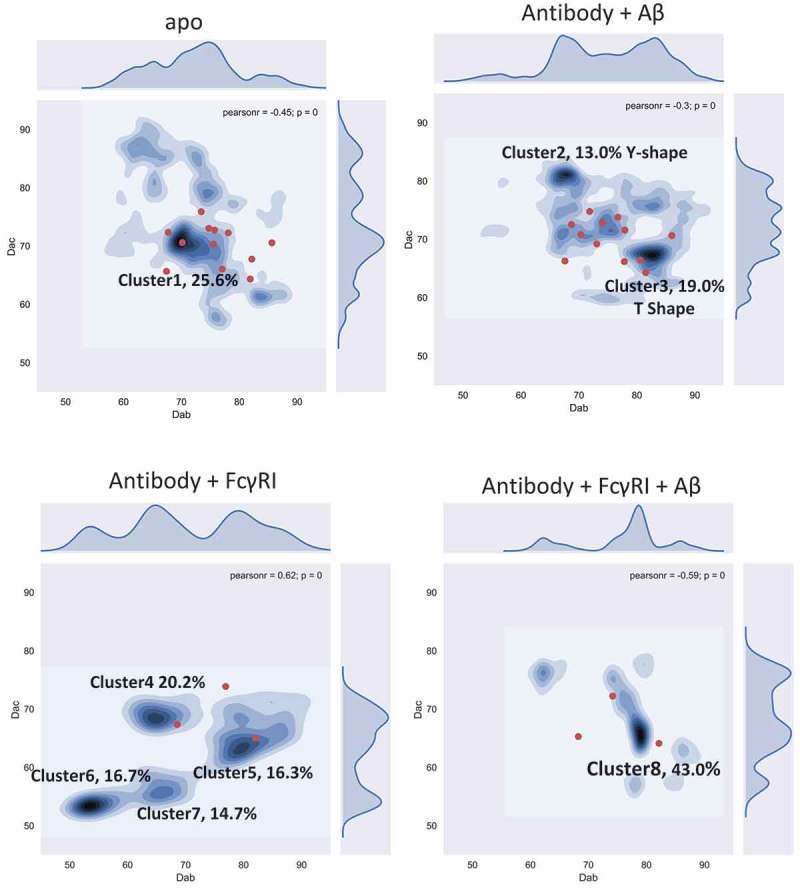
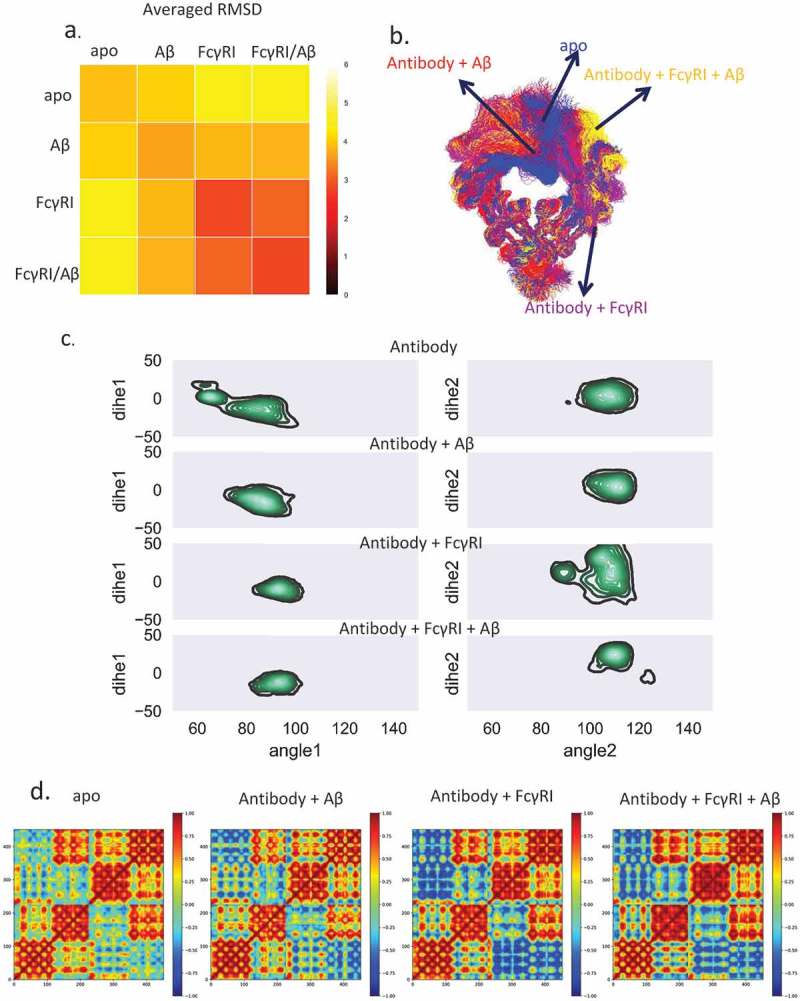
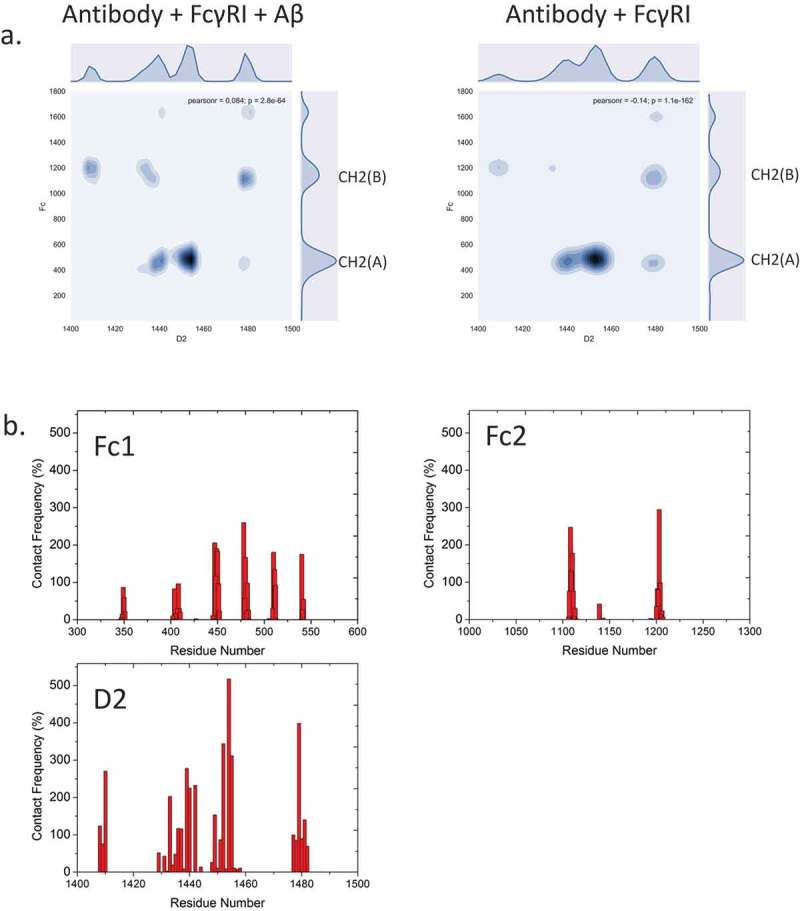
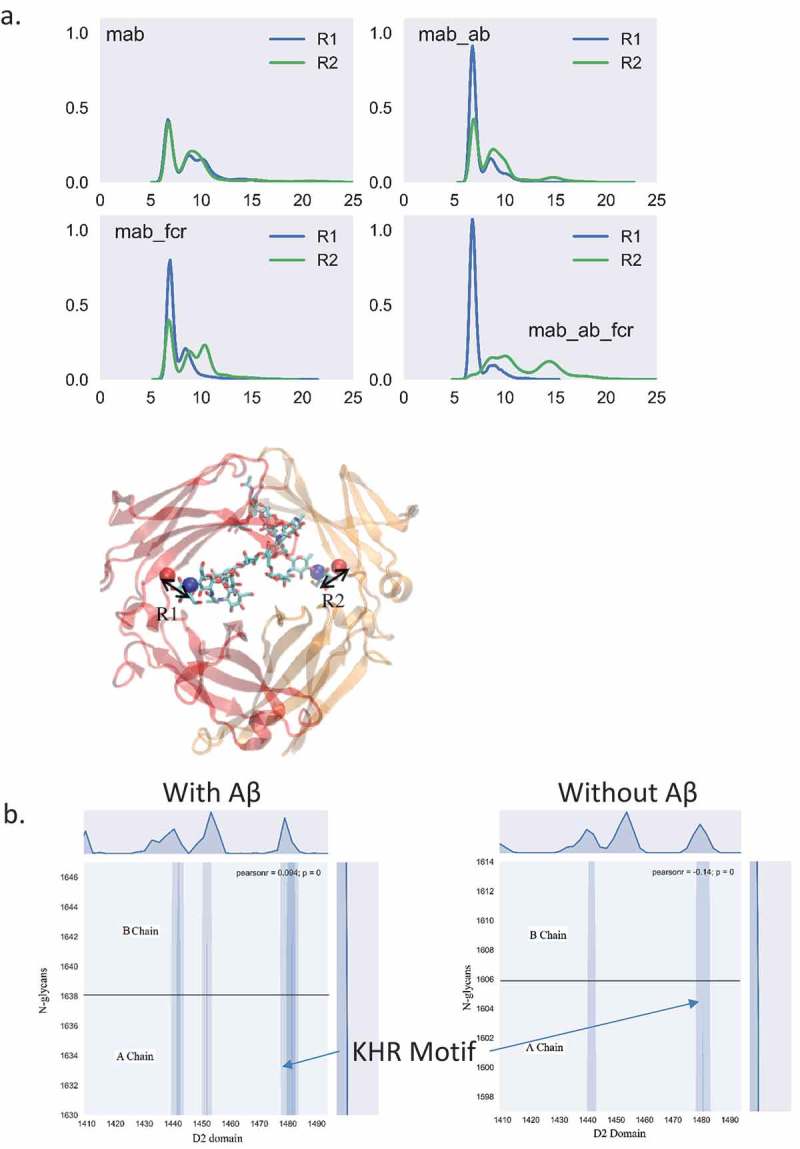
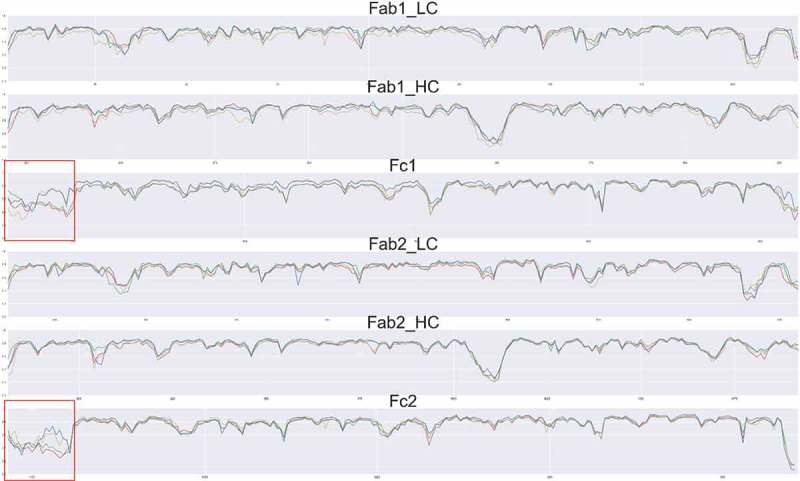
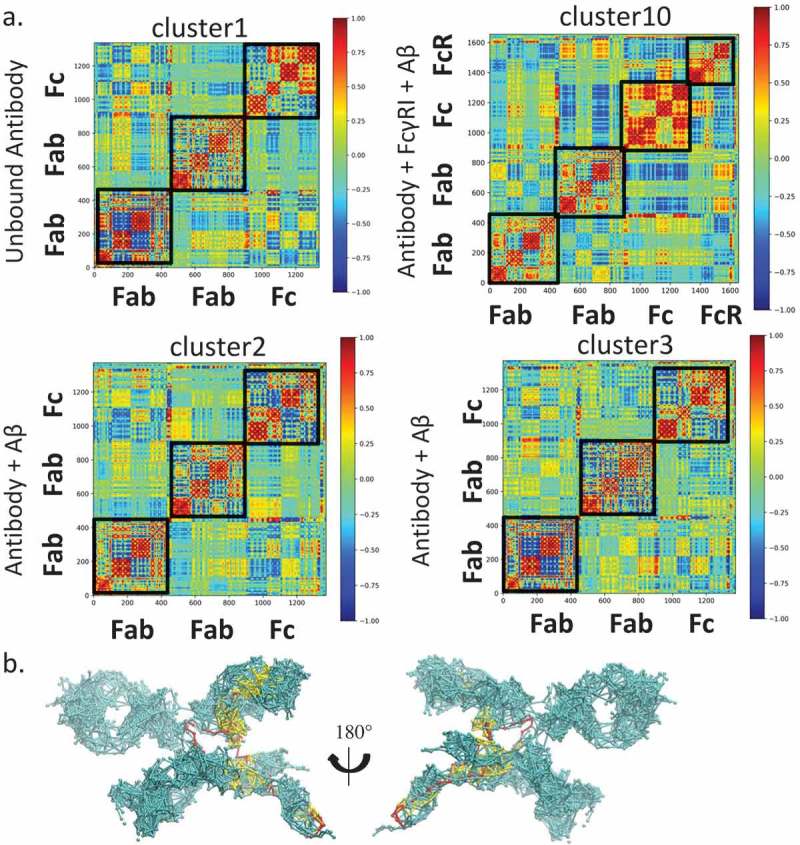
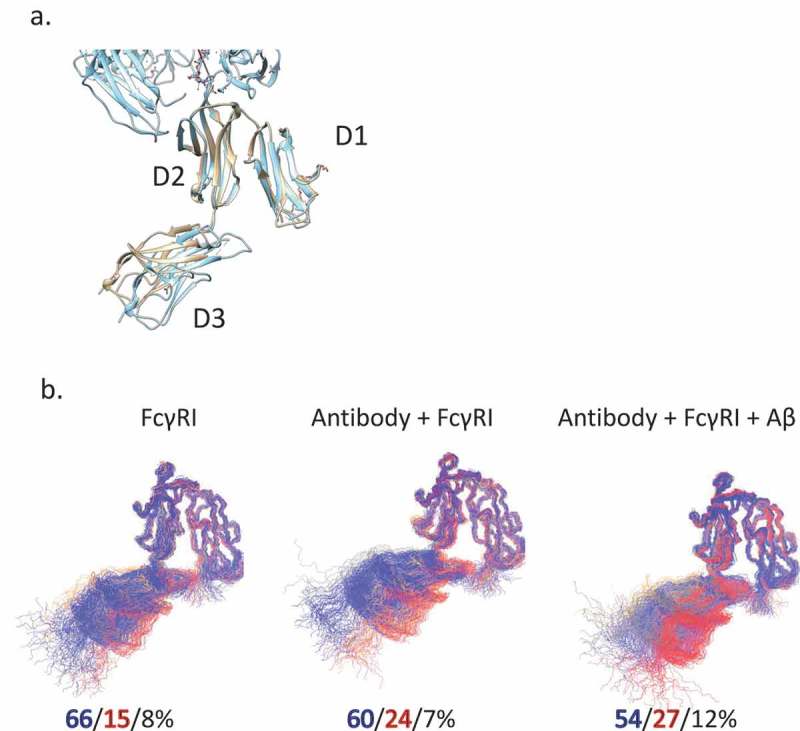
A key question in immunology is whether antigen recognition and Fc receptor (FcR) binding are allosterically linked. This question is also relevant for therapeutic antibody design. Antibody Fab and Fc domains are connected by flexible unstructured hinge region. Fc chains have conserved glycosylation sites at Asn297, with each conjugated to a core heptasaccharide and forming biantennary Fc glycan. The glycans modulate the Fc conformations and functions. It is well known that the antibody Fab and Fc domains and glycan affect antibody activity, but whether these elements act independently or synergistically is still uncertain. We simulated four antibody complexes: free antibody, antigen-bound antibody, FcR-bound antibody, and an antigen-antibody-FcR complex. We found that, in the antibody's "T/Y" conformation, the glycans, and the Fc domain all respond to antigen binding, with the antibody population shifting to two dominant clusters, both with the Fc-receptor binding site open. The simulations reveal that the Fc-glycan-receptor complexes also segregate into two conformational clusters, one corresponding to the antigen-free antibody-FcR baseline binding, and the other with an antigen-enhanced antibody-FcR interaction. Our study confirmed allosteric communications in antibody-antigen recognition and following FcR activation. Even though we observed allosteric communications through the IgG domains, the most important mechanism that we observed is the communication via population shift, stimulated by antigen binding and propagating to influence FcR recognition.
免疫学中的一个关键问题是抗原识别和 Fc 受体 (FcR) 结合是否具有变构关联。这个问题也与治疗性抗体的设计有关。抗体 Fab 和 Fc 结构域通过柔性无规卷曲的铰链区连接。Fc 链在 Asn297 处具有保守的糖基化位点,每个位点与核心七糖连接,并形成双天线 Fc 聚糖。糖基化修饰调节 Fc 构象和功能。众所周知,抗体 Fab 和 Fc 结构域和聚糖会影响抗体的活性,但这些元素是独立还是协同作用仍不确定。我们模拟了四种抗体复合物:游离抗体、抗原结合抗体、FcR 结合抗体和抗原-抗体-FcR 复合物。我们发现,在抗体的“T/Y”构象中,聚糖和 Fc 结构域都对抗原结合有响应,抗体群体向两个主要簇转移,FcR 结合位点均开放。模拟结果表明,Fc-聚糖-FcR 复合物也分为两个构象簇,一个与抗原游离抗体-FcR 基线结合相对应,另一个与抗原增强的抗体-FcR 相互作用相对应。我们的研究证实了抗体-抗原识别和随后 FcR 激活中的变构通讯。尽管我们通过 IgG 结构域观察到变构通讯,但我们观察到的最重要的机制是通过抗原结合刺激的群体转移进行通讯,并传播到影响 FcR 识别。