Centre International de Recherche-Développement sur l'Elevage en zone Subhumide (CIRDES), Bobo-Dioulasso, Burkina Faso.
Institut Pierre Richet (IPR), Bouaké, Côte d'Ivoire.
Parasit Vectors. 2020 Aug 14;13(1):419. doi: 10.1186/s13071-020-04286-w.
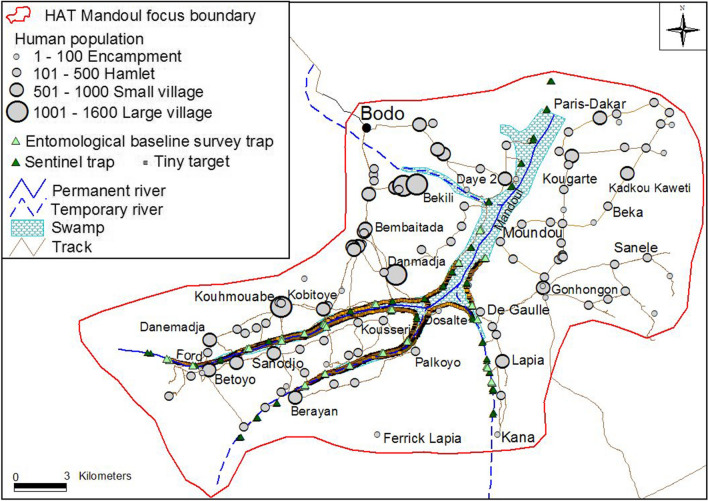
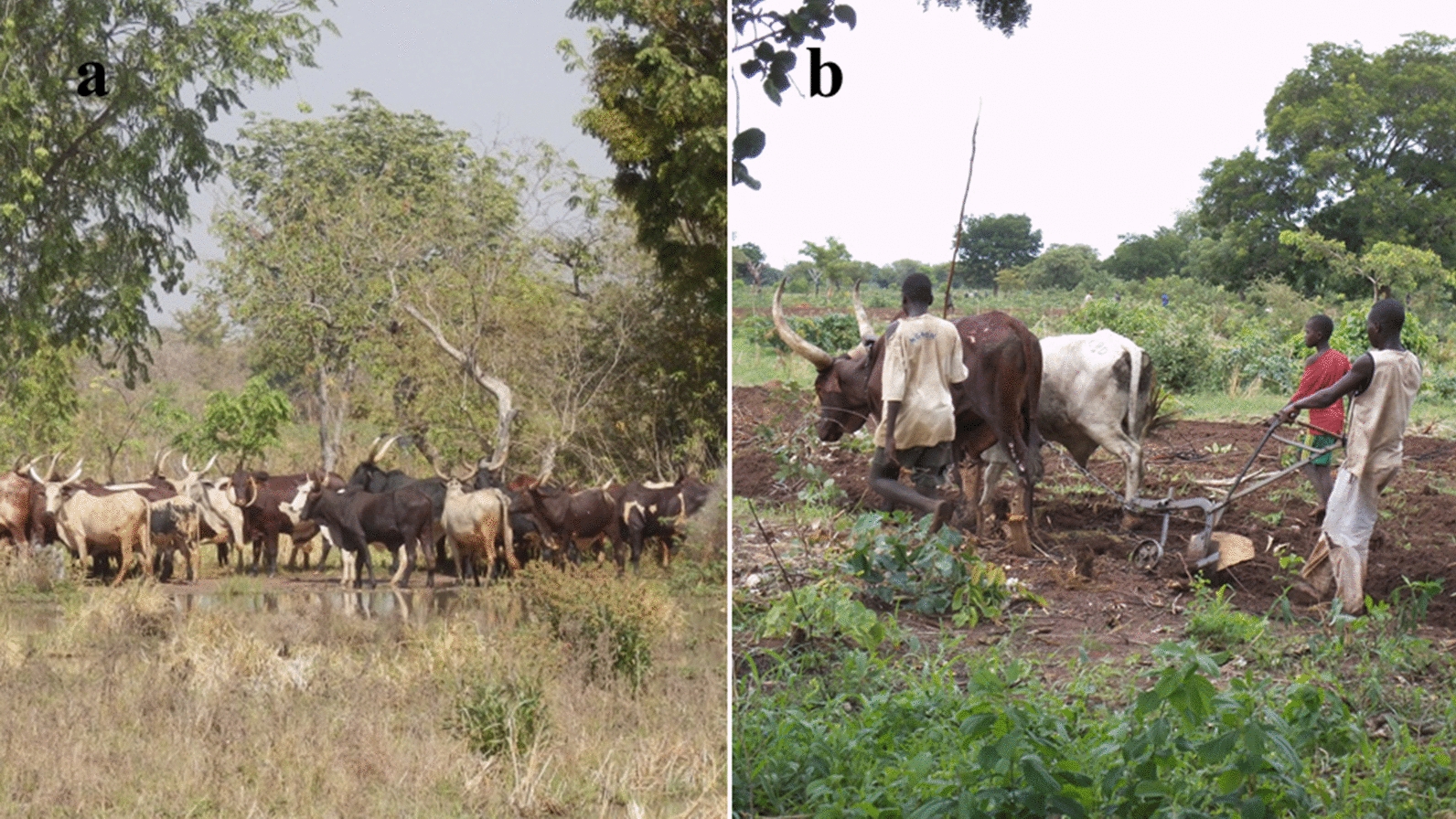
Since 2012, the World Health Organisation and the countries affected by the Gambian form of human African trypanosomiasis (HAT) have been committed to eliminating the disease, primarily through active case-finding and treatment. To interrupt transmission of Trypanosoma brucei gambiense and move more rapidly towards elimination, it was decided to add vector control using 'tiny targets'. Chad's Mandoul HAT focus extends over 840 km, with a human population of 39,000 as well as 14,000 cattle and 3000 pigs. Some 2700 tiny targets were deployed annually from 2014 onwards.
A protocol was developed for the routine collection of tsetse control costs during all field missions. This was implemented throughout 2015 and 2016, and combined with the recorded costs of the preliminary survey and sensitisation activities. The objective was to calculate the full costs at local prices in Chad. Costs were adjusted to remove research components and to ensure that items outside the project budget lines were included, such as administrative overheads and a share of staff salaries.
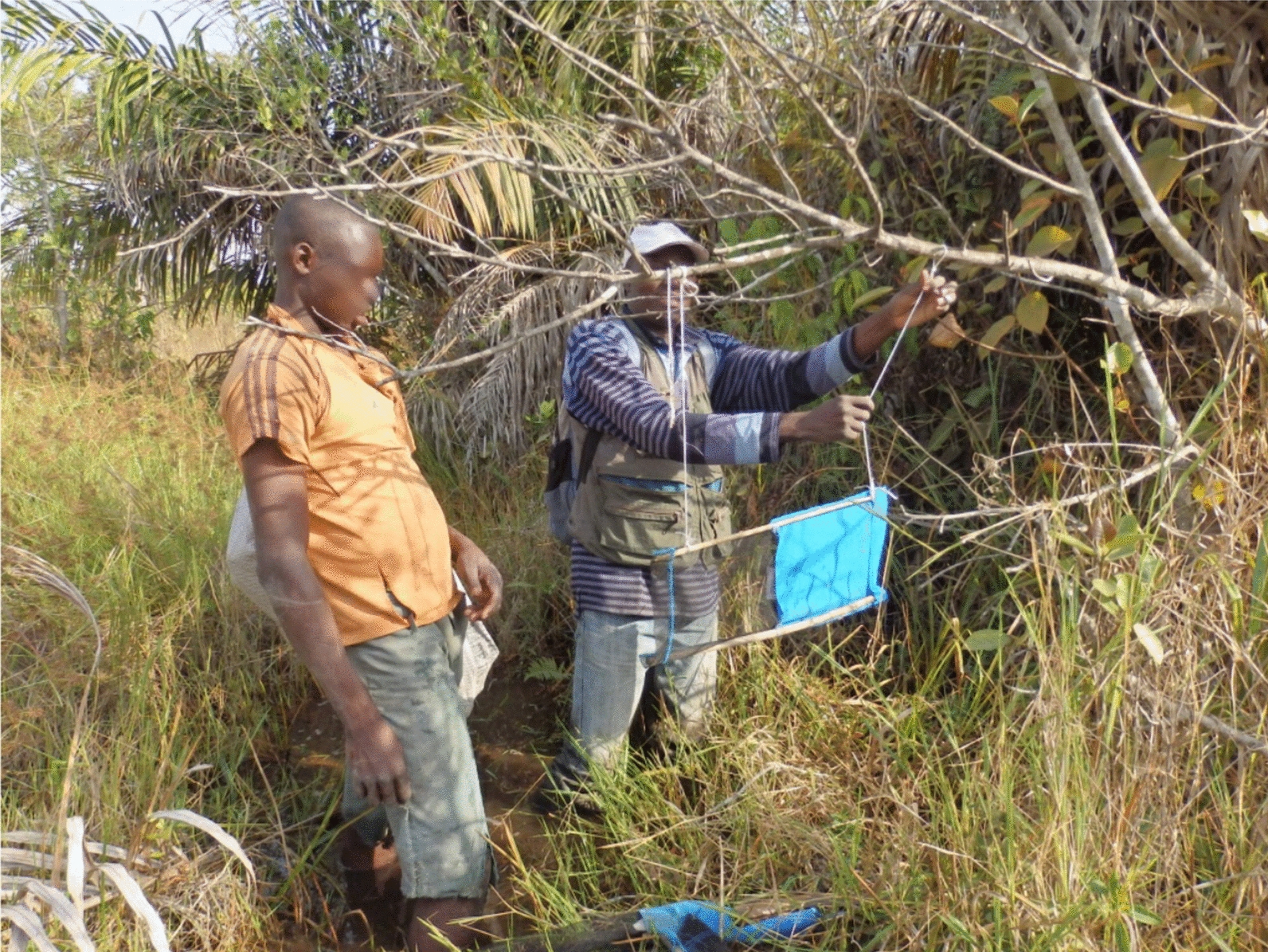
Targets were deployed at about 60 per linear km of riverine tsetse habitat. The average annual cost of the operation was USD 56,113, working out at USD 66.8 per km protected and USD 1.4 per person protected. Of this, 12.8% was an annual share of the initial tsetse survey, 40.6% for regular tsetse monitoring undertaken three times a year, 36.8% for target deployment and checking and 9.8% for sensitisation of local populations. Targets accounted for 8.3% of the cost, and the cost of delivering a target was USD 19.0 per target deployed.
This study has confirmed that tiny targets provide a consistently low cost option for controlling tsetse in gambiense HAT foci. Although the study area is remote with a tsetse habitat characterised by wide river marshes, the costs were similar to those of tiny target work in Uganda, with some differences, in particular a higher cost per target delivered. As was the case in Uganda, the cost was between a quarter and a third that of historical target operations using full size targets or traps.
自 2012 年以来,世界卫生组织和受冈比亚形式人体非洲锥虫病(HAT)影响的国家一直致力于消除这种疾病,主要通过主动病例发现和治疗。为了阻断布氏冈比亚锥虫的传播并更迅速地朝着消除方向前进,决定使用“微小目标”来增加媒介控制。乍得的曼杜尔 HAT 重点地区绵延 840 公里,人口 39000 人,牛 14000 头,猪 3000 头。自 2014 年以来,每年部署约 2700 个微小目标。
制定了一个方案,用于在所有实地考察中定期收集采采蝇控制成本。这一方案于 2015 年和 2016 年实施,并结合了初步调查和宣传活动的记录成本。目的是计算乍得当地价格的全部成本。成本进行了调整,以去除研究部分,并确保包括项目预算线之外的项目,如行政费用和员工工资的一部分。
在约 60 条每公里的河流水生采采蝇栖息地部署目标。该行动的平均年成本为 56113 美元,每公里保护费用为 66.8 美元,每人保护费用为 1.4 美元。其中,12.8%是每年采采蝇初步调查的份额,40.6%是每年三次进行的常规采采蝇监测,36.8%是目标部署和检查,9.8%是当地人口的宣传。目标占成本的 8.3%,每个目标的交付成本为 19.0 美元。
本研究证实,微小目标为控制冈比亚型 HAT 媒介提供了一种始终如一的低成本选择。尽管研究区域偏远,采采蝇栖息地以宽阔的河漫滩沼泽为特征,但成本与乌干达微小目标工作的成本相似,存在一些差异,特别是每目标交付成本较高。与乌干达一样,成本是使用全尺寸目标或陷阱进行历史目标操作的四分之一到三分之一。