Kurnia Dikdik, Rachmawati Putri, Satari Mieke H
Department of Chemistry, Faculty of Mathematics and Natural Science, Universitas Padjadjaran, Sumedang, Indonesia.
Department of Oral Biology, Faculty of Dentistry, Universitas Padjadjaran, Sumedang, Indonesia.
Drug Des Devel Ther. 2020 Jul 30;14:3079-3086. doi: 10.2147/DDDT.S255270. eCollection 2020.
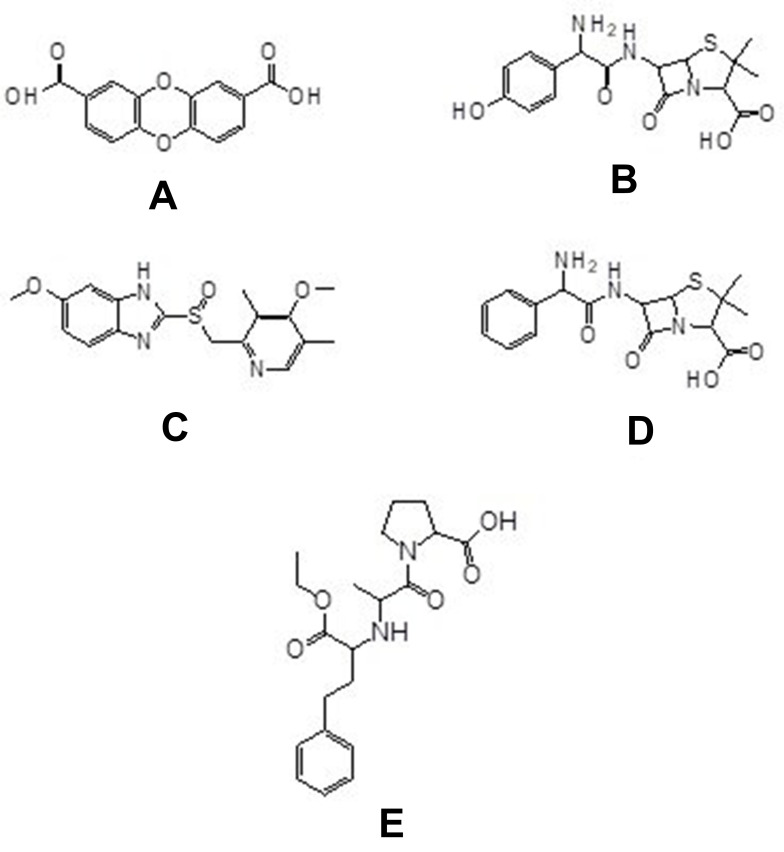
Recently, it has emerged from the international scientific literature that quorum sensing (QS) is a promising way for the effective treatment of diseases caused by pathogenic bacteria. One of the crucial proteins in the QS system of Gram-positive bacteria is the pheromone. Some research has reported secondary metabolites from natural products capable of attenuating bacteria through the interruption of the quorum sensing system. One of the Indonesian herbal plants containing bioactive compounds is Sarang Semut (). A phenolic compound, dibenzo--dioxin-2,8-dicarboxylic acid, has been isolated from this plant which had antibacterial activity against . However, the molecular mechanism of it has not been known.
The study in question aimed to predict the molecular action of the compound against some proteins that act as a signal in the mediated QS of Gram-positive bacteria, called pheromones, including PrgQ, PrgX, PrgZ, and CcfA.
The methods used in this in silico study were ligand-protein docking and virtual screening that were performed by some software and programs. The compound and some positive controls act as ligand were subject binding to PrgQ, PrgX, PrgZ, and CcfA as proteins target, the ligands were free for blind docking. A framework was presented potency of phenolic compounds to inhibit the protein's target from its affinity binding scores.
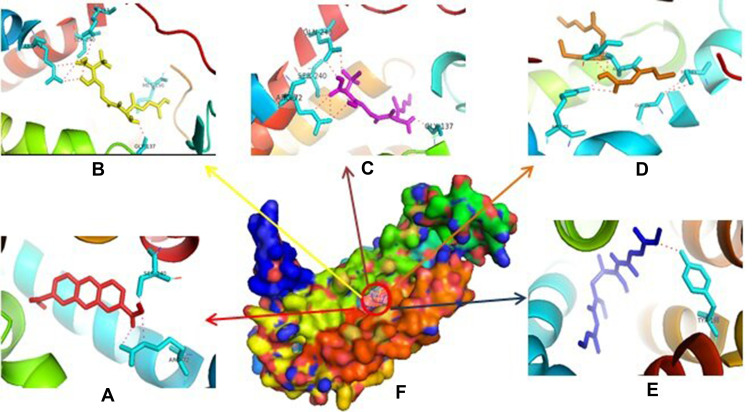
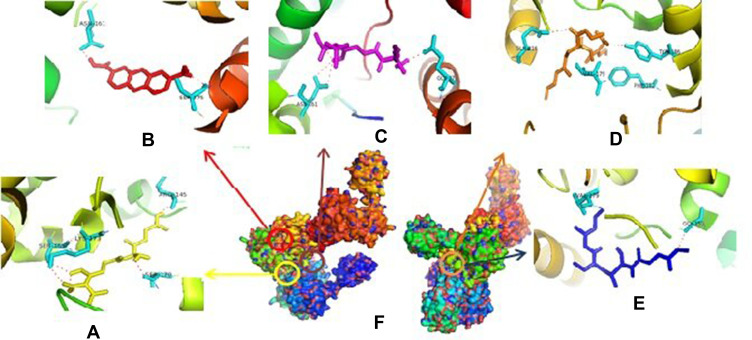
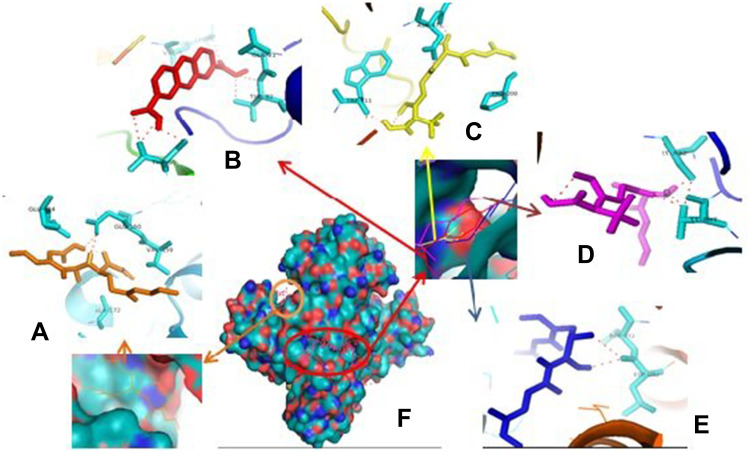
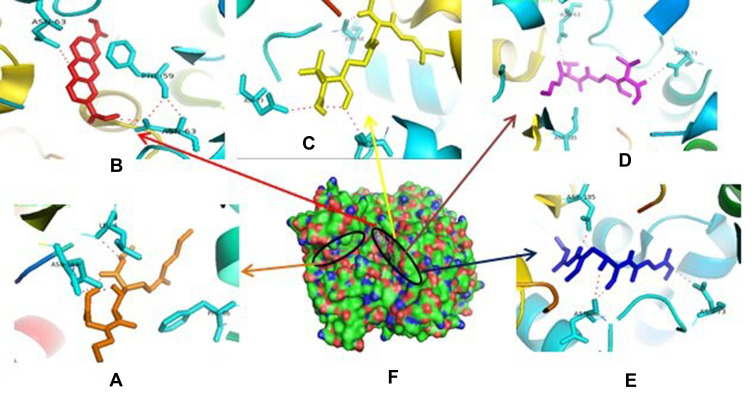
It was found thatcompound was potential to inhibit all of the tested protein and gave the highest binding affinity to PrgX (-9.2 kcal.mol; the site at Phe59B, Phe59B, Asn63A, and Asn63B residue) and PrgZ (-7.4 kcal.mol; the site at Leu4B, Thr65A, Thr82A. Gln81A, and Val5B residue).
It is proposed that compound has a good activity to inhibit through its peptide pheromones in the QS system.
最近,国际科学文献表明群体感应(QS)是有效治疗由病原菌引起疾病的一种有前景的方法。革兰氏阳性菌QS系统中的关键蛋白之一是信息素。一些研究报道了天然产物中的次生代谢物能够通过干扰群体感应系统来减弱细菌活性。一种含有生物活性化合物的印度尼西亚草药植物是Sarang Semut()。从这种植物中分离出了一种酚类化合物二苯并 - 二恶英 - 2,8 - 二羧酸,它对具有抗菌活性。然而,其分子机制尚不清楚。
该研究旨在预测该化合物对一些在革兰氏阳性菌介导的QS中充当信号的蛋白(称为信息素)的分子作用,这些蛋白包括PrgQ、PrgX、PrgZ和CcfA。
本计算机模拟研究中使用的方法是通过一些软件和程序进行配体 - 蛋白质对接和虚拟筛选。该化合物和一些作为配体的阳性对照与作为蛋白质靶点的PrgQ、PrgX、PrgZ和CcfA进行结合,配体可进行盲对接。根据酚类化合物与蛋白质靶点的亲和力结合分数给出其抑制蛋白质靶点的潜力框架。
发现该化合物有潜力抑制所有测试蛋白,并且对PrgX(-9.2 kcal.mol;位于苯丙氨酸59B、苯丙氨酸59B、天冬酰胺63A和天冬酰胺63B残基处)和PrgZ(-7.4 kcal.mol;位于亮氨酸4B、苏氨酸65A、苏氨酸82A、谷氨酰胺81A和缬氨酸5B残基处)具有最高的结合亲和力。
提出该化合物通过其在QS系统中的肽类信息素具有良好的抑制活性。