Kurnia Dikdik, Ramadhanty Zenika Febian, Ardani Aprilina Mora, Zainuddin Achmad, Dharsono Hendra Dian Adhita, Satari Mieke Hemiawati
Department of Chemistry, Faculty of Mathematics and Natural Science, Universitas Padjadjaran, Sumedang 45363, Indonesia.
Department of Conservative Dentistry, Faculty of Dentistry, Universitas Padjadjaran, Bandung 40132, Indonesia.
Molecules. 2021 Oct 22;26(21):6381. doi: 10.3390/molecules26216381.
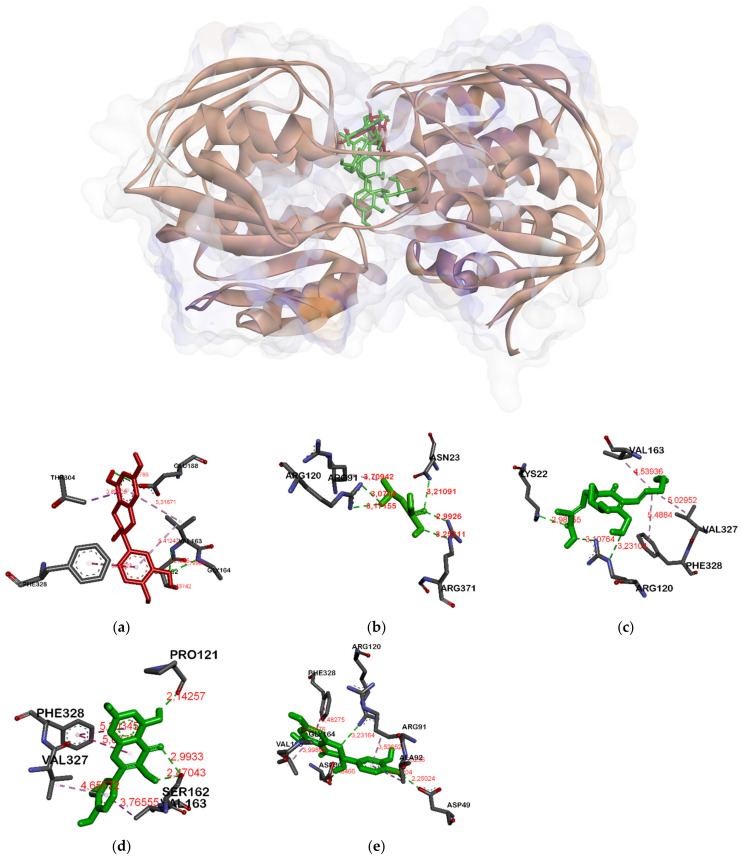
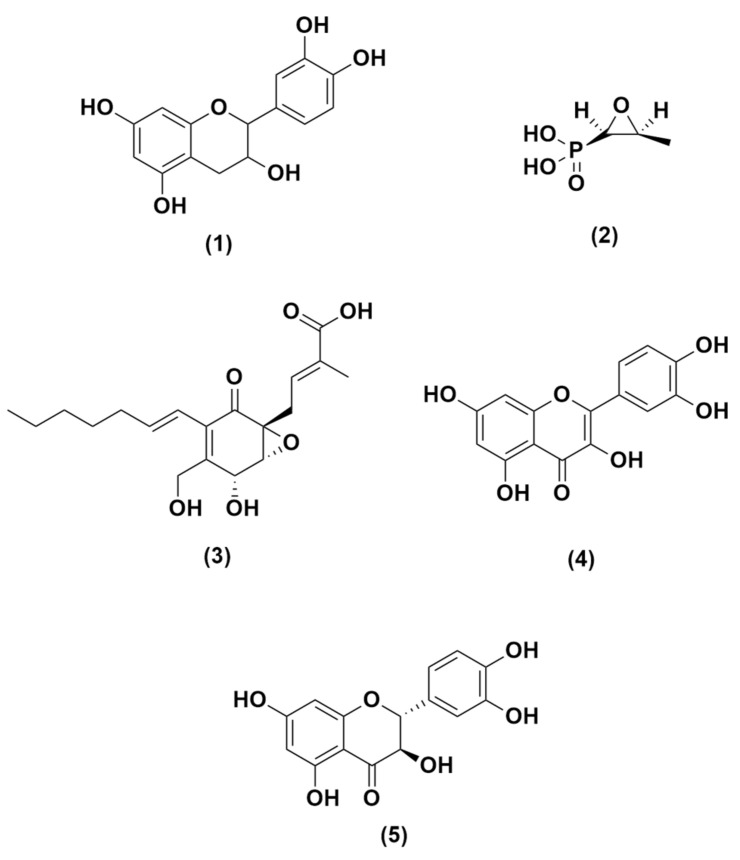
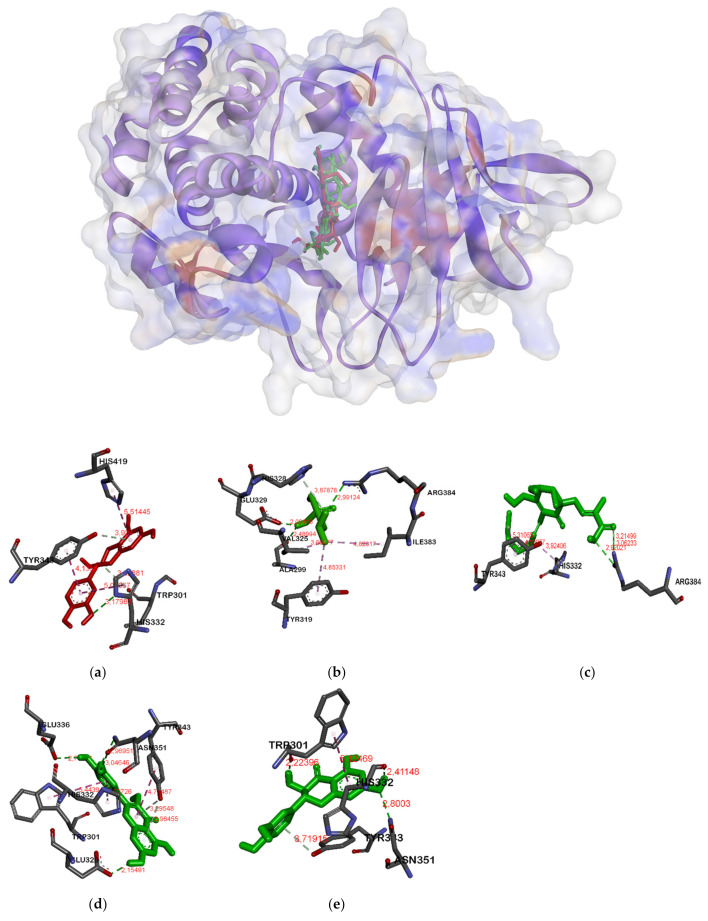
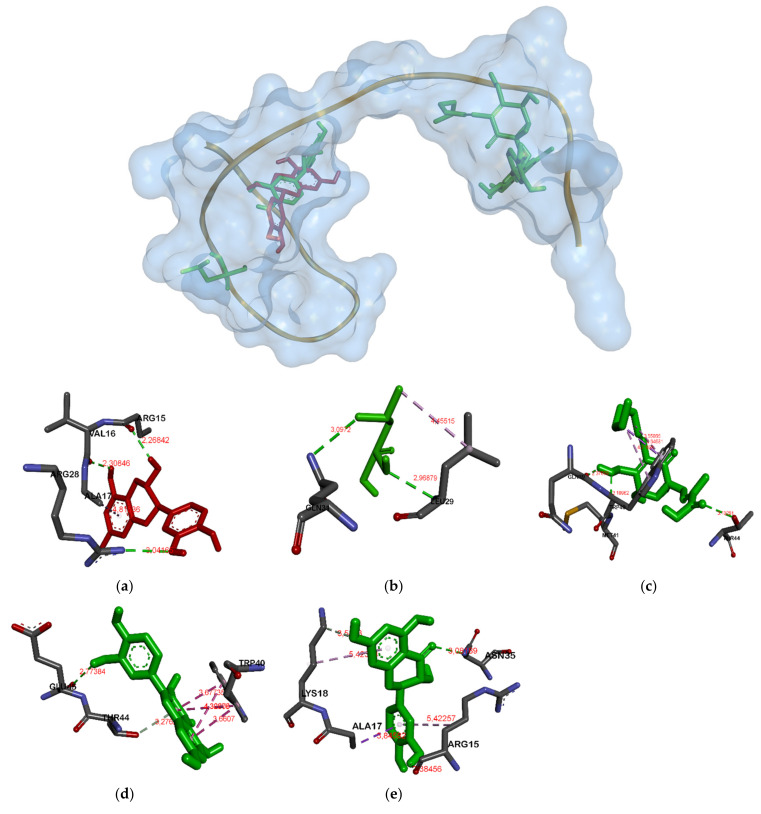
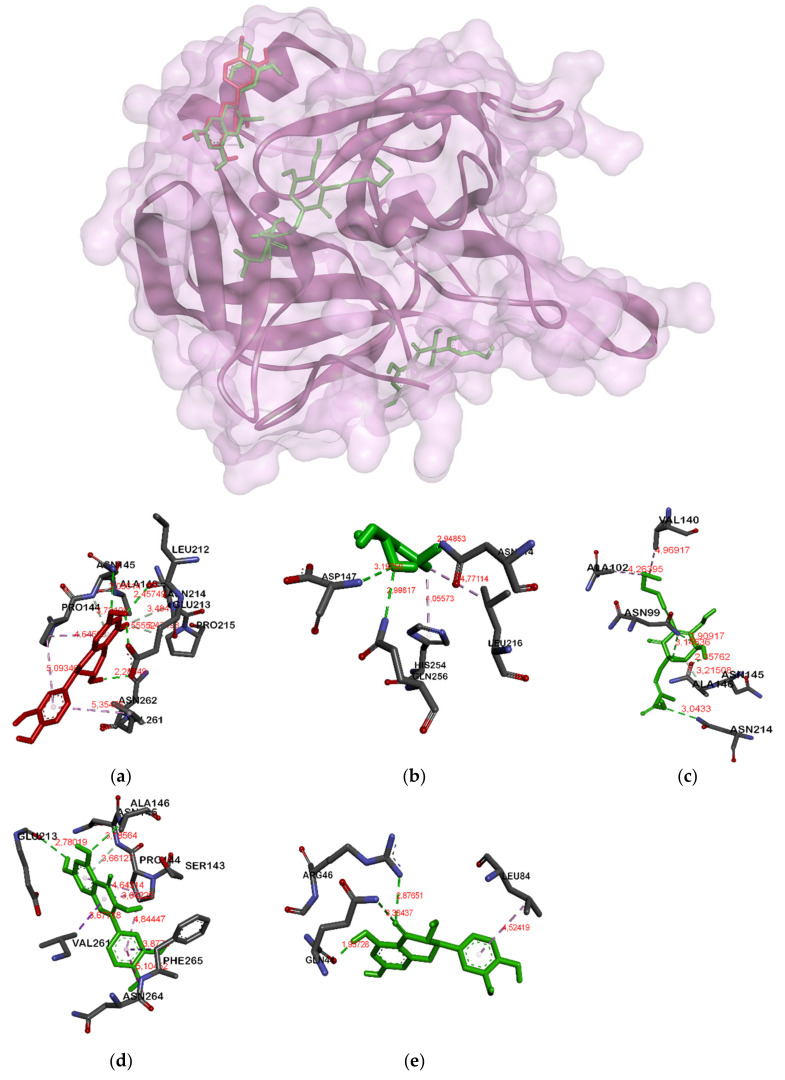
The utilization of medicinal plants has long been explored for the discovery of antibacterial agents and the most effective mechanisms or new targets that can prevent and control the spread of antibiotic resistance. One kind of bacterial cell wall inhibition is the inactivation of the MurA enzyme that contributes to the formation of peptidoglycan. Another approach is to interfere with the cell-cell communication of bacteria called the Quorum sensing (QS) system. The blocking of auto-inducer such as gelatinase biosynthesis-activating pheromone (GBAP) can also suppress the virulence factors of gelatinase and serine protease. This research, in particular, aims to analyze lead compounds as antibacterial and anti-QS agents from Gambir ( Roxburgh) through protein inhibition by in silico study. Antibacterial agents were isolated by bioactivity-guided isolation using a combination of chromatographic methods, and their chemical structures were determined by spectroscopic analysis methods. The in vitro antibacterial activity was evaluated by disc diffusion methods to determine inhibitory values. Meanwhile, in the in silico analysis, the compound of was used as ligand and compared with fosfomycin, ambuic acid, quercetin, and taxifolin as the standard ligand. These ligands were attached to MurA, GBAP, gelatinase, and serine proteases using Autodock Vina in PyRx 0.8 followed by PYMOL for combining the ligand conformation and proteins. plus programs to explore the complex, and visualized by Discovery Studio 2020 Client program. The antibacterial agent was identified as catechin that showed inhibitory activity against ATCC 29212 with inhibition zones of 11.70 mm at 10%, together with MIC and MBC values of 0.63 and 1.25 μg/mL, respectively. In the in silico study, the molecular interaction of catechin with MurA, GBAP, and gelatinase proteins showed good binding energy compared with two positive controls, namely fosfomycin and ambuic acid. It is better to use catechin-MurA (-8.5 Kcal/mol) and catechin-gelatinase (-7.8 Kcal/mol), as they have binding energies which are not marginally different from quercetin and taxifolin. On the other hand, the binding energy of serine protease is lower than quercetin, taxifolin, and ambuic acid. Based on the data, catechin has potency as an antibacterial through the inhibition of GBAP proteins, gelatinase, and serine protease that play a role in the QS system. This is the first discovery of the potential of catechin as an alternative antibacterial agent with an effective mechanism to prevent and control oral disease affected by antibiotic resistance.
长期以来,人们一直在探索利用药用植物来发现抗菌剂以及能够预防和控制抗生素耐药性传播的最有效机制或新靶点。一种细菌细胞壁抑制方法是使MurA酶失活,该酶有助于肽聚糖的形成。另一种方法是干扰细菌的细胞间通讯,即群体感应(QS)系统。阻断自诱导物,如明胶酶生物合成激活信息素(GBAP),也可以抑制明胶酶和丝氨酸蛋白酶的毒力因子。本研究尤其旨在通过计算机模拟研究中的蛋白质抑制作用,分析儿茶素作为来自钩藤(Roxburgh)的抗菌和抗QS剂的先导化合物。通过色谱方法结合生物活性导向分离法分离抗菌剂,并通过光谱分析方法确定其化学结构。通过纸片扩散法评估体外抗菌活性以确定抑制值。同时,在计算机模拟分析中,将该化合物用作配体,并与磷霉素、ambuic酸、槲皮素和紫杉叶素作为标准配体进行比较。使用PyRx 0.8中的Autodock Vina将这些配体连接到MurA、GBAP、明胶酶和丝氨酸蛋白酶上,随后使用PYMOL来结合配体构象和蛋白质,再加上程序来探索复合物,并通过Discovery Studio 2020 Client程序进行可视化。鉴定出的抗菌剂为儿茶素,其对ATCC 29212显示出抑制活性,在10%浓度下抑菌圈为11.70毫米,MIC和MBC值分别为0.63和1.25μg/mL。在计算机模拟研究中,与两个阳性对照即磷霉素和ambuic酸相比,儿茶素与MurA、GBAP和明胶酶蛋白的分子相互作用显示出良好的结合能。使用儿茶素-MurA(-8.5千卡/摩尔)和儿茶素-明胶酶(-7.8千卡/摩尔)更好,因为它们的结合能与槲皮素和紫杉叶素相差不大。另一方面,丝氨酸蛋白酶的结合能低于槲皮素、紫杉叶素和ambuic酸。基于这些数据,儿茶素具有通过抑制在QS系统中起作用的GBAP蛋白、明胶酶和丝氨酸蛋白酶而作为抗菌剂的潜力。这是首次发现儿茶素作为替代抗菌剂的潜力,其具有预防和控制受抗生素耐药性影响的口腔疾病的有效机制。