Liu Ruxiu, Chang Xing, Li Jie, Shunyu Yao
Guang'anmen Hospital, Chinese Academy of Traditional Chinese Medicine, Beijing 100053, China.
Evid Based Complement Alternat Med. 2020 Jul 27;2020:8327307. doi: 10.1155/2020/8327307. eCollection 2020.
This study focuses on the role of Zishen Huoxue Decoction (ZSHX) in reducing mitochondrial membrane potential and reducing the proportion of apoptosis through the mTORC1 signaling pathway.
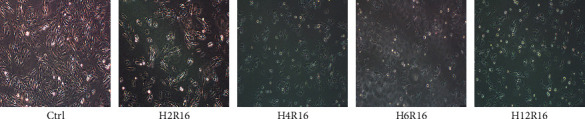
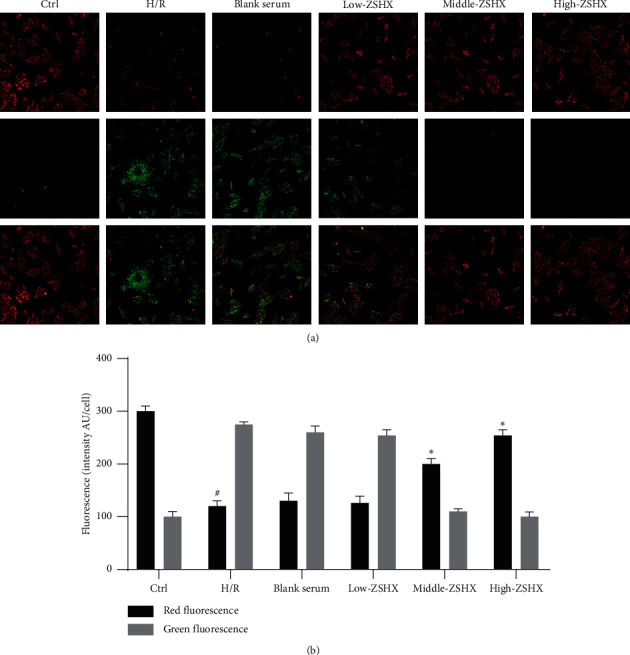
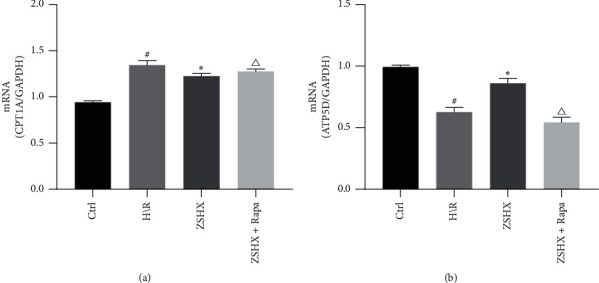
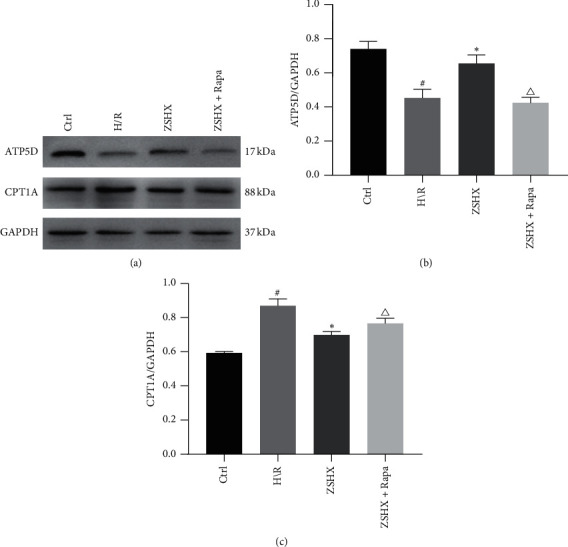
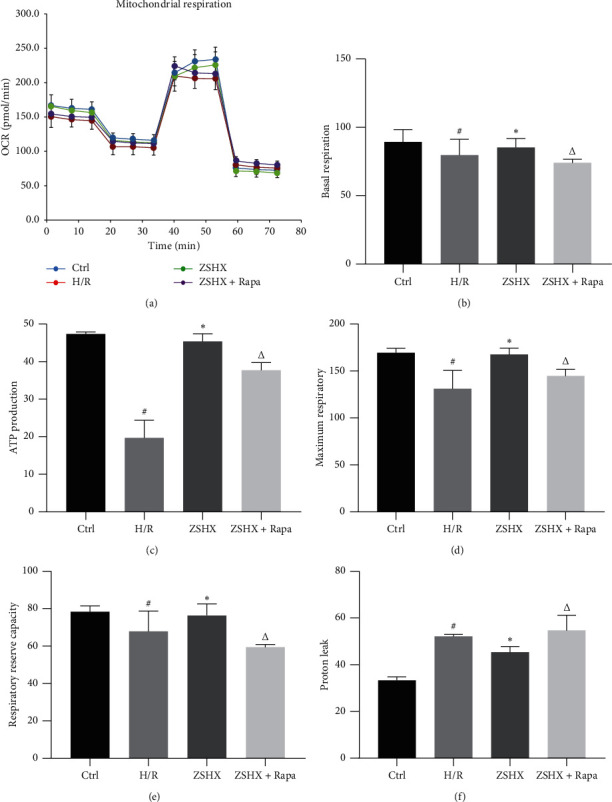
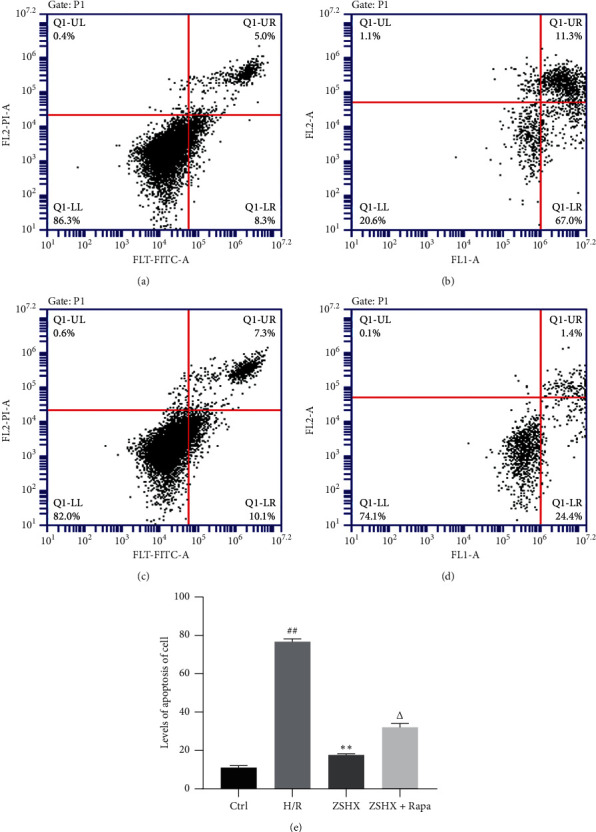
In our experiment, we first constructed an in vitro hypoxia/reoxygenation (H/R) model of H9C2 cells. Then, the cells were divided into control group, model group (hypoxia/reoxygenation, H/R), ZSHX, ZSHX + Rapa, low-dose ZSHX (100 g/ml), and middle-dose ZSHX. High-dose ZSHX (400 g/ml) group was treated with Zishen Huoxue Decoction (ZSHX). Western Blot was used to detect the expression of cell-related protein and RT-PCR was used to detect the expression of the cell-related gene in each group. Flow cytometry was used to assay for ROS content and the apoptotic ratio of H9C2 cells, Seahorse Live Cell Energy Meter was used to detect the Mitochondrial Respiratory Function in H9C2 Cells, and confocal laser scanning was used to detect the mitochondrial membrane potential of H9C2 cells.
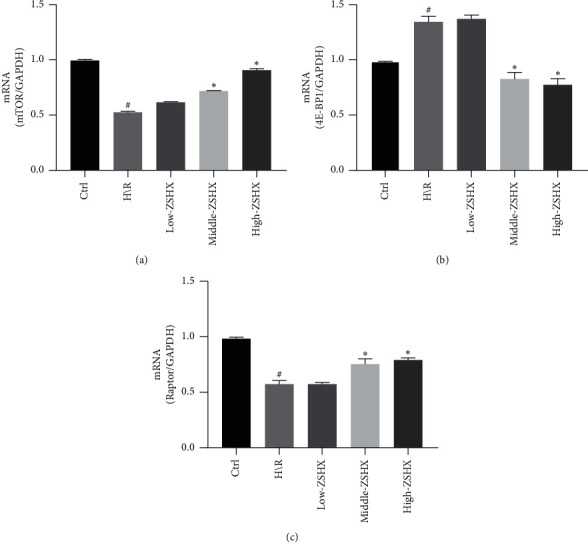
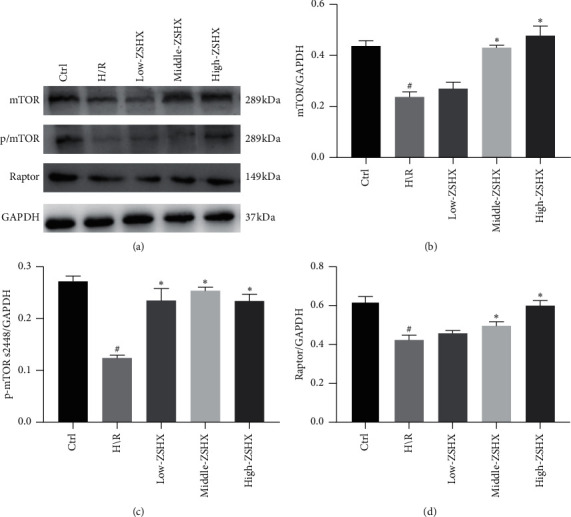
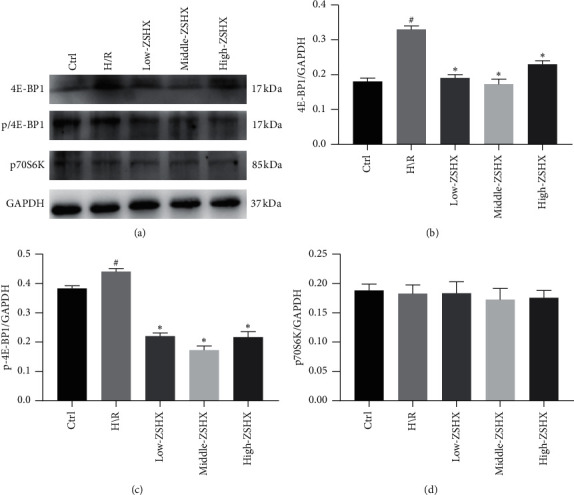
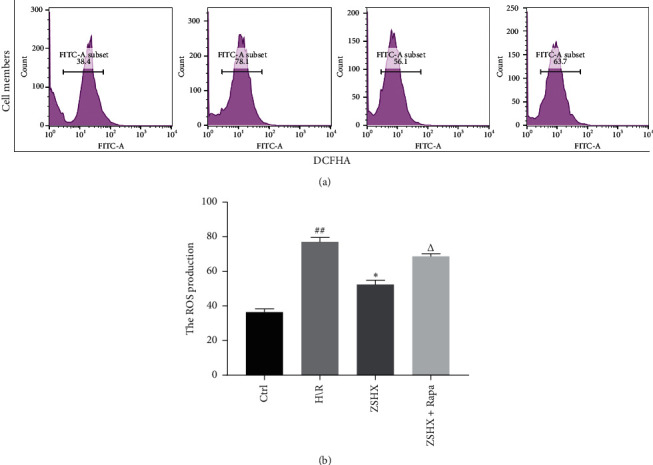
Western Blot assay showed that the relative expression of mTOR and Raptor in the H/R group was significantly lower than that in the control group ( = 3, < 0.05). The expression of mTOR and Raptor was upregulated and the relative expression of 4E-BP1 was downregulated in the middle- and high-dose ZSHX groups ( = 3, < 0.05). In addition, the ROS content of H9C2 cells was detected by flow cytometry, showing the ROS synthesis in H/R group (78.31 + 6.14) higher than that in the control group (34.53 + 6.10) ( = 3, < 0.01). The ROS value was increased significantly after rapamycin inhibited mTOR (66.18 (+4.03 vs. 52.31 (+6.01), = 3, < 0.05). The basal mitochondrial respiration and ATP production in H/R group were significantly lower than those in the control group (38.17 + 17.76); the mitochondrial leakage in H/R model group was significantly higher than that in the control group (H/R: 40.93 + 5.18 vs. Ctrl: 27.17 + 8.92, = 4, < 0.05). The apoptotic rate of cardiomyocytes in the H/R model group (70.91 + 4.57) was significantly higher than that in the control group (14.52 + 2.37, = 3, < 0.01), and Zishen Huoxue Decoction could decrease the apoptotic rate of hypoxic-reoxygenated cardiomyocytes (ZSHX: 18.24 + 4.17 vs. H/R: 78.91 + 3.48, = 3, < 0.01).
ZSHX Decoction has the effects of activating mTORC1, inhibiting the overexpression of 4E-BP1, inhibiting fatty acid oxidation, protecting the respiratory function of mitochondria, reducing ROS and apoptosis, and thus protecting myocardial cells from injury.
本研究聚焦于滋肾活血汤(ZSHX)通过mTORC1信号通路降低线粒体膜电位及减少细胞凋亡比例的作用。
在我们的实验中,首先构建H9C2细胞的体外缺氧/复氧(H/R)模型。然后,将细胞分为对照组、模型组(缺氧/复氧,H/R)、滋肾活血汤组、滋肾活血汤+雷帕霉素组、低剂量滋肾活血汤组(100μg/ml)和中剂量滋肾活血汤组、高剂量滋肾活血汤组(400μg/ml),对滋肾活血汤组进行滋肾活血汤处理。采用蛋白质免疫印迹法检测各组细胞相关蛋白的表达,采用逆转录聚合酶链反应检测各组细胞相关基因的表达。采用流式细胞术检测H9C2细胞的活性氧(ROS)含量及凋亡率,采用海马活细胞能量代谢分析仪检测H9C2细胞的线粒体呼吸功能,采用共聚焦激光扫描检测H9C2细胞的线粒体膜电位。
蛋白质免疫印迹法检测显示,H/R组中mTOR和Raptor的相对表达量显著低于对照组(n=3,P<0.05)。中、高剂量滋肾活血汤组中mTOR和Raptor的表达上调,4E-BP1的相对表达量下调(n=3,P<0.05)。此外,采用流式细胞术检测H9C2细胞的ROS含量,结果显示H/R组(78.31±6.14)的ROS合成高于对照组(34.53±6.10)(n=3,P<0.01)。雷帕霉素抑制mTOR后,ROS值显著升高(66.18±4.03对52.31±6.01,n=3,P<0.05)。H/R组的基础线粒体呼吸和ATP产生显著低于对照组(38.17±17.76);H/R模型组的线粒体泄漏显著高于对照组(H/R:40.93±5.18对Ctrl:27.17±8.92,n=4,P<0.05)。H/R模型组心肌细胞的凋亡率(70.91±4.57)显著高于对照组(14.52±2.37,n=3,P<0.01),滋肾活血汤可降低缺氧复氧心肌细胞的凋亡率(滋肾活血汤组:18.24±4.17对H/R组:78.91±3.48,n=3,P<0.01)。
滋肾活血汤具有激活mTORC1、抑制4E-BP1过表达、抑制脂肪酸氧化、保护线粒体呼吸功能、减少ROS及细胞凋亡的作用,从而保护心肌细胞免受损伤。