Sun Yat-sen University Cancer Center, State Key Laboratory of Oncology in South China, Collaborative Innovation Center for Cancer Medicine, Guangzhou 510060, P. R. China.
Department of Pathology, Sun Yat-sen University Cancer Center, Guangzhou 510060, P. R. China.
Theranostics. 2020 Jul 14;10(20):9186-9199. doi: 10.7150/thno.46825. eCollection 2020.
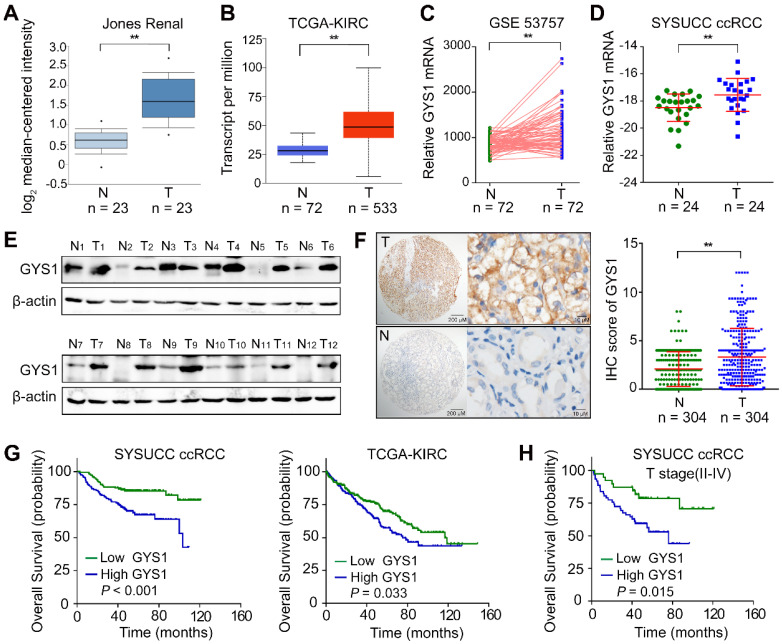
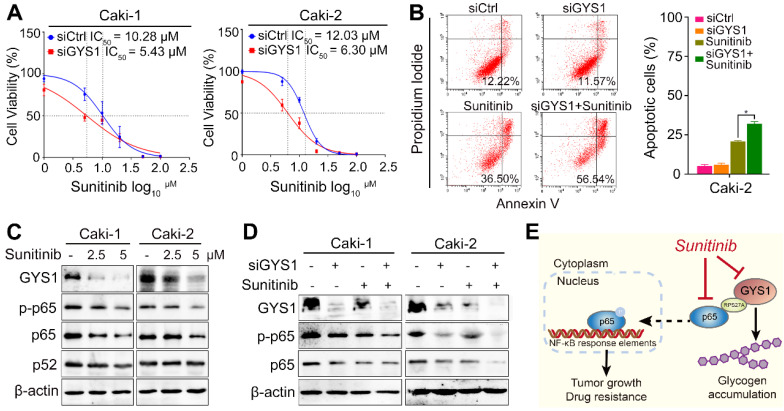
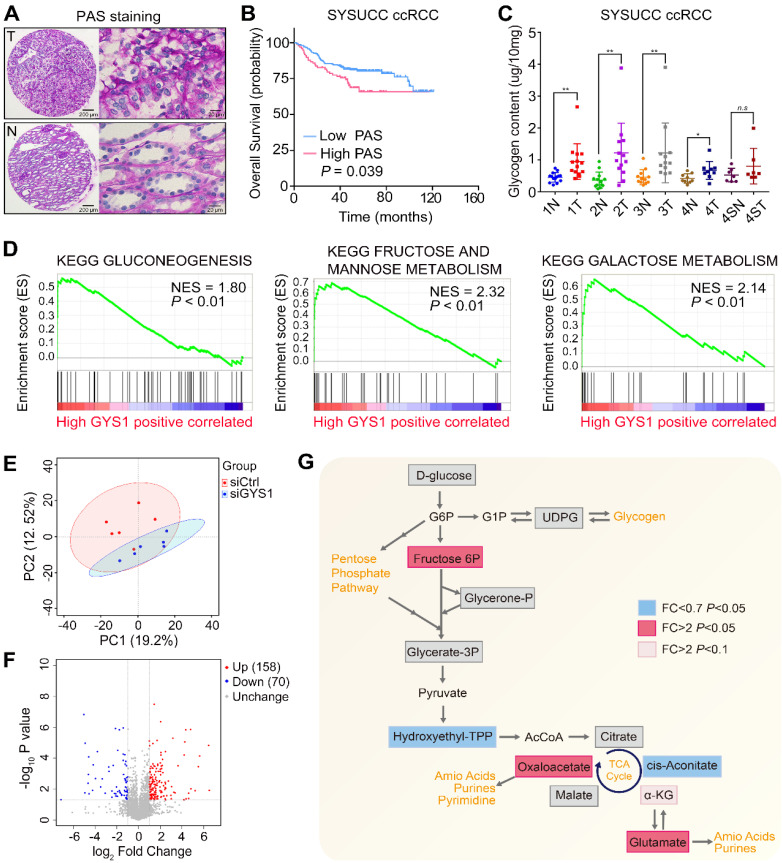
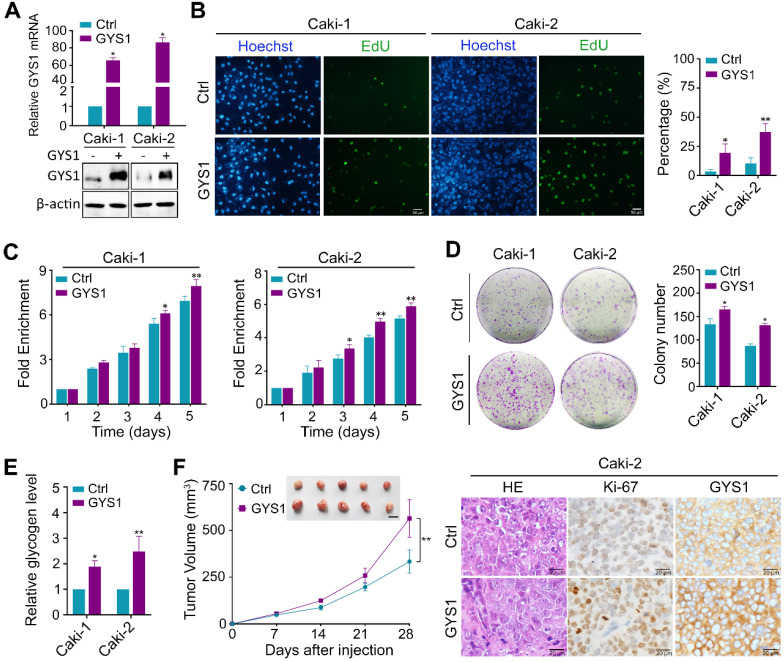
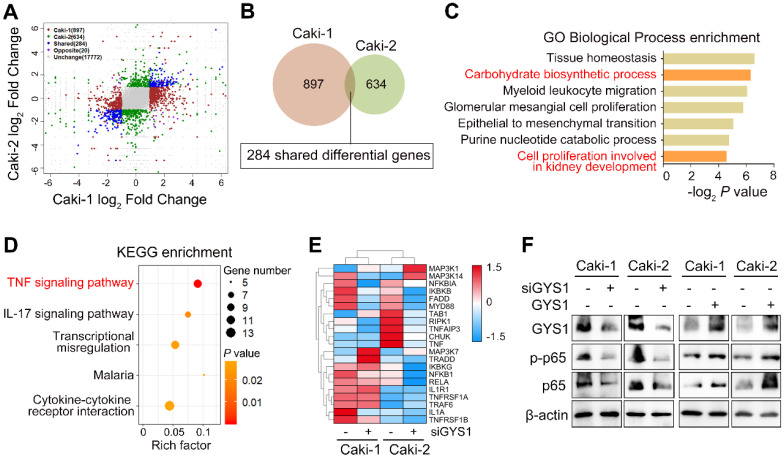
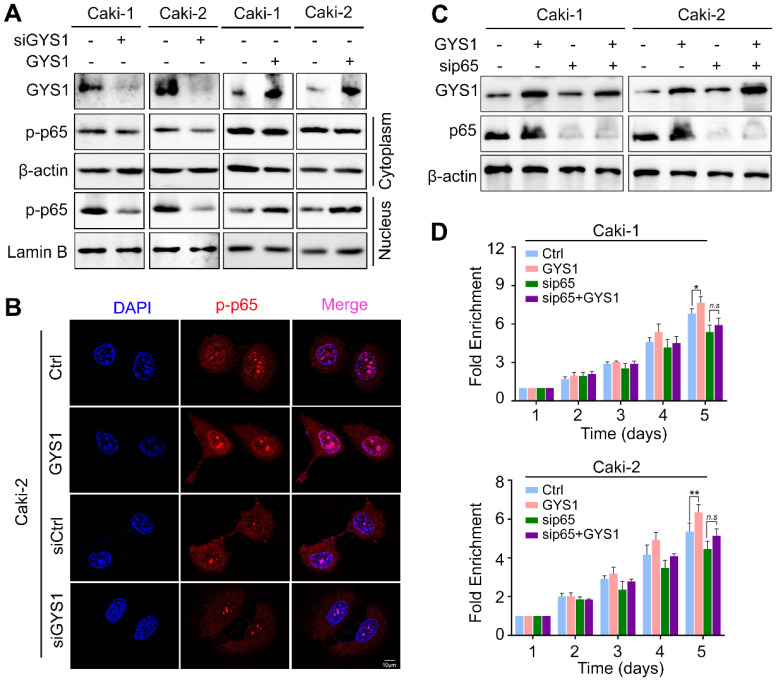
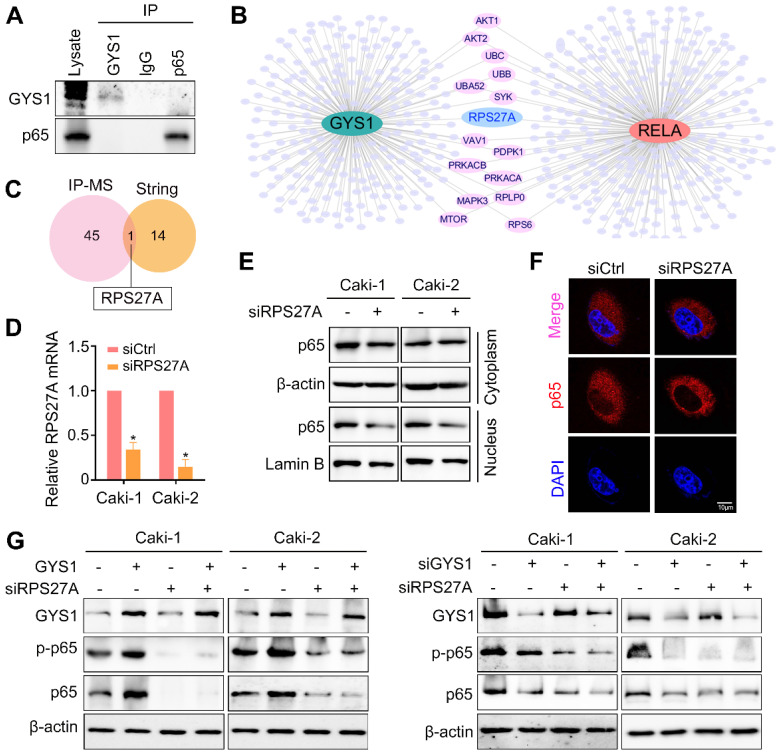
Metabolism reprogramming is a hallmark of many cancer types. We focused on clear cell renal carcinoma (ccRCC) which is characterized by its clear and glycogen-enriched cytoplasm with unknown reasons. The aim of this study was to identify the clinical significance, biological function, and molecular regulation of glycogen synthase 1 (GYS1) in ccRCC glycogen accumulation and tumor progression. We determined the clinical relevance of GYS1 and glycogen in ccRCC by immunohistochemistry and periodic acid-schiff staining in fresh tissue and by tissue micro-array. Metabolic profiling with GYS1 depletion was performed by metabolomics analysis. and xenograft mouse models were used to evaluate the impact of GYS1 on cell proliferation. High-throughput RNA-Seq analyses and co-immunoprecipitation-linked mass spectrometry were used to investigate the downstream targets of GYS1. Flow cytometry and CCK8 assays were performed to determine the effect of GYS1 and sunitinib on cell viability. We observed that GYS1 was significantly overexpressed and glycogen was accumulated in ccRCC tissues. These effects were correlated with unfavorable patient survival. Silencing of GYS1 induced metabolomic perturbation manifested by a carbohydrate metabolism shift. Overexpression of GYS1 promoted tumor growth whereas its silencing suppressed it by activating the canonical NF-κB pathway. The indirect interaction between GYS1 and NF-κB was intermediated by RPS27A, which facilitated the phosphorylation and nuclear import of p65. Moreover, silencing of GYS1 increased the synthetic lethality of ccRCC cells to sunitinib treatment by concomitantly suppressing p65. Our study findings reveal an oncogenic role for GYS1 in cell proliferation and glycogen metabolism in ccRCC. Re-sensitization of ccRCC cells to sunitinib suggests that GYS1 is a useful indicator of unfavorable prognosis as well as a therapeutic target for patients with ccRCC.
代谢重编程是许多癌症类型的标志。我们专注于透明细胞肾细胞癌(ccRCC),其特征是细胞质透明且富含糖原,但原因不明。本研究旨在确定糖原合酶 1(GYS1)在 ccRCC 糖原积累和肿瘤进展中的临床意义、生物学功能和分子调控。我们通过免疫组织化学和新鲜组织的过碘酸-希夫染色以及组织微阵列确定了 GYS1 和糖原在 ccRCC 中的临床相关性。通过代谢组学分析进行 GYS1 耗竭的代谢谱分析。并使用异种移植小鼠模型评估 GYS1 对细胞增殖的影响。使用高通量 RNA-Seq 分析和共免疫沉淀连接质谱分析来研究 GYS1 的下游靶标。使用流式细胞术和 CCK8 测定来确定 GYS1 和舒尼替尼对细胞活力的影响。我们观察到 GYS1 在 ccRCC 组织中显著过表达且糖原积累。这些作用与患者预后不良相关。沉默 GYS1 会引起代谢组学紊乱,表现为碳水化合物代谢转移。GYS1 的过表达促进肿瘤生长,而沉默则通过激活经典 NF-κB 通路来抑制肿瘤生长。GYS1 和 NF-κB 之间的间接相互作用由 RPS27A 介导,这促进了 p65 的磷酸化和核内输入。此外,沉默 GYS1 通过同时抑制 p65 增加了 ccRCC 细胞对舒尼替尼治疗的合成致死性。我们的研究结果揭示了 GYS1 在 ccRCC 细胞增殖和糖原代谢中的致癌作用。GYS1 可使 ccRCC 细胞重新对舒尼替尼敏感,表明 GYS1 不仅是预后不良的有用指标,也是 ccRCC 患者的治疗靶点。