Samiea Abrar, Yoon Jeff S J, Ong Christopher J, Zoubeidi Amina, Chamberlain Thomas C, Mui Alice L-F
Immunity and Infection Research Centre, Vancouver Coastal Health Research Institute, Vancouver, Canada.
Department of Surgery, University of British Columbia, Vancouver, Canada.
Prostate Cancer. 2020 Jul 31;2020:5305306. doi: 10.1155/2020/5305306. eCollection 2020.
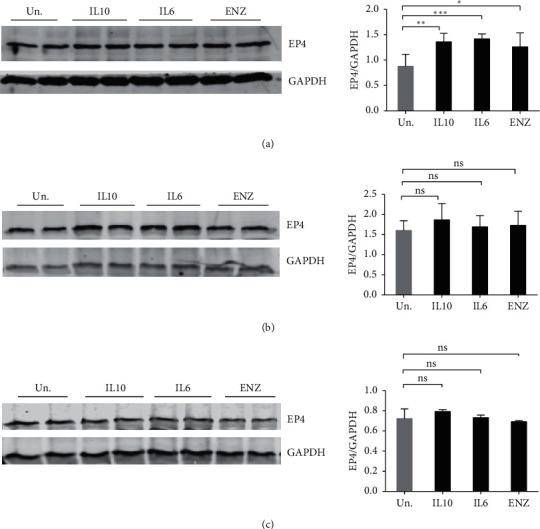
Interleukin-10 (IL10) is best studied for its inhibitory action on immune cells and ability to suppress an antitumour immune response. But IL10 also exerts direct effects on nonimmune cells such as prostate cancer epithelial cells. Elevated serum levels of IL10 observed in prostate and other cancer patients are associated with poor prognosis. After first-line androgen-deprivation therapy, prostate cancer patients are treated with androgen receptor antagonists such as enzalutamide to inhibit androgen-dependent prostate cancer cell growth. However, development of resistance inevitably occurs and this is associated with tumour differentiation to more aggressive forms such as a neuroendocrine phenotype characterized by expression of neuron specific enolase and synaptophysin. We found that treatment of prostate cancer cell lines with IL10 or enzalutamide induced markers of neuroendocrine differentiation and inhibited androgen receptor reporter activity. Both also upregulated the levels of PDL1, which could promote tumour survival through its interaction with the immune cell inhibitory receptor PD1 to suppress antitumour immunity. These findings suggest that IL10's direct action on prostate cancer cells could contribute to prostate cancer progression independent of IL10's suppression of host immune cells.
白细胞介素-10(IL10)因其对免疫细胞的抑制作用以及抑制抗肿瘤免疫反应的能力而得到了充分研究。但IL10也对非免疫细胞如前列腺癌上皮细胞产生直接影响。在前列腺癌和其他癌症患者中观察到的血清IL10水平升高与预后不良相关。一线雄激素剥夺治疗后,前列腺癌患者会接受雄激素受体拮抗剂如恩杂鲁胺治疗,以抑制雄激素依赖性前列腺癌细胞生长。然而,耐药性不可避免地会出现,这与肿瘤分化为更具侵袭性的形式有关,如以神经元特异性烯醇化酶和突触素表达为特征的神经内分泌表型。我们发现,用IL10或恩杂鲁胺处理前列腺癌细胞系会诱导神经内分泌分化标志物并抑制雄激素受体报告基因活性。两者还上调了PDL1的水平,PDL1可通过与免疫细胞抑制受体PD1相互作用来促进肿瘤存活,从而抑制抗肿瘤免疫。这些发现表明,IL10对前列腺癌细胞的直接作用可能独立于IL10对宿主免疫细胞的抑制作用而促进前列腺癌进展。