Gkogkou E, Broux I, Kempeneers C, Boboli H, Viellevoye R, Janssen A, Seghaye M-C, Mastouri M
Department of Pediatrics, University Hospital of Liege, Belgium.
Department of Neonatology, University Hospital of Liege, Belgium.
Respir Med Case Rep. 2020 Jun 11;31:101121. doi: 10.1016/j.rmcr.2020.101121. eCollection 2020.
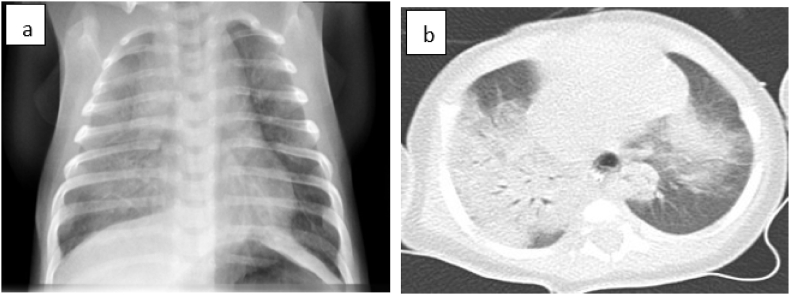
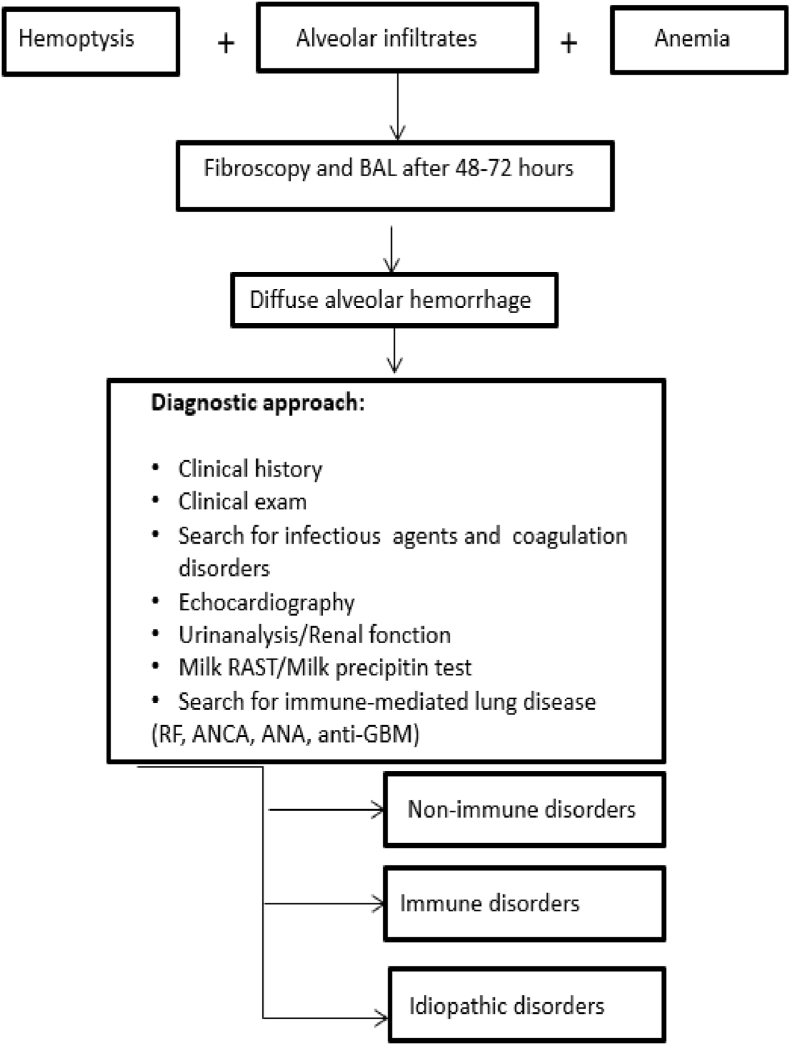
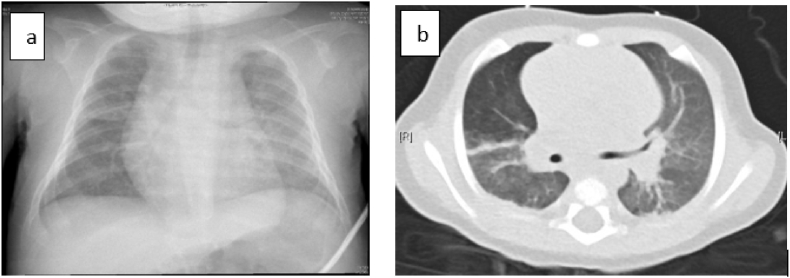
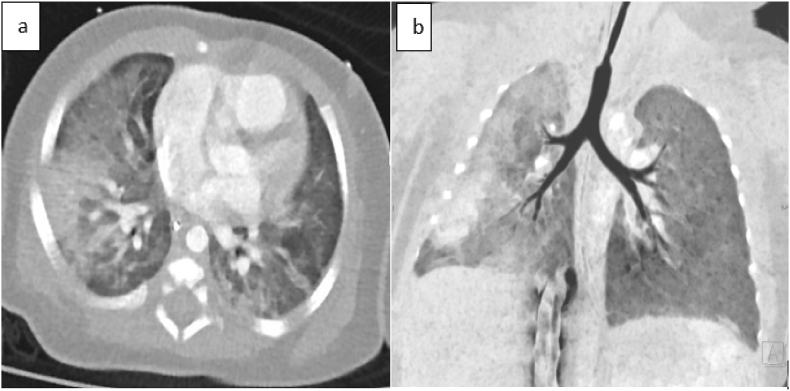
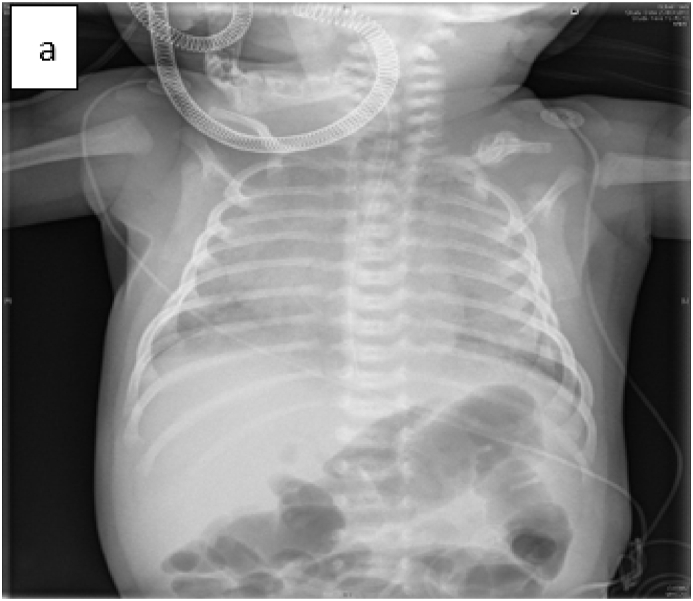
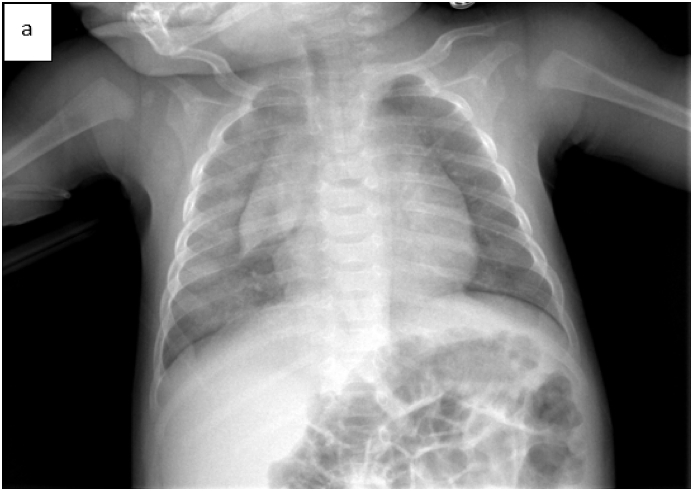
Diffuse alveolar hemorrhage (DAH) is a rare life-threatening condition in children. In this entity, the bleeding originates from the pulmonary microvasculature as a result of microvascular damage leading to blood leakage into the alveolar spaces. DAH can occur as an isolated medical entity or may be associated with other organ system injury or dysfunction. The classic triad of symptoms includes hemoptysis, anemia and diffuse pulmonary infiltrates. Hemoptysis is the usual presenting symptom but is not constant. A variety of diseases is associated with the development of DAH. Current classification organize the etiologies of diffuse alveolar hemorrhage based on the presence of severe immune disorders (such as systemic vasculitis and collagenosis) or non-immunodeficiency disorders (with an identified cardiac or non-cardiac origin, or idiopathic). The five cases of DAH presented in this study were all diagnosed in full-term infants, four males and one female, with normal neonatal adaptation and without family history of notable diseases. In all cases the diagnosis was made between the age of three and eighteen weeks-old. Moreover, all five patients, at the time of diagnosis, presented with hemoptysis, mild or severe dyspnea, anemia and abnormal chest X-rays. Consequently, the diagnosis of DAH was strongly suspected and, eventually, confirmed by bronchoscopy. Additional laboratory tests, as well as selected serologic and radiographic studies were performed in order to identify a specific etiology. The final diagnoses reflect a variety of causes: infections, idiopathic pulmonary hemosiderosis, accidental suffocation and Heiner syndrome. Treatment included oral corticosteroids except from one patient that received antimicrobial therapy.
弥漫性肺泡出血(DAH)是一种在儿童中罕见的危及生命的病症。在这种病症中,出血源于肺微血管,是微血管损伤导致血液漏入肺泡腔的结果。DAH可作为一种孤立的病症出现,也可能与其他器官系统损伤或功能障碍相关。典型的三联征症状包括咯血、贫血和弥漫性肺部浸润。咯血是常见的首发症状,但并非持续出现。多种疾病与DAH的发生有关。目前的分类是根据是否存在严重免疫紊乱(如系统性血管炎和胶原病)或非免疫缺陷性疾病(有明确的心脏或非心脏病因,或特发性)来组织弥漫性肺泡出血的病因。本研究中呈现的5例DAH均诊断于足月儿,4例男性,1例女性,新生儿适应情况正常,且无明显疾病家族史。所有病例的诊断均在3至18周龄之间。此外,所有5例患者在诊断时均出现咯血、轻度或重度呼吸困难、贫血及胸部X线异常。因此,强烈怀疑为DAH,并最终通过支气管镜检查得以确诊。为了确定具体病因,还进行了其他实验室检查以及特定的血清学和影像学研究。最终诊断反映了多种病因:感染、特发性肺含铁血黄素沉着症、意外窒息和海纳综合征。治疗包括口服糖皮质激素,但有1例患者接受了抗菌治疗。