5th Medical Department, University Hospital Mannheim, Heidelberg University, Mannheim, Germany.
Department of Pathology and Medical Biology, University Medical Centre Groningen and University of Groningen, Groningen, The Netherlands.
J Mol Med (Berl). 2020 Sep;98(9):1333-1346. doi: 10.1007/s00109-020-01957-0. Epub 2020 Aug 15.
To assess the influence of serum carnosinase (CN1) on the course of diabetic kidney disease (DKD).
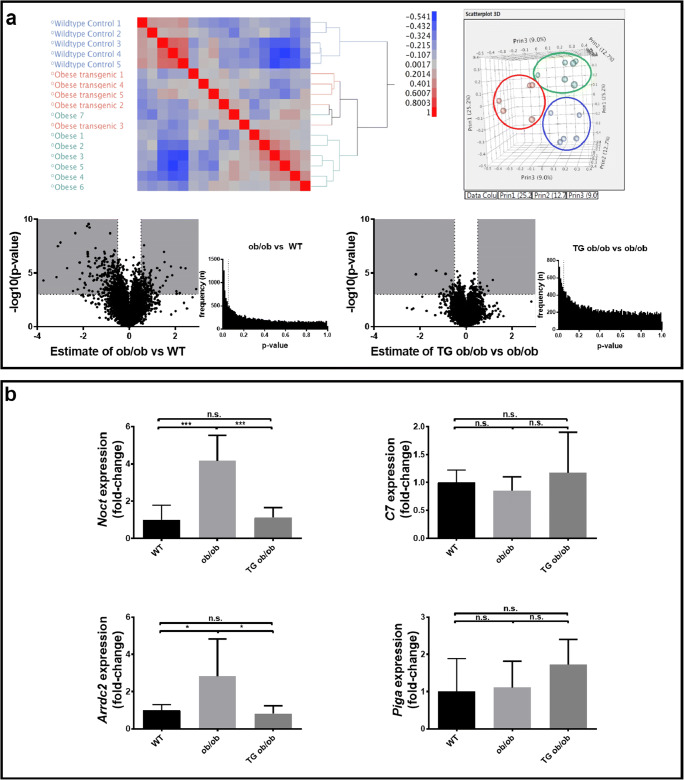
hCN1 transgenic (TG) mice were generated in a BTBR genetic background to allow the spontaneous development of DKD in the presence of serum carnosinase. The influence of serum CN1 expression on obesity, hyperglycemia, and renal impairment was assessed. We also studied if aggravation of renal impairment in hCN1 TG BTBR mice leads to changes in the renal transcriptome as compared with wild-type BTBR mice.
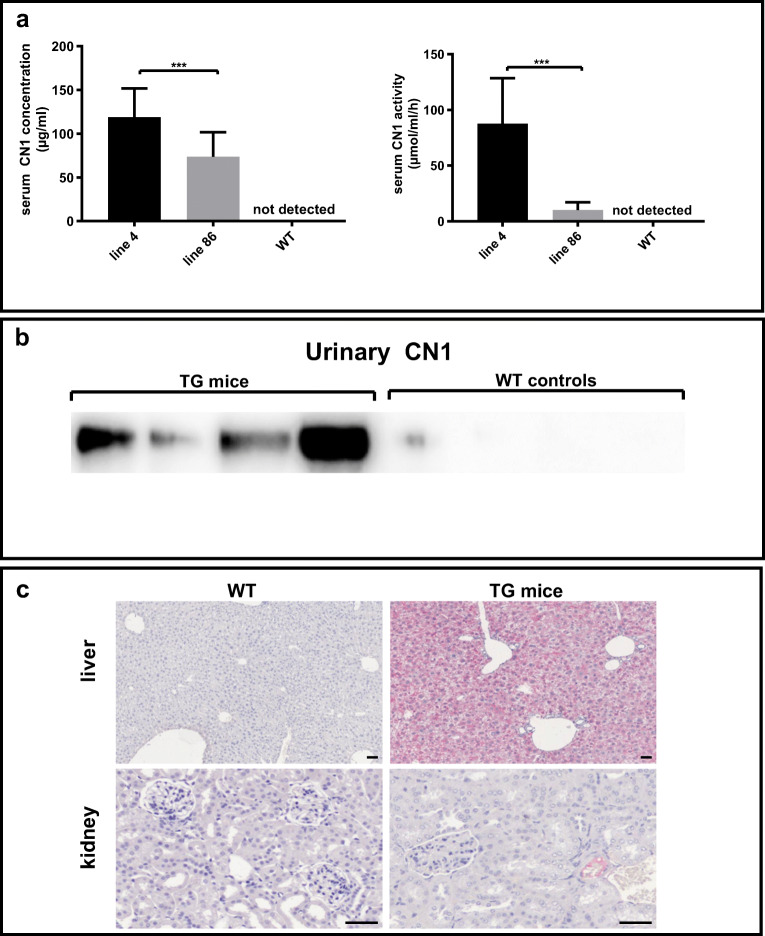
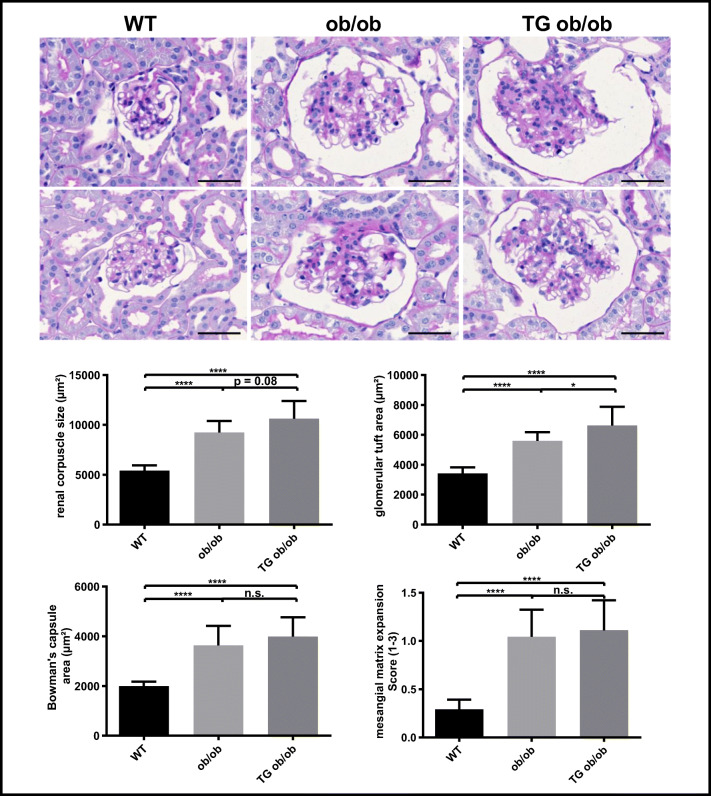
hCN1 was detected in the serum and urine of mice from two different hCN1 TG lines. The transgene was expressed in the liver but not in the kidney. High CN1 expression was associated with low plasma and renal carnosine concentrations, even after oral carnosine supplementation. Obese hCN1 transgenic BTBR mice displayed significantly higher levels of glycated hemoglobin, glycosuria, proteinuria, and increased albumin-creatinine ratios (1104 ± 696 vs 492.1 ± 282.2 μg/mg) accompanied by an increased glomerular tuft area and renal corpuscle size. Gene-expression profiling of renal tissue disclosed hierarchical clustering between BTBR, BTBR and hCN1 BTBR mice. Along with aggravation of the DKD phenotype, 26 altered genes have been found in obese hCN1 transgenic mice; among them claudin-1, thrombospondin-1, nephronectin, and peroxisome proliferator-activated receptor-alpha have been reported to play essential roles in DKD.
Our data support a role for serum carnosinase 1 in the progression of DKD. Whether this is mainly attributed to the changes in renal carnosine concentrations warrants further studies.
Increased carnosinase 1 (CN1) is associated with diabetic kidney disease (DKD). BTBR mice with human CN1 develop a more aggravated DKD phenotype. Microarray revealed alterations by CN1 which are not altered by hyperglycemia. These genes have been described to play essential roles in DKD. Inhibiting CN1 could be beneficial in DKD.
评估血清肌肽酶(CN1)对糖尿病肾病(DKD)病程的影响。
在 BTBR 遗传背景下生成 hCN1 转基因(TG)小鼠,允许在存在血清肌肽酶的情况下自发性发生 DKD。评估血清 CN1 表达对肥胖、高血糖和肾功能损害的影响。我们还研究了 hCN1 TG BTBR 小鼠肾功能损害加重是否导致与野生型 BTBR 小鼠相比肾脏转录组发生变化。
从两个不同的 hCN1 TG 系中检测到 hCN1 血清和尿液中的 TG。转基因在肝脏中表达,但不在肾脏中表达。高 CN1 表达与低血浆和肾脏肌肽浓度相关,即使在口服肌肽补充后也是如此。肥胖的 hCN1 转基因 BTBR 小鼠表现出明显更高的糖化血红蛋白、糖尿、蛋白尿和增加的白蛋白-肌酐比值(1104 ± 696 对 492.1 ± 282.2μg/mg),伴有肾小球丛面积和肾小体增大。肾脏组织的基因表达谱显示 BTBR、BTBR 和 hCN1 BTBR 小鼠之间存在层次聚类。随着 DKD 表型的加重,在肥胖的 hCN1 转基因小鼠中发现了 26 个改变的基因;其中 Claudin-1、Thrombospondin-1、Nephrin 和过氧化物酶体增殖物激活受体-α已被报道在 DKD 中发挥重要作用。
我们的数据支持血清肌肽酶 1 在 DKD 进展中的作用。这种作用是否主要归因于肾脏肌肽浓度的变化,还需要进一步研究。
增加的肌肽酶 1(CN1)与糖尿病肾病(DKD)相关。BTBR 小鼠与人 CN1 一起发展出更严重的 DKD 表型。微阵列显示由 CN1 引起的改变,而不是由高血糖引起的改变。这些基因已被描述为在 DKD 中发挥重要作用。抑制 CN1 可能对 DKD 有益。