Persian BayanGene Research and Training Center, Shiraz University of Medical Sciences, Shiraz, Iran.
Sir William Dunn School of Pathology, University of Oxford, Oxford, UK; Merton College, University of Oxford, Oxford, UK; Lincoln College, University of Oxford, Oxford, UK.
Eur J Pharmacol. 2020 Dec 5;888:173487. doi: 10.1016/j.ejphar.2020.173487. Epub 2020 Aug 15.
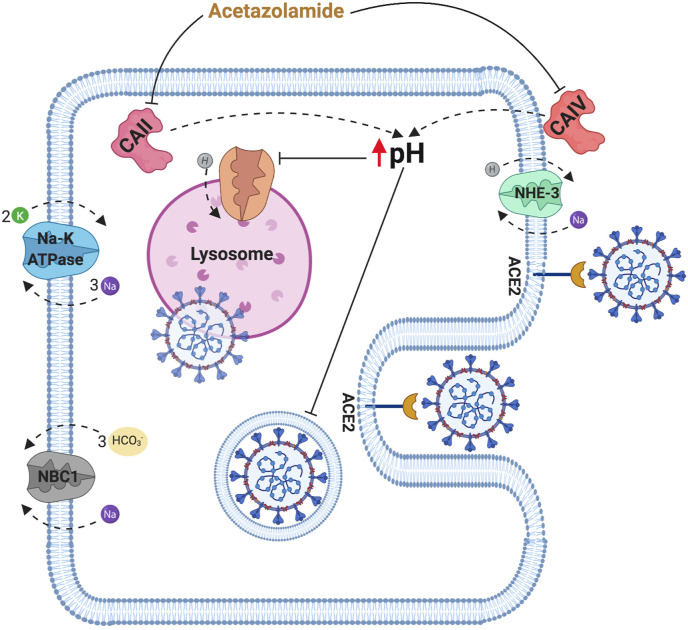
Acute kidney injury (AKI) is an important complication of COVID-19 encompassing a wide range of presentations. SARS-CoV-2 is proposed to cause AKI in the patients through various mechanisms. We are, nevertheless, far from a comprehensive understanding of the underlying pathophysiological mechanisms of the kidney injury in this infection. AKI has been shown to be a marker of disease severity and also a negative prognostic factor for survival. Unfortunately, no effective preventive strategy to decrease the risk of kidney damage in these patients has yet been identified. In this hypothesis, we highlight the potential protective effects of acetazolamide, a carbonic anhydrase inhibitor, in preventing the proximal tubular damage caused by the virus through disrupting the virus-endosome fusion and also interfering with the lysosomal proteases. Our proposed mechanisms could pave the way for further in vitro studies and subsequent clinical trials.
急性肾损伤(AKI)是 COVID-19 的一个重要并发症,涵盖了广泛的表现。SARS-CoV-2 被认为通过多种机制导致患者发生 AKI。然而,我们远没有全面了解这种感染中肾脏损伤的潜在病理生理机制。AKI 已被证明是疾病严重程度的标志物,也是生存的负面预后因素。不幸的是,尚未确定有效的预防策略来降低这些患者发生肾损伤的风险。在这个假设中,我们强调了乙酰唑胺(一种碳酸酐酶抑制剂)的潜在保护作用,通过破坏病毒-内体融合和干扰溶酶体蛋白酶,防止病毒引起的近端肾小管损伤。我们提出的机制可能为进一步的体外研究和随后的临床试验铺平道路。