Sviland L, Pearson A D, Eastham E J, Hamilton P J, Proctor S J, Malcolm A J
Department of Pathology, Royal Victoria Infirmary, University of Newcastle upon Tyne.
J Clin Pathol. 1988 Feb;41(2):148-54. doi: 10.1136/jcp.41.2.148.
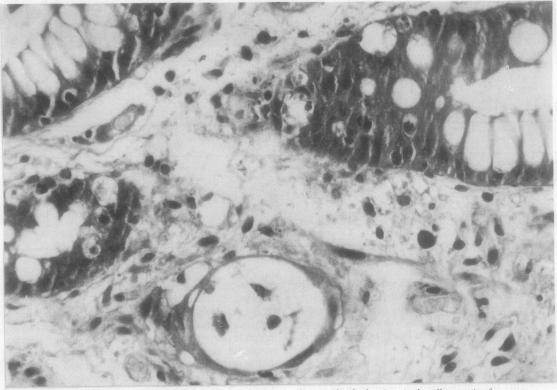
The histological appearances of skin and rectal biopsy specimens were studied in 31 bone marrow transplant recipients (13 autologous, 18 allogeneic) before transplant, at 28 days, at six months, and as soon as graft versus host disease (GVHD) was clinically suspected. Grades I and II skin changes were commonly seen in patients before transplant and in the autologous group after transplant, as well as in most of the allogeneic recipients with suspected GVHD. Epidermal lymphocytic infiltration was seen only in allogeneic recipients, with clinical GVHD following transplant, but this was not a consistent finding and no other histological features were seen which would distinguish early GVHD from changes caused by cytotoxic agents. Rectal biopsy specimens, however, were normal in patients before transplant and in autologous recipients at 28 days; single cell necrosis of crypt cells was seen only in six of 13 allogeneic recipients studied after transplant with clinical skin GVHD but no gastrointestinal symptoms. Skin changes greater than I and II are required for the histological diagnosis of GVHD. Rectal changes are more specific and may be present despite a lack of intestinal symptoms.
对31例骨髓移植受者(13例自体移植,18例异体移植)移植前、移植后28天、6个月以及临床怀疑发生移植物抗宿主病(GVHD)时的皮肤和直肠活检标本的组织学表现进行了研究。I级和II级皮肤改变常见于移植前的患者、自体移植组移植后的患者以及大多数疑似发生GVHD的异体移植受者。仅在移植后发生临床GVHD的异体移植受者中可见表皮淋巴细胞浸润,但这并非一致的发现,且未观察到其他可将早期GVHD与细胞毒性药物所致改变区分开来的组织学特征。然而,移植前的患者和28天时的自体移植受者的直肠活检标本均正常;在13例移植后出现临床皮肤GVHD但无胃肠道症状的异体移植受者中,仅6例可见隐窝细胞单细胞坏死。GVHD的组织学诊断需要皮肤改变大于I级和II级。直肠改变更具特异性,即使没有肠道症状也可能存在。