Basic Medical College, Shandong First Medical University, Jinan, 250062, Shandong, China.
Key Laboratory of Rare and Uncommon Diseases, Basic Medical Colleg, Shandong First Medical University, Jinan, 250062, Shandong, China.
BMC Geriatr. 2020 Aug 17;20(1):292. doi: 10.1186/s12877-020-01682-w.
Statins have been recommended by several guidelines as the primary prevention medication for cardiovascular diseases. However, the benefits of statin therapy for cerebral small vessel disease (CSVD), particularly in adults ≥75 years of age, have not been fully evaluated.
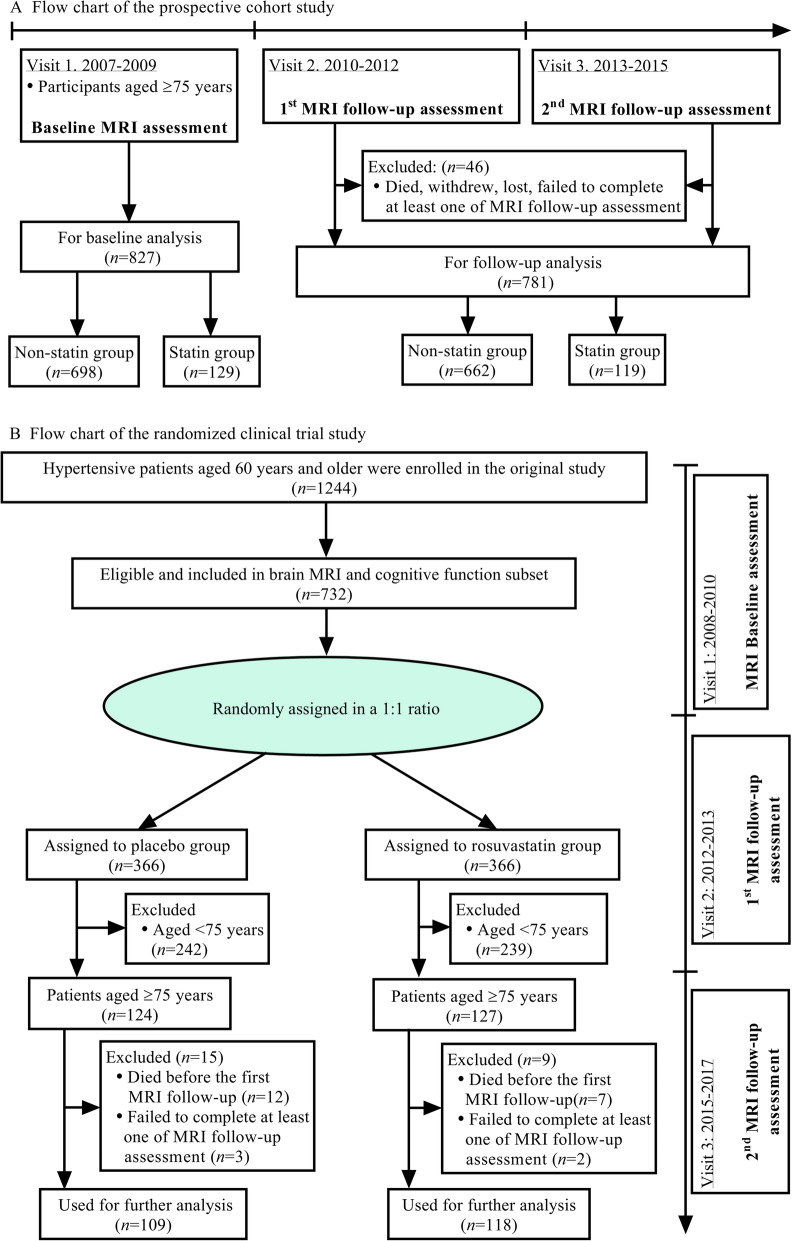
We analyzed the data from a prospective population-based cohort study and a randomized, double-blind, placebo-controlled clinical trial to determine whether statin therapy might aid in slowing the progression of CSVD in adults ≥75 years of age. For the cohort study, 827 participants were considered eligible and were included in the baseline analysis. Subsequently, 781 participants were included in follow-up analysis. For the clinical trial, 227 participants were considered eligible and were used in the baseline and follow-up analyses.
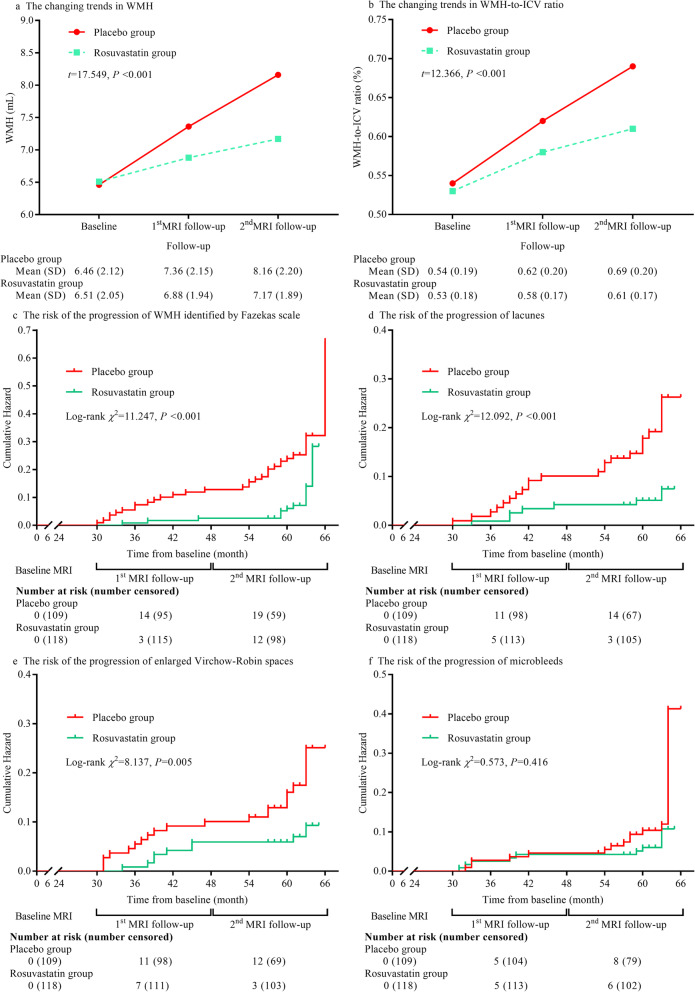
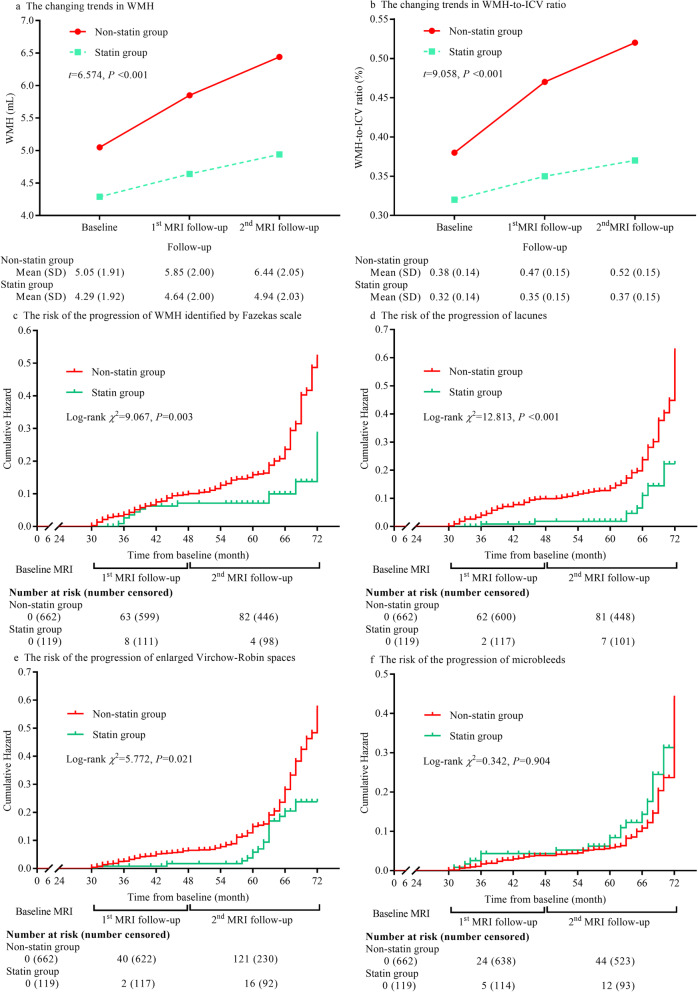
The white matter hyperintensities (WMH) volume, the WMH-to-intracranial volume (ICV) ratio, the prevalence of a Fazekas scale score ≥ 2, lacunes, enlarged perivascular spaces (EPVS), and microbleeds were significantly lower in the statin group than the non-statin group at baseline in the cohort study (all P < 0.05). During the follow-up period, in both the cohort and clinical trial studies, the WMH volume and WMH-to-ICV ratio were significantly lower in the statin/rosuvastatin group than the non-statin/placebo group (all P < 0.001). Statin therapy was associated with lower risk of WMH, lacunes, and EPVS progression than the non-statin therapy group after adjustment for confounders (all P < 0.05). There was no statistically significant difference in the risk of microbleeds between the statin and non-statin therapy groups (all, P > 0.05).
Our findings indicated that statin therapy alleviated the progression of WMH, lacunes, and EPVS without elevating the risk of microbleeds. On the basis of the observed results, we concluded that statin therapy is an efficient and safe intervention for CSVD in adults ≥75 years of age.
Chictr.org.cn: ChiCTR-IOR-17013557 , date of trial retrospective registration November 27, 2017 and ChiCTR-EOC-017013598 , date of trial retrospective registration November 29, 2017.
他汀类药物已被多项指南推荐为心血管疾病的一级预防药物。然而,他汀类药物治疗脑小血管疾病(CSVD)的益处,尤其是在 75 岁以上的成年人中,尚未得到充分评估。
我们分析了一项前瞻性人群队列研究和一项随机、双盲、安慰剂对照临床试验的数据,以确定他汀类药物治疗是否有助于减缓 75 岁以上成年人 CSVD 的进展。对于队列研究,考虑了 827 名符合条件的参与者并纳入了基线分析。随后,纳入了 781 名参与者进行随访分析。对于临床试验,考虑了 227 名符合条件的参与者,并在基线和随访分析中使用了这些参与者。
在队列研究中,与非他汀类药物组相比,他汀类药物组在基线时的脑白质高信号(WMH)体积、WMH 与颅内体积(ICV)比值、Fazekas 量表评分≥2 的患病率、腔隙、扩大的血管周围间隙(EPVS)和微出血均显著降低(均 P < 0.05)。在随访期间,队列研究和临床试验中,与非他汀类药物/安慰剂组相比,他汀类药物/罗苏伐他汀组的 WMH 体积和 WMH 与 ICV 比值均显著降低(均 P < 0.001)。在调整混杂因素后,与非他汀类药物治疗组相比,他汀类药物治疗与 WMH、腔隙和 EPVS 进展的风险降低相关(均 P < 0.05)。他汀类药物治疗组和非他汀类药物治疗组之间微出血的风险无统计学差异(均 P > 0.05)。
我们的研究结果表明,他汀类药物治疗可缓解 WMH、腔隙和 EPVS 的进展,而不会增加微出血的风险。基于观察结果,我们得出结论,他汀类药物治疗是一种治疗 75 岁以上成年人 CSVD 的有效且安全的干预措施。
Chictr.org.cn:ChiCTR-IOR-17013557,临床试验回顾性注册日期 2017 年 11 月 27 日和 ChiCTR-EOC-017013598,临床试验回顾性注册日期 2017 年 11 月 29 日。