Department of Chiropractic, Faculty of Science and Engineering, Macquarie University, Sydney, Australia.
Department of Physical Therapy, Faculty of Rehabilitation Medicine, University of Alberta, Edmonton, Canada.
Chiropr Man Therap. 2020 Aug 18;28(1):42. doi: 10.1186/s12998-020-00331-8.
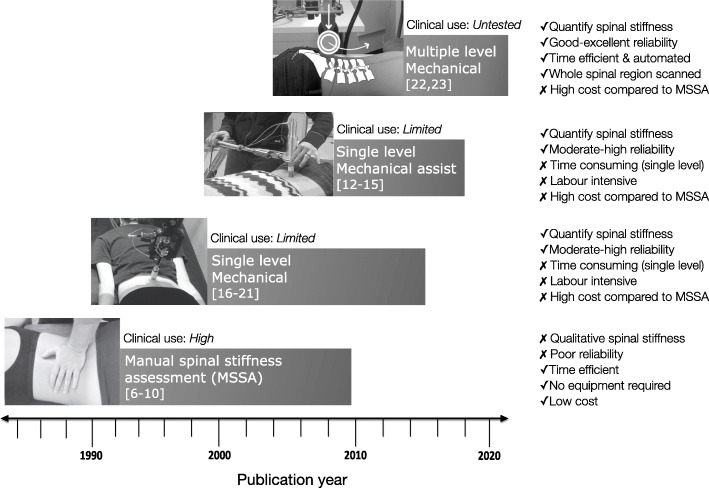
The assessment of spinal stiffness by manual palpation in clinical settings has demonstrated both poor accuracy and reliability. More recently, mechanical methods for assessment of spinal stiffness have demonstrated superior accuracy and reliability. However, mechanical methods of spinal stiffness assessment can be expensive, time consuming and/or unsuited to clinical practice. While a new device has been designed to address these issues (VerteTrack), its benchtop performance remains unknown.
To measure the bench-top performance of VerteTrack.
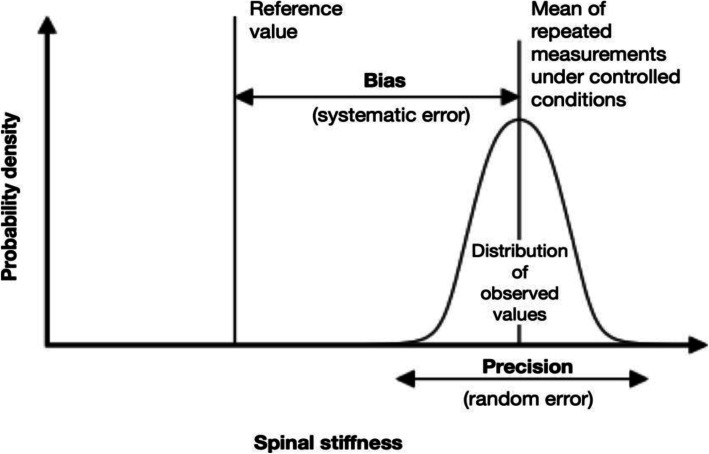
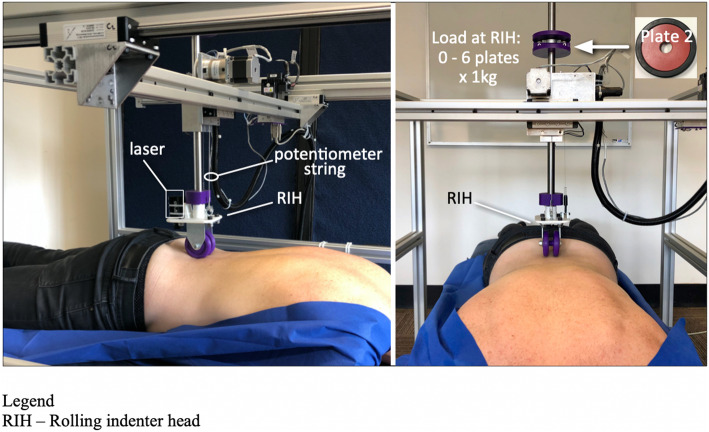
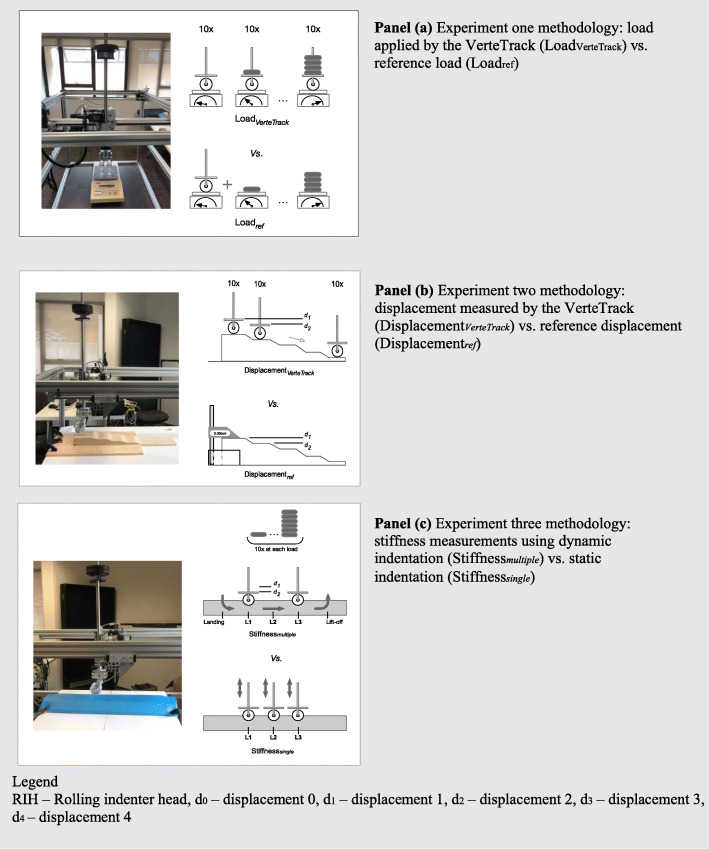
A series of laboratory-based experiments were conducted in February 2018 to investigate the accuracy (precision and bias) of load and displacement measurements obtained by VerteTrack and then were compared against an appropriate reference standard. Measurements of both multiple-level continuous assessment (multiple spinal levels measured), and single-level assessment (single spinal level measured) were performed on a viscoelastic foam medium (AIREX® balance beam, Switzerland) and the resulting stiffness calculated.
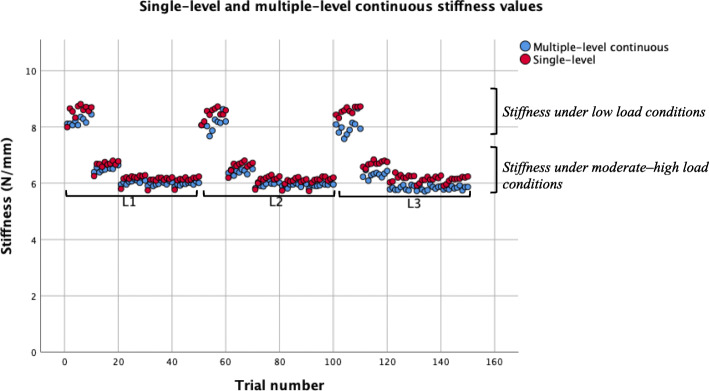
VerteTrack demonstrated high precision at all loads and displacements. There was minimal systematic measurement bias identified for applied versus reference load (mean bias = - 0.123 N; 95%CI - 0.182 to 0.428 N, p < .001), and no systematic measurement bias for measured versus reference displacement (mean difference = 0.02 mm; 95%CI - 0.09 to 0.14 mm, p < .001). The magnitude of stiffness obtained during multiple-level continuous assessment was on average 0.25 N/mm (2.79%) less than that for single-level assessment (95%CI - 0.67 to 0.17 N/mm, p < .001).
VerteTrack demonstrated high accuracy (high precision, low bias) under bench-top conditions. The difference in stiffness found between multiple versus single spinal levels should be considered in the research context, but is unlikely to be clinically relevant. The results of this study demonstrate that VerteTrack may be suitable for both single and multi-level spinal stiffness measurements in-vivo.
在临床环境中,通过手动触诊评估脊柱刚度的方法既不准确也不可靠。最近,用于评估脊柱刚度的机械方法已证明具有更高的准确性和可靠性。然而,机械方法评估脊柱刚度既昂贵又耗时,而且/或者不适合临床实践。虽然已经设计了一种新设备来解决这些问题(VerteTrack),但其台架性能仍不清楚。
测量 VerteTrack 的台架性能。
2018 年 2 月进行了一系列基于实验室的实验,以研究 VerteTrack 获得的负载和位移测量的准确性(精度和偏差),然后将其与适当的参考标准进行比较。对粘弹性泡沫介质(瑞士 AIREX®平衡梁)进行了多水平连续评估(多个脊柱水平测量)和单水平评估(单个脊柱水平测量)的一系列测量,并计算出相应的刚度。
VerteTrack 在所有负载和位移下均表现出高精度。应用负载与参考负载相比,系统测量偏差最小(平均偏差为-0.123N;95%CI -0.182 至 0.428N,p<.001),而测量位移与参考位移相比,无系统测量偏差(平均差值为 0.02mm;95%CI -0.09 至 0.14mm,p<.001)。多水平连续评估获得的刚度平均值比单水平评估低 0.25N/mm(2.79%)(95%CI -0.67 至 0.17N/mm,p<.001)。
VerteTrack 在台架条件下表现出高精度(高精度、低偏差)。在研究背景下,应考虑多个与单个脊柱水平之间的刚度差异,但不太可能具有临床相关性。本研究结果表明,VerteTrack 可能适用于体内的单个和多个脊柱刚度测量。