Weill Cornell Medical College.
Center for Global Health.
JCI Insight. 2020 Sep 17;5(18):136301. doi: 10.1172/jci.insight.136301.
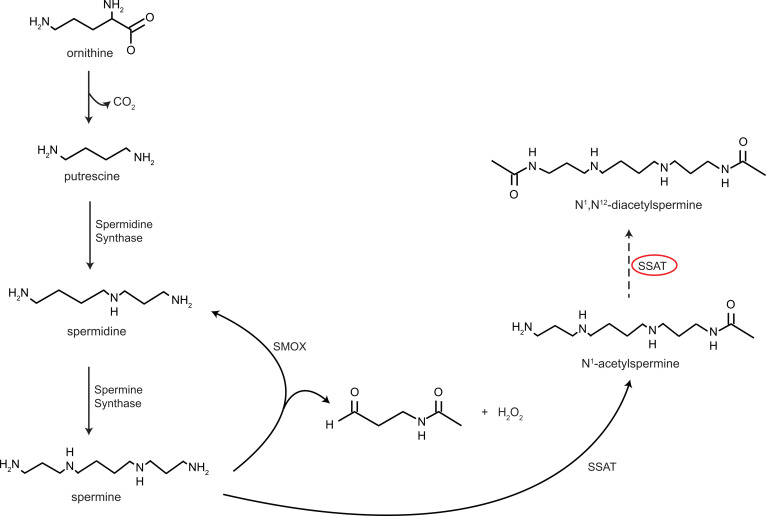
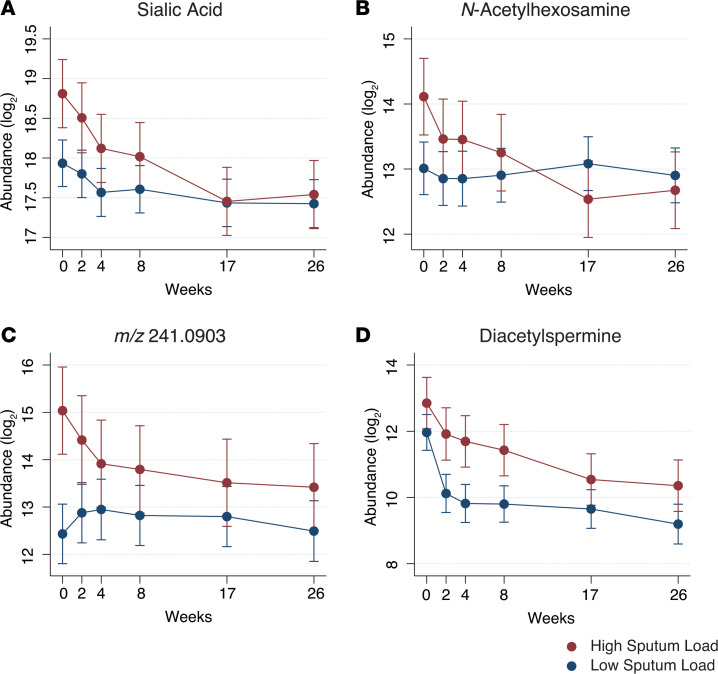
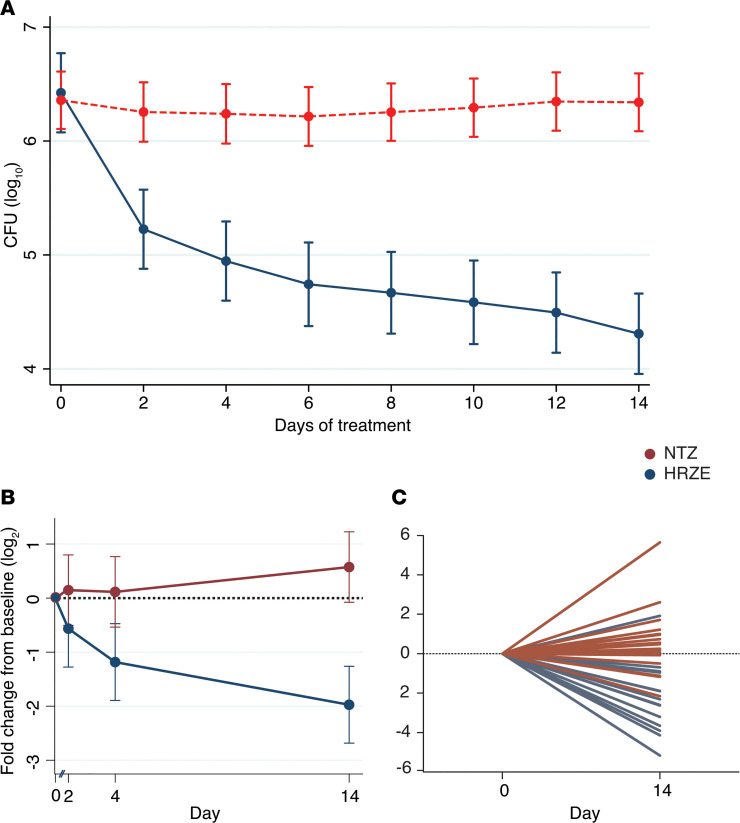
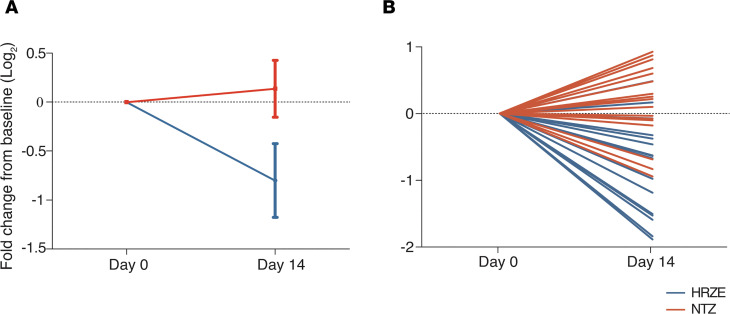
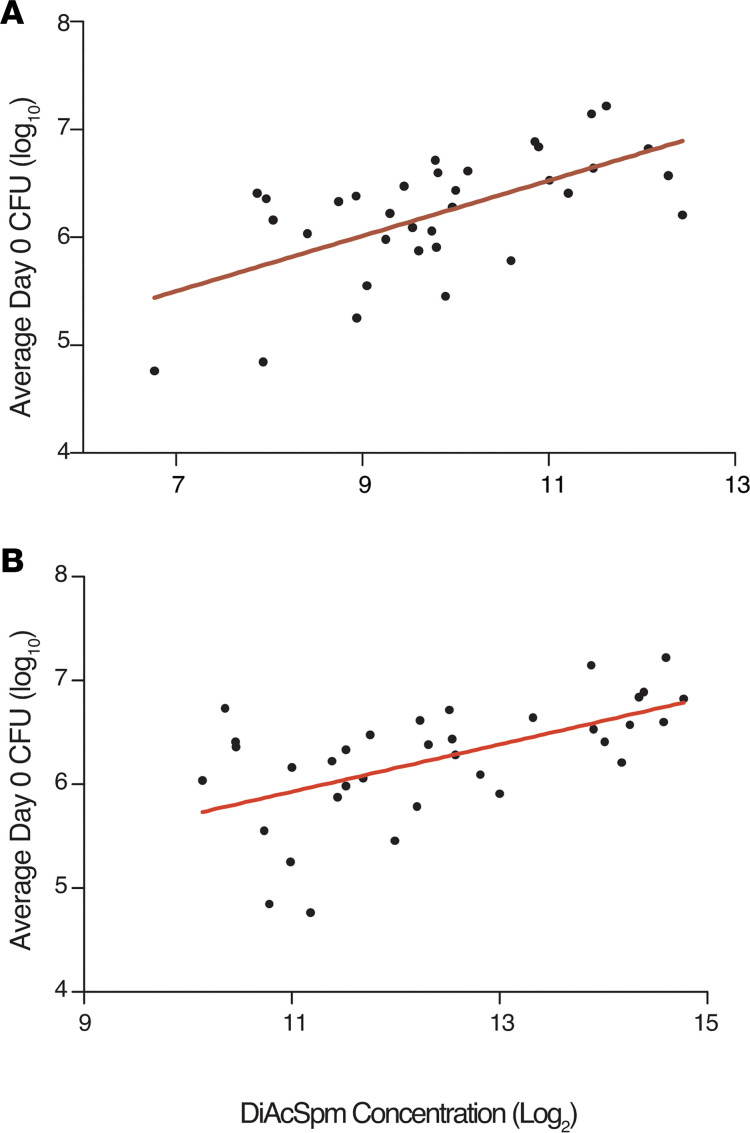
BACKGROUNDControl of the tuberculosis (TB) pandemic remains hindered in part by a lack of simple and accurate measures of treatment efficacy, as current gold standard markers rely on sputum-based assays that are slow and challenging to implement. However, previous work identified urinary N1, N12-diacetylspermine (DiAcSpm), neopterin, hydroxykynurenine, N-acetylhexosamine, ureidopropionic acid, sialic acid, and mass-to-charge ratio (m/z) 241.0903 as potential biomarkers of active pulmonary TB (ATB). Here, we evaluated their ability to serve as biomarkers of TB treatment response and mycobacterial load.METHODSWe analyzed urine samples prospectively collected from 2 cohorts with ATB. A total of 34 study participants from African countries treated with first-line TB therapy rifampin, isoniazid, pyrazinamide, and ethambutol (HRZE) were followed for 1 year, and 35 participants from Haiti treated with either HRZE or an experimental drug were followed for 14 days. Blinded samples were analyzed by untargeted HPLC-coupled high-resolution TOF-mass spectrometry.RESULTSUrinary levels of all 7 molecules significantly decreased by week 26 of successful treatment (P = 0.01 to P < 0.0001) and positively correlated with sputum mycobacterial load (P < 0.0001). Urinary DiAcSpm levels decreased significantly in participants treated with HRZE as early as 14 days (P < 0.0001) but remained unchanged in cases of ineffective therapy (P = 0.14).CONCLUSIONUrinary DiAcSpm, neopterin, hydroxykynurenine, N-acetylhexosamine, ureidopropionic acid, sialic acid, and m/z 241.0903 reductions correlated with successful anti-TB treatment and sputum mycobacterial load. Urinary DiAcSpm levels exhibited reductions capable of differentiating treatment success from failure as early as 2 weeks after the initiation of chemotherapy, advocating its further development as a potentially simple, noninvasive biomarker for assessing treatment response and bacterial load.FUNDINGThis work was supported by the Clinical and Translational Science Center at Weill Cornell College of Medicine (NIH/NCATS 1 UL1 TR002384-02 and KL2TR000458), the Department of Defense (PR170782), the National Institute of Allergy and Infectious Disease grants (NIAID T32AI007613-16, K24 AI098627, and K23 AI131913), the NIH Fogarty International Center grants (R24 TW007988 and TW010062), NIH grant (R01 GM135926), the Abby and Howard P. Milstein Program in Chemical Biology and Translational Medicine, and the Tuberculosis Research Units Networks (TBRU-N, AI111143).
控制结核病(TB)大流行仍然受到阻碍,部分原因是缺乏简单而准确的治疗效果衡量标准,因为当前的黄金标准标志物依赖于基于痰的检测,这些检测既缓慢又难以实施。然而,先前的工作已经确定尿液中的 N1、N12-二乙酰基精脒(DiAcSpm)、新蝶呤、羟基犬尿氨酸、N-乙酰己糖胺、脲基丙酸、唾液酸和质荷比(m/z)241.0903 是潜在的活动性肺结核(ATB)的生物标志物。在这里,我们评估了它们作为 TB 治疗反应和分枝杆菌负荷标志物的能力。
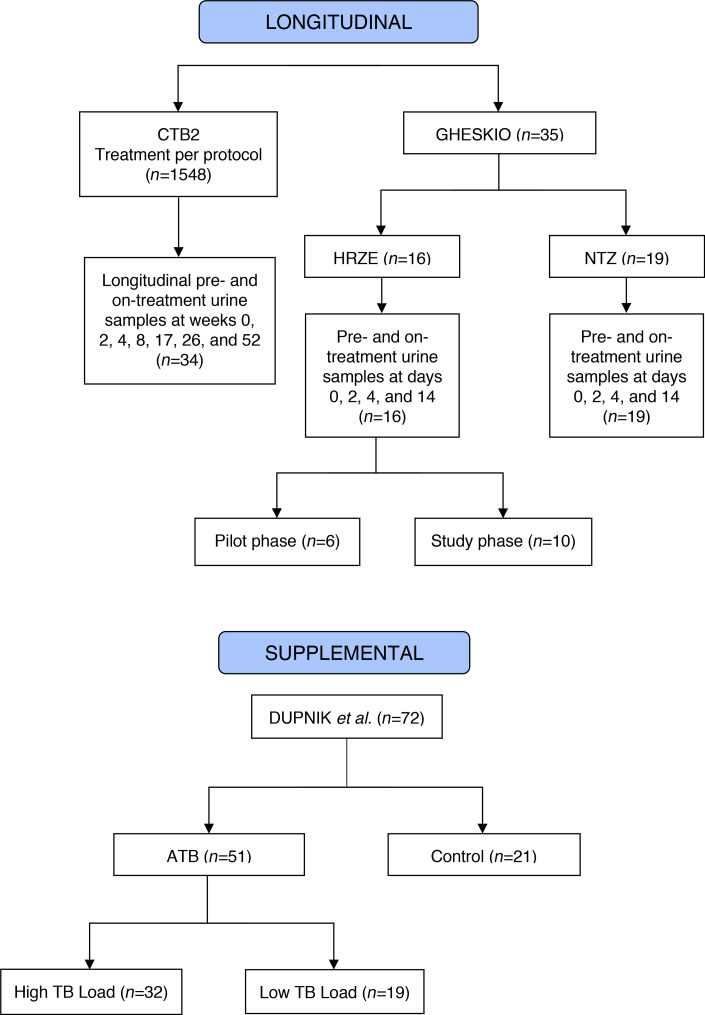
我们前瞻性地分析了来自 2 个 ATB 队列的尿液样本。共有 34 名来自非洲国家的研究参与者接受一线 TB 治疗利福平、异烟肼、吡嗪酰胺和乙胺丁醇(HRZE)治疗,随访 1 年,35 名来自海地的参与者接受 HRZE 或实验药物治疗,随访 14 天。用非靶向 HPLC 结合高分辨率 TOF 质谱法分析盲样。
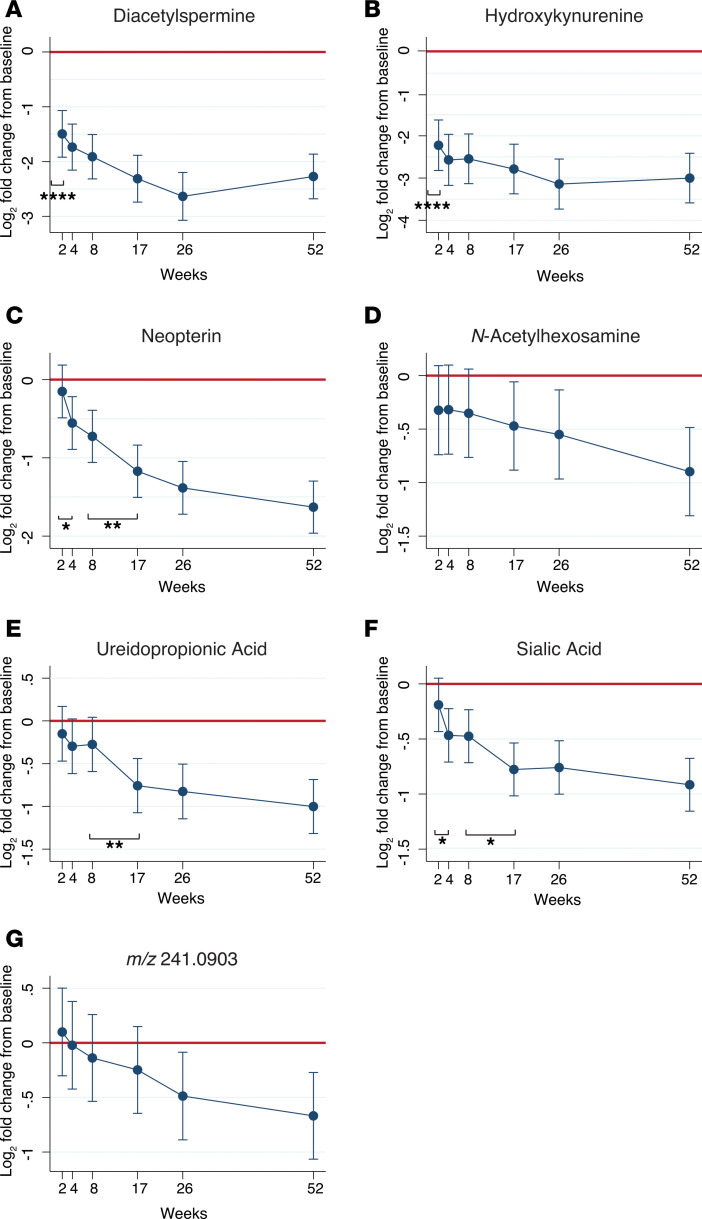
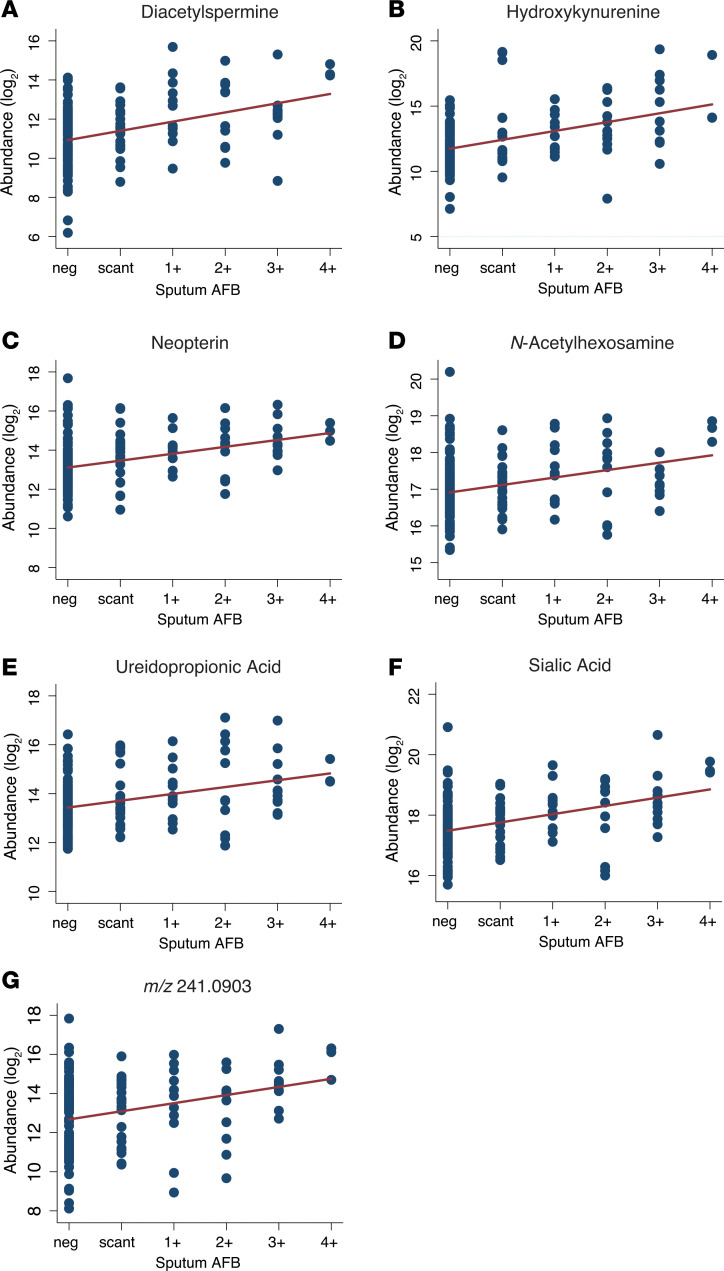
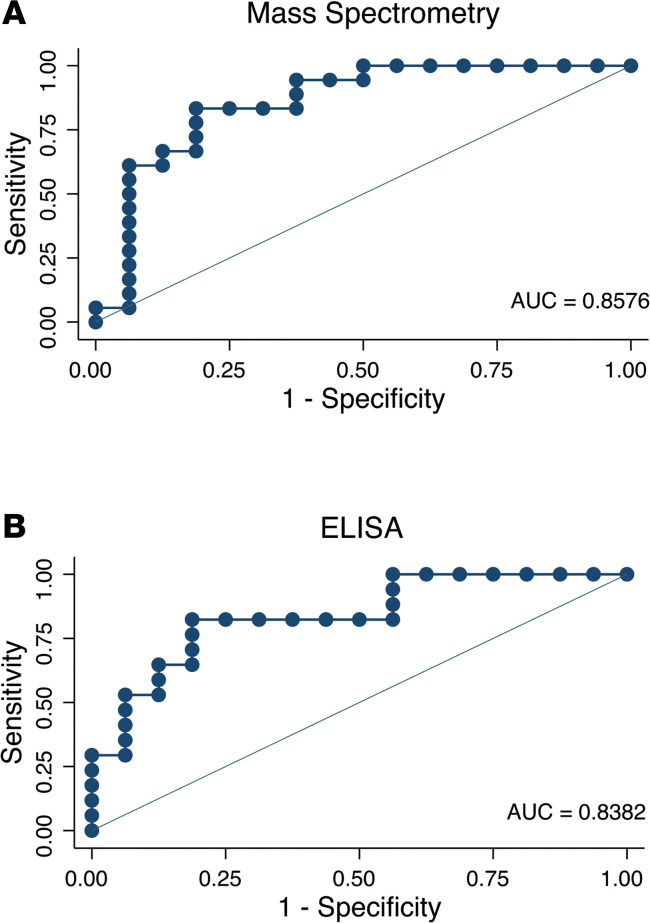
成功治疗 26 周后,所有 7 种分子的尿液水平均显著降低(P=0.01 至 P<0.0001),与痰分枝杆菌负荷呈正相关(P<0.0001)。接受 HRZE 治疗的参与者在 14 天内,尿液 DiAcSpm 水平显著降低(P<0.0001),但在无效治疗的情况下不变(P=0.14)。
尿液 DiAcSpm、新蝶呤、羟基犬尿氨酸、N-乙酰己糖胺、脲基丙酸、唾液酸和 m/z 241.0903 的降低与成功的抗 TB 治疗和痰分枝杆菌负荷相关。尿液 DiAcSpm 水平在开始化疗后 2 周即可降低,足以区分治疗成功和失败,这表明它作为一种潜在的简单、非侵入性的生物标志物,可用于评估治疗反应和细菌负荷。
这项工作得到了威尔康奈尔医学院临床和转化科学中心(NIH/NCATS 1 UL1 TR002384-02 和 KL2TR000458)、美国国防部(PR170782)、美国国立过敏和传染病研究所拨款(NIAID T32AI007613-16、K24 AI098627 和 K23 AI131913)、NIH 福格蒂国际中心拨款(R24 TW007988 和 TW010062)、NIH 拨款(R01 GM135926)、Abby 和 Howard P. Milstein 化学生物学和转化医学计划以及结核病研究单位网络(TBRU-N,AI111143)的支持。