Department of Pediatrics, Children's Hospital of Pittsburgh, University of Pittsburgh Medical Center, Pittsburgh, PA, 15224, USA.
Department of Human Genetics, University of Pittsburgh, School of Public Health, Pittsburgh, PA, USA.
Acta Neuropathol Commun. 2020 Aug 18;8(1):138. doi: 10.1186/s40478-020-01021-5.
Amyotrophic lateral sclerosis (ALS) is an adult-onset, fatal neurodegenerative disease characterized by progressive loss of upper and lower motor neurons. While pathogenic mutations in the DNA/RNA-binding protein Matrin-3 (MATR3) are linked to ALS and distal myopathy, the molecular mechanisms underlying MATR3-mediated neuromuscular degeneration remain unclear.
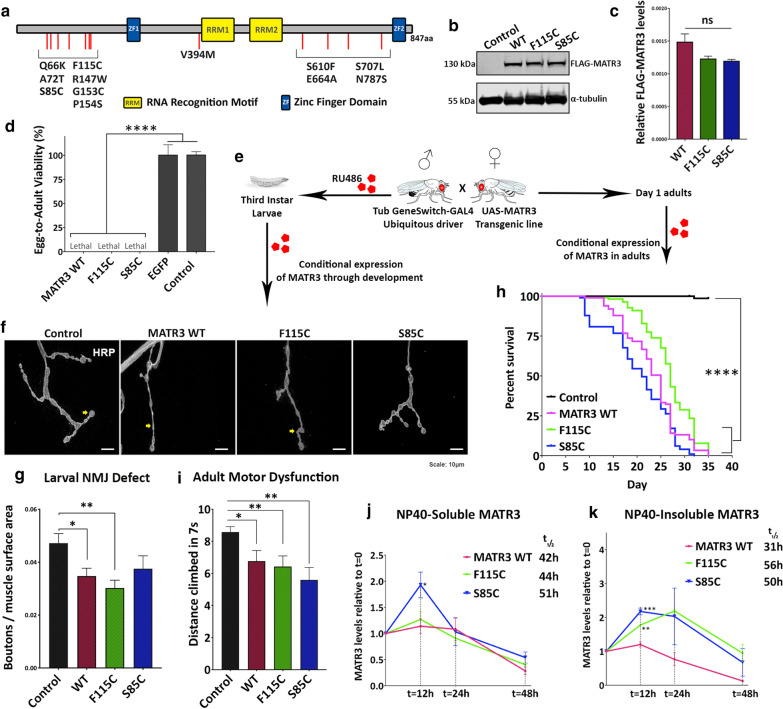
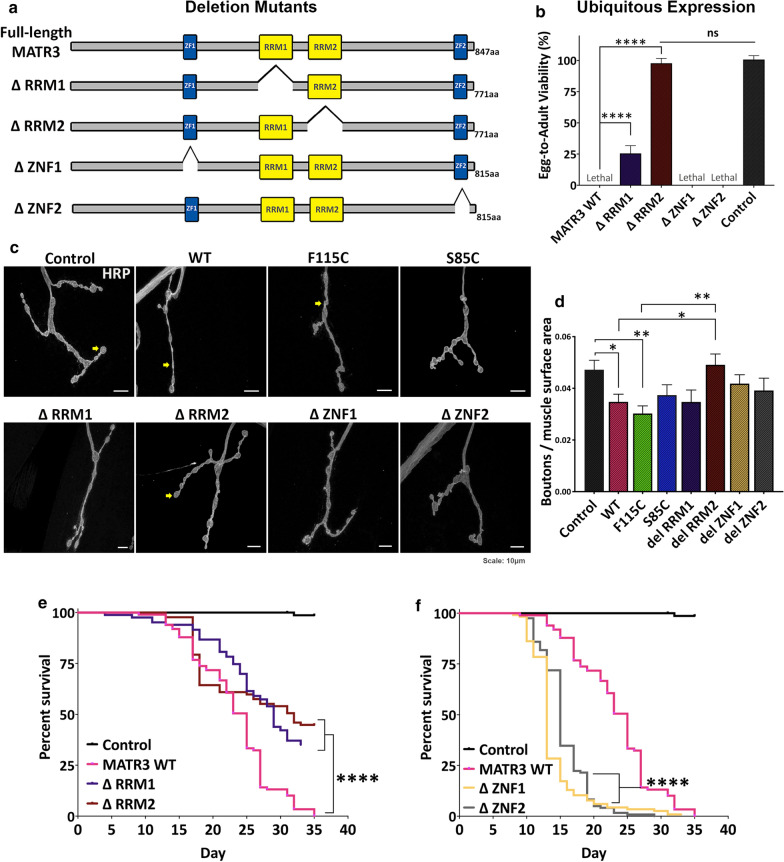
We generated Drosophila lines with transgenic insertion of human MATR3 wildtype, disease-associated variants F115C and S85C, and deletion variants in functional domains, ΔRRM1, ΔRRM2, ΔZNF1 and ΔZNF2. We utilized genetic, behavioral and biochemical tools for comprehensive characterization of our models in vivo and in vitro. Additionally, we employed in silico approaches to find transcriptomic targets of MATR3 and hnRNPM from publicly available eCLIP datasets.
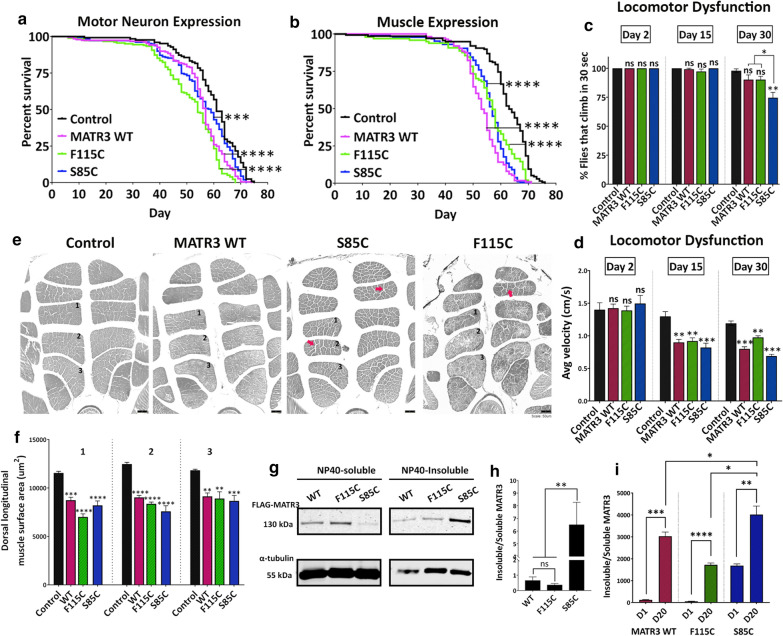
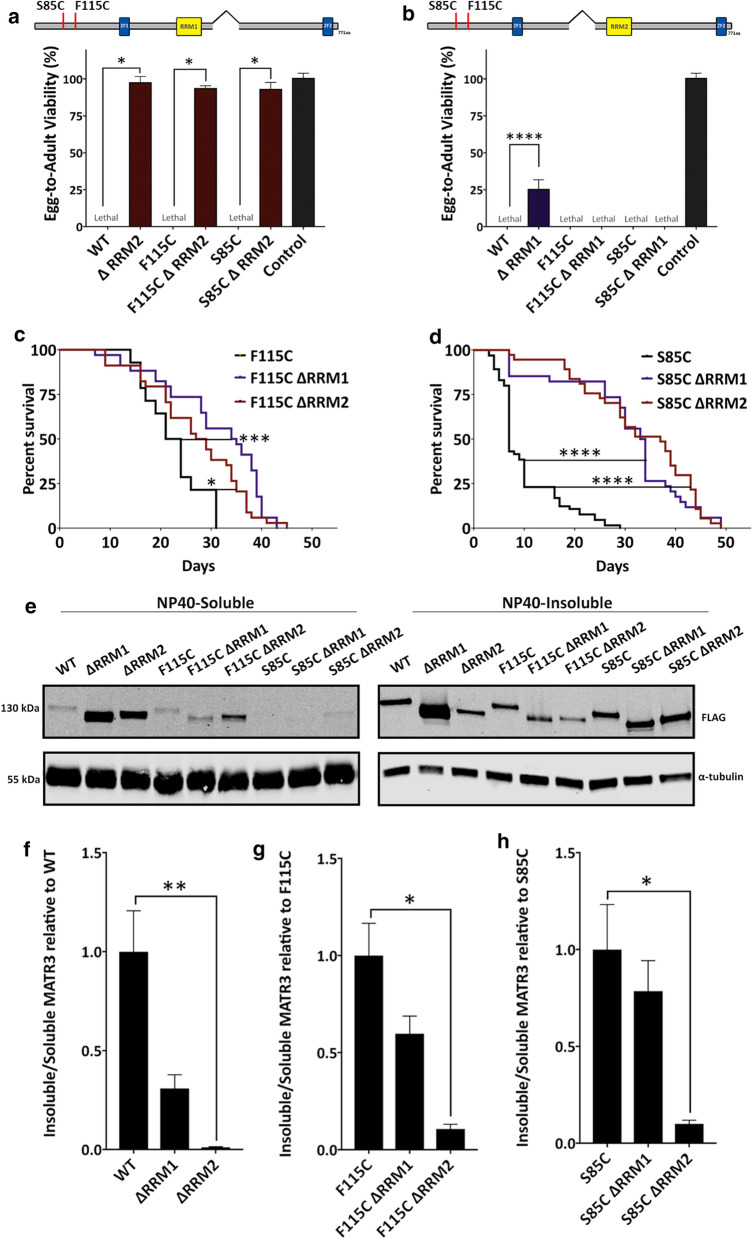
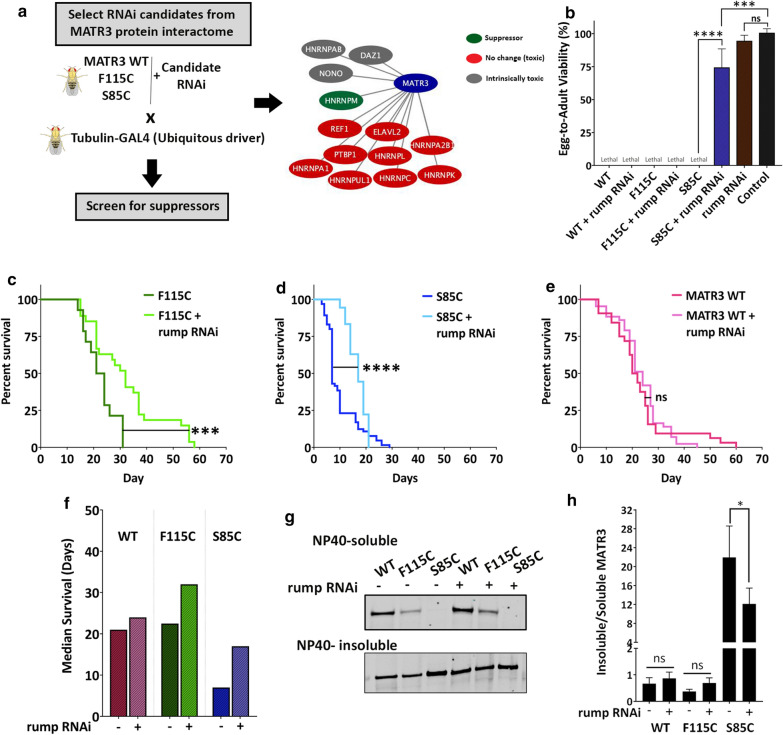
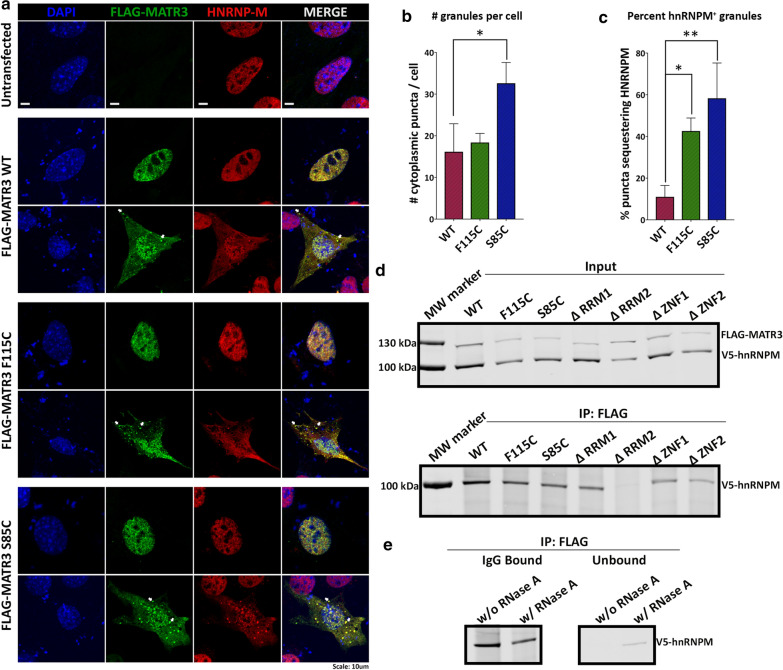
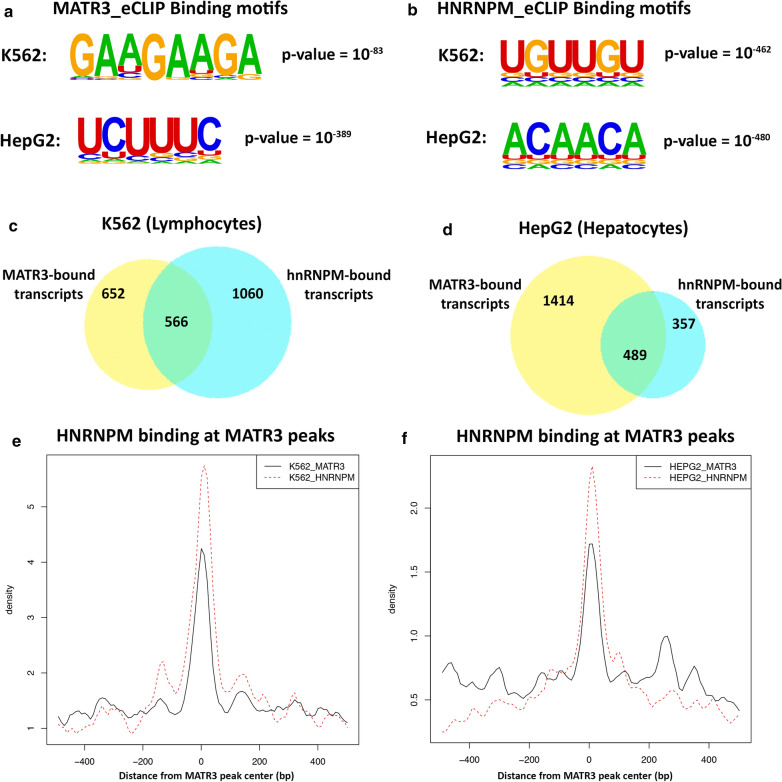
We found that targeted expression of MATR3 in Drosophila muscles or motor neurons shorten lifespan and produces progressive motor defects, muscle degeneration and atrophy. Strikingly, deletion of its RNA-recognition motif (RRM2) mitigates MATR3 toxicity. We identified rump, the Drosophila homolog of human RNA-binding protein hnRNPM, as a modifier of mutant MATR3 toxicity in vivo. Interestingly, hnRNPM physically and functionally interacts with MATR3 in an RNA-dependent manner in mammalian cells. Furthermore, common RNA targets of MATR3 and hnRNPM converge in biological processes important for neuronal health and survival.
We propose a model of MATR3-mediated neuromuscular degeneration governed by its RNA-binding domains and modulated by interaction with splicing factor hnRNPM.
肌萎缩侧索硬化症(ALS)是一种成人发病、致命的神经退行性疾病,其特征是上运动神经元和下运动神经元逐渐丧失。虽然 DNA/RNA 结合蛋白 Matrin-3(MATR3)的致病突变与 ALS 和远端肌病有关,但 MATR3 介导的神经肌肉退化的分子机制尚不清楚。
我们生成了带有转基因插入的果蝇系,插入的是人类 MATR3 的野生型、疾病相关的变体 F115C 和 S85C,以及功能域缺失变体 ΔRRM1、ΔRRM2、ΔZNF1 和 ΔZNF2。我们利用遗传、行为和生化工具对我们的体内和体外模型进行了全面的特征描述。此外,我们还采用了计算方法,从公开的 eCLIP 数据集查找 MATR3 和 hnRNPM 的转录组靶标。
我们发现,MATR3 在果蝇肌肉或运动神经元中的靶向表达会缩短寿命,并导致进行性运动缺陷、肌肉退化和萎缩。引人注目的是,其 RNA 识别基序(RRM2)的缺失减轻了 MATR3 的毒性。我们鉴定出 rump,即人类 RNA 结合蛋白 hnRNPM 的果蝇同源物,是体内突变 MATR3 毒性的调节剂。有趣的是,hnRNPM 在哺乳动物细胞中以 RNA 依赖的方式与 MATR3 发生物理和功能相互作用。此外,MATR3 和 hnRNPM 的常见 RNA 靶标在对神经元健康和存活很重要的生物学过程中趋同。
我们提出了一个由 MATR3 的 RNA 结合结构域介导、并由其与剪接因子 hnRNPM 的相互作用调节的 MATR3 介导的神经肌肉退化模型。