Department of Neurology, MassGeneral Institute for Neurodegenerative Disease, Massachusetts General Hospital, Harvard Medical School, Charlestown, MA, 02129, USA.
Acta Neuropathol Commun. 2020 Aug 18;8(1):137. doi: 10.1186/s40478-020-01014-4.
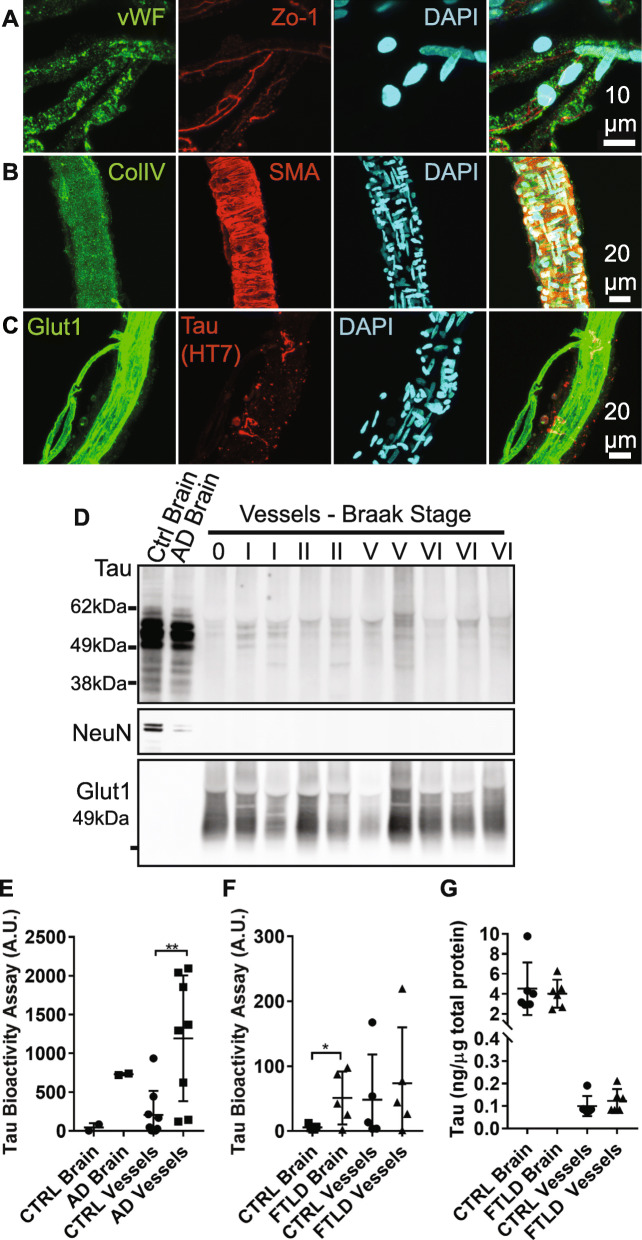
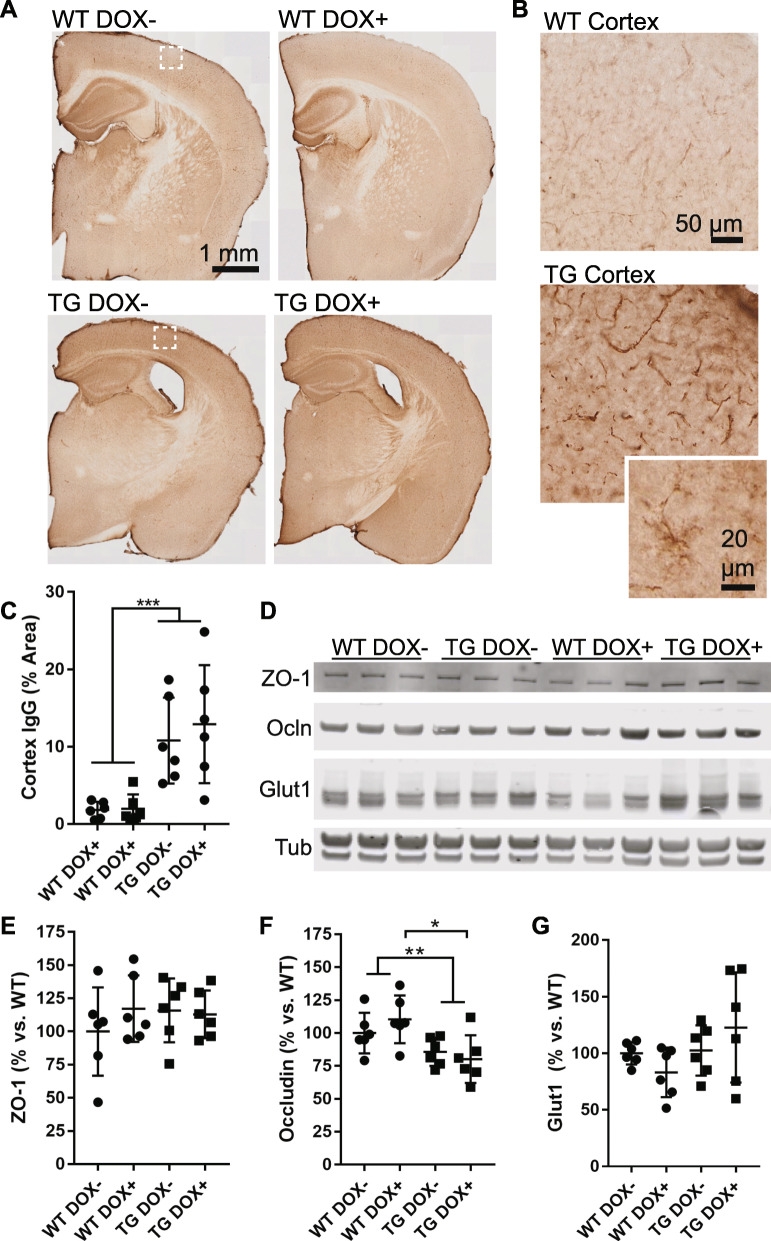
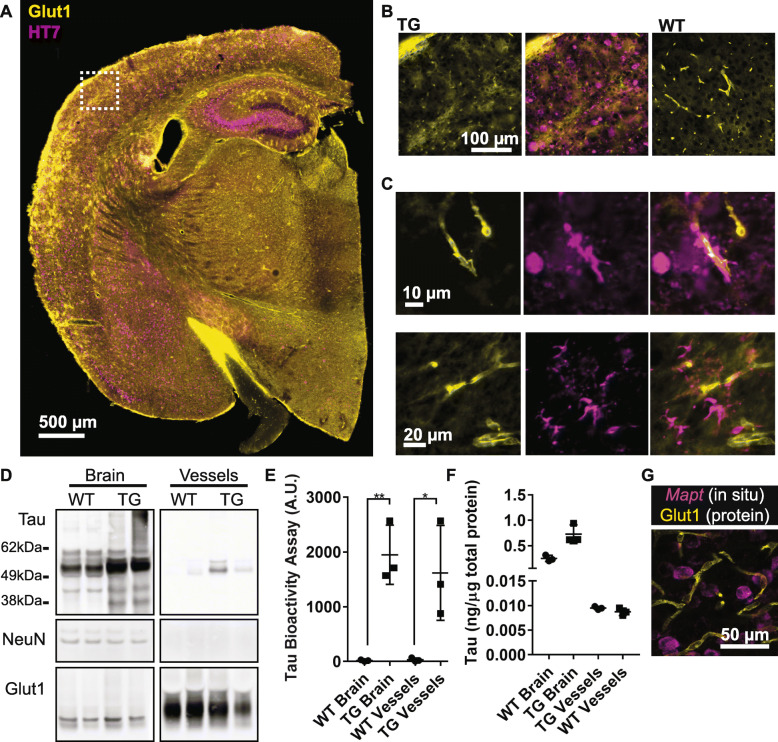
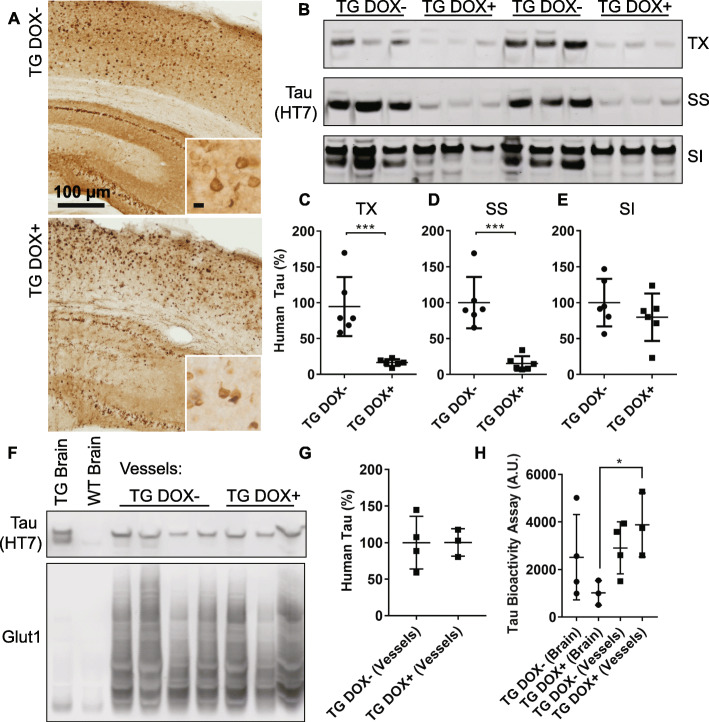
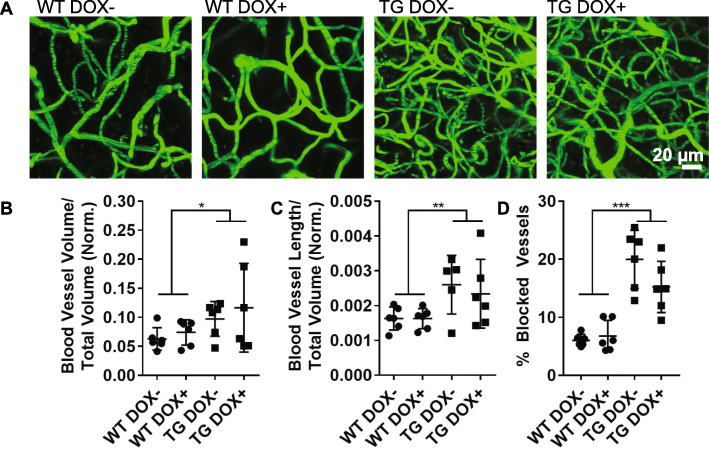
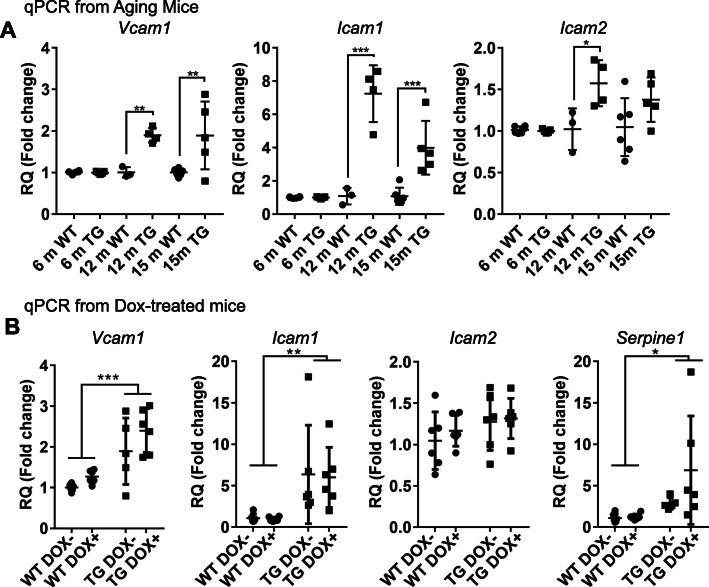
Microangiopathy, including proliferation of small diameter capillaries, increasing vessel tortuosity, and increased capillary blockage by leukocytes, was previously observed in the aged rTg4510 mouse model. Similar gene expression changes related to angiogenesis were observed in both rTg4510 and Alzheimer's disease (AD). It is uncertain if tau is directly responsible for these vascular changes by interacting directly with microvessels, and/or if it contributes indirectly via neurodegeneration and concurrent neuronal loss and inflammation. To better understand the nature of tau-related microangiopathy in human AD and in tau mice, we isolated capillaries and observed that bioactive soluble tau protein could be readily detected in association with vasculature. To examine whether this soluble tau is directly responsible for the microangiopathic changes, we made use of the tetracycline-repressible gene expression cassette in the rTg4510 mouse model and measured vascular pathology following tau reduction. These data suggest that reduction of tau is insufficient to alter established microvascular complications including morphological alterations, enhanced expression of inflammatory genes involved in leukocyte adherence, and blood brain barrier compromise. These data imply that 1) soluble bioactive tau surprisingly accumulates at the blood brain barrier in human brain and in mouse models, and 2) the morphological and molecular phenotype of microvascular disturbance does not resolve with reduction of whole brain soluble tau. Additional consideration of vascular-directed therapies and strategies that target tau in the vascular space may be required to restore normal function in neurodegenerative disease.
微血管病变,包括小直径毛细血管的增殖、血管迂曲的增加以及白细胞引起的毛细血管阻塞,以前在老年 rTg4510 小鼠模型中观察到。rTg4510 和阿尔茨海默病 (AD) 中观察到类似的与血管生成相关的基因表达变化。尚不确定 tau 是否通过与微血管直接相互作用而直接导致这些血管变化,以及/或者它是否通过神经退行性变和伴随的神经元丧失和炎症而间接导致。为了更好地了解人类 AD 和 tau 小鼠中 tau 相关微血管病的性质,我们分离了毛细血管,观察到生物活性可溶性 tau 蛋白可以与血管一起轻松检测到。为了检查这种可溶性 tau 是否直接导致微血管病变,我们利用 rTg4510 小鼠模型中的四环素可诱导基因表达盒,并在 tau 减少后测量血管病理学。这些数据表明,tau 的减少不足以改变已建立的微血管并发症,包括形态改变、参与白细胞黏附的炎症基因的增强表达以及血脑屏障的损伤。这些数据表明,1)可溶性生物活性 tau 出人意料地在人脑和小鼠模型中的血脑屏障中积累,以及 2)微血管紊乱的形态和分子表型不会随着整个大脑可溶性 tau 的减少而解决。可能需要考虑血管定向治疗和针对血管空间中 tau 的策略,以恢复神经退行性疾病的正常功能。