Center for Vision Research, York University, Toronto, ON, Canada.
Vision and Control of Action (VISCA) group, Department of Cognition, Development and Psychology of Education, Institut de Neurociències, Universitat de Barcelona, Barcelona, Catalonia, Spain.
PLoS One. 2020 Aug 19;15(8):e0236732. doi: 10.1371/journal.pone.0236732. eCollection 2020.
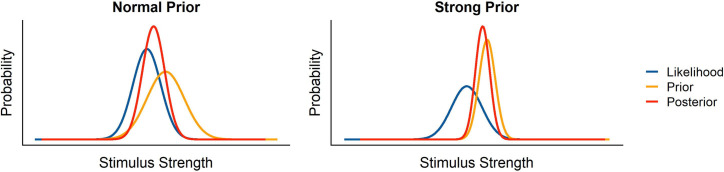
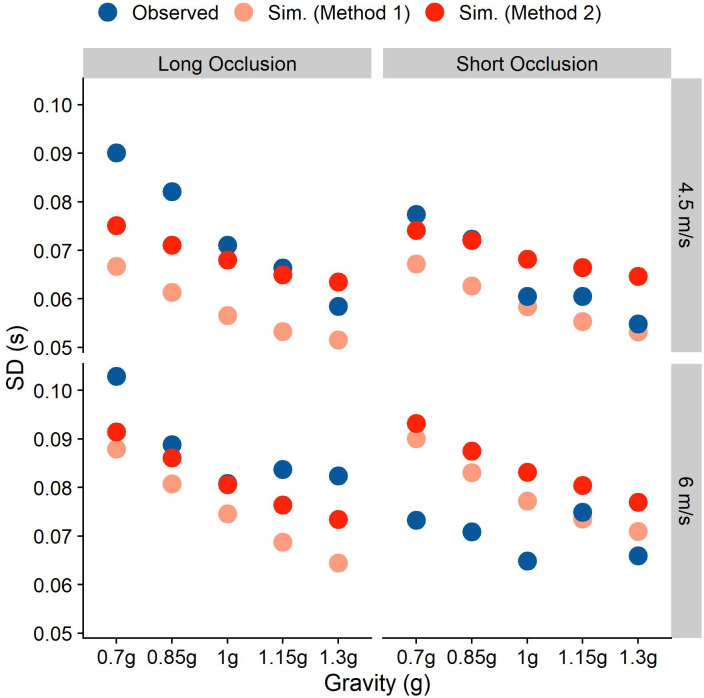
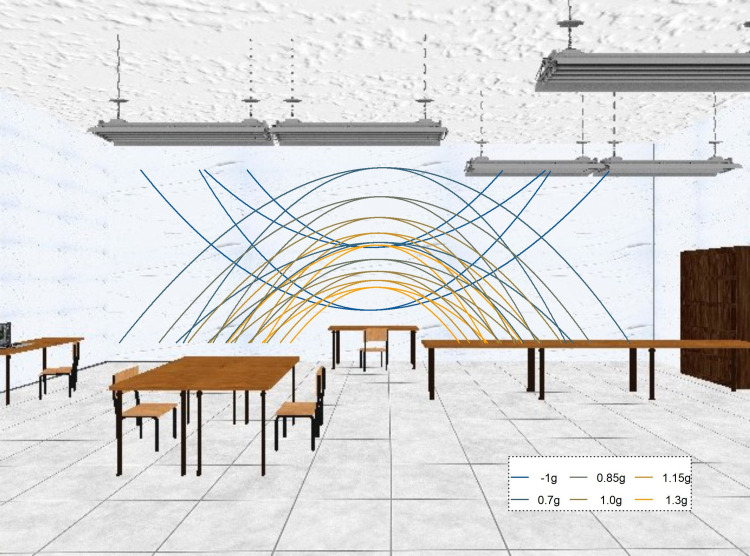
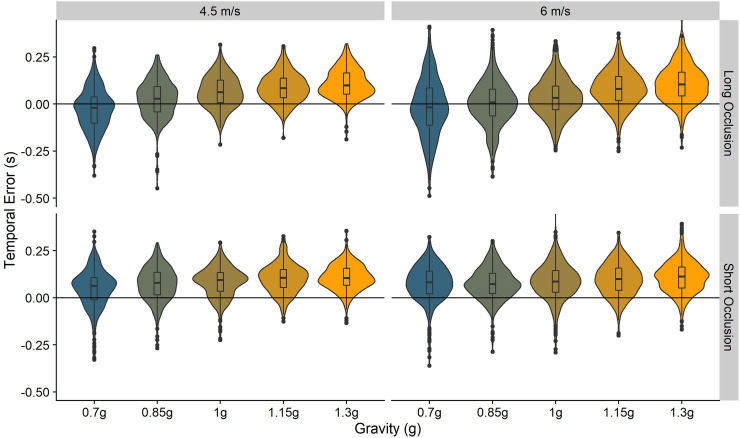
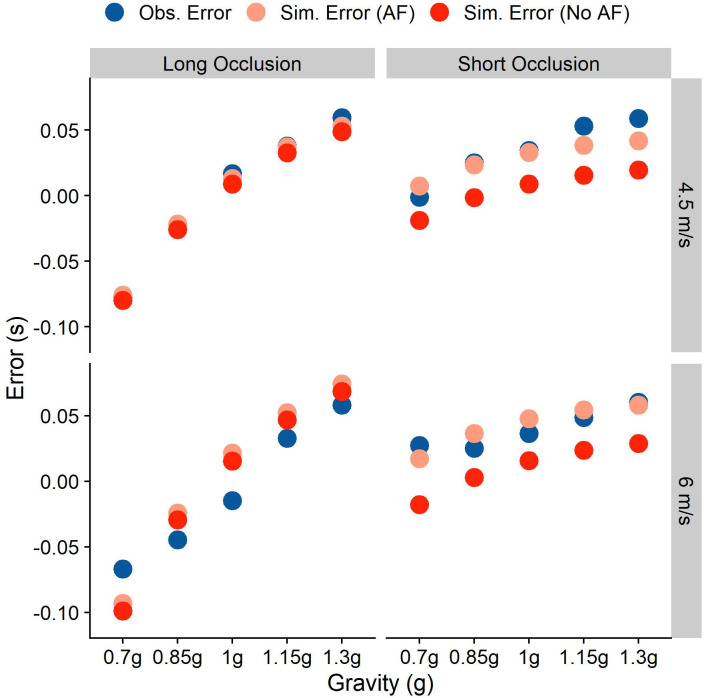
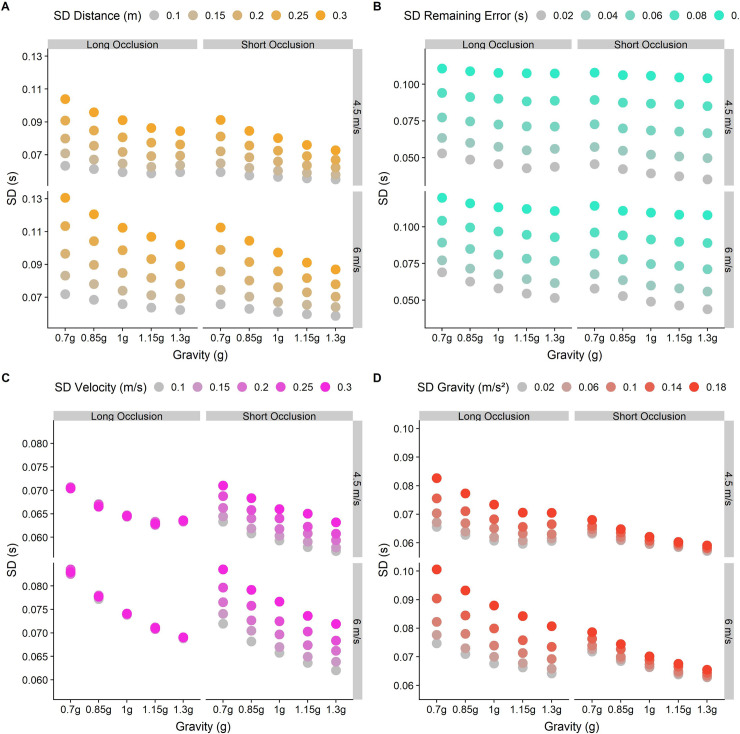
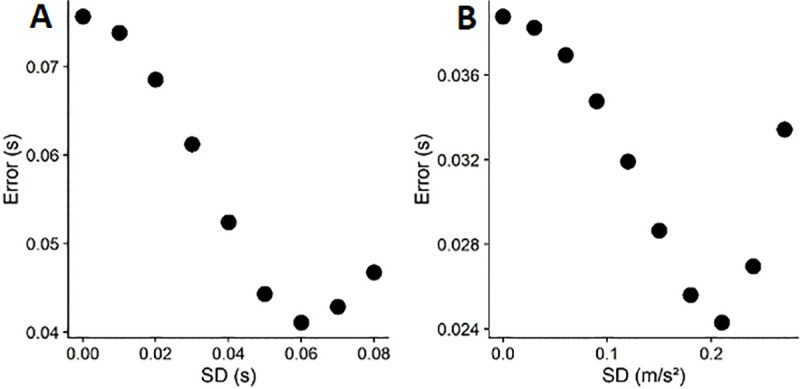
Humans expect downwards moving objects to accelerate and upwards moving objects to decelerate. These results have been interpreted as humans maintaining an internal model of gravity. We have previously suggested an interpretation of these results within a Bayesian framework of perception: earth gravity could be represented as a Strong Prior that overrules noisy sensory information (Likelihood) and therefore attracts the final percept (Posterior) very strongly. Based on this framework, we use published data from a timing task involving gravitational motion to determine the mean and the standard deviation of the Strong Earth Gravity Prior. To get its mean, we refine a model of mean timing errors we proposed in a previous paper (Jörges & López-Moliner, 2019), while expanding the range of conditions under which it yields adequate predictions of performance. This underscores our previous conclusion that the gravity prior is likely to be very close to 9.81 m/s2. To obtain the standard deviation, we identify different sources of sensory and motor variability reflected in timing errors. We then model timing responses based on quantitative assumptions about these sensory and motor errors for a range of standard deviations of the earth gravity prior, and find that a standard deviation of around 2 m/s2 makes for the best fit. This value is likely to represent an upper bound, as there are strong theoretical reasons along with supporting empirical evidence for the standard deviation of the earth gravity being lower than this value.
人类期望向下移动的物体加速,向上移动的物体减速。这些结果被解释为人类保持了一个关于重力的内部模型。我们之前曾在感知的贝叶斯框架内对这些结果进行了一种解释:地球重力可以被表示为一个强先验,它可以覆盖嘈杂的感官信息(似然性),因此非常强烈地吸引最终的感知(后验)。基于这个框架,我们使用涉及重力运动的计时任务中的已发表数据来确定强地球重力先验的平均值和标准差。为了得到平均值,我们改进了我们在之前的一篇论文(Jörges & López-Moliner,2019)中提出的平均计时误差模型,同时扩大了该模型能够充分预测表现的条件范围。这进一步强调了我们之前的结论,即重力先验很可能非常接近 9.81 m/s2。为了得到标准差,我们确定了反映在计时误差中的不同感官和运动变异性来源。然后,我们基于对这些感官和运动误差的定量假设,为地球重力先验的标准差范围建立了计时响应模型,并发现标准差约为 2 m/s2 可以得出最佳拟合。这个值可能是一个上限,因为有强有力的理论依据和支持性的经验证据表明地球重力的标准差低于这个值。