Department of Biochemistry and Molecular Biology, Colorado State University, Fort Collins, CO 80523.
World Research Hub Initiative, Institute of Innovative Research, Tokyo Institute of Technology, Yokohama 226-8503, Japan.
Mol Biol Cell. 2020 Oct 1;31(21):2363-2378. doi: 10.1091/mbc.E20-01-0017-T. Epub 2020 Aug 20.
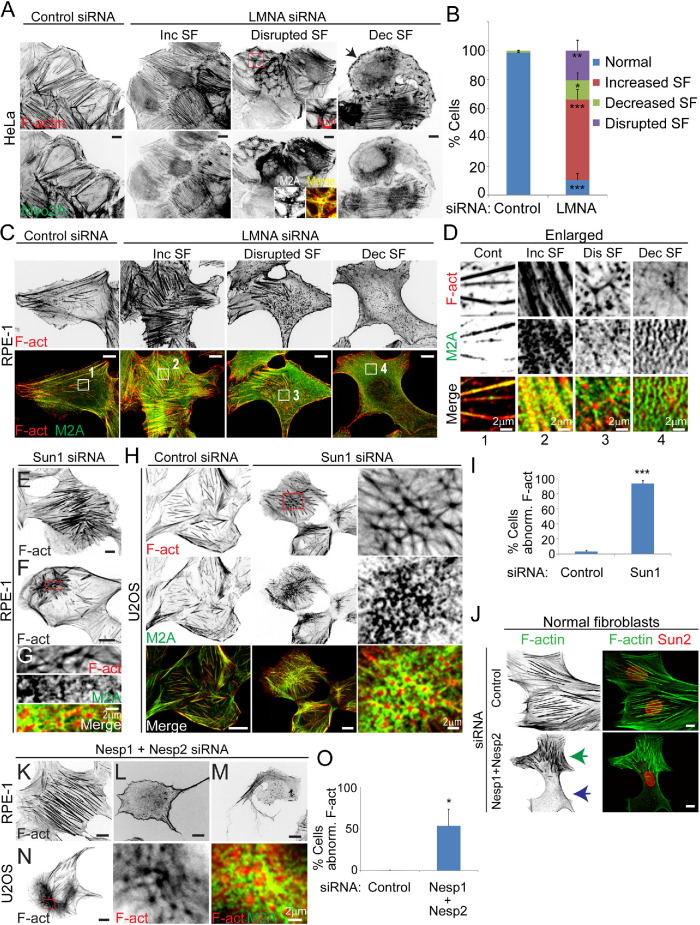
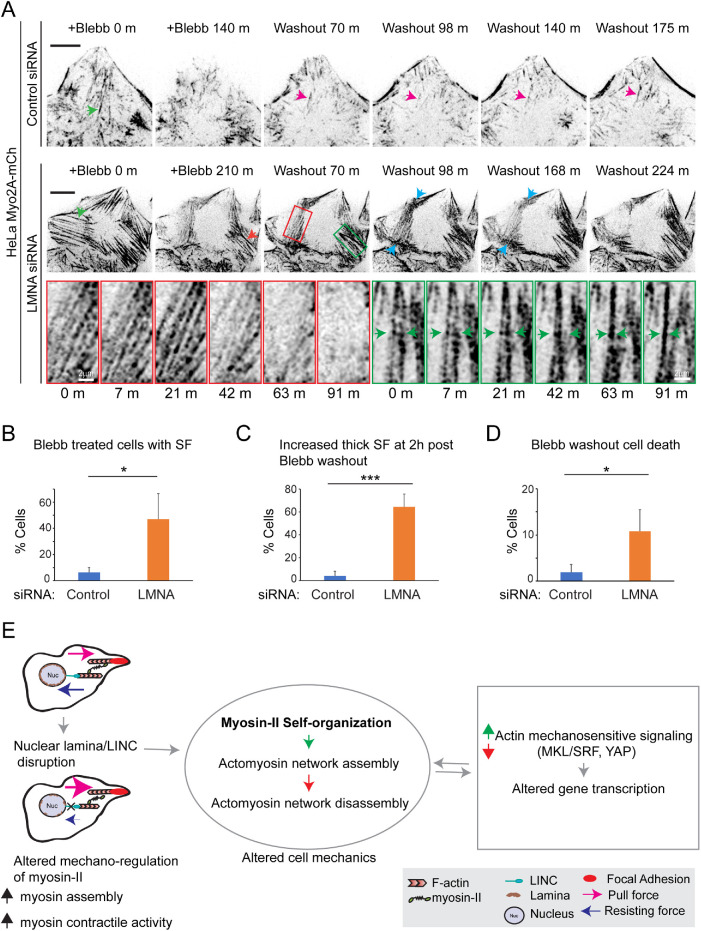
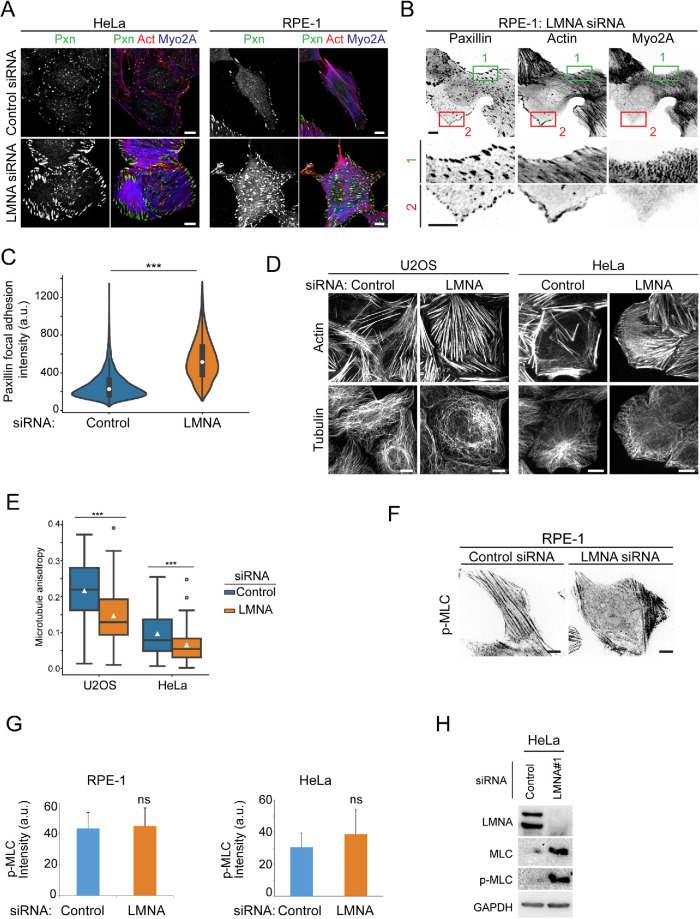
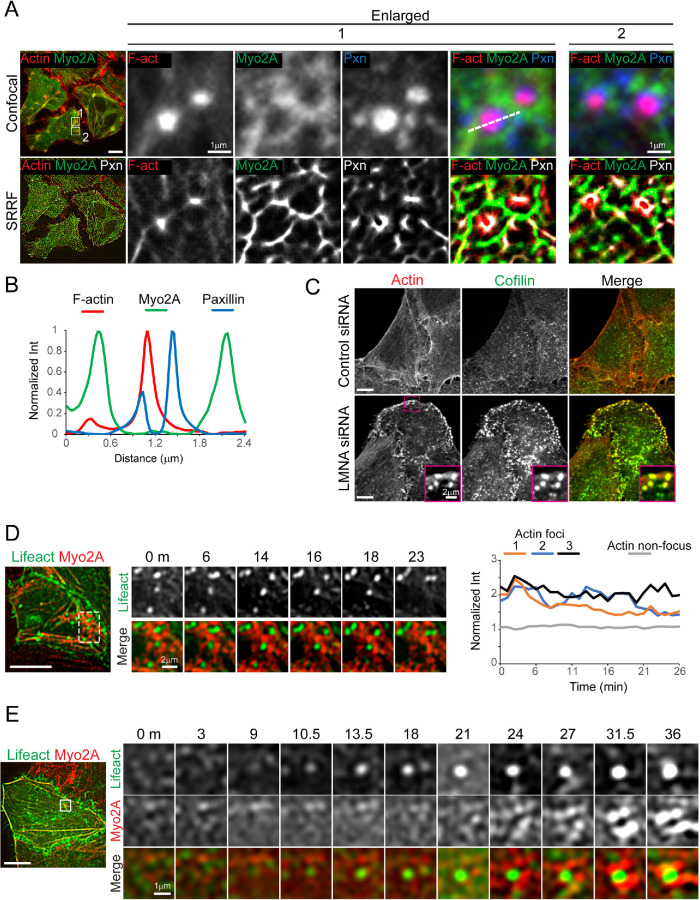
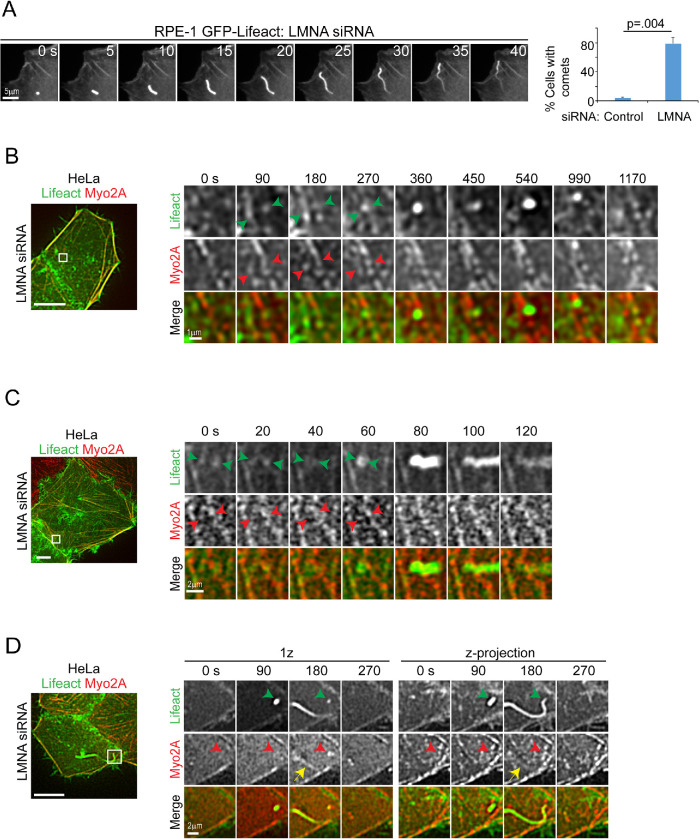
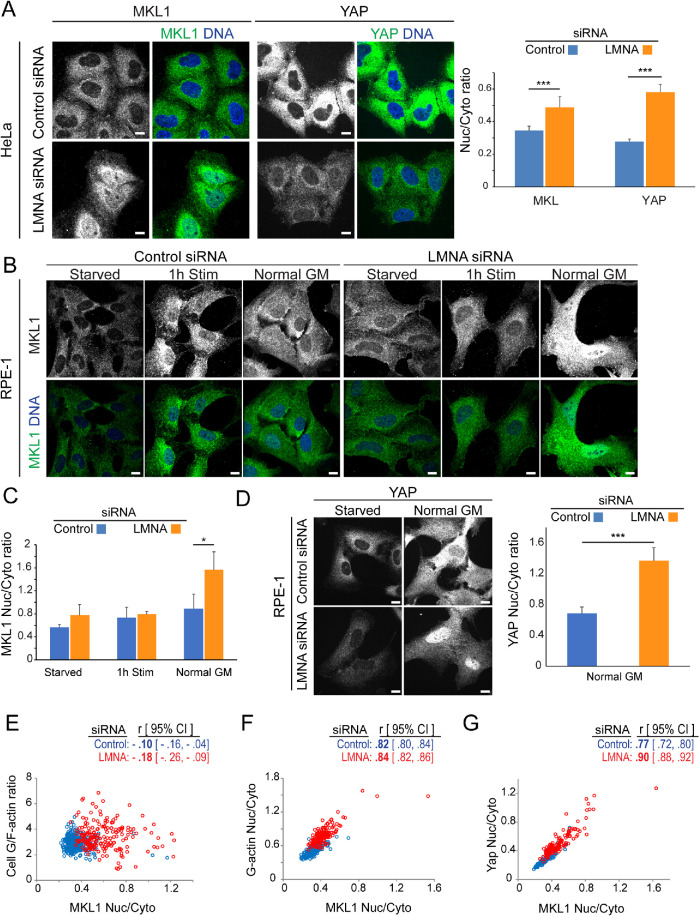
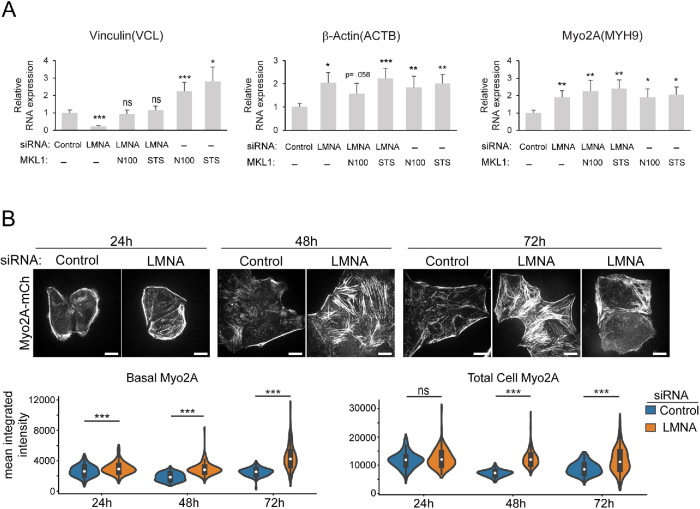
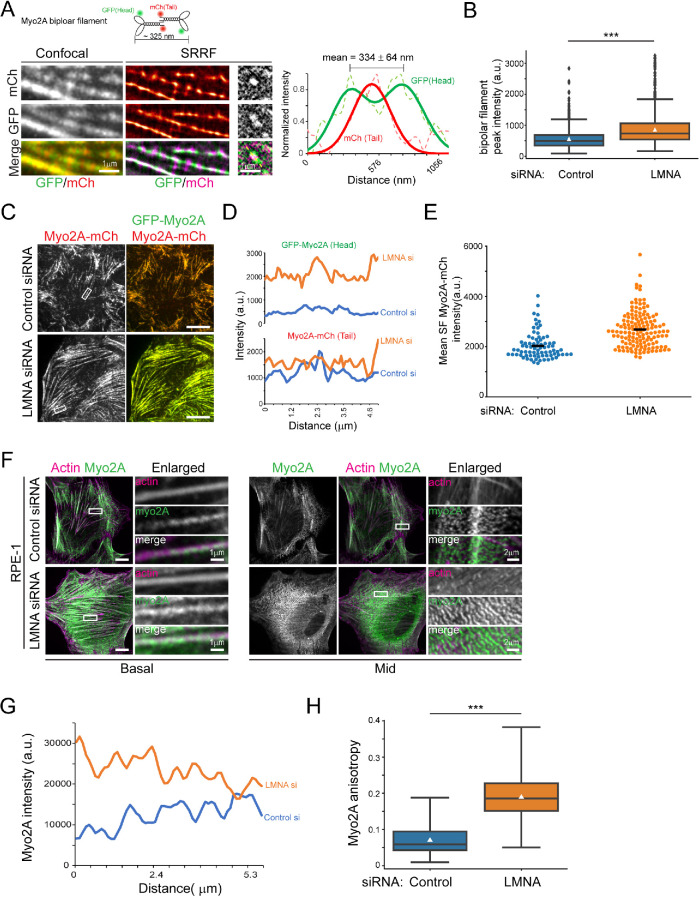
Nuclear envelope proteins influence cell cytoarchitecure by poorly understood mechanisms. Here we show that small interfering RNA-mediated silencing of lamin A/C (LMNA) promotes contrasting stress fiber assembly and disassembly in individual cells and within cell populations. We show that LMNA-deficient cells have elevated myosin-II bipolar filament accumulations, irregular formation of actin comet tails and podosome-like adhesions, increased steady state nuclear localization of the mechanosensitive transcription factors MKL1 and YAP, and induced expression of some MKL1/serum response factor-regulated genes such as that encoding myosin-IIA (MYH9). Our studies utilizing live cell imaging and pharmacological inhibition of myosin-II support a mechanism of deregulated myosin-II self-organizing activity at the nexus of divergent actin cytoskeletal aberrations resulting from LMNA loss. In light of our results, we propose a model of how the nucleus, via linkage to the cytoplasmic actomyosin network, may act to control myosin-II contractile behavior through both mechanical and transcriptional feedback mechanisms.
核膜蛋白通过尚未完全了解的机制影响细胞的细胞形态结构。在这里,我们表明,通过小干扰 RNA 介导的 lamin A/C (LMNA) 沉默,可以促进单个细胞和细胞群体中应力纤维的组装和拆卸。我们发现,LMNA 缺陷细胞中肌球蛋白-II 双极丝聚积增加,肌动蛋白彗星尾和 Podosome 样黏附物的形成不规则,机械敏感性转录因子 MKL1 和 YAP 的核定位增加,以及某些 MKL1/血清反应因子调节基因的表达增加,如编码肌球蛋白-IIA (MYH9) 的基因。我们利用活细胞成像和肌球蛋白-II 的药理学抑制的研究,支持了一种机制,即由于 LMNA 缺失导致的发散的肌动蛋白细胞骨架异常的交汇点处,肌球蛋白-II 自我组织活性失调。鉴于我们的结果,我们提出了一个模型,说明细胞核如何通过与细胞质肌球蛋白网络的连接,通过机械和转录反馈机制来控制肌球蛋白-II 的收缩行为。