Kim Han-Byeol, Yoo Ji-Young, Yoo Seung-Yeon, Suh San Won, Lee Seoul, Park Ji Hye, Lee Jun-Ho, Baik Tai-Kyoung, Kim Hye-Sun, Woo Ran-Sook
Department of Anatomy and Neuroscience, College of Medicine, Eulji University, Daejeon, 34824 Republic of Korea.
Department of Physiology, College of Medicine, Hallym University, Chuncheon, 24252 Republic of Korea.
Cell Death Discov. 2020 Aug 8;6:73. doi: 10.1038/s41420-020-00308-9. eCollection 2020.
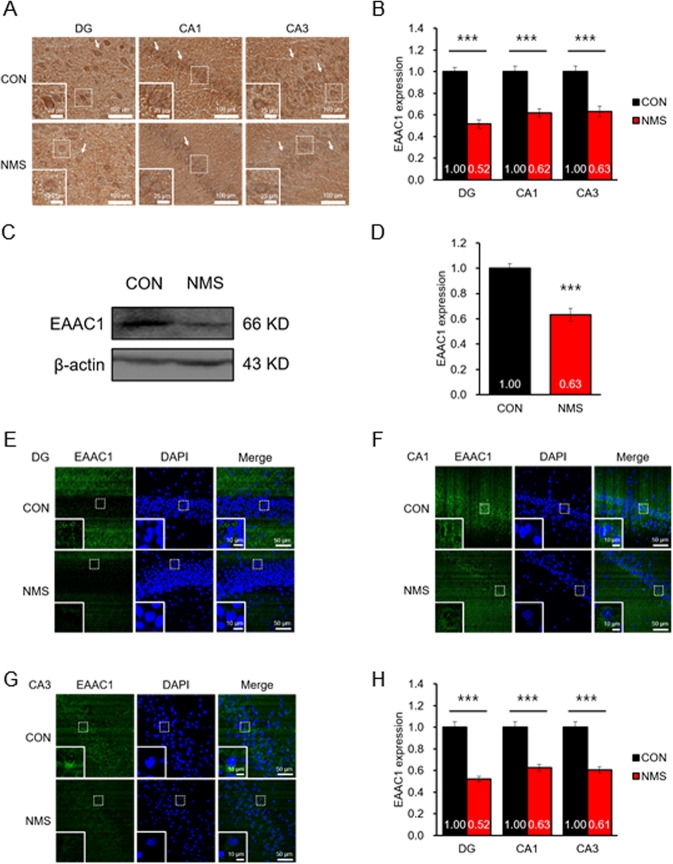
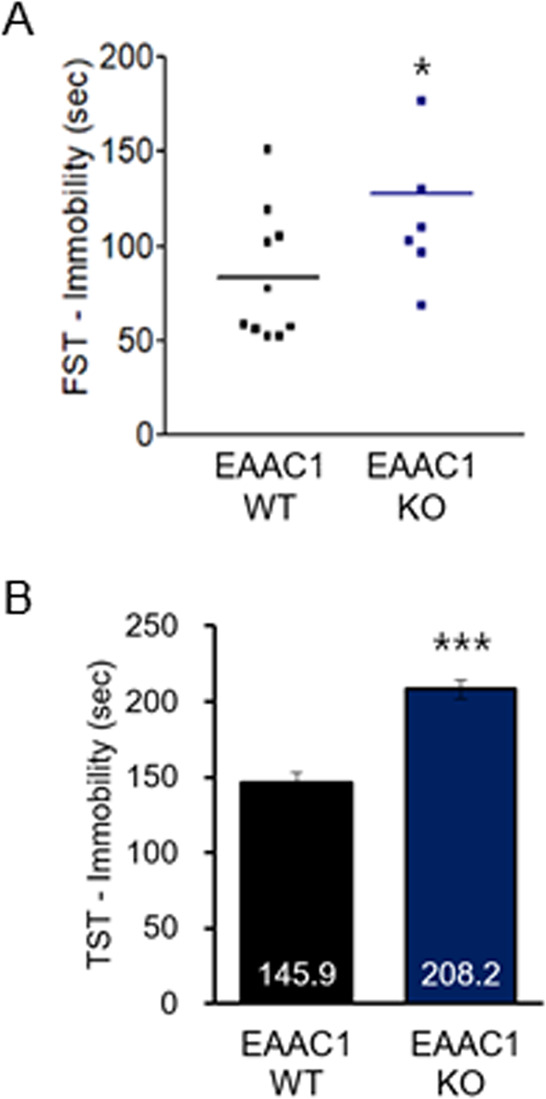
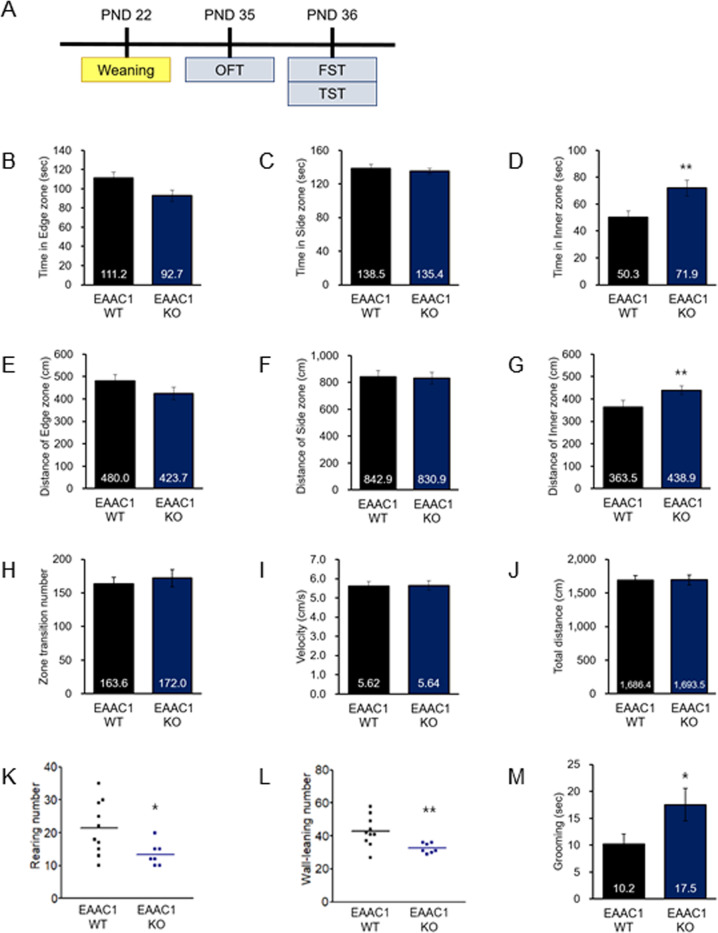
Neonatal maternal separation (NMS), as an early-life stress (ELS), is a risk factor to develop emotional disorders. However, the exact mechanisms remain to be defined. In the present study, we investigated the mechanisms involved in developing emotional disorders caused by NMS. First, we confirmed that NMS provoked impulsive behavior, orienting and nonselective attention-deficit, abnormal grooming, and depressive-like behaviors in adolescence. Excitatory amino acid carrier 1 (EAAC1) is an excitatory amino acid transporter expressed specifically by neurons and is the route for the neuronal uptake of glutamate/aspartate/cysteine. Compared with that in the normal control group, EAAC1 expression was remarkably reduced in the ventral hippocampus and cerebral cortex in the NMS group. Additionally, EAAC1 expression was reduced in parvalbumin-positive hippocampal GABAergic neurons in the NMS group. We also found that EAAC1-knockout (EAAC1-/-) mice exhibited impulsive-like, nonselective attention-deficit, and depressive-like behaviors compared with WT mice in adolescence, characteristics similar to those of the NMS behavior phenotype. Taken together, our results revealed that ELS induced a reduction in EAAC1 expression, suggesting that reduced EAAC1 expression is involved in the pathophysiology of attention-deficit and depressive behaviors in adolescence caused by NMS.
新生儿母婴分离(NMS)作为一种早期生活应激(ELS),是引发情绪障碍的一个风险因素。然而,确切机制仍有待确定。在本研究中,我们探究了NMS导致情绪障碍的相关机制。首先,我们证实NMS会引发青春期的冲动行为、定向和非选择性注意力缺陷、异常修饰以及抑郁样行为。兴奋性氨基酸载体1(EAAC1)是一种由神经元特异性表达的兴奋性氨基酸转运体,是神经元摄取谷氨酸/天冬氨酸/半胱氨酸的途径。与正常对照组相比,NMS组腹侧海马体和大脑皮层中的EAAC1表达显著降低。此外,NMS组小白蛋白阳性海马体GABA能神经元中的EAAC1表达也降低。我们还发现,与野生型小鼠相比,EAAC1基因敲除(EAAC1-/-)小鼠在青春期表现出冲动样、非选择性注意力缺陷和抑郁样行为,这些特征与NMS行为表型相似。综上所述,我们的结果表明,ELS导致EAAC1表达降低,提示EAAC1表达降低参与了NMS所致青春期注意力缺陷和抑郁行为的病理生理过程。