Castillo Escamilla Joaquín, Fernández Castro José Javier, Baliyan Shishir, Ortells-Pareja Juan José, Ortells Rodríguez Juan José, Cimadevilla José Manuel
Department of Psychology, University of Almeria, Carretera de Sacramento s/n, C.P. 04120 Almeria, Spain.
Health Research Center, University of Almeria, Carretera de Sacramento s/n, C.P. 04120 Almeria, Spain.
Brain Sci. 2020 Aug 13;10(8):552. doi: 10.3390/brainsci10080552.
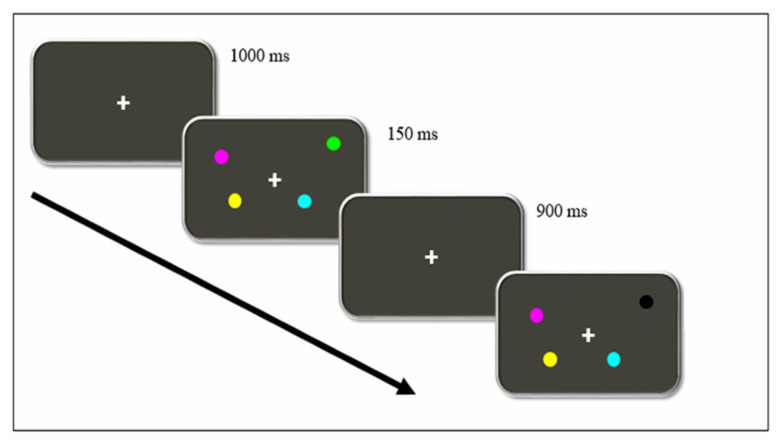
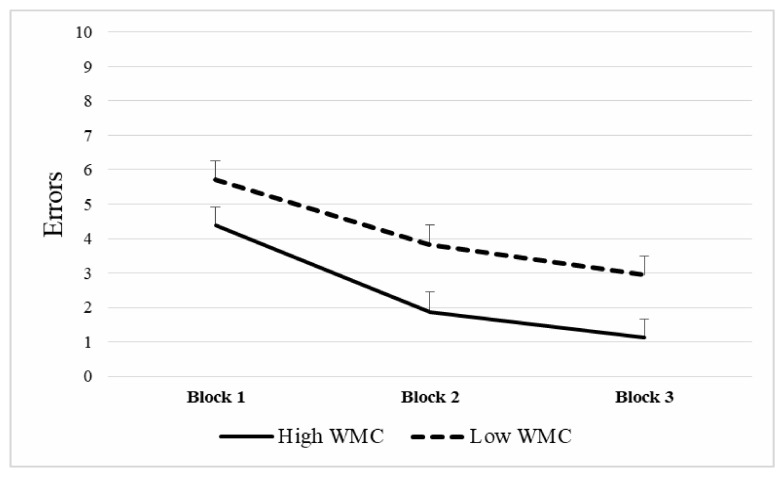
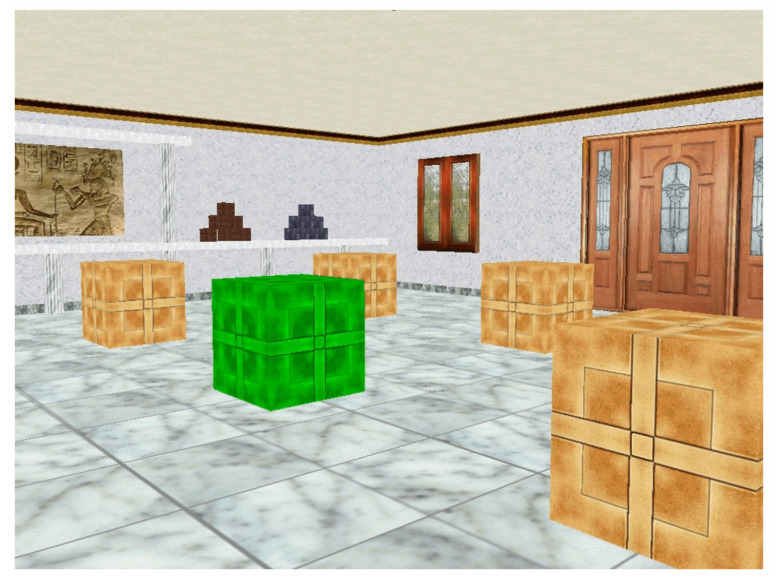
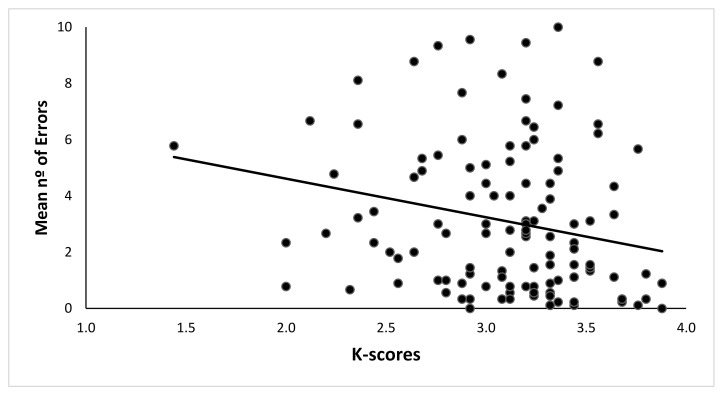
Traditionally, the medial temporal lobe has been considered a key brain region for spatial memory. Nevertheless, executive functions, such as working memory, also play an important role in complex behaviors, such as spatial navigation. Thus, the main goal of this study is to clarify the relationship between working memory capacity and spatial memory performance. Spatial memory was assessed using a virtual reality-based procedure, the Boxes Room task, and the visual working memory with the computer-based Change Localization Task. One hundred and twenty-three ( = 123) participants took part in this study. Analysis of Covariance (ANCOVA) revealed a statistically significant relationship between working memory capacity and spatial abilities. Thereafter, two subgroups = 60, were formed according to their performance in the working memory task (1st and 4th quartiles, = 30 each). Results demonstrate that participants with high working memory capacity committed fewer mistakes in the spatial task compared to the low working memory capacity group. Both groups improved their performance through repeated trials of the spatial task, thus showing that they could learn spatial layouts independent of their working memory capacity. In conclusion, these findings support that spatial memory performance is directly related to working memory skills. This could be relevant for spatial memory assessment in brain lesioned patients.
传统上,内侧颞叶一直被认为是空间记忆的关键脑区。然而,执行功能,如工作记忆,在诸如空间导航等复杂行为中也起着重要作用。因此,本研究的主要目标是阐明工作记忆容量与空间记忆表现之间的关系。使用基于虚拟现实的程序“盒子房间任务”评估空间记忆,并使用基于计算机的“变化定位任务”评估视觉工作记忆。123名参与者参与了本研究。协方差分析(ANCOVA)显示工作记忆容量与空间能力之间存在统计学上的显著关系。此后,根据他们在工作记忆任务中的表现(第1和第4四分位数,各30人)形成了两个亚组(每组60人)。结果表明,与低工作记忆容量组相比,高工作记忆容量的参与者在空间任务中犯的错误更少。两组都通过重复进行空间任务试验提高了表现,从而表明他们可以独立于工作记忆容量学习空间布局。总之,这些发现支持空间记忆表现与工作记忆技能直接相关。这可能与脑损伤患者的空间记忆评估有关。