Laboratory of Ornamental Plants and Vegetable Crops, Faculty of Agriculture and Biotechnology, UTP University of Science and Technology in Bydgoszcz, Bernardyńska 6, 85-029 Bydgoszcz, Poland.
Int J Mol Sci. 2020 Aug 13;21(16):5826. doi: 10.3390/ijms21165826.
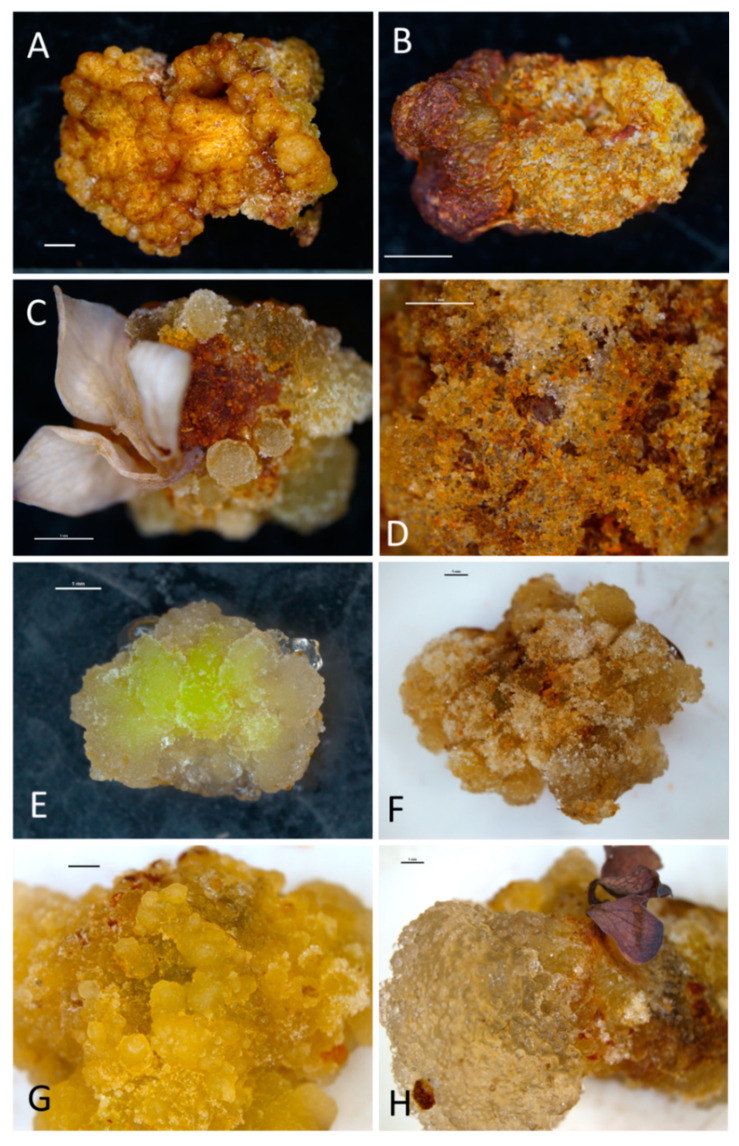
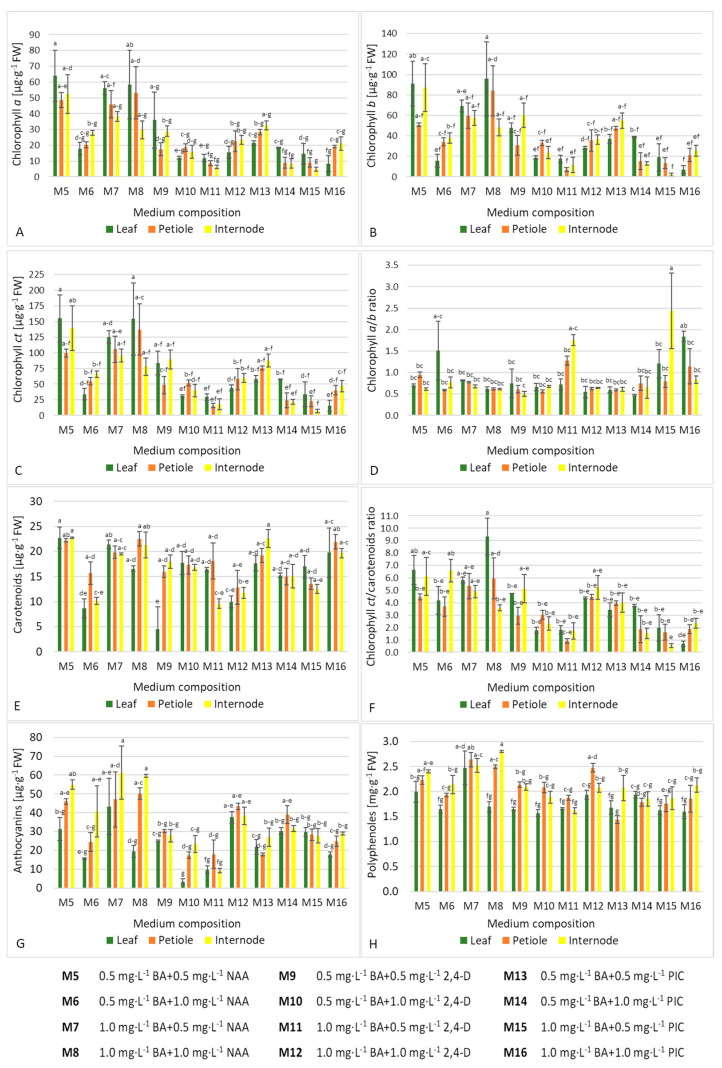
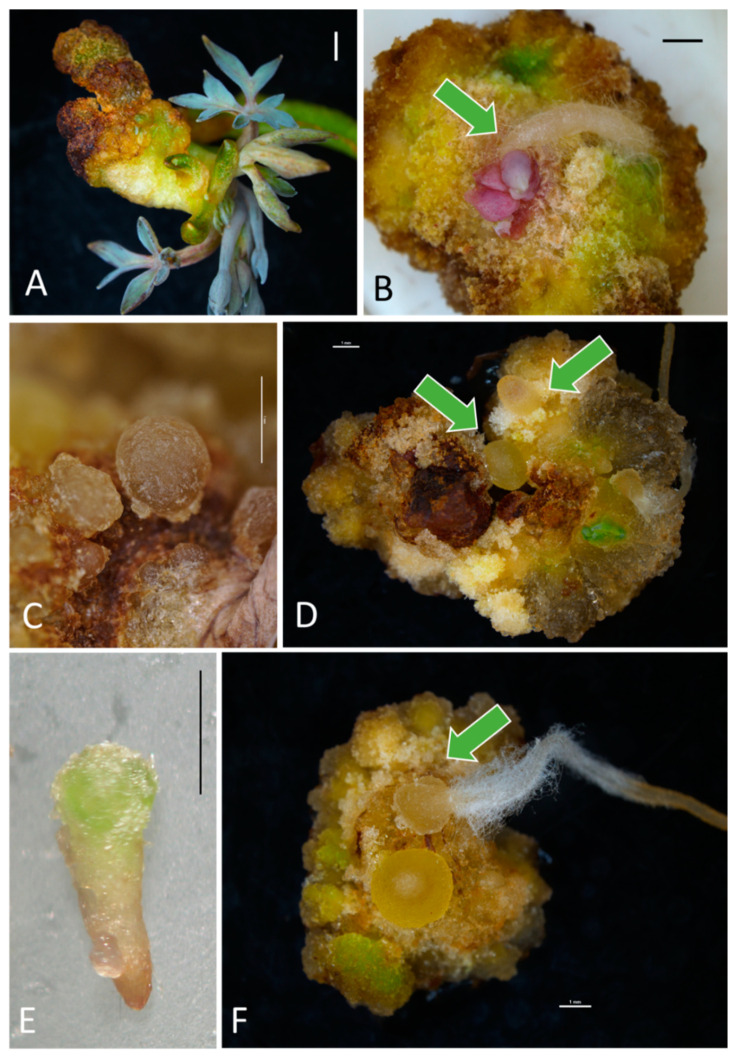
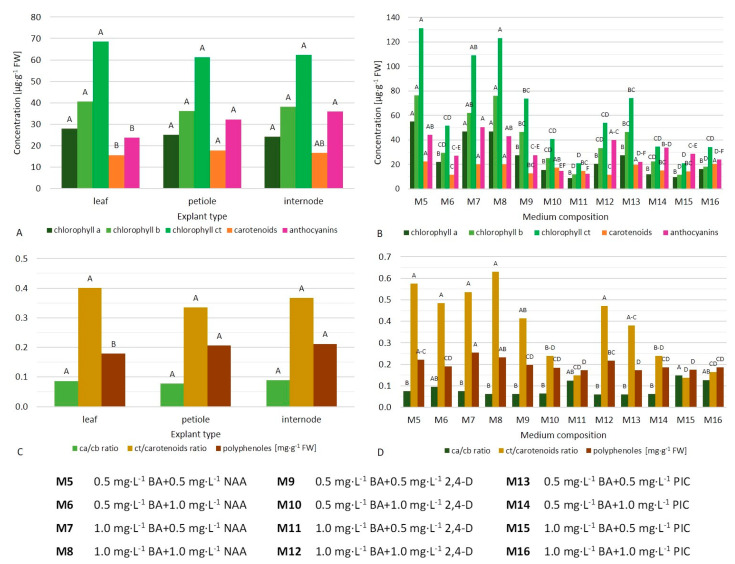
(L.) Fukuhara is a perennial plant species valued in the horticultural, cosmetic, and pharmaceutical markets. To date, however, there were no studies on tissue culture systems in this species when adjusted from non-meristematic explants. The aim of this study is to induce callogenesis, organogenesis, and somatic embryogenesis in non-meristematic explants of 'Alba' cultured in various media and to analyze the chemical diversity of the produced callus. Leaf, petiole, and internode explants were cultured on the modified Murashige and Skoog (MS) medium fortified with various combinations and concentrations of 6-benzyladenine (BA), indole-3-acetic acid (IAA), 1-naphthaleneacetic acid (NAA), 2,4-dichlorphenoxyacetic acid (2,4-D), and picloram (PIC). After 10 weeks of culturing, the morphogenetic response of explants was evaluated and the concentration of chlorophylls, carotenoids, anthocyanins, and polyphenols in callus was analyzed. There was no influence of explant type on the callogenesis efficiency (62.1-65.3%). The highest fresh weight of callus was produced on leaf explants in the presence of 2,4-D or PIC. In contrast, the highest share of dry weight was found in internode-derived calli and cultured on IAA-supplemented medium (up to 30.8%). Only 2.5% of all explants regenerated adventitious shoots, while rhizogenesis was reported in 4.5% of explants. Somatic embryos were produced indirectly by 0% to 100% of explants, depending on the culture medium and explant type. The highest mean number of embryos (11.4 per explant) was found on petioles cultured in the MS medium with 0.5 mg·L BA and 1.0 mg·L PIC. Calli cultured in media with NAA usually contained a higher content of primary and secondary metabolites. There was also a significant impact of explant type on the content of anthocyanins, polyphenols, and carotenoids in callus. Further studies should focus on the elicitation of metabolites production in callus culture systems of the bleeding heart.
(L.) Fukuhara 是一种多年生植物物种,在园艺、化妆品和制药市场上有很高的价值。然而,迄今为止,对于这种非分生组织外植体的组织培养系统还没有研究。本研究的目的是在不同培养基中诱导‘Alba’的非分生组织外植体发生愈伤组织、器官发生和体细胞胚胎发生,并分析产生的愈伤组织的化学多样性。叶片、叶柄和节间外植体在改良的 Murashige 和 Skoog(MS)培养基上培养,培养基中添加了不同组合和浓度的 6-苄基腺嘌呤(BA)、吲哚-3-乙酸(IAA)、1-萘乙酸(NAA)、2,4-二氯苯氧乙酸(2,4-D)和 picloram(PIC)。培养 10 周后,评估外植体的形态发生反应,并分析愈伤组织中叶绿素、类胡萝卜素、花青素和多酚的浓度。外植体类型对愈伤组织发生效率(62.1-65.3%)没有影响。在含有 2,4-D 或 PIC 的叶片外植体上产生的愈伤组织鲜重最高。相比之下,在含有 IAA 的培养基上培养的节间来源的愈伤组织的干重比例最高(高达 30.8%)。只有 2.5%的外植体再生不定芽,而 4.5%的外植体生根。体细胞胚胎通过外植体的 0%至 100%间接产生,这取决于培养基和外植体类型。在含有 0.5mg·L BA 和 1.0mg·L PIC 的 MS 培养基上培养的叶柄外植体上,发现的平均胚胎数(每个外植体 11.4 个)最高。在含有 NAA 的培养基中培养的愈伤组织通常含有较高含量的初级和次级代谢物。外植体类型对愈伤组织中花青素、多酚和类胡萝卜素的含量也有显著影响。进一步的研究应集中在诱导出血心脏愈伤组织培养系统中代谢产物的产生。