Institute of Clinical Sciences, University of Birmingham, Birmingham B15 2TT, UK.
College of Medicine, Basic Medical Sciences, King Saud bin Abdulaziz University for Health Sciences, Riyadh 11481, Saudi Arabia.
Int J Mol Sci. 2020 Aug 20;21(17):6012. doi: 10.3390/ijms21176012.
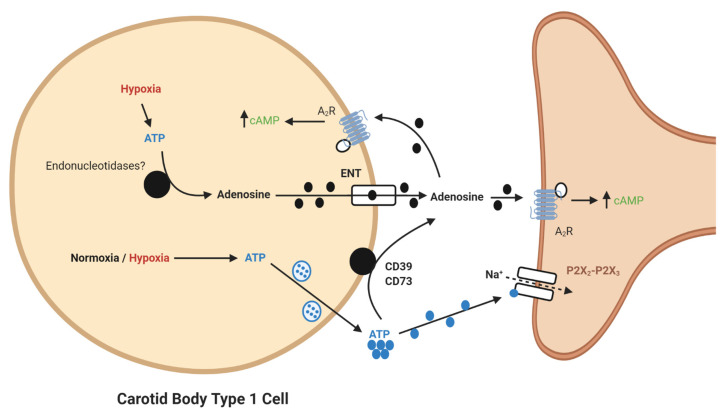
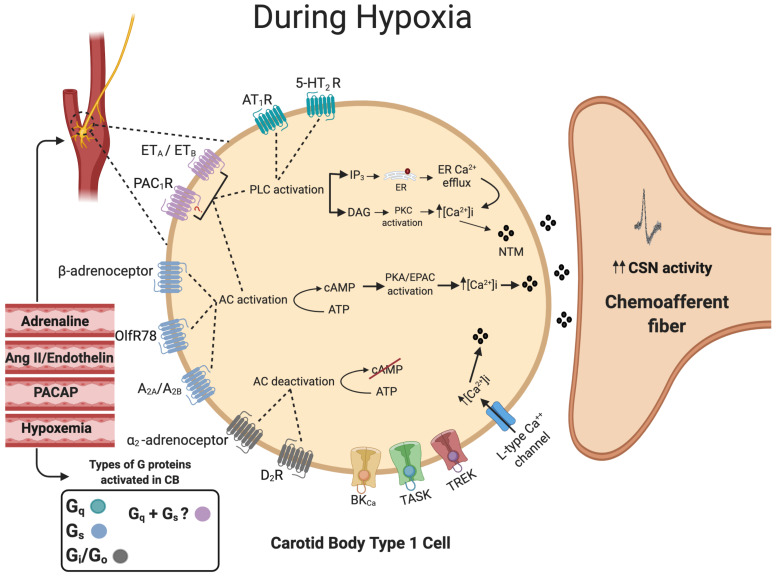
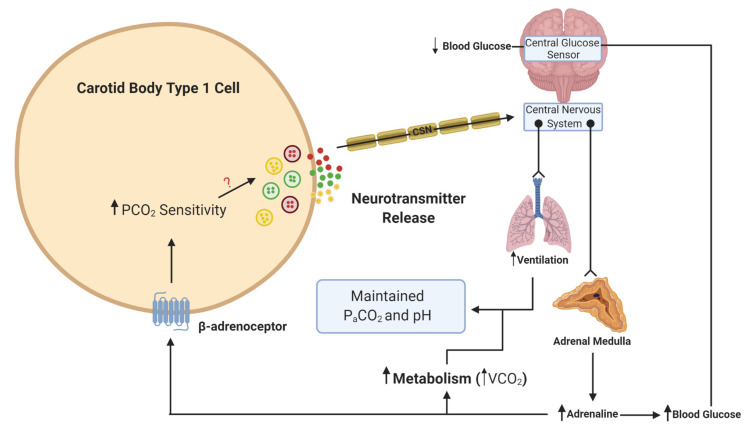
The carotid body (CB) is an important organ located at the carotid bifurcation that constantly monitors the blood supplying the brain. During hypoxia, the CB immediately triggers an alarm in the form of nerve impulses sent to the brain. This activates protective reflexes including hyperventilation, tachycardia and vasoconstriction, to ensure blood and oxygen delivery to the brain and vital organs. However, in certain conditions, including obstructive sleep apnea, heart failure and essential/spontaneous hypertension, the CB becomes hyperactive, promoting neurogenic hypertension and arrhythmia. G-protein-coupled receptors (GPCRs) are very highly expressed in the CB and have key roles in mediating baseline CB activity and hypoxic sensitivity. Here, we provide a brief overview of the numerous GPCRs that are expressed in the CB, their mechanism of action and downstream effects. Furthermore, we will address how these GPCRs and signaling pathways may contribute to CB hyperactivity and cardiovascular and respiratory disease. GPCRs are a major target for drug discovery development. This information highlights specific GPCRs that could be targeted by novel or existing drugs to enable more personalized treatment of CB-mediated cardiovascular and respiratory disease.
颈动脉体(carotid body,CB)是位于颈动脉分叉处的一个重要器官,它能持续监测为大脑供血的血液。在缺氧的情况下,CB 会立即通过向大脑发送神经冲动的形式发出警报。这会激活保护性反射,包括过度通气、心动过速和血管收缩,以确保血液和氧气输送到大脑和重要器官。然而,在某些情况下,包括阻塞性睡眠呼吸暂停、心力衰竭和原发性/自发性高血压,CB 会变得过度活跃,促进神经性高血压和心律失常。G 蛋白偶联受体(G-protein-coupled receptors,GPCRs)在 CB 中高度表达,在调节 CB 基础活性和低氧敏感性方面发挥着关键作用。在这里,我们简要概述了在 CB 中表达的众多 GPCRs,它们的作用机制和下游效应。此外,我们还将讨论这些 GPCRs 和信号通路如何导致 CB 过度活跃以及心血管和呼吸系统疾病。GPCRs 是药物发现和开发的主要靶点。这些信息突出了特定的 GPCRs,这些 GPCRs可以成为新型或现有药物的作用靶点,从而实现更个性化的治疗由 CB 介导的心血管和呼吸系统疾病。