Dua Pami
Department of Economics, Delhi School of Economics, University of Delhi, Delhi, India.
Indian Econ Rev. 2020;55(1):117-154. doi: 10.1007/s41775-020-00085-3. Epub 2020 Jun 23.
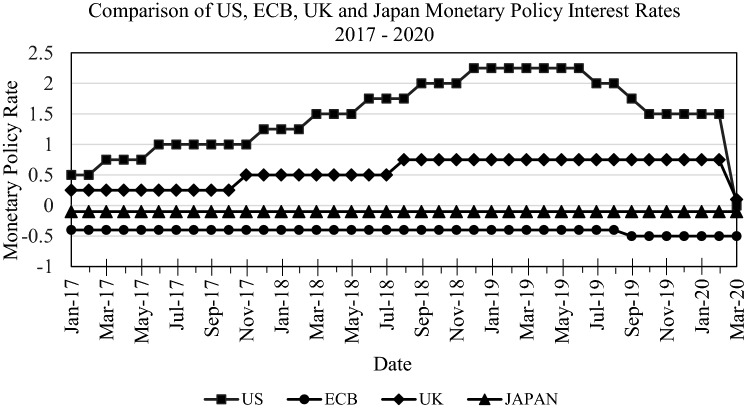
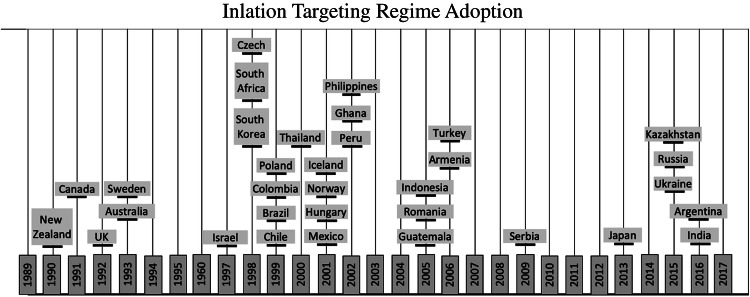
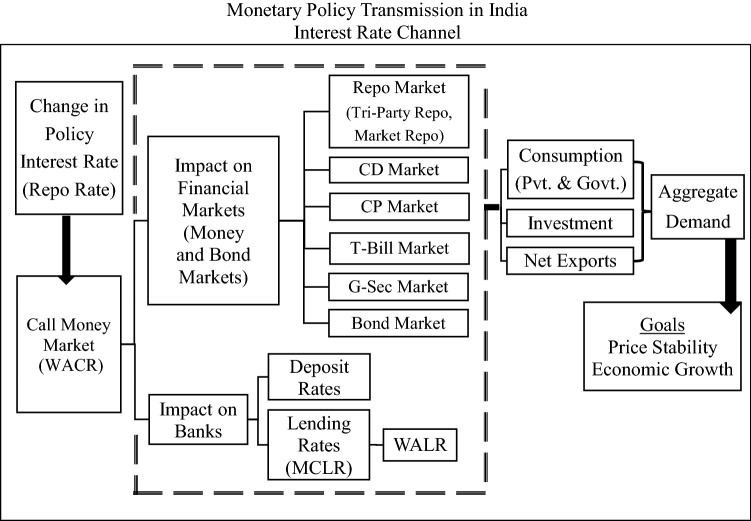
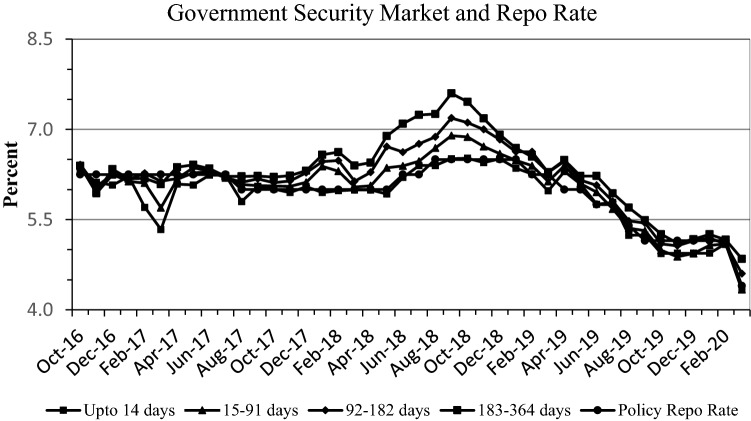
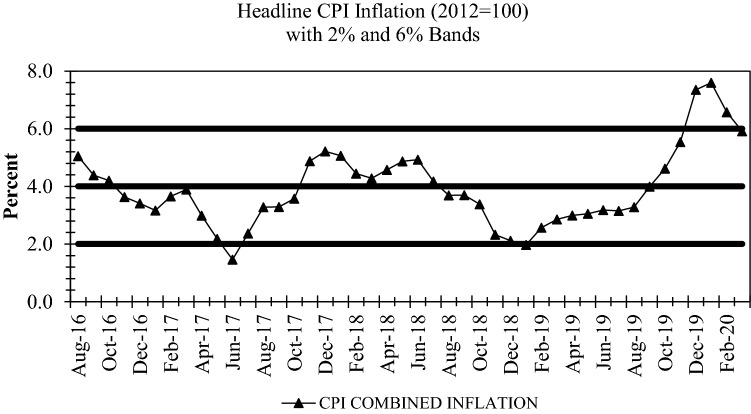
In 2016, the monetary policy framework moved towards flexible inflation targeting and a six member Monetary Policy Committee (MPC) was constituted for setting the policy rate. With this step towards modernization of the monetary policy process, India joined the set of countries that have adopted inflation targeting as their monetary policy framework. The Consumer Price Index (CPI combined) inflation target was set by the Government of India at 4% with ± 2% tolerance band for the period from August 5, 2016 to March 31, 2021. In this backdrop, the paper reviews the evolution of monetary policy frameworks in India since the mid-1980s. It also describes the monetary policy transmission process and its limitations in terms of lags and rigidities. It highlights the importance of unconventional monetary policy measures in supplementing conventional tools especially during the easing cycle. Further, it examines the voting pattern of the MPC in India and compares this with that of various developed and emerging economies. The synchronization of cuts in the policy rate by MPCs of various countries during the global slowdown in 2019 and the COVID-19 pandemic in the early 2020s is also analysed.
2016年,货币政策框架转向灵活的通胀目标制,并成立了一个由六人组成的货币政策委员会(MPC)来设定政策利率。随着这一迈向货币政策流程现代化的举措,印度加入了采用通胀目标制作为其货币政策框架的国家行列。印度政府将2016年8月5日至2021年3月31日期间的消费者物价指数(综合)通胀目标设定为4%,容忍区间为±2%。在此背景下,本文回顾了自20世纪80年代中期以来印度货币政策框架的演变。它还描述了货币政策传导过程及其在滞后性和刚性方面的局限性。它强调了非常规货币政策措施在补充传统工具方面的重要性,特别是在宽松周期期间。此外,它考察了印度货币政策委员会的投票模式,并将其与各发达经济体和新兴经济体的投票模式进行比较。本文还分析了2019年全球经济放缓和2020年代初新冠疫情期间各国货币政策委员会同步下调政策利率的情况。