Bhar Ramaprasad, Malliaris A G
The University of New South Wales, UNSW, Sydney, NSW 2052, Australia.
Quinlan School of Business, Loyola University Chicago, 16 East Pearson Street, Chicago, IL 60611, United States.
J Policy Model. 2021 Jan-Feb;43(1):15-33. doi: 10.1016/j.jpolmod.2020.07.001. Epub 2020 Aug 30.
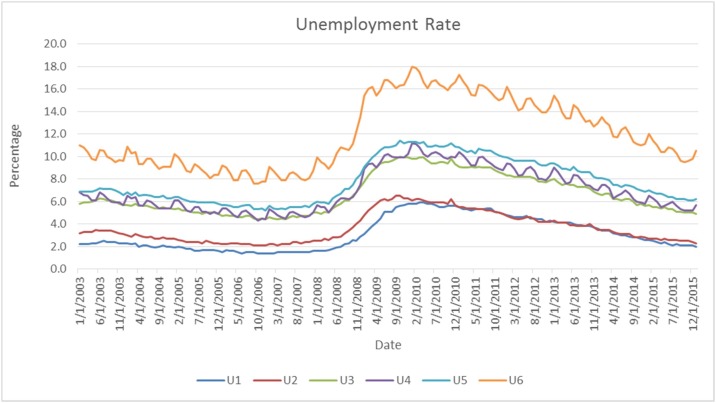
The paper formulates the modeling of unconventional monetary policy and critically evaluates its effectiveness to address the Global Financial Crisis. We begin with certain principles guiding general scientific modeling and focus on Milton Friedman's 1968 Presidential Address that delineates the strengths and limitations of monetary policy to pursue certain goals. The modeling of monetary policy with its novelty of quantitative easing to target unusually high unemployment is evaluated by a Markov switching econometric model using monthly data for the period 2002-2015. We conclude by relating the lessons learned from unconventional monetary policy during the Global Financial Crisis to the recent bold initiatives of the Fed to mitigate the economic and financial impact of the Covid-19 pandemic on U.S. households and businesses.
本文阐述了非常规货币政策的建模,并对其应对全球金融危机的有效性进行了批判性评估。我们从指导一般科学建模的某些原则入手,重点关注米尔顿·弗里德曼1968年的总统演讲,该演讲阐述了货币政策在追求某些目标时的优势和局限性。使用2002 - 2015年期间的月度数据,通过马尔可夫切换计量经济模型对以量化宽松为新颖手段来应对异常高失业率的货币政策建模进行了评估。我们通过将全球金融危机期间从非常规货币政策中学到的经验教训与美联储最近为减轻新冠疫情对美国家庭和企业的经济和金融影响而采取的大胆举措联系起来得出结论。